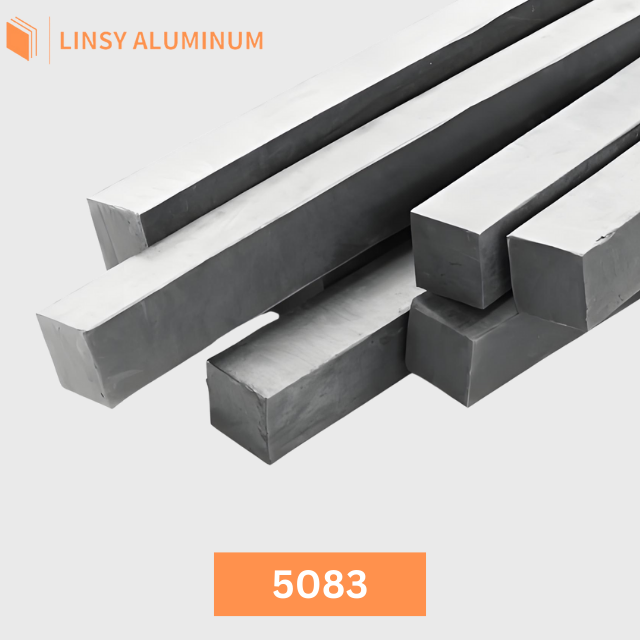


5083 aluminum square bar is solid Al-Mg stock with 4.0–4.9% magnesium — the strongest grade that cannot be heat treated, and the bar for hull stiffeners, deck fittings and tank internals. H116 and H321 are the marine tempers a surveyor expects; H111 is not a substitute.
Side: 6–200 mm
Length: 1,000–6,000 mm
Tempers: O / H111 / H112 / H116 / H321
Standards: ASTM B221, EN 755
Quality documents: MTC report with every order
5083 aluminum square bar is solid square stock in Al-Mg with 4.0–4.9% magnesium — the strongest grade that cannot be heat treated, and the square bar for structural work in salt water: hull stiffeners, deck fittings, tank internals, welded frames on boats and offshore structures. Strength comes from strain hardening and from the stabilising tempers that make it surveyable, and H116 or H321 is what a classification society expects to see. Alloy data: 5083 aluminum alloy.
| Item | Range |
|---|---|
| Side length | 6 – 200 mm |
| Length | 1,000 – 6,000 mm, custom cut |
| Tempers | O / H111 / H112 / H116 / H321 |
| Standards | ASTM B221, EN 755, GB/T 3191 |
On the marine tempers. H111 is annealed and lightly strain hardened — general purpose and cheaper. H116 and H321 are produced to a controlled microstructure resisting exfoliation corrosion and stress-corrosion cracking, and they are what a surveyor looks for on hull and tank work. Substituting H111 there is a rejection waiting to happen.
| Temper | Tensile (MPa) | Yield (MPa) | Elongation | Hardness (HB) |
|---|---|---|---|---|
| O | 275 | 125 | 16% | 75 |
| H111 | 290 | 165 | 14% | 80 |
| H112 | 275 | 125 | 12% | 75 |
| H116 | 305 | 215 | 12% | 95 |
| H321 | 305 | 215 | 12% | 95 |
Typical values; confirm against the MTC. Density 2.66 g/cm³, elastic modulus 71 GPa. 5083 keeps useful toughness to cryogenic temperature, which is why it appears in cold-service and liquid-gas structures rather than the 6xxx grades.
H116 and H321 are the marine answers, close in practice and both accepted for surveyed work. Order one of these for anything permanently wet or classed. H111 is general purpose — easier to form, adequate in dry or mildly aggressive service. O is for forming before hardening. H112 appears at heavy sections produced by hot working without a controlled hardening step.
| Alloy / temper | Tensile (MPa) | Yield (MPa) | Marine SCC | Where it fits |
|---|---|---|---|---|
| 5083-H116 / H321 | 305 | 215 | Best | Hull stiffeners, deck fittings, tank internals, offshore frames |
| 5052-H32 | 214 – 262 | ≥ 159 | Good | Lighter marine fittings and brackets |
| 6061-T6 | 310 | 276 | Moderate | Machine parts, keys, dry service |
5083 and 6061-T6 are near-equal on strength and the choice is not about strength: 5083 is chosen when the part is welded, exposed to salt water, or runs cold. A welded 6061-T6 joint loses strength in the heat-affected zone and has a smaller corrosion margin.
Solid versus tube: tube gives more stiffness per kilogram, but there is no wall to hold a thread, a keyway or a clamp load. A tank stiffener is usually tube; a fitting boss or a tapped block is solid.
5083 square bar is extruded at the smaller sizes and sawn from plate at the larger ones. That matters because the plate route gives a different surface, a sawn rather than as-extruded edge, and a different tolerance. State the side and the application and we will confirm which route applies to your size.
One practical point for classed work: the certificate has to name the temper, the standard and the lot, and it has to be produced with the material. If a surveyor requires a specific society format, say so at enquiry — it cannot be added afterwards, and discovering that at the quay is the most expensive way to learn it.
Cutting: sawn to length; plate-derived bar is sawn square and can be supplied with milled edges where the edge is functional.
Machining: 5083 is gummier than 6061 because of the magnesium content. Sharp polished carbide, high rake, firm feed; light cuts cause built-up edge. Tapping can be difficult — use form taps where the design allows.
Welding: excellent, and the main reason for specifying the alloy. 5356 filler as standard, 5183 where higher weld strength is required. The marine tempers retain corrosion resistance across the weld far better than H111.
Hull stiffeners and deck fittings, tank internals and baffles, offshore fabrication, welded marine frames, desalination plant components, cryogenic equipment supports, dump truck and trailer structure.
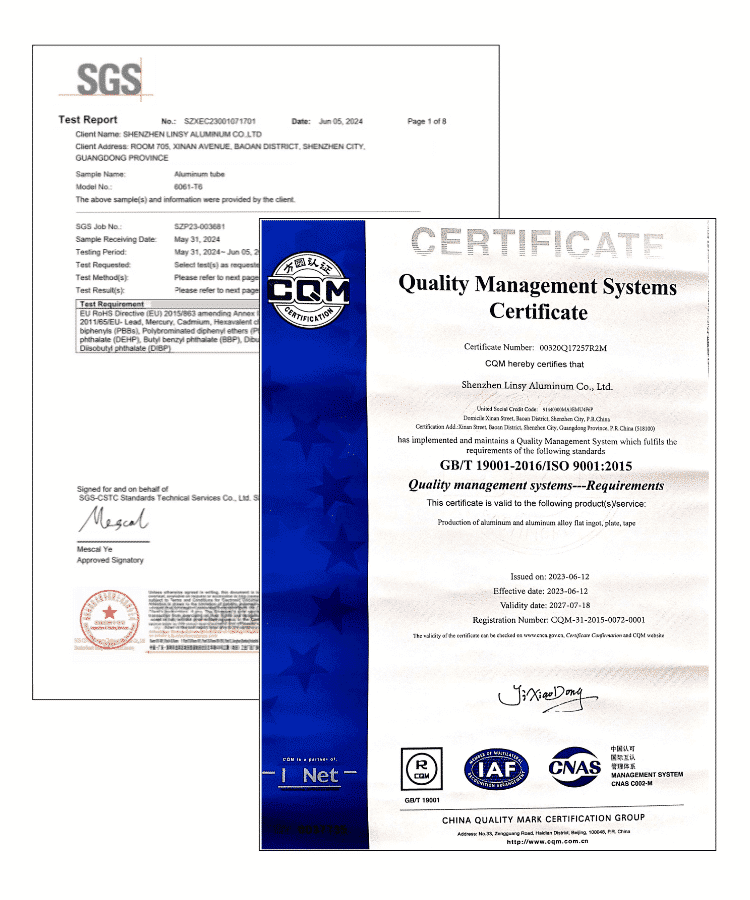
Every order ships with an MTC reporting alloy, temper, side and mechanical results. For marine and classified work, state H116 or H321 and the standard on the enquiry so the certificate matches what the surveyor expects — and name the society and certificate format, because that cannot be produced after the material ships. Third-party testing is available on request; production runs under ISO 9001, ISO 14001 and ISO 45001 certified systems.
The two questions that decide most 5083 orders are the temper — H116/H321 for anything classed, H111 for general use — and whether the part is welded, because the filler and the temper need to be confirmed together rather than separately.
To quote in one round, send: side × length, temper (H116 or H321 for surveyed work), survey requirement, end finish, and the destination.
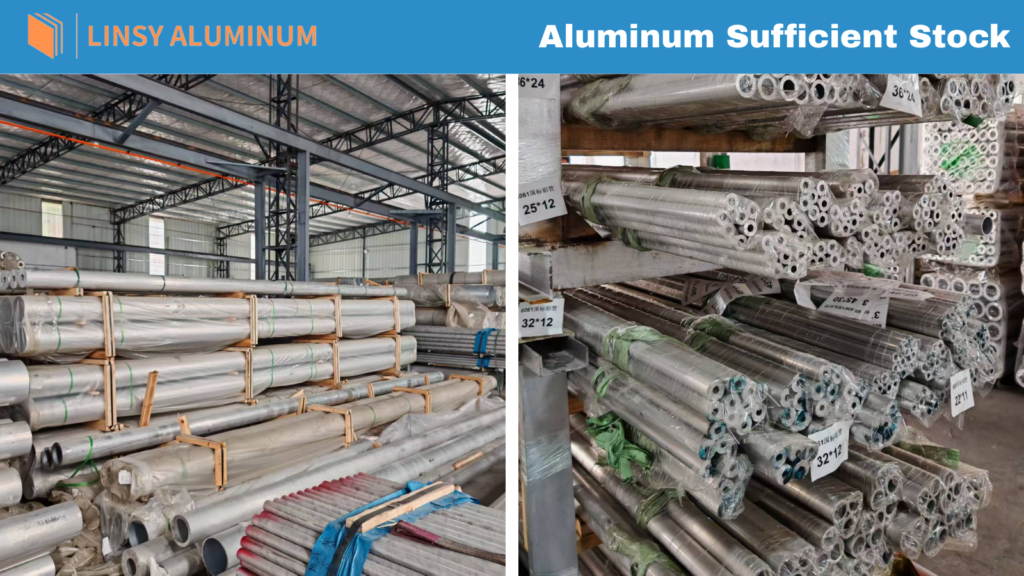
Shenzhen-based aluminum factory, more than 20 years in the industry, supplying 1000–8000 series alloys in standard specifications and custom sizes.
Q: H116 or H321 for a hull stiffener?
A: Both are stabilised marine tempers and both are accepted. What matters is not substituting H111 — it is not the marine condition and a surveyor will reject it.
Q: Can 5083 square bar be heat treated?
A: No. Strength comes from strain hardening and the stabilising treatment; welding returns the joint area towards annealed.
Q: Why 5083 instead of 5052?
A: About 40% more yield strength in the same environment, plus the surveyed marine tempers. Use 5052 where the part is lighter and heavily formed.
Q: What filler for welding 5083?
A: 5356 as standard, 5183 where higher weld strength is needed. Do not use 4043 — the silicon reacts with the magnesium in this alloy.
Q: What sizes do you hold?
A: 6–200 mm side, cut to length from 1,000 to 6,000 mm.
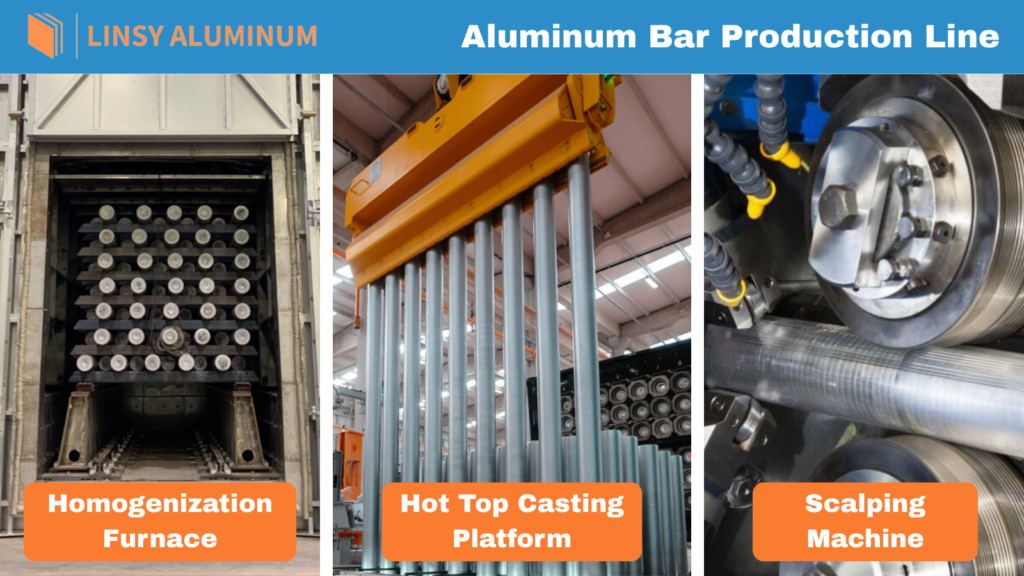
Linsy Advantages
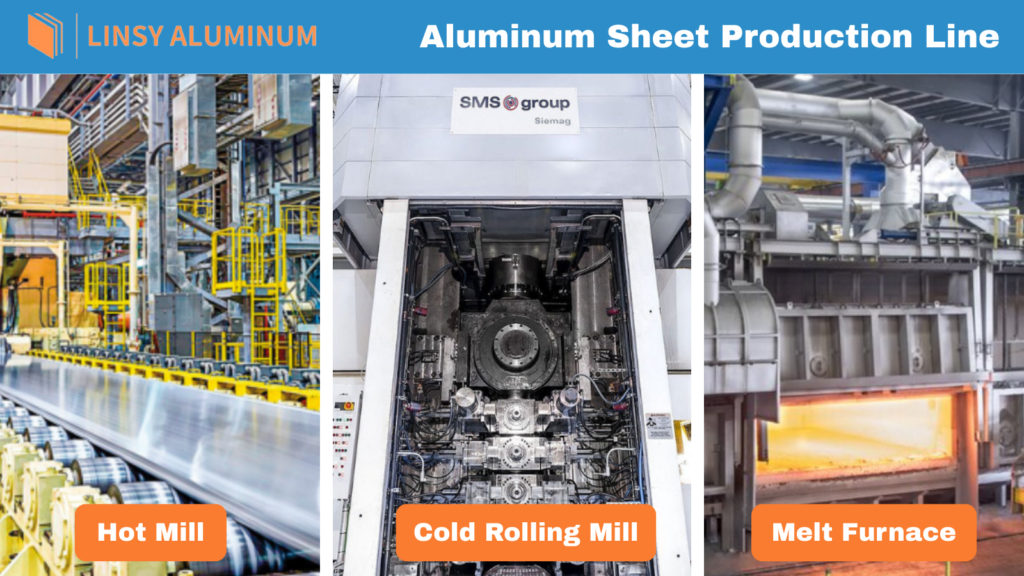
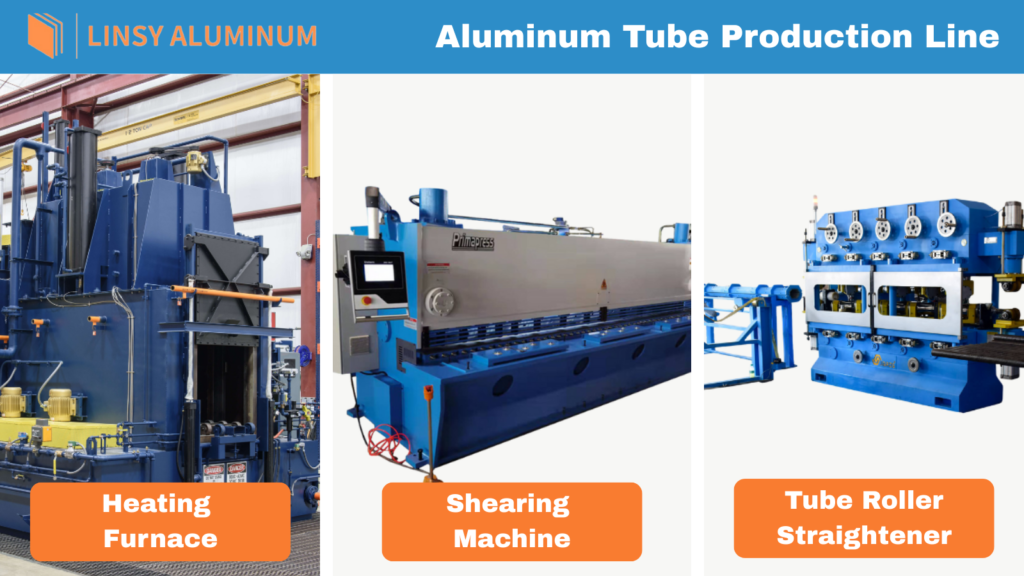
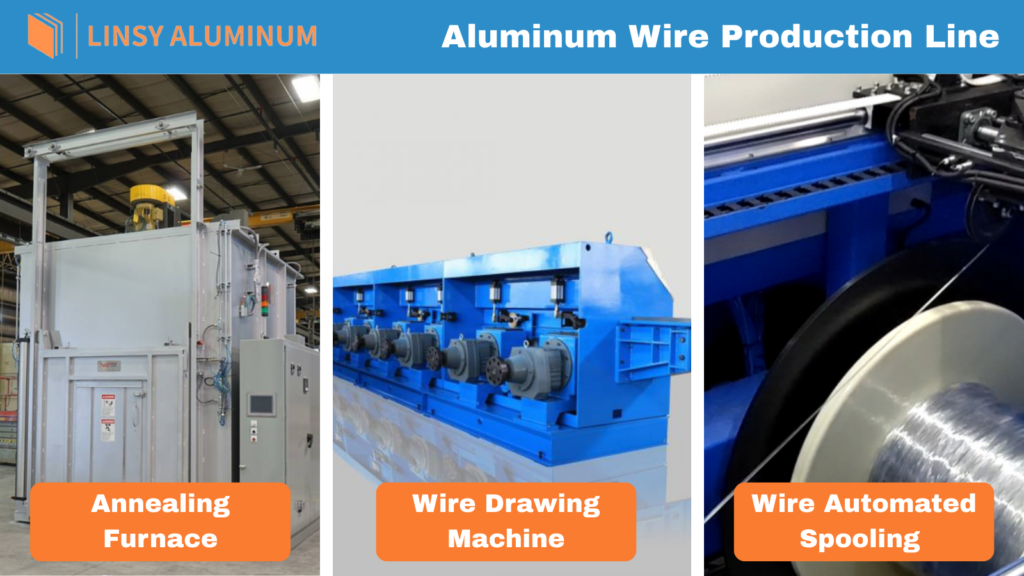
Linsy Aluminum is a leading supplier of aluminum processing products, serving diverse industries including aerospace, general engineering, automotive, marine, shipbuilding and other specialized industrial applications.
We are committed to maintaining the highest standards of quality and environmental responsibility, as demonstrated by our certifications: ISO 9001:2008, ISO 14001:2004 and SGS.