5052 aluminum square bar is solid Al-Mg stock with 2.2–2.8% magnesium, supplied extruded or cold-finished. It is the square bar for parts that are welded and exposed to water: marine fittings, tank internals, truck body spacers. Welding softens it with no heat treatment to recover it.
Extruded: 6–100 mm side
Cold-finished: 6–80 mm side
Tempers: O / H32 / H34
Standard: ASTM B221
Quality documents: MTC report with every order
5052 aluminum square bar is solid square stock in non-heat-treatable Al-Mg with 2.2–2.8% magnesium, supplied either extruded or cold-finished. It is the square bar for parts that are welded, exposed to water, or both: marine fittings, tank internals, truck body spacers, brackets on dock and boat structures. Strength comes from strain hardening, so the temper you buy is the strength you keep, and welding softens it with no heat treatment to recover it. Alloy data: 5052 aluminum alloy.
| Route | Tempers | Side (mm) | Length (mm) |
|---|---|---|---|
| Extruded | O, H32, H34 | 6 – 100 | 1,000 – 6,000, cut to length |
| Cold-finished | O, H32, H34 | 6 – 80 | 1,000 – 6,000, cut to length |
Two routes, two products. Extruded is cheaper and runs to a wider size, but the corners are radiused and the tolerance is an extrusion tolerance. Cold-finished is drawn or machined to a tighter tolerance and better straightness with sharper corners — the right choice when the bar slides, locates, or is held in a collet. Both are supplied to ASTM B221.
| Temper | Tensile (MPa) | Yield (MPa) | Elongation | Condition |
|---|---|---|---|---|
| O | 172 – 214 | ≥ 66 | 18 – 20% | Annealed, maximum formability |
| H32 | 214 – 262 | ≥ 159 | 5 – 9% | Quarter hard, stabilised |
| H34 | 234 – 283 | ≥ 179 | 4 – 7% | Half hard |
Typical values; confirm against the MTC. Density 2.68 g/cm³, elastic modulus 70 GPa. Because 5052 is not heat-treatable, there is no ageing step to recover strength after welding — welded assemblies are designed on the annealed strength of the joint.
H32 is the workhorse: enough strength to hold a thread and carry a bracket load, enough ductility for minor fitting. H34 adds about 20 MPa at noticeably less formability — for parts cut and assembled, not worked.
O is for forming and for anything bent or rolled before welding. On a fully welded part, buying H32 often buys nothing that survives the process.
| Alloy / temper | Tensile (MPa) | Yield (MPa) | Where it fits |
|---|---|---|---|
| 5052-H32 | 214 – 262 | ≥ 159 | Marine fittings, tank internals, welded brackets |
| 5083-H116 / H321 | 305 | 215 | Heavier marine structure, surveyed work |
| 6061-T6 / T6511 | 310 | 276 | Machine parts, keys, tapped posts, dry service |
5052 is the middle option: less strong, but the most forgiving when welded and left in salt water. Choose it when the part is welded and the load is moderate; step to 5083 for more strength in the same environment, and to 6061 when the part is machined and stays dry.
Solid versus tube is a question of function. Tube gives more stiffness per kilogram; solid bar gives a body that can be threaded, keyed and clamped without collapsing. A tank stiffener is usually tube; a tapped spacer or a key is always solid.
Extruded versus cold-finished is a question of fit. If the bar has to slide into a channel, be gripped in a collet, or sit square on a fixture, cold-finished — the tighter tolerance and sharper corner are the point. If it is a spacer or a welded bracket, extruded is cheaper and adequate.
Where these small-to-medium square bars most often end up is as spacers and standoffs in truck body and trailer assemblies, and there the useful property is that 5052 tolerates the weld and the weather at the same time. A 6061 spacer would be stronger but would need protection at every weld; a 3003 spacer would be cheaper but would not carry the clamp load.
Cutting: sawn to length, cut-to-size as standard; deburred on request.
Machining: 5052 is softer and gummier than 6061 and will build up on the tool edge if the feed is light. Sharp polished carbide, generous coolant, no dwelling. Threads cut cleanly.
Welding: very good with 5356 filler. The weld zone returns near O condition, so design welded assemblies on the annealed joint strength.
Surface: mill finish, polished, or anodized — 5052 anodizes bright and white, which is why it is used on visible marine fittings.
Marine fittings and brackets, tank stiffeners and internals, truck and trailer body spacers, dock and boat hardware, walkway supports, chemical equipment parts, anodized decorative sections, general welded fabrication.
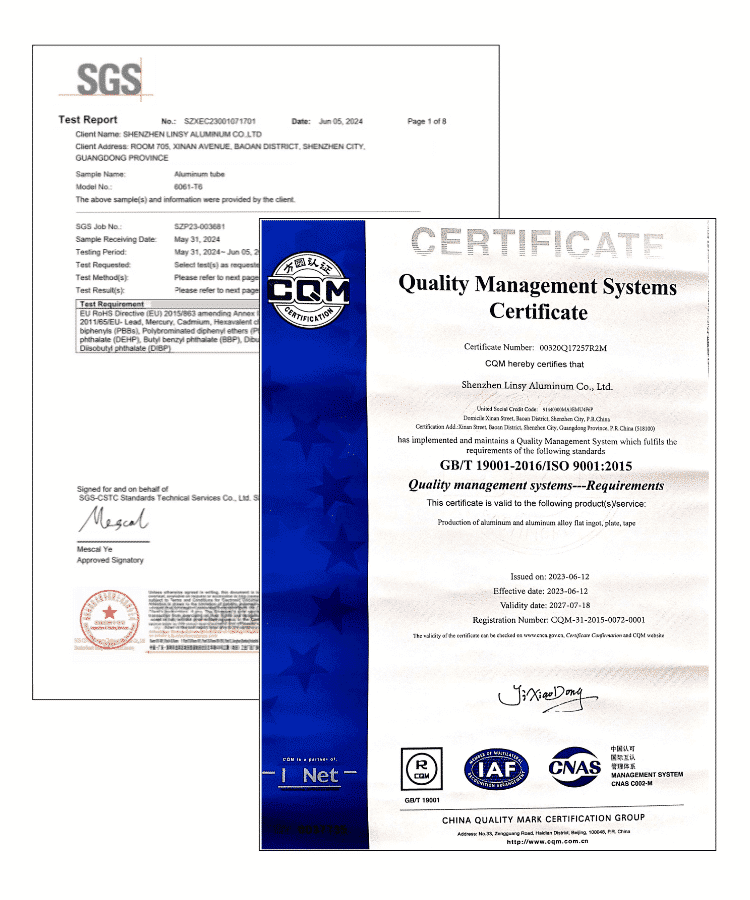
Every order ships with an MTC reporting alloy, temper, side and mechanical results against ASTM B221. Third-party testing is available on request at additional cost; production runs under ISO 9001, ISO 14001 and ISO 45001 certified systems.
Two things decide most of these orders: whether the part is welded (which makes the temper largely irrelevant at the joint) and whether it has to fit (which decides extruded against cold-finished). Answer those and the quotation is straightforward.
To quote in one round, send: side × length, temper (H32 general, O if formed), extruded or cold-finished, tolerance and corner requirement if the bar has to fit, end finish, and the destination.
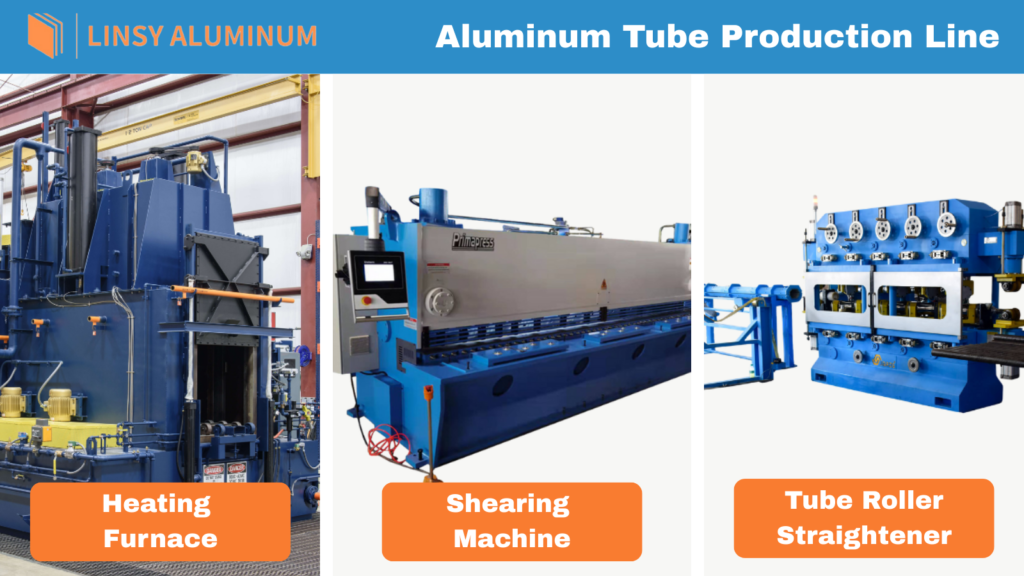
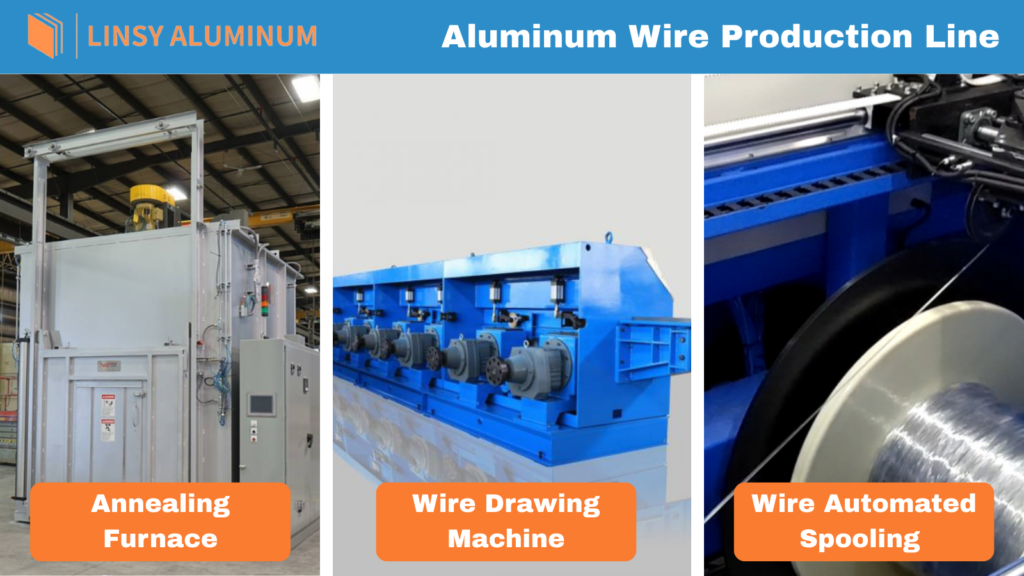
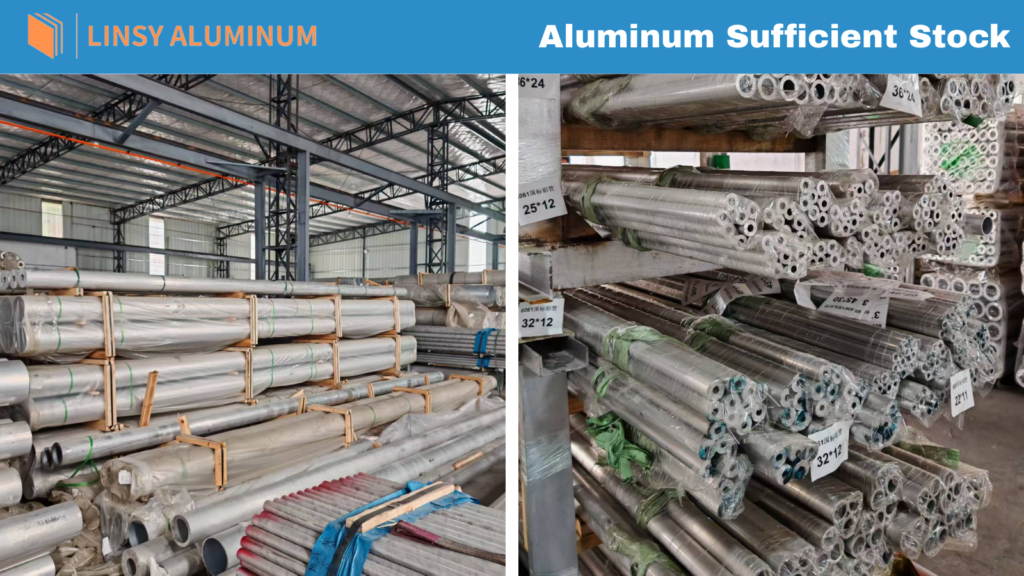
Shenzhen-based aluminum factory, more than 20 years in the industry, supplying 1000–8000 series alloys in standard specifications and custom sizes.
Q: Extruded or cold-finished — how do I choose?
A: Cold-finished when the dimension is functional: tighter tolerance, sharper corners, better straightness. Extruded when the bar is a spacer or a welded bracket and cheaper is better.
Q: Can 5052 square bar be heat treated?
A: No. Strength comes from strain hardening only; welding or forming softens it permanently.
Q: Is 5052 good for marine parts?
A: Yes — it welds easily and resists salt water. For higher stress in the same environment, 5083-H116 or H321 is the next step up.
Q: Square bar or square tube for a stiffener?
A: Tube, normally — more stiffness per kilogram. Solid bar is for parts that need a thread, a keyway or a milled face.
Q: What sizes do you hold?
A: Extruded 6–100 mm side, cold-finished 6–80 mm, cut to length from 1,000 to 6,000 mm.
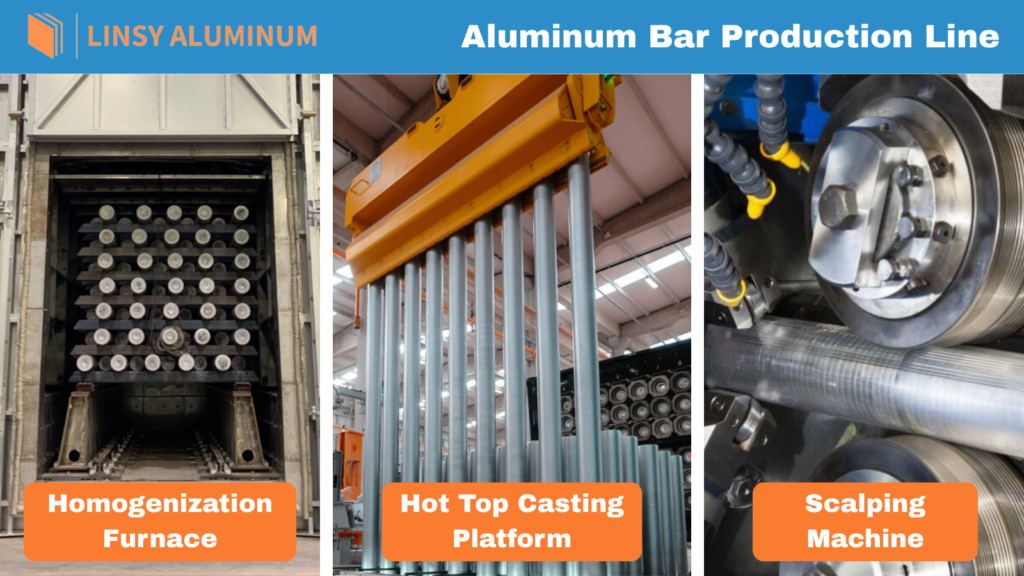
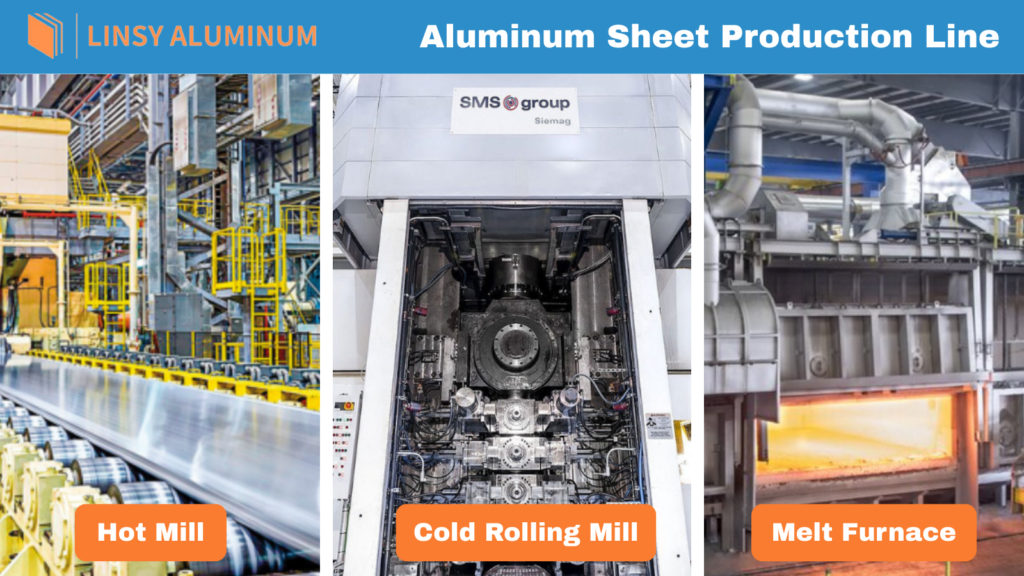
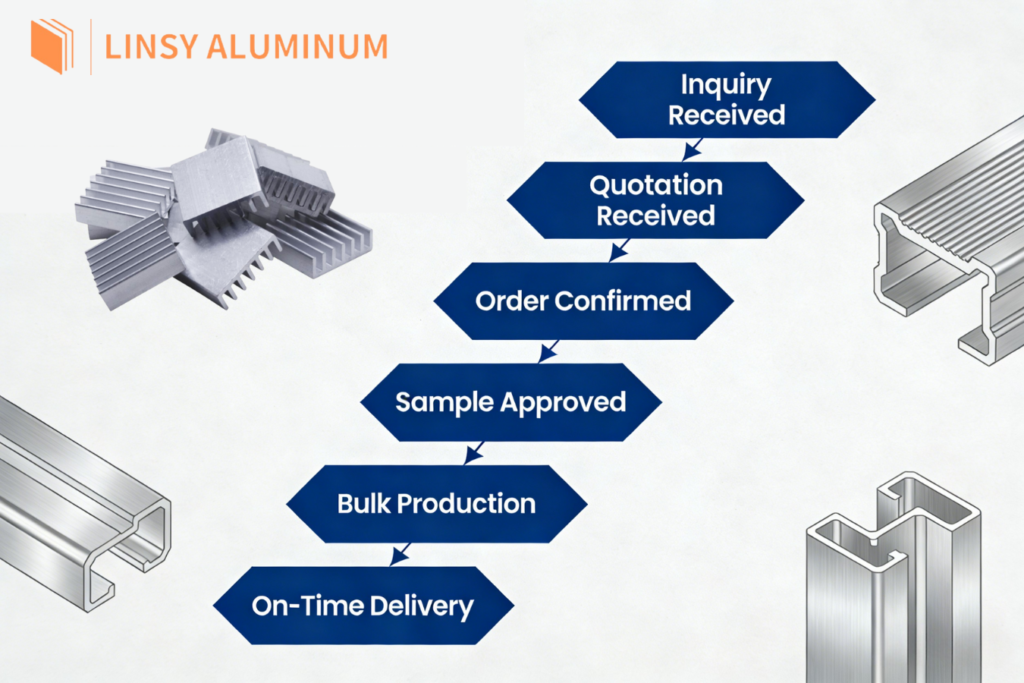
Linsy Advantages
Linsy Aluminum is a leading supplier of aluminum processing products, serving diverse industries including aerospace, general engineering, automotive, marine, shipbuilding and other specialized industrial applications.
We are committed to maintaining the highest standards of quality and environmental responsibility, as demonstrated by our certifications: ISO 9001:2008, ISO 14001:2004 and SGS.