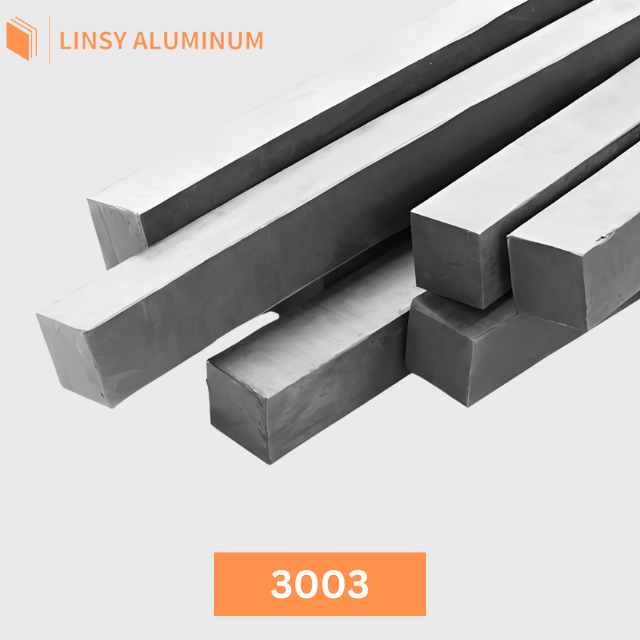


3003 aluminum square bar is solid Al-Mn stock, about 20% stronger than 1100 with the same workability — but note the range: 5–12 mm side only. This is spacer, trim and light-fabrication stock, not structural. Above about 12 mm we quote 6063 or 5052 instead.
Side: 5–12 mm
Length: 1,000–4,000 mm
Weight: 0.07–0.39 kg/m
Tempers: O / H14 / H22
Quality documents: MTC report with every order
3003 aluminum square bar is solid square stock in non-heat-treatable Al-Mn with 1.0–1.5% manganese — about 20% stronger than 1100 with the same excellent workability. This is a small-section product: our 3003 square bar runs from 5 to 12 mm side, which puts it in spacer, trim and light-fabrication territory rather than structural work. Strength comes from strain hardening only, so any weld or braze softens it permanently. Alloy data: 3003 aluminum alloy.
| Side (mm) | Length (mm) | Approx. weight (kg/m) | Tempers |
|---|---|---|---|
| 5 – 12 | 1,000 – 4,000 | 0.07 – 0.39 | O / H14 / H22 |
Be aware of the range before you design around it. 3003 square bar is a small-section product here — above about 12 mm side we would quote 6063 or 5052 square bar instead, which are stronger and available in larger sections. If you need a big 3003 section, tell us what it is for; in most cases another alloy is the better answer and we would rather say so at enquiry.
The weight column is there because these sizes are often bought by length for freight and handling estimates: at 5 mm side a bar is 0.07 kg/m, at 12 mm it is 0.39 kg/m, a factor of five across the range.
| Temper | Tensile (MPa) | Yield (MPa) | Elongation | Hardness (HB) |
|---|---|---|---|---|
| O | 95 – 130 | ≥ 35 | ≥ 25% | 28 |
| H14 | 140 – 180 | ≥ 115 | ≥ 5% | 40 |
| H22 | ≥ 185 | ≥ 165 | ≥ 3% | 55 |
Typical values; confirm against the MTC. Density 2.73 g/cm³, elastic modulus 69 GPa. Because 3003 cannot be heat treated, there is no ageing step to recover strength after welding or forming.
H14 is the general-purpose condition for spacers, trim and light brackets: enough strength to hold shape, enough ductility to bend. H22 gives more strength with some ductility retained, and suits parts lightly formed then used. O is for forming — bending, rolling, twisting — and is the condition where 3003 shows its other strength: it brazes better than it welds.
| Alloy / temper | Tensile (MPa) | Yield (MPa) | Where it fits |
|---|---|---|---|
| 3003-H14 | 140 – 180 | ≥ 115 | Small spacers, trim, light brackets, formed parts |
| 5052-H32 | 214 – 262 | ≥ 159 | Marine, welded parts, larger sections |
| 6063-T5 / T6 | 185 / 240 | 145 / 215 | Decorative posts, trim, larger sections with good finish |
3003 is the cheapest and most workable of the three, and the weakest. Choose it for small formed or brazed parts where weight and load are light; step to 6063 for anything visible and larger, and to 5052 as soon as there is salt water or real load.
Solid versus tube: tube is stiffer per kilogram, but at these small sizes the wall would be too thin to thread or clamp, so a solid bar is usually the practical choice for a spacer or a small block.
Route: 3003 square bar is extruded and drawn to size. Because the range stops at 12 mm, the corner radius is proportionally significant — at 5 mm side the radius is a large fraction of the face, so a part that has to sit flush should be dimensioned with that in mind.
Because these sections are small, the practical issues are different from larger bar: a burr left on a 5 mm square is proportionally huge and will not sit flat in a fixture, and the cut length tolerance is a larger fraction of the part than on a 50 mm bar. If the parts feed an assembly line, specify deburred and give us the length tolerance you can accept.
Cutting: sawn to length; deburred on request. At these sizes burrs are proportionally large, so deburring is worth specifying on parts that will be handled.
Machining: soft and gummy, similar to 5052. Sharp polished carbide, high rake, firm feed; light cuts smear. Threads form but strip at low torque, so thread engagement has to be designed for the alloy.
Joining: brazing is the strong suit; welding is good with 4043 or 1100 filler. Both return the joint area towards annealed with no heat treatment to recover it.
Surface: mill finish or anodized — it anodizes with a slightly warmer tone than 6xxx because of the manganese.
Spacers and standoffs, light brackets, trim and moulding sections, electrical and electronic mounting hardware, small formed parts, brazed assemblies, decorative inserts, signs and nameplate supports.
Every order ships with an MTC reporting alloy, temper, side and mechanical results against ASTM B221. Third-party testing is available on request at additional cost; production runs under ISO 9001, ISO 14001 and ISO 45001 certified systems.
Because the section is small, the deciding factors are usually deburring and length tolerance rather than strength — so state both rather than leaving them to the shop floor.
To quote in one round, send: side × length, temper (H14 general, O for forming), fit requirement if the part must sit flush, end finish, and the destination.
Shenzhen-based aluminum factory, more than 20 years in the industry, supplying 1000–8000 series alloys in standard specifications and custom sizes.
Q: Why does 3003 square bar only go to 12 mm?
A: Because this is a small-section product for spacers and trim. Above about 12 mm we quote 6063 or 5052 instead — stronger and available in larger sections.
Q: Can 3003 square bar be heat treated?
A: No. Strength comes from strain hardening only, and welding or brazing returns the joint area towards annealed.
Q: Can it be threaded?
A: It can, but threads strip at low torque in this alloy. Design the engagement accordingly, or use 6061 where the thread carries load.
Q: How much does it weigh?
A: About 0.07 kg/m at 5 mm side and 0.39 kg/m at 12 mm — a factor of five across the range, which matters for freight estimates.
Q: What sizes do you hold?
A: 5–12 mm side, cut to length from 1,000 to 4,000 mm.
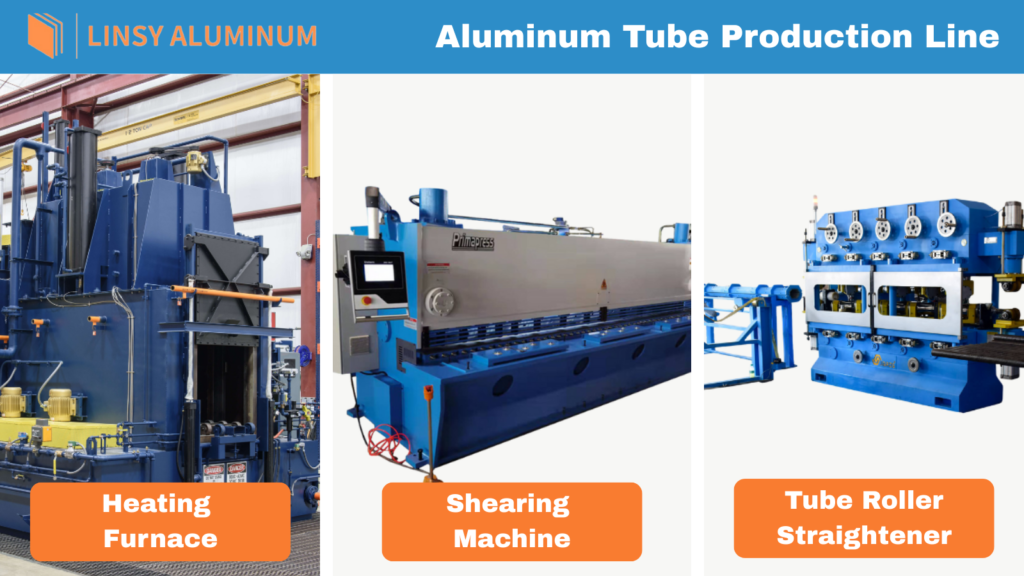
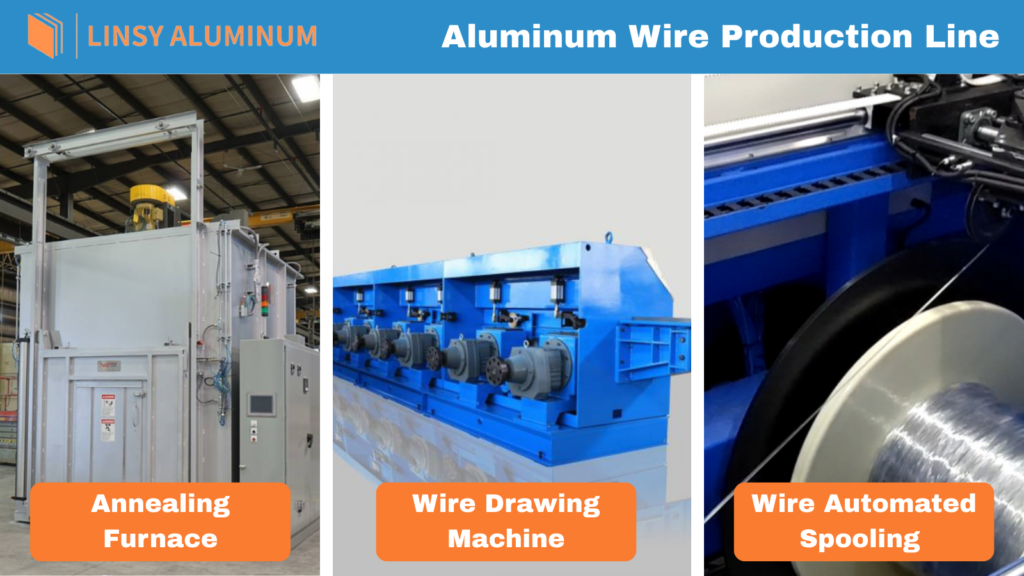
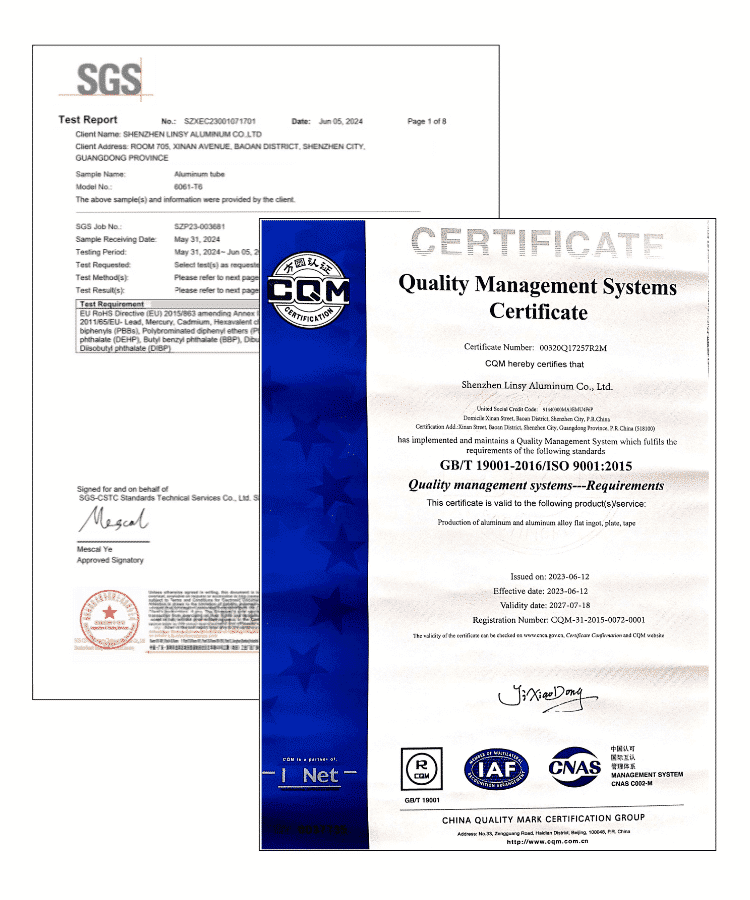
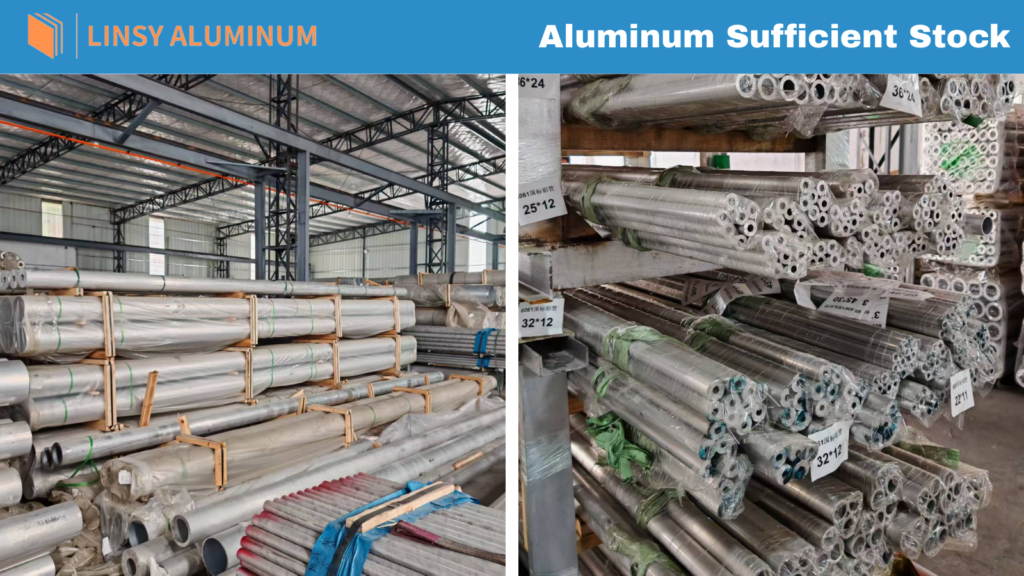
Linsy Advantages
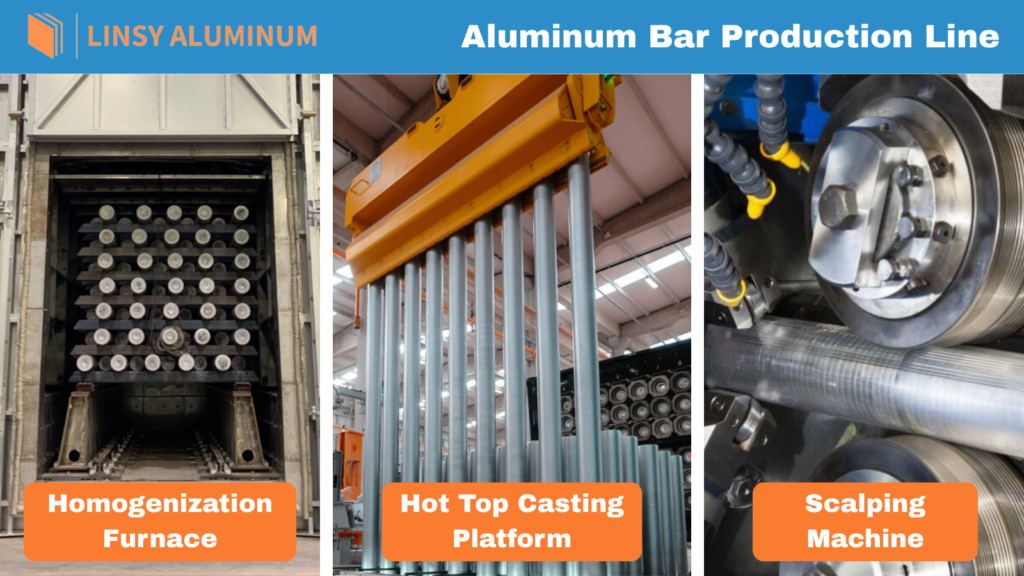
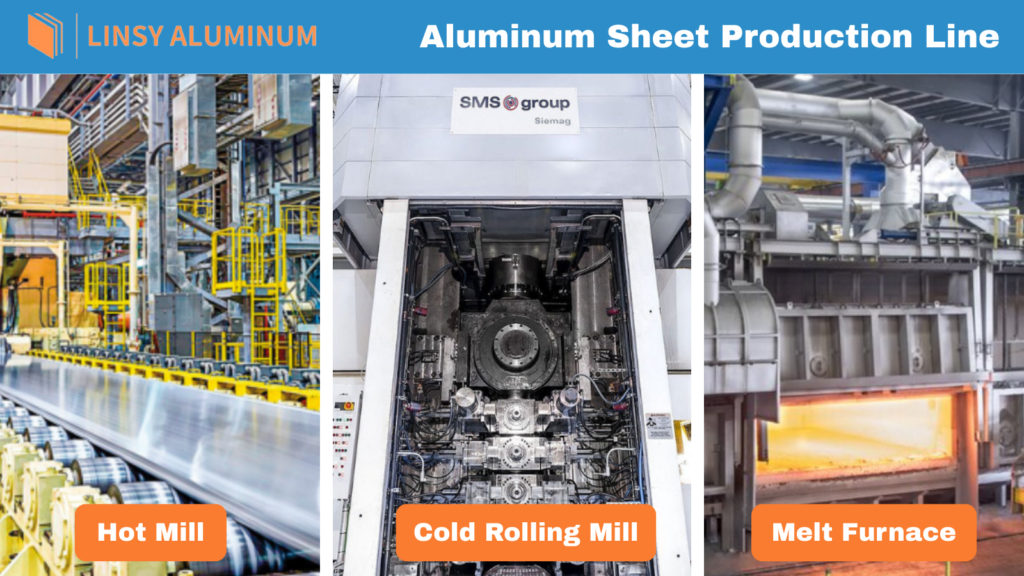
Linsy Aluminum is a leading supplier of aluminum processing products, serving diverse industries including aerospace, general engineering, automotive, marine, shipbuilding and other specialized industrial applications.
We are committed to maintaining the highest standards of quality and environmental responsibility, as demonstrated by our certifications: ISO 9001:2008, ISO 14001:2004 and SGS.