6063 aluminum square bar is solid square stock chosen for clean extrusion and the best anodized finish of any common alloy. It is the default for visible square bar: decorative posts, trim, furniture components. T6 gives 240 MPa against 310 for 6061, and it is not strong in thread.
Side: 8–150 mm
Length: 1,000–6,000 mm
Tempers: T5 / T6
Standards: ASTM B221, EN 755
Quality documents: MTC report with every order
6063 aluminum square bar is solid square stock in Al-Mg-Si with lower alloy content than 6061, chosen for two reasons: it extrudes into clean square sections with tight corners and it anodizes better than any other common alloy. That makes it the default for visible square bar — decorative posts, trim, furniture components, display hardware, handrail infill. It is not a structural alloy in the way 6061 is: T6 gives 240 MPa against 310, and it machines less cleanly. Alloy data: 6063 aluminum alloy.
| Item | Range |
|---|---|
| Side length | 8 – 150 mm |
| Length | 1,000 – 6,000 mm, custom cut |
| Tempers | T5 / T6 |
| Standards | ASTM B221 (extruded bar), EN 755 |
6063 square bar is extruded, so the stress-relieved condition is T5 — not the T6511 used on 6061, and certainly not T651. A drawing that carries a plate designation onto a 6063 bar order is a copy-paste error worth catching before the certificate is written.
| Temper | Tensile (MPa) | Yield (MPa) | Elongation | Condition |
|---|---|---|---|---|
| O | 90 | 55 | 25% | Annealed |
| T5 | 185 | 145 | 12% | Cooled from extrusion and aged |
| T6 | 240 | 215 | 12% | Solution treated and artificially aged |
Typical values; confirm against the MTC. Density 2.70 g/cm³, elastic modulus 69 GPa. For a decorative post or a trim section these numbers are rarely the constraint — finish, corner consistency and straightness are what the specification is really about.
T5 is the volume temper for architectural and decorative work: cheap, good surface, adequate for posts, trim and furniture hardware. T6 adds about 55 MPa for parts that carry a load, at some cost in finish because the quench disturbs the section. There is no T4 or T52 in our 6063 square bar range.
| Alloy / temper | Tensile (MPa) | Yield (MPa) | Where it fits |
|---|---|---|---|
| 6063-T5 / T6 | 185 / 240 | 145 / 215 | Decorative posts, trim, furniture, display hardware |
| 6061-T6 / T6511 | 310 | 276 | Machine parts, keys, jigs, tapped posts |
| 5052-H32 | 214 – 262 | ≥ 159 | Marine, welded parts, salt-water service |
The decision is about finish and corner quality, not strength. 6063 when the bar is seen and will be anodized — it holds a cleaner corner and takes a more even film. 6061 when the bar is machined or threaded; 5052 when it is welded and wet.
Solid square bar versus square tube is a decision about function. Tube gives more stiffness per kilogram because material sits away from the neutral axis; solid bar gives a body that can be threaded, keyed and clamped without crushing. If the part is a post, a spacer or a trim section, either can work; if it has to hold a screw thread, it has to be solid.
6063 square bar is normally extruded rather than cold-finished, because the alloy’s value here is a clean extrusion and a good anodized surface rather than a tight dimensional tolerance. Where a decorative section has to fit precisely, that is a conversation about tolerance class rather than about switching route.
Two limits worth knowing before you select 6063 for a functional part: it is not strong in thread, and it is not designed for repeated assembly. A decorative post that is screwed together once is fine; a component that is taken apart and rebuilt will wear the thread and eventually strip it. For that, use 6061.
Cutting: sawn to length and cut-to-size; deburred on request. For visible work, state whether the sawn end is acceptable or has to be milled — a sawn end on an anodized post is noticeable.
Machining: softer and gummier than 6061 — it cuts more like 5052. Sharp polished carbide, high rake, firm feed; light cuts smear rather than cut, and built-up edge ruins the finish on a part whose finish is the point.
Threading: possible in solid bar, but 6063 is not strong in thread; where the thread carries load, specify 6061.
Surface: the reason to specify 6063. It anodizes to a bright, uniform film in clear or any dye lot with minimal batch-to-batch variation, and it polishes well.
Decorative posts and uprights, furniture components, display and exhibition hardware, handrail infill and balusters, trim sections, signage supports, lighting components, spacer blocks where finish matters more than strength.
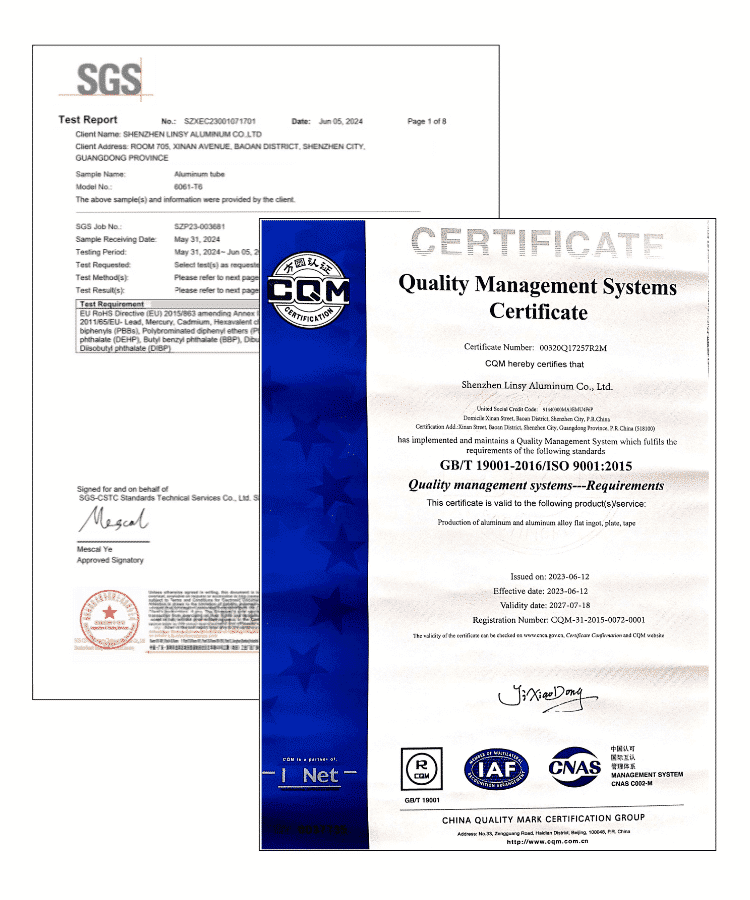
Every order ships with an MTC reporting alloy, temper, side and mechanical results. Where the bar is decorative, state the anodizing requirement — clear or dyed, film thickness, and colour consistency across lots. Third-party testing is available on request; production runs under ISO 9001, ISO 14001 and ISO 45001 certified systems.
For visible work, the anodizing requirement is part of the specification, not a finishing note: clear or dyed, film thickness, and whether several lengths have to match each other.
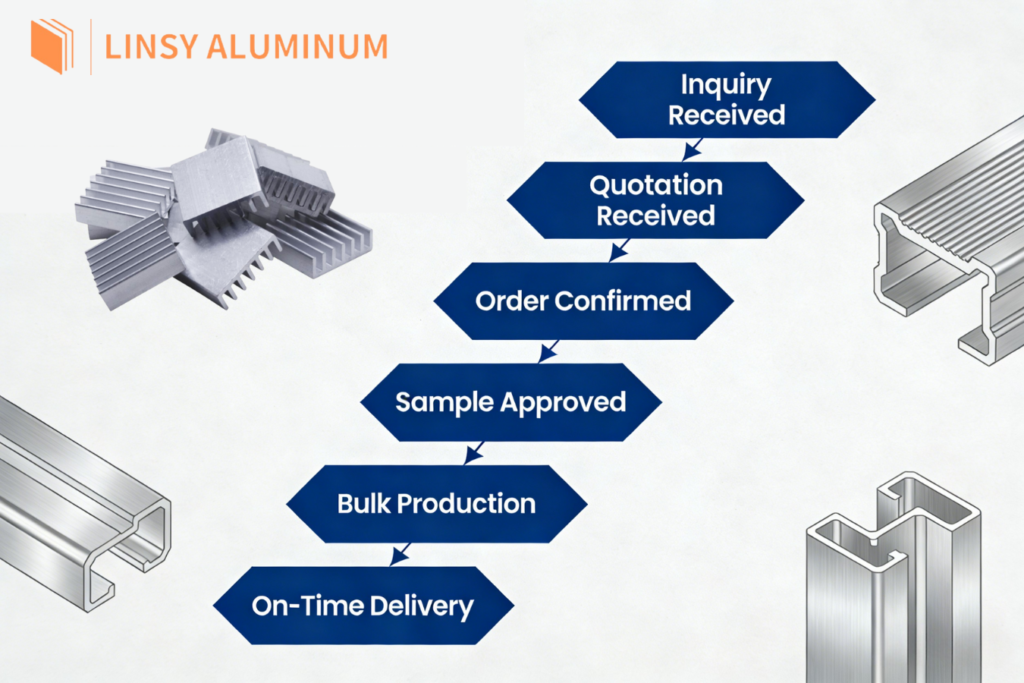
To quote in one round, send: side × length, temper (T5 or T6), corner and tolerance requirement if it has to fit, anodizing (clear, dyed, film thickness), end finish, and the destination.
Shenzhen-based aluminum factory, more than 20 years in the industry, supplying 1000–8000 series alloys in standard specifications and custom sizes.
Q: Is 6063 square bar strong enough for a structural post?
A: Usually not. T6 gives 240 MPa against 310 for 6061. 6063 is chosen for finish and corner quality; if the post carries load, check the numbers.
Q: Can I thread 6063 square bar?
A: It can be threaded, but 6063 is not strong in thread. Where the thread carries load or is assembled repeatedly, specify 6061.
Q: Why does 6063 anodize better than 6061?
A: Lower alloying content gives a more uniform film and less colour variation between batches — which is what an architectural specification tests for.
Q: Square bar or square tube?
A: Bar if the part needs a thread, a keyway or a milled face; tube if it is a frame member and stiffness per kilogram is the point.
Q: What sizes do you hold?
A: 8–150 mm side, cut to length from 1,000 to 6,000 mm.
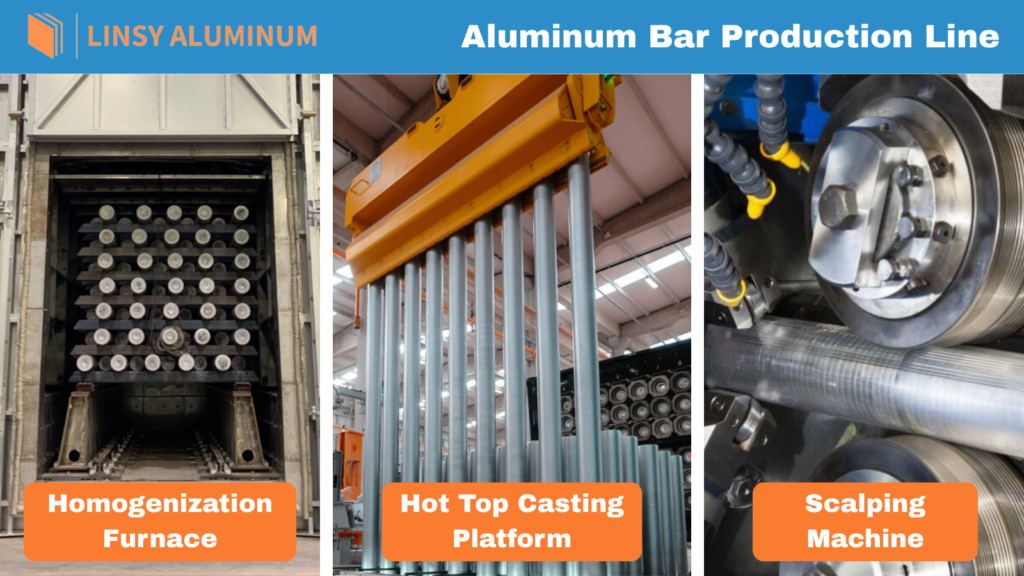
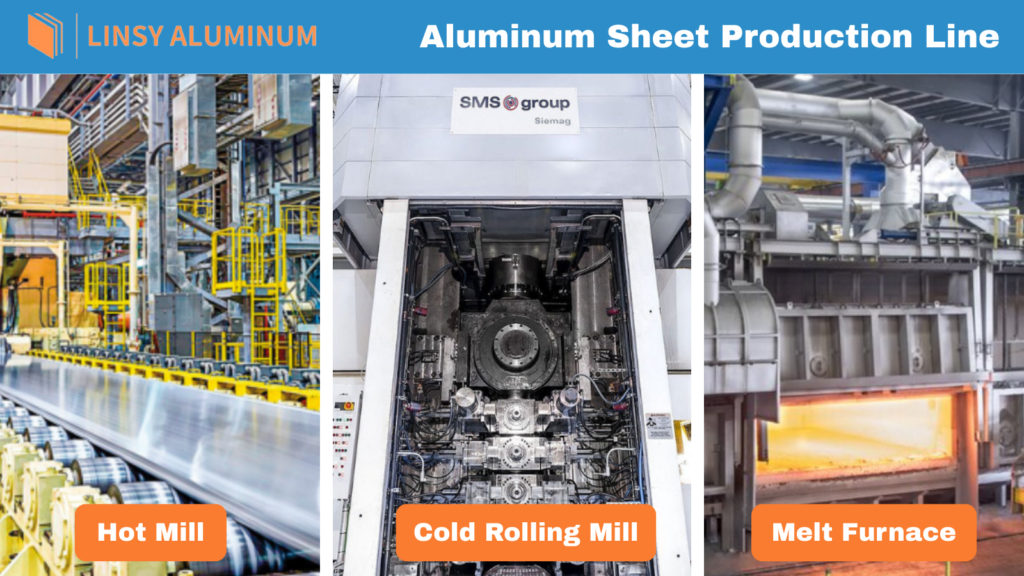
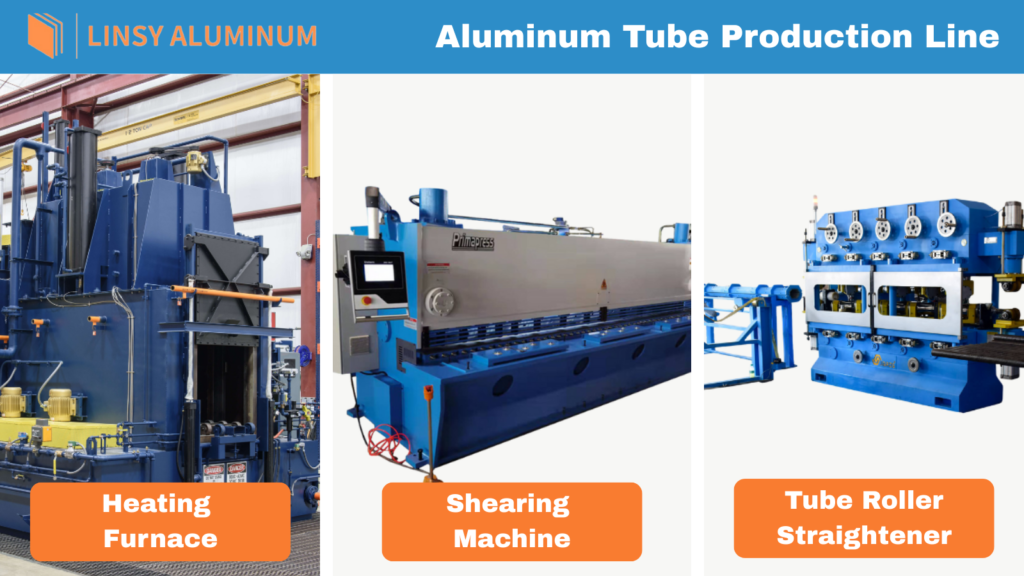
Linsy Advantages
Linsy Aluminum is a leading supplier of aluminum processing products, serving diverse industries including aerospace, general engineering, automotive, marine, shipbuilding and other specialized industrial applications.
We are committed to maintaining the highest standards of quality and environmental responsibility, as demonstrated by our certifications: ISO 9001:2008, ISO 14001:2004 and SGS.