소개
5356은 표준 5% 마그네슘 합금입니다 알루미늄 5xxx 계열 모재 용접용 필러 합금입니다 — 구조용 단조 등급이 아닌 필러 와이어, 로드 및 전극 합금입니다. 높은 Mg 함량(4.5–5.5%)은 5083, 5086, 5056 및 5456의 화학 조성과 일치하여 용접부의 내식성 및 기계적 성능이 모재와 일관되게 유지됩니다. 본 가이드는 사양, 템퍼 변형 및 다양한 모재와 사용 조건에 따른 5356과 4043 선택 방법을 다룹니다.
화학 성분
- 마그네슘: 4.5–5.5%
- 망간(Mn): 0.05–0.2%
- 철: ≤0.4%
- 규소: ≤0.25%
- 구리: ≤0.1%
- 크롬: 0.05–0.2%
- 강도 및 고온 성능
- 티타늄: 0.06–0.2%
- 잔여: 알루미늄
주요 속성
필러 성능
5356은 5xxx 모재의 화학 조성 및 부식 전위와 일치하는 용접 비드를 형성하도록 용융, 유동 및 응고되도록 설계되었습니다. 약 5%의 Mg 수준은 용접 후 상태에서 5083 및 5086과 일관된 용착 인장 강도를 제공합니다 — 희석률 및 용접 파라미터에 따라 일반적으로 240–290 MPa의 인장 강도를 나타냅니다. 낮은 실리콘 함량은 Mg-Si 계에서 형성될 수 있는 취성 금속간 화합물을 방지합니다.
내식성 호환성
5356을 4043과 같은 범용 필러보다 선택하는 주된 이유는 전기화학적 호환성입니다: 5356으로 용접된 5xxx 이음부는 필러와 모재가 유사한 부식 전위를 공유하므로 해수에서 갈바닉 부식을 방지합니다. 예를 들어, 해양 환경에서 4043으로 5083을 용접하면 더 양극성인 용접 비드가 생성되어 우선적으로 부식됩니다 — 이는 선박 및 보트 건조에서 실제 파손 위험입니다.
전단 강도
일반적인 횡전단 강도는 약 180–190 MPa(26 ksi)로 4043 필러(일반적으로 약 140 MPa)보다 높으며, 설계 하중이 용접부 목(목두께)을 통과하는 해양 및 자동차 응용 분야의 대부분의 구조 용접물에 충분합니다.
양극산화 반응
5356으로 용접된 이음부는 4043으로 용접된 이음부보다 더 균일한 양극산화 외관을 생성합니다. 이는 Mg이 풍부한 용접 비드가 Mg이 풍부한 모재와 유사하게 양극산화에 반응하기 때문입니다. 외관이 중요한 건축용 및 장식용 알루미늄 용접의 경우 5356이 색상 일치도가 더 우수합니다.
5356 vs 4043 필러
이는 알루미늄 용접에서 가장 일반적인 필러 선택 결정입니다:
- 5356: 5xxx 모재(5083, 5086, 5052, 5454, 5456)의 경우 내식성, 용접 강도 및 양극산화 일치도가 중요합니다. 표준 해양 및 구조용 필러입니다.
- 4043: 6xxx 모재(6061, 6063) 및 범용 알루미늄 제작의 경우. 융점이 낮고 유동성이 우수하며 고온 균열 위험이 적습니다 — 그러나 강도가 낮고 5xxx 모재와의 내식성 호환성이 떨어집니다.
원칙: 필러의 Mg 수준을 모재에 맞추십시오. 5xxx 모재 → 5356 필러. 6xxx 모재 → 양극산화 및 사용 조건에 따라 4043 또는 5356. 5xxx 해양 구조물 용접에 4043을 절대 사용하지 마십시오 — 갈바닉 부식 불일치는 알려진 파손 모드입니다.
일반적인 템퍼
- O: 소둔(O) — 와이어 공급 및 스풀링을 위한 최대 성형성. 가장 연질 상태.
- H18: 완전 경질 — 최고 강도 상태, 아크 발생 전에 용접 건을 통해 과도한 변형 없이 인발되는 와이어에 일반적으로 사용됩니다.
- H32: 1/4 경질 및 안정화(H32) — 공급성과 적정 강도 수준의 균형을 유지하며, 용접사가 수동으로 공급하는 수동 TIG 로드에 선호됩니다.
적용 가능/불가 판단 기준
이 빠른 참조를 사용하여 5356이 작업에 적합한 필러인지 결정하십시오.
사용 가능 — 다음 경우 5356을 사용하십시오:
- 모재가 5xxx 합금(5083, 5086, 5052, 5454, 5056, 5456)인 경우 — 5356은 Mg 함량이 일치하며 용접부의 내식성 호환성을 유지합니다. 일반적인 적용 분야: 선박 패널, 해양 연료 탱크, 구조용 보트 및 요트 건조.
- 해수 노출 또는 해양 대기가 사용 조건인 경우 — 5356 필러와 5xxx 모재 간의 전기화학적 일치는 용접부 우선 부식을 방지합니다.
- 용접 후 양극산화가 계획되어 있고 용접부 전체의 색상 균일성이 중요한 경우 — 5356은 5xxx 및 많은 6xxx 모재에서 4043보다 우수한 양극산화 일치도를 제공합니다.
- 4043이 제공할 수 있는 것(약 140 MPa)보다 더 높은 용접 상태 전단 강도(약 190 MPa)가 요구되는 경우 — 하중 경로가 용접부 목을 통과하는 구조 용접물은 더 높은 필러 강도의 이점을 얻습니다.
사용 불가 — 다음 경우 5356을 사용하지 마십시오:
- 모재가 실리콘 함량이 높은 6xxx 주조 합금(예: 356, 319)인 경우 — 4043은 표준 주조 수리 필러이며 Si이 풍부한 조성은 주조물의 고온 균열을 방지합니다.
- 내식성 호환성보다 유동성과 균열 저항성이 더 중요한 6061 압출재의 대량 자동 용접 — 4043의 실리콘 함량은 6xxx 생산 용접에서 더 나은 용융풀 유동성과 낮은 고온 균열 민감성을 제공합니다.
- 필러가 용접 이음부 외부의 주요 구조 하중 지지 재료가 되는 경우 — 5356은 단조 구조용 합금이 아니며 베이스 플레이트, 시트 또는 바로 지정해서는 안 됩니다.
애플리케이션
- 해양 — 선박 및 보트 구조 용접, 선체 플레이팅, 연료 및 물 탱크 제작
- 자동차 — 트럭 트레일러, 탱커 차체, 알루미늄 프레임 용접
- 압력 용기 — 내식성 호환성이 요구되는 5083 및 5454 용기 용접물
- 건축 — 양극산화 색상 일치가 사양 요구사항인 용접 알루미늄 구조물
결론
5356 알루미늄 5356은 구조용 합금이 아닙니다 — 5xxx 모재용 표준 용접 필러이며, 약 5%의 Mg 화학 조성이 4043과 같은 범용 필러와 비교하여 동일한 부식 전위, 유사한 용접 상태 강도 및 더 우수한 양극산화 일치도를 제공하기 때문에 선택됩니다. 단점은 필러에 불과하다는 것입니다 — 모재 선택이 엔지니어링 결정을 주도하며, 5356은 용접부가 부품의 나머지 부분과 동일하게 성능을 발휘하도록 따릅니다.
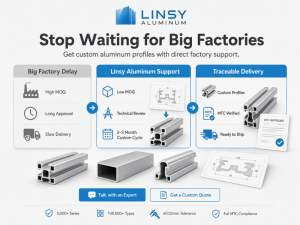
Linsy Aluminum은 5356을 와이어(MIG용 스풀 및 TIG용 절단 길이), 로드 및 전극 형태로 공급하며, 맞춤 직경 및 포장 사양을 낮은 최소 주문 수량으로 제공합니다. MTC 및 성분 인증은 모든 주문에 표준으로 포함됩니다. 프로젝트에 특정 필러 직경 또는 스풀 중량이 포함된 경우 용접 사양을 기술 검토용으로 보내주십시오.
자주 묻는 질문
5356과 4043 필러의 차이점은 무엇입니까?
5356은 5xxx 모재 용접용 Al-5%Mg 필러입니다 — 5083, 5052, 5454 및 유사 합금의 화학 조성 및 부식 전위와 일치합니다. 4043은 6xxx 모재 용접용 Al-5%Si 필러입니다 — 유동성이 우수하지만 강도가 낮고 5xxx 해양 합금과 내식성 호환이 되지 않습니다. 원칙: 5xxx 모재 → 5356; 6xxx 모재 → 4043(또는 양극산화 일치도가 중요하면 5356).
5356을 6061 알루미늄 용접에 사용할 수 있습니까?
예 — 5356은 6061에 사용할 수 있으며 일반적으로 4043보다 우수한 양극산화 색상 일치도를 제공합니다. 그러나 4043은 실리콘 함량이 고온 균열 위험을 줄이고 용융풀 유동성을 개선하므로 대량 6061 생산 용접에 종종 선호됩니다. 구조용 6061 용접물의 경우 선택은 양극산화 외관과 균열 저항성 중 무엇이 더 중요한지에 따라 달라집니다.
5356은 열처리가 가능합니까?
아니요 — 5356은 모든 일반 알루미늄 필러 합금과 마찬가지로 비열처리성입니다. 용접 강도는 고용체 내 Mg 함량에서 비롯됩니다. 용접 후 어셈블리의 열처리는 모재에 영향을 미치지만 5356 필러 자체를 석출 경화시키지는 않습니다.
5356 필러와 호환되는 용접 공정은 무엇입니까?
5356은 GTAW(TIG), GMAW(MIG) 및 플라즈마 아크 용접과 호환됩니다. MIG용 스풀 와이어 및 TIG용 절단 길이 로드로 제공됩니다. 아르곤 또는 아르곤-헬륨 차폐 가스가 표준입니다. 와이어 직경과 템퍼(O, H18 또는 H32)가 용접 건 및 공급 시스템과 일치하는지 확인하십시오.
5356은 해양 용접에 적합합니까?
예 — 해양 환경에서 5xxx 합금(5083, 5086, 5052 선체 및 탱크) 용접의 경우 5356이 표준 필러입니다. Mg 함량이 모재와 전기화학적 일치를 생성하므로 용접부가 해수에서 우선 부식 부위가 되지 않습니다. 해양 5xxx 용접에 4043을 사용하면 필러부의 갈바닉 부식 위험이 있습니다 — 이는 보트 건조에서 알려진 파손 모드입니다.