Czym jest aluminium 1350?
1350 to stop z serii 1xxx o minimalnej zawartości aluminium wynoszącej 99,50%, który Aluminum Association oznacza jako gatunek EC (Electrical Conductor). Nie jest obrabialny cieplnie — swoją niewielką wytrzymałość zawdzięcza umocnieniu odkształceniowemu na zimno, a nie przesycaniu i starzeniu jak stopy z serii 6xxx czy 2xxx.
Ta czystość jest tu kluczowa: zawartość żelaza i krzemu jest utrzymywana na niskim poziomie specjalnie w celu ochrony przewodności elektrycznej, co czyni 1350 standardowym wyborem na druty, szyny zbiorcze i uzwojenia transformatorów, a nie na części konstrukcyjne. Definiujący kompromis to maksymalna przewodność kosztem niskiej wytrzymałości — i właśnie dlatego wybór stanu (O do formowania, H19 dla wytrzymałości) ma większe znaczenie niż jakakolwiek inna specyfikacja.
Skład chemiczny aluminium 1350
1350 jest kontrolowane niemal wyłącznie przez górne granice zanieczyszczeń, ponieważ metal podstawowy to już 99,5% aluminium. Żelazo i krzem to dwa pierwiastki najbardziej szkodliwe dla przewodności, dlatego ich limity są rygorystyczne.
| Element | Zawartość (maks. o ile nie zaznaczono inaczej) |
|---|---|
| Aluminium (Al) | Minimum 99,50% (reszta) |
| Krzem (Si) | 0.10% |
| Żelazo (Fe) | 0.40% |
| Miedź (Cu) | 0.05% |
| Mangan (Mn) | 0.01% |
| Magnez (Mg) | 0.01% |
| Chrom (Cr) | 0.01% |
| Cynk (Zn) | 0.05% |
| Tytan (Ti) | 0.02% |
| Inne (każdy / łącznie) | 0.03% / 0.10% |
Stosunek żelaza do krzemu ma również znaczenie w praktyce: drut przewodowy klasy EC jest zazwyczaj specyfikowany z kontrolą Fe + Si, tak aby suma pozostawała wystarczająco niska dla ochrony przewodności. Do zastosowań elektrycznych powyższa tabela składu jest podstawą odbioru (ASTM B230 / B233, EN AW-1350, GB 1A35).
Właściwości fizyczne i mechaniczne aluminium 1350
Jedyną liczbą definiującą 1350 jest jego przewodność elektryczna — gwarantowane minimum 61,2% IACS (International Annealed Copper Standard), powszechnie specyfikowane na poziomie 61,8% IACS. Jest to najwyższa przewodność spośród wszystkich głównych stopów aluminium przerabianych plastycznie i powód, dla którego miedź jest zastępowana przez 1350 w przewodnikach wrażliwych na masę.
| Nieruchomość | Wartość |
|---|---|
| Gęstość | 2,70 g/cm³ |
| Zakres topnienia | 646–657 °C |
| Przewodność elektryczna | ≥ 61,2% IACS (powszechnie 61,8% IACS) |
| Przewodność cieplna | ~234 W/(m·K) |
| Moduł sprężystości | ~68,9 GPa |
| Wytrzymałość na rozciąganie, stan O | 60–100 MPa |
| Wytrzymałość na rozciąganie, stan H19 | 150–200 MPa |
| Granica plastyczności, stan O | 20–50 MPa |
| Granica plastyczności, stan H19 | 145–185 MPa |
| Wydłużenie, O / H19 | ≥ 20% / ≥ 1,5% |
Przewodność pozostaje zasadniczo stała w różnych stanach — około 61,8% IACS zarówno w O, jak i H19 — więc wybór H19 dla wytrzymałości nie kosztuje zdolności przewodzenia prądu. Powyższe wartości mechaniczne dotyczą drutu zgodnie z ASTM B230; blacha i inne formy skalują się według tej samej logiki odkształcenia na zimno, ale używają wartości specyficznych dla danej formy.
Typowe temperatury aluminium 1350
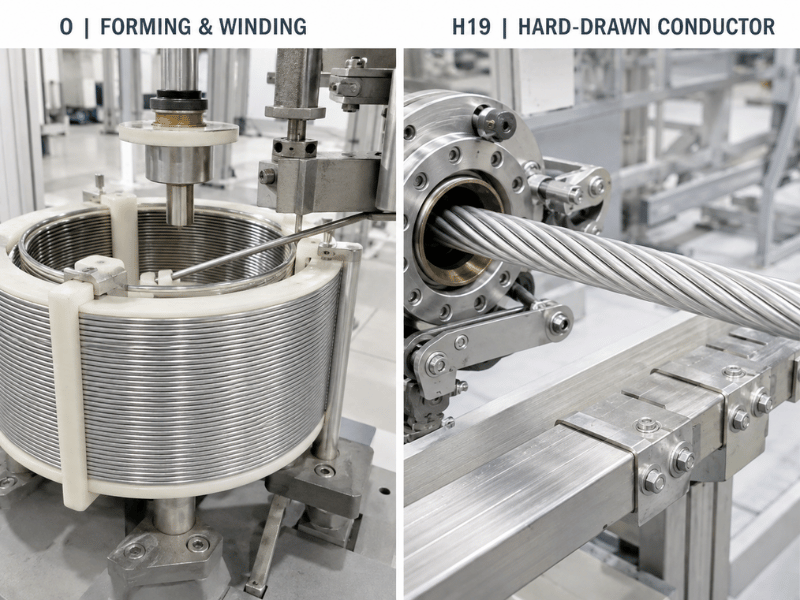
1350 jest umacniane wyłącznie przez obróbkę na zimno (umocnienie odkształceniowe), nigdy przez obróbkę cieplną. Zaczynając od w pełni miękkiego stanu O, każdy kolejny stopień H1x stosuje większe zgniot i częściowe wyżarzanie, aby podnieść wytrzymałość kosztem wydłużenia.
| Temperament | Poziom umocnienia odkształceniowego | Typowa wytrzymałość na rozciąganie (MPa) | Najlepsze dla |
|---|---|---|---|
| O | W pełni wyżarzony, miękki | 60–100 | Ciągnienie, nawijanie, ciasne zgięcia |
| H12–H18 | Stopniowa obróbka na zimno między O a H19 | Wzrasta od ~90 do ~170 w całej drabince | Formowane przewodniki wymagające większej sztywności niż O |
| H19 | Pełne utwardzenie (standardowy drut EC) | 150–200 | Przewody napowietrzne, szyny zbiorcze, żyły kablowe |
H19 to komercyjny koń roboczy: jest to stan specyfikowany dla twardociągniętego drutu EC w ASTM B230 oraz dla przewodów wielodrutowych o splocie koncentrycznym (AAC/ACSR) w ASTM B231. Jeśli zastosowaniem jest drut ciągniony, kabel wielodrutowy lub szyna zbiorcza, H19 jest niemal zawsze właściwym wyborem. O jest zarezerwowany dla drutu nawojowego, cienkiego ciągnienia i przewodów elastycznych, gdzie formowalność dominuje.
Kryteria kwalifikacji (Go/No-Go)
Użyj tej listy, aby zdecydować, czy 1350 pasuje, zanim go wyspecyfikujesz.
Tak — użyj 1350, gdy:
- Priorytetem jest maksymalna przewodność elektryczna przy minimalnej masie — linie napowietrzne, szyny zbiorcze oraz uzwojenia transformatorów lub silników, gdzie 61,2% IACS ma większe znaczenie niż wytrzymałość.
- Część jest niekonstrukcyjna i formowana lub ciągniona do kształtu — drut nawojowy, uzwojenia cewek i przewody elastyczne korzystają z formowalności stanu O.
- Odporność korozyjna w zwykłej atmosferze lub łagodnym środowisku chemicznym jest wystarczająca — tlenkowa warstwa czystego aluminium chroni odsłonięte przewody zewnętrzne bez powłoki.
- Pożądane jest zastąpienie miedzi ze względu na masę lub koszt, a konstrukcja może zaakceptować niższy stosunek przewodności aluminium do miedzi (~61% vs 100% IACS).
Nie — nie używaj 1350, gdy:
- Komponent przenosi obciążenie mechaniczne — 1350-H19 osiąga tylko około 150–200 MPa wytrzymałości na rozciąganie, znacznie poniżej gatunków konstrukcyjnych takich jak 6061-T6 (310 MPa) czy 6082-T6.
- Wymagana jest twardość lub odporność na zużycie — stop jest miękki nawet w stanie H19 i będzie się zacierał lub rysował pod kontaktem ślizgowym.
- Temperatura pracy jest wysoka i wytrzymałość musi być zachowana — jak wszystkie stopy aluminium, 1350 traci znaczną wytrzymałość powyżej około 150 °C, więc nie jest materiałem konstrukcyjnym do wysokich temperatur.
- Część wymaga gwintowania, wielokrotnego zginania pod obciążeniem lub obrabianych ścieżek nośnych — niska granica plastyczności i twardość czynią go złym wyborem konstrukcyjnym.
Gdzie stosuje się aluminium 1350
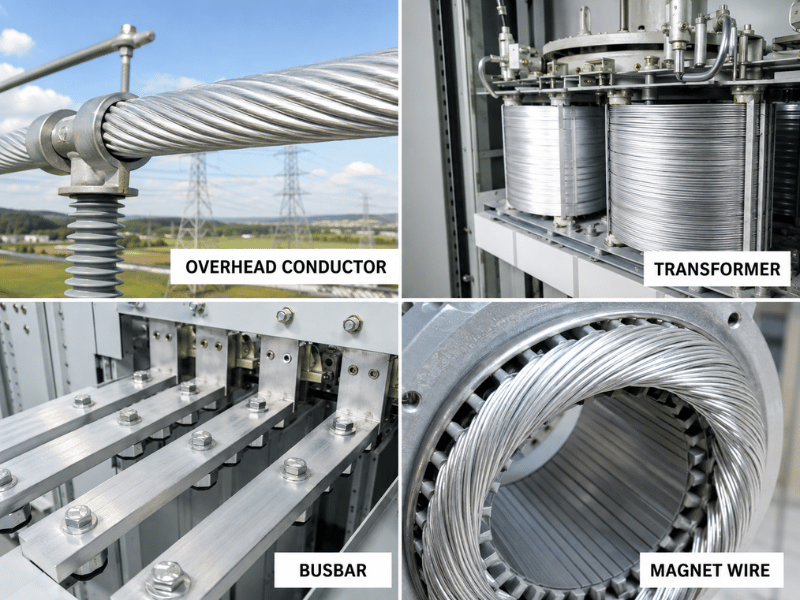
Powyższe kryteria Tak/Nie oddzielają “czy powinienem?” od “gdzie?”. Poniższa lista przedstawia systemy, w których 1350 jest standardową praktyką.
Przesył i dystrybucja energii elektrycznej
Przewody napowietrzne to największe zastosowanie: linie z aluminium całkowicie (AAC) oraz aluminium ze stalowym rdzeniem wzmacniającym (ACSR) są budowane z drutów twardo ciągnionych 1350-H19, ponieważ przenoszą największy prąd na kilogram spośród wszystkich powszechnych rodzin przewodów napowietrznych. Żyły kabli podziemnych, szyny zbiorcze stacji transformatorowych i uzwojenia transformatorów wykorzystują tę samą przewodność klasy EC, z drutem w stanie O tam, gdzie elastyczność podczas instalacji ma znaczenie.
Drut nawojowy, uzwojenia cewek i szyny zbiorcze
Silniki, generatory i transformatory wykorzystują 1350-O na drut nawojowy i drobne uzwojenia cewek, gdzie ekstremalna podatność na formowanie i najwyższa przewodność wygrywają. Szyny zbiorcze — zarówno pełne, jak i linkowe — wykorzystują H19 do sztywnej dystrybucji wysokoprądowej w rozdzielnicach i energoelektronice. W przypadku form drutu klasy EC, zobacz drut aluminiowy 1350-O/H19.
1350 vs 6061 vs 8000 — Jak wybrać
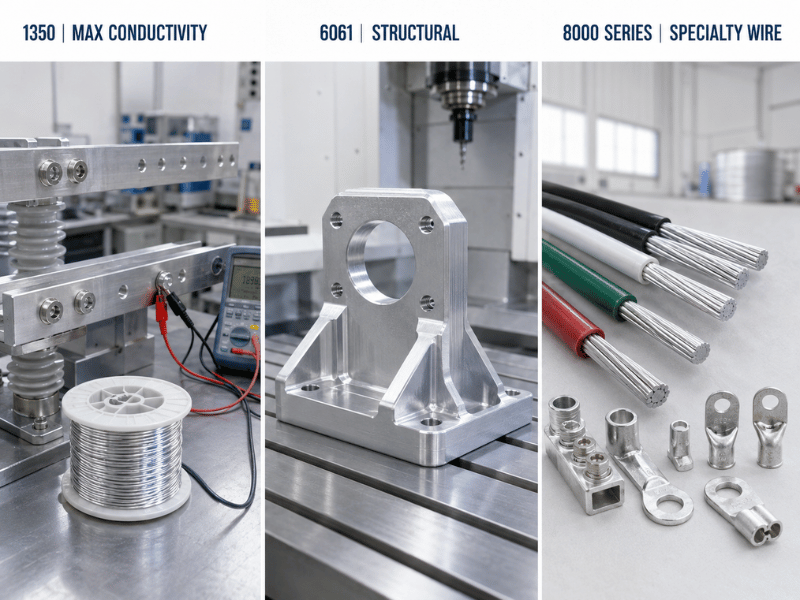
Te trzy nie są konkurentami; odpowiadają na różne pytania. 1350 to gatunek przewodnościowy, 6061 to gatunek konstrukcyjny, a seria 8000 wypełnia niszowe role przewodowe.
| Nieruchomość | 1350 (klasa EC) | 6061-T6 | Gatunki przewodowe serii 8000 |
|---|---|---|---|
| Główna rola | Przewodność elektryczna | Wytrzymałość konstrukcyjna | Przewody specjalistyczne (niektóre przewody instalacyjne) |
| Przewodność elektryczna | 61,2% IACS (min.) | ~40% IACS | Zazwyczaj poniżej 61,2% IACS |
| Wytrzymałość na rozciąganie | 60–200 MPa (w zależności od stanu) | 310 MPa | ~100–200 MPa |
| Obróbka cieplna | Nie (tylko obróbka na zimno) | Tak (T6) | Zależy od gatunku |
| Odporność na korozję | Wysoka (czystość) | Wysoka (mniejsza niż 1350) | Dobra, zależna od stopu |
| Typowe zastosowanie | Drut, szyny zbiorcze, uzwojenia | Ramy, części obrabiane | Konkretne specyfikacje przewodów 8000 |
Wybierz 1350, gdy przewodność na jednostkę masy jest ograniczeniem. Wybierz 6061-T6, gdy część musi przenosić obciążenie i wymagane jest spawanie lub obróbka skrawaniem. Rozważ gatunek serii 8000 (na przykład 8176 lub 8130 na przewody instalacyjne) tylko wtedy, gdy konkretna norma lub korzyść ze stopowania — a nie wyższa przewodność — determinuje specyfikację; 1350 nadal prowadzi pod względem czystej wydajności IACS. W przypadku alternatywy konstrukcyjnej, zobacz stronę stopu aluminium 6061.
Praca z aluminium 1350
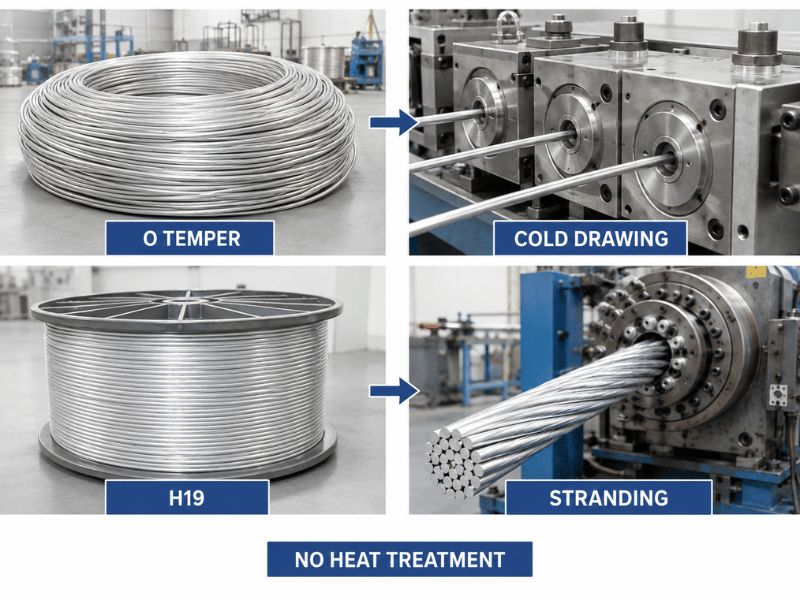
Formowanie i ciągnienie: W stanie O, 1350 jest niezwykle podatne na formowanie — ciągnie się, zgina i zwija bez trudności, dlatego jest domyślnym wyborem dla drutu nawojowego i drobnych przewodów. H19 traci większość tej plastyczności (wydłużenie spada do około 1,5%), więc formuj go przed końcowym utwardzeniem lub używaj go w stanie takim, jak został przeciągnięty.
Spawanie i łączenie: 1350 dobrze się spawa metodami oporowymi (stosowane do łączenia przewodów) i może być łączone metodami MIG/TIG z odpowiednim spoiwem, choć spawanie jest rzadkie w standardowej produkcji przewodów. Należy zauważyć, że spawanie nie obrabia cieplnie stopu — nie ma stanu T do przywrócenia.
Ochrona antykorozyjna: Wysoka czystość zapewnia 1350 doskonałą odporność na korozję atmosferyczną dzięki naturalnej warstwie tlenkowej, więc większość zastosowań przewodów zewnętrznych nie wymaga powłoki. W środowiskach chlorkowych lub przemysłowych stosuje się te same metody anodowania, malowania lub osłaniania, co w przypadku innych gatunków aluminium.
Brak obróbki cieplnej: Ponieważ 1350 nie jest obrabialne cieplnie, wytrzymałość pochodzi wyłącznie z obróbki na zimno. Każdy etap wyżarzania przywraca go w kierunku stanu O; przywrócenie H19 wymaga ponownego przeciągania, a nie obróbki piecowej. Zaplanuj trasę produkcyjną wokół końcowego stanu.
Zalety i Ograniczenia w Skrócie
| Wymiar | Siła | Ograniczenie |
|---|---|---|
| Przewodność elektryczna | Najwyższa spośród wszystkich powszechnych stopów aluminium (≥61,2% IACS) | Wciąż ~61% miedzi — nie jest zamiennikiem miedzi tam, gdzie przestrzeń jest stała |
| Waga | ~1/3 masy miedzi przy równym prądzie | Niska wytrzymałość ogranicza zastosowanie konstrukcyjne |
| Podatność na formowanie (O) | Doskonała do ciągnienia i zwijania | H19 jest kruchy przy ciasnych zgięciach |
| Odporność na korozję | Wysoka dzięki czystości, brak potrzeby powłoki na zewnątrz | Miękka powierzchnia ulega zacieraniu pod obciążeniem ściernym |
| Koszt | Tańsze i lżejsze niż przewody miedziane | Niskie właściwości mechaniczne ograniczają zastosowania |
| Dostępność | Standardowy gatunek EC, szeroka dostępność hutnicza | Nie jest gatunkiem magazynowym profili konstrukcyjnych |
Wnioski
Aluminium 1350 zapewnia najwyższą przewodność spośród wszystkich głównych stopów aluminium kutych — gwarantowane minimum 61,2% IACS — ale jego kompromisem jest niska wytrzymałość i twardość, które wykluczają je z części nośnych. To czyni je właściwym wyborem dla przewodów, szyn zbiorczych i uzwojeń, a niewłaściwym dla wszystkiego, co konstrukcyjne.
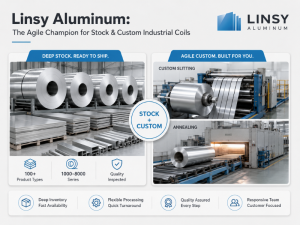
Linsy Aluminum, fabryka z siedzibą w Shenzhen z ponad 20-letnim doświadczeniem, dostarcza 1350 w postaci drutu, szyn zbiorczych, blach i zwojów w całej serii 1000–8000, w tym drut EC 1350-O i 1350-H19, z pełną dokumentacją MTC do każdego zamówienia i raportami z badań SGS dostępnymi na życzenie; typowy niestandardowy czas realizacji wynosi 10–60 dni z wsparciem niskiego MOQ dla rozmiarów niestandardowych. Gdy specyfikacja wymaga 1350 klasy EC, prześlij rysunek lub specyfikację przewodu do przeglądu gatunku i stanu.
Często zadawane pytania
Jaka jest różnica między 1350-O a 1350-H19?
1350-O jest w pełni wyżarzane i miękkie, z wydłużeniem 20% lub więcej — najlepsze do ciągnienia, zwijania i ciasnych zgięć. 1350-H19 jest w pełni utwardzone przez zgniot do wytrzymałości na rozciąganie 150–200 MPa, standardowy stan dla przewodów napowietrznych i szyn zbiorczych, gdzie wytrzymałość ma większe znaczenie niż podatność na formowanie. Przewodność jest taka sama (~61,8% IACS) w obu przypadkach.
Czy aluminium 1350 nadaje się do zastosowań konstrukcyjnych?
Nie. Nawet w stanie H19, 1350 osiąga jedynie około 150–200 MPa wytrzymałości na rozciąganie, znacznie poniżej gatunków konstrukcyjnych takich jak 6061-T6 (310 MPa). Jest to gatunek przewodnikowy, a nie konstrukcyjny, i powinien być ograniczony do zastosowań elektrycznych nienośnych.
Jaka jest różnica między aluminium 1350 a 1370?
Oba są stopami czystymi klasy EC, ale 1370 ma wyższą minimalną czystość aluminium wynoszącą 99,70% w porównaniu do 99,50% w 1350, co daje nieco lepszą przewodność. Oba służą jako przewodniki elektryczne; 1370 jest specified gdy zastosowanie wymaga gatunku o wyższej czystości.
Czy aluminium 1350 można poddać obróbce cieplnej w celu zwiększenia wytrzymałości?
Nie. 1350 nie jest stopem poddającym się obróbce cieplnej — wytrzymałość uzyskuje wyłącznie poprzez umocnienie odkształceniowe na zimno (stany H1x). Wyżarzanie przywraca je w kierunku stanu O, a przywrócenie H19 wymaga ponownego przeciągania, a nie cyklu piecowego.
Jaka jest różnica między aluminium 1350 a 1050?
Oba są stopami czystymi o minimalnej zawartości 99,5%, ale 1350 jest dostosowane do zastosowań elektrycznych z niską zawartością żelaza i krzemu w celu ochrony przewodności, podczas gdy 1050 jest uniwersalnym gatunkiem czystym. Wybierz 1350, gdy priorytetem jest wydajność elektryczna, a 1050 do ogólnego formowania i obróbki.