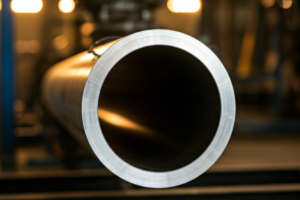
Czym jest odkuwka z aluminium 7075-T6?
7075 to stop z serii 7xxx oparty na układzie cynk-magnez-miedź, który zapewnia najwyższą wytrzymałość spośród wszystkich powszechnych stopów aluminium przerabianych plastycznie — wytrzymałość na rozciąganie osiąga około 572 MPa w stanie T6. Ta wytrzymałość ma jednak swoją cenę w zakresie odporności korozyjnej: T6 oferuje jedynie umiarkowaną ogólną odporność korozyjną i najsłabszą odporność na korozję naprężeniową (SCC) w rodzinie 7075, dlatego większość zastosowań wymaga powłoki lub stanu przestarzonego.
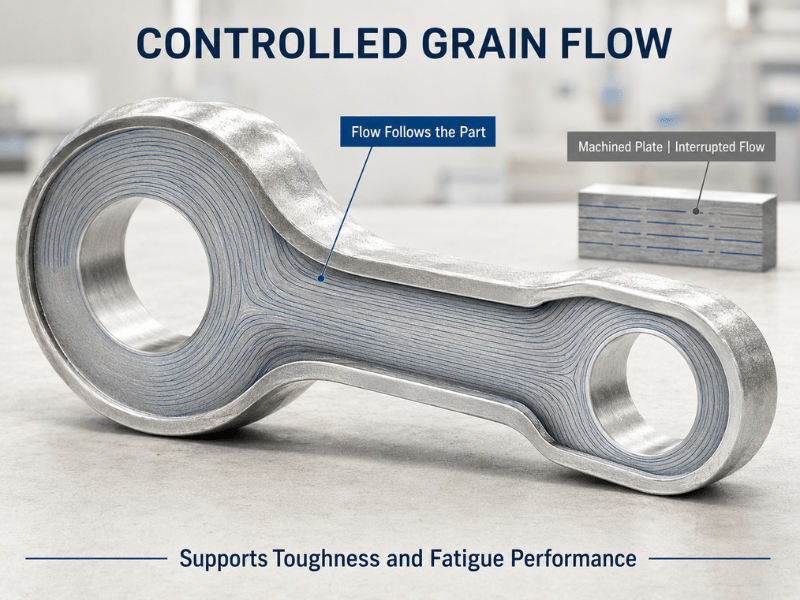
Kucie to proces, który zamienia tę wytrzymałość w część konstrukcyjną. Ściskanie podgrzanego wsadu między matrycami zamyka wewnętrzne pustki i wymusza ułożenie ziaren zgodnie z konturem części, co podnosi odporność na pękanie i trwałość zmęczeniową znacznie powyżej poziomu osiągalnego przez odlewanie lub obróbkę skrawaniem z płyty. Ta przewaga wynikająca z ukierunkowania ziaren jest dokładnie powodem, dla którego odkuwki 7075-T6, a nie tylko płyty 7075-T6, są specyfikowane do najbardziej wymagających obciążeń płatowca i zawieszenia.
Zrozumienie stanu T6
Oznaczenie “T6” opisuje ustaloną ścieżkę obróbki cieplnej, a nie stan po kuciu. Odkuwka opuszcza matrycę w stanie miękkim; dopiero cykl T6 nadaje jej pełną wytrzymałość.
Obróbka cieplna przesycania polega na nagrzaniu części do 465–485°C na 1–4 godziny, aby cynk, magnez i miedź rozpuściły się w jednofazowym roztworze stałym. Szybkie hartowanie w wodzie (powyżej 100°C/s, w ciągu 30 sekund) zatrzymuje te pierwiastki w miejscu, zanim zdążą się wytrącić. Sztuczne starzenie w 120°C przez około 24 godziny wytrąca następnie drobne cząstki η′ (MgZn₂), które blokują ruch dyslokacji i podnoszą wytrzymałość.
T6 vs T652 dla odkuwek
T652 to wariant T6 istotny dla odkuwek. Po hartowaniu część poddawana jest odprężaniu ściskającemu 1–5% — prasa o nacisku 500–3000 ton usuwa naprężenia resztkowe po hartowaniu wynoszące 60–90 MPa — a następnie jest starzona. Wytrzymałość mechaniczna pozostaje zbliżona do poziomu T6, ale naprężenia resztkowe spadają do 20–40 MPa, a stabilność wymiarowa się poprawia, dlatego odkuwki lotnicze są zwykle specyfikowane jako T652, a nie zwykłe T6.
Właściwości mechaniczne 7075-T6
Są to typowe wartości dla odkuwek i płyt w stanie T6. Należy je potwierdzić na podstawie świadectwa badania wytopu dla konkretnego przekroju i stanu.
| Nieruchomość | 7075-T6 | Uwagi |
|---|---|---|
| Najwyższa wytrzymałość na rozciąganie (UTS) | 572 MPa (83 ksi) | Szczytowy wśród powszechnych stopów Al przerabianych plastycznie |
| Yield Strength (YS) | 503 MPa (73 ksi) | ~80% więcej niż 6061-T6 |
| Wydłużenie | 8–11% | Spada w T652 |
| Twardość | ~150 HB | — |
| Moduł sprężystości | ~72 GPa | — |
| Wytrzymałość zmęczeniowa (10⁷ cykli) | ~160 MPa | Ukierunkowanie ziaren podnosi ją w odkuwkach |
| Gęstość | 2,81 g/cm³ | — |
Liczbą, która decyduje o większości wyborów, jest granica plastyczności. Przy 503 MPa stop 7075-T6 przenosi o około 80% większe obciążenie niż 6061-T6, zanim ulegnie odkształceniu plastycznemu, dlatego zastępuje stal w konstrukcjach krytycznych pod względem masy — ale ta sama mikrostruktura umocniona wydzieleniowo czyni go wrażliwym na SCC i trudnym do spawania.
Proces kucia 7075-T6
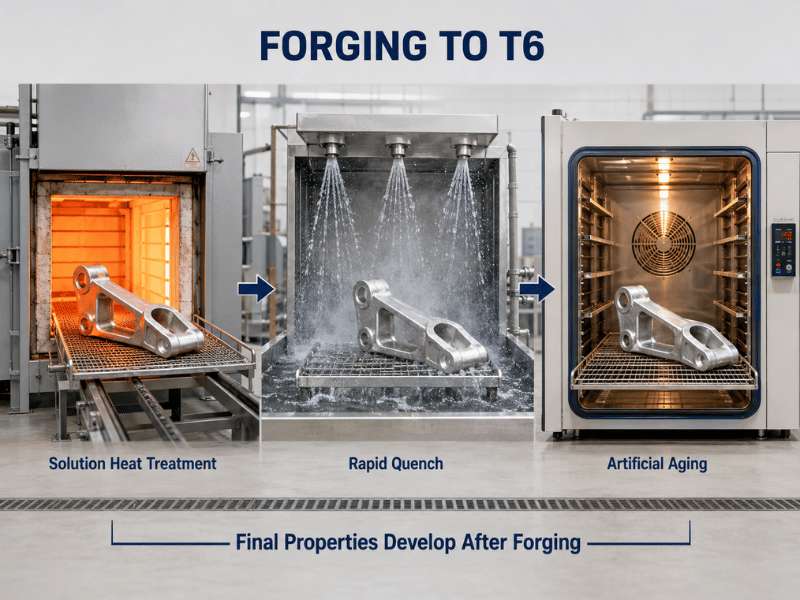
Kucie 7075-T6 przebiega według kontrolowanej sekwencji: nagrzanie wsadu, odkształcenie między matrycami, a następnie zastosowanie obróbki cieplnej T6. Niewielkie odchylenia temperatury lub gniotu zmieniają mikrostrukturę, więc okno procesowe jest wąskie.
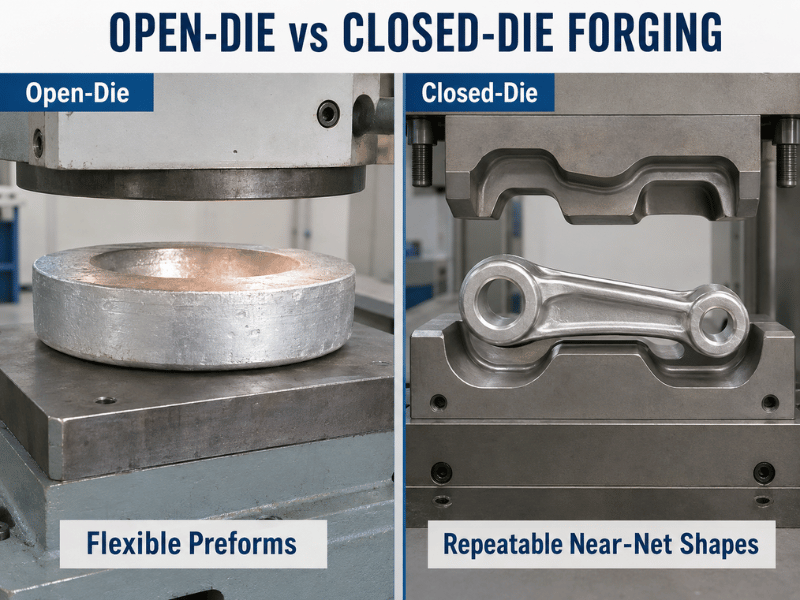
Kucie swobodne vs kucie matrycowe
| Czynnik | Kucie swobodne | Kucie matrycowe |
|---|---|---|
| Najlepsze dla | Krążki, pierścienie, klocki, półfabrykaty | Złożone kształty zbliżone do gotowych |
| Naddatek na obróbkę skrawaniem | 5–10 mm | 0,5–2 mm |
| Wykorzystanie materiału | 60–70% | 80–95% |
| Koszt matrycy | Niski — odpowiedni dla małych partii | Wysoki — odpowiedni dla produkcji seryjnej |
Kucie matrycowe zamknięte jest domyślnym wyborem dla gotowych części lotniczych, ponieważ gniazdo definiuje kształt, a ziarna podążają za konturem. Kucie swobodne pozostaje użyteczne dla pierścieni, bloków i półfabrykatów, które są później obrabiane.
Parametry i etapy kucia
Podgrzewanie wsadu odbywa się w zakresie 370–420°C, a samo kucie pozostaje w oknie 370–450°C. Poniżej tego zakresu metal pęka lub słabo płynie; powyżej ziarna grubieją i wytrzymałość spada. Każde uderzenie zwiększa odkształcenie, a skumulowany stopień gniotu powinien osiągnąć co najmniej 4:1 do 6:1, aby rozbić strukturę odlewniczą i wytworzyć drobne, ukierunkowane ziarno.
Po kuciu i kontrolowanym chłodzeniu część przechodzi przez opisany powyżej cykl T6 (przesycanie → hartowanie → starzenie). W przypadku T652 etap odprężania ściskającego wstawia się bezpośrednio po hartowaniu. Właściwości końcowe zależą w równym stopniu od tej obróbki cieplnej, co od samego kucia, dlatego kuźnia i zakład obróbki cieplnej muszą pracować według jednej specyfikacji.
Gdzie stosuje się odkuwki 7075-T6
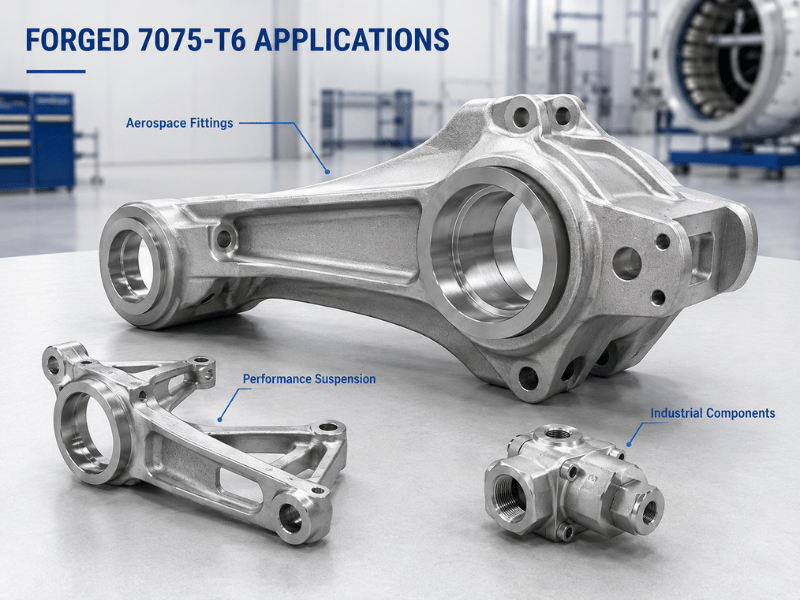
Kuta 7075-T6 zasługuje na swoje miejsce wszędzie tam, gdzie wytrzymałość, trwałość zmęczeniowa i masa znajdują się na tej samej ścieżce krytycznej.
Lotnictwo i obronność
Elementy podwozia, dźwigary skrzydeł, żebra i okucia kadłuba wykorzystują odkuwki 7075-T6, ponieważ ukierunkowany przebieg ziaren wytrzymuje obciążenia cykliczne, którym te części są poddawane przez dziesięciolecia. Sekcje krytyczne pod względem SCC przechodzą na stan T73 lub T7352; pozostałe pozostają w T6 lub T652 z powłoką.
Motoryzacja i zawieszenie o wysokich osiągach
Wahacze, zwrotnice i kolumny zawieszenia wykorzystują odkuwki 7075-T6, aby zmniejszyć masę nieresorowaną bez rezygnacji ze sztywności potrzebnej przy obciążeniach udarowych i w zakrętach. W miarę jak odchudzanie wykracza poza części dokręcane, odkuwki 7075-T6 przechodzą z samochodów wyścigowych do bardziej masowych linii o wysokich osiągach.
Przemysł i sprzęt sportowy
Komponenty hydrauliczne, formy i oprzyrządowanie korzystają z twardości i stabilności wymiarowej tego stopu po odprężeniu. Sprzęt wspinaczkowy, korby rowerowe i kije baseballowe wykorzystują go tam, gdzie mała, wytrzymała i odporna na zmęczenie część ma większe znaczenie niż niski koszt.
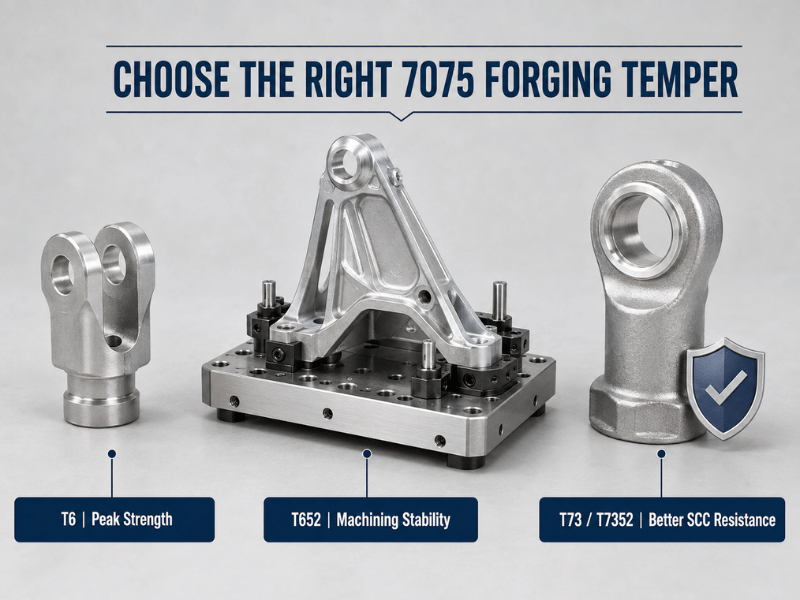
T6 vs inne stany 7075 — jak wybierać
| Temperament | Obróbka | UTS / YS (MPa) | Najlepsze dla | Unikać, gdy |
|---|---|---|---|---|
| T6 | Przesycanie + hartowanie + starzenie | 572 / 503 | Szczytowa wytrzymałość, części nie narażone na SCC | Narażenie na SCC, ciasne tolerancje po obróbce skrawaniem |
| T651 | T6 + rozciąganie (płyta) | 572 / 503 | Płyta, która musi pozostać płaska | Odkuwki (stosować T652) |
| T652 | T6 + odprężanie ściskające | ~570 / ~500 | Odkuwki wymagające stabilności | Najniższy koszt jest priorytetem |
| T73 | Przestarzone | ~483 / ~414 | Grube, krytyczne dla SCC części | Wymagana maksymalna wytrzymałość |
Kiedy T6 jest właściwym wyborem
- Część jest poddawana wysokim obciążeniom statycznym, ale nie występują w niej trwałe naprężenia rozciągające w środowisku korozyjnym — łączniki podwozia, wsporniki konstrukcyjne.
- Celem projektu jest redukcja masy względem stali, a geometria może być powlekana lub platerowana w celu ochrony przed korozją.
Kiedy Inny Temperament Pasuje Lepiej
T73 i T7352 wymieniają 15–20% wytrzymałości na wyraźnie lepszą odporność na SCC, co jest standardowym wyborem dla grubych przekrojów w warunkach wilgotnych lub zasolonych. T652 jest domyślnym wyborem dla odkuwek, gdy stabilność wymiarowa po obróbce mechanicznej jest ważniejsza niż ostatnie kilka MPa granicy plastyczności.
Praca z kutym 7075-T6 — co musisz wiedzieć
Obróbka jest prosta przy odpowiednim przygotowaniu. Narzędzia z węglika, sztywne mocowanie i chłodziwo zalewowe zapobiegają rozmazywaniu się powierzchni podatnej na umocnienie; 7075-T6 wytwarza czyste wióry i utrzymuje ciasne tolerancje.
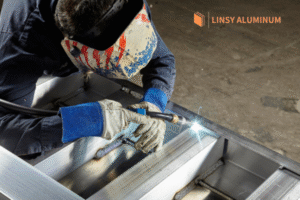
Spawanie jest generalnie unikane. Zawartość miedzi i cynku powoduje pękanie na gorąco, a strefa wpływu ciepła traci znaczną część wytrzymałości; złącza spawane również słabo wypadają pod względem korozji i SCC. Nity, śruby i klejenie są standardowymi metodami łączenia.
Ochrona przed korozją jest obowiązkowa w większości środowisk. T6 jest odporny na atmosferę wewnętrzną, ale ulega wżerom przy ekspozycji na chlorki, dlatego anodowanie, malowanie lub platerowanie jest standardem; w każdym zastosowaniu w środowisku zasolonym lub o stałej wilgotności należy przejść na T73, zamiast polegać wyłącznie na powłoce.
Projektuj pod proces od samego początku. Utrzymuj współczynnik redukcji co najmniej 4:1, stosuj duże promienie zaokrągleń i kąty odciążenia, unikaj cienkich przekrojów, które zbyt szybko stygną, i zorientuj część tak, aby przepływ ziaren przebiegał wzdłuż głównej ścieżki naprężeń. Te wybory decydują, czy odkuwka przewyższa blachę obrabianą mechanicznie pod względem zmęczenia.
Zalety i Ograniczenia w Skrócie
| Wymiar | Siła | Watch-out |
|---|---|---|
| Stosunek wytrzymałości do masy | Najwyższa spośród powszechnych stopów Al kutych | Wyższy koszt materiału i kucia |
| Trwałość zmęczeniowa | Doskonała przy ukierunkowanym przepływie ziaren | Zależy od jakości kucia |
| Obrabialność | Dobra z węglikiem + chłodziwem | 对表面进行加工硬化 |
| Odporność korozyjna | Umiarkowana ogólna, słaba SCC (T6) | Wymaga powłoki; T73 dla środowiska słonego |
| Spawalność | Słaba — łączenie za pomocą elementów złącznych | Ogranicza możliwości naprawy |
| Dostępność | Powszechnie stosowany w łańcuchu dostaw lotniczych | Grube odkuwki T73 kosztują więcej |
| Koszt | Wyższa niż w stopach 6xxx | 通过载荷/重量增益可证明其合理性 |
Wnioski
Odkuwka 7075-T6 przekształca najwytrzymalszy powszechnie stosowany aluminium stopowy w gęste, odporne na zmęczenie części, których ziarna podążają za ścieżką obciążenia — kompromis jest realny: T6 daje szczytową wytrzymałość, ale najsłabszą odporność na SCC w rodzinie, jedynie umiarkowaną ogólną odporność na korozję i praktycznie brak spawalności, dlatego powłoki i łączenie mechaniczne są normą.
林思铝业,一家位于深圳、拥有20余年经验的工厂,供应 Odkuwki 7075-T6 i T652 oraz powiązane stany z pełną dokumentacją MTC dla każdego zamówienia i raportami z badań SGS dostępnymi na życzenie; typowy czas realizacji zamówień niestandardowych wynosi 10–60 dni w zależności od rozmiaru i obróbki. Prześlij rysunek odkuwki do przeglądu wykonalności i dopasowania gatunku — Linsy Aluminum obsługuje niestandardowe odkuwki o niskim MOQ w seriach 1000–8000 z wewnętrzną obróbką cieplną i wykończeniową.
Często zadawane pytania
Jaka jest różnica między odkuwkami 7075-T6 a T652?
Oba osiągają niemal identyczną wytrzymałość, ale T652 dodaje 1–5% odprężania ściskającego bezpośrednio po hartowaniu. Zmniejsza to naprężenia resztkowe z 60–90 MPa do 20–40 MPa i poprawia stabilność wymiarową, więc T652 jest zwykle stosowaną specyfikacją dla obrabianych odkuwek lotniczych, podczas gdy T6 pasuje do mniej krytycznych części.
Czy aluminium 7075-T6 można spawać?
Spawanie jest generalnie unikane. Miedź i cynk powodują pękanie na gorąco, strefa wpływu ciepła traci znaczną część wytrzymałości, a złącze jest podatne na korozję i SCC. Nity, śruby lub klejenie są standardowymi metodami łączenia.
Jaka temperatura jest stosowana do kucia 7075-T6?
Wstępne podgrzewanie wsadu odbywa się w zakresie 370–420°C, a kucie pozostaje w zakresie 370–450°C. Utrzymanie się w tym oknie zapewnia płynięcie metalu bez rozdrobnienia ziaren; hartowanie i starzenie następnie dopełniają stan T6.
Czy kuty 7075-T6 nadaje się do zastosowań morskich lub w wodzie słonej?
Nie w stanie T6. Ulega wżerom w środowiskach chlorkowych, a T6 ma najgorszą odporność na SCC w rodzinie 7075. W zastosowaniach w środowisku zasolonym lub o stałej wilgotności należy określić stan przestarzały T73 lub T7352 i nadal stosować powłokę.
Jak część kutowa 7075-T6 wypada w porównaniu z obróbką mechaniczną z blachy?
Kucie zamyka wewnętrzne pustki i alignuje ziarna z kształtem części, zwiększając odporność na pękanie i trwałość zmęczeniową w porównaniu z blachą obrabianą mechanicznie z tego samego stopu i stanu. Oszczędza również materiał dzięki kształtowi zbliżonemu do docelowego, choć oprzyrządowanie do kucia matrycowego zwiększa koszty początkowe, które zwracają się przy produkcji seryjnej.