5456 Alüminyum Nedir?
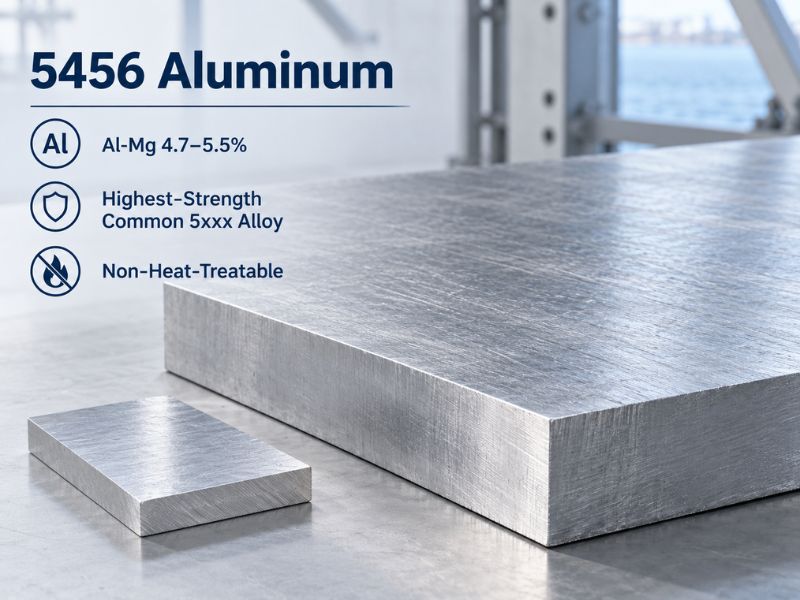
5456, 5xxx serisinde bir dövme alüminyum-magnezyum alaşımıdır ve %4,7–5,5 magnezyum içeriğiyle, aksi takdirde ısıl işlemle sağlanacak olan katı çözelti mukavemetlendirmesinin yerini alır. Isıl işlemle sertleştirilemez, bu nedenle her ek megapaskal, su verme ve yaşlandırma çevriminden değil, deformasyon sertleşmesinden ve alaşım içeriğinden gelir. Manganez tokluk katar ve krom tane yapısını kontrol eder; bunlar birlikte 5456'ya, yaygın olarak stoklanan 5xxx alaşımları arasında en yüksek imalat sonrası mukavemeti kazandırır.
Bu magnezyum seviyesi aynı zamanda alaşımın tek ciddi kısıtlamasının da kaynağıdır. Yaklaşık %3 magnezyumun üzerinde, yaklaşık 65 °C'nin üzerinde uzun süre tutulan bir Al-Mg alaşımı, tane sınırları boyunca bir beta fazı çökelttirir ve bu ağ, çevresindeki matrise göre anodiktir. Korozyon daha sonra yüzey boyunca değil, tane sınırları boyunca ilerler; bu nedenle yüksek magnezyumlu kalitelerin deniz hizmeti için kabul edilebilir sayılması için yalnızca belirli bir alaşım değil, belirli bir temper durumu da gerekir.
5456 Kimyasal Bileşimi
Aşağıdaki sınırlar, sac ve plaka için ASTM B209'a göredir. Titanyum değeri komşu kaliteler arasında farklılık gösterir: 5456 maksimum 0,20'ye izin verirken, 5056 yalnızca maksimum 0,15'e izin verir; bu nedenle bu iki değer birbirinden kopyalanmamalıdır.
| Element | Bileşim (ağırlıkça %) |
|---|---|
| Silisyum (Si) | 0,25 maks. |
| Demir (Fe) | 0,40 maks |
| Bakır (Cu) | 0,10 maks. |
| Manganez (Mn) | 0.50–1.00 |
| Magnezyum (Mg) | 4.7–5.5 |
| Krom (Cr) | 0.05–0.20 |
| Çinko (Zn) | 0,25 maks. |
| Titanyum (Ti) | 0,20 maks. |
| Diğerleri, her biri | 0,05 maks. |
| Diğerleri, toplam | 0,15 maks. |
| Alüminyum (Al) | Denge |
Satın alma siparişinde iki kalem dikkat gerektirir. Bu seviyedeki magnezyum, 5456'yı 5083'ün üzerine taşıyan mukavemeti sağlayan unsurdur; bu nedenle magnezyumun aralığın alt sınırına yakın olduğunu gösteren bir sertifika, mukavemet avantajının ne kadarının korunduğu sorusunu gündeme getirmelidir. Bakır %0,10 ile sınırlandırılmıştır çünkü bakır doğrudan deniz suyu korozyon performansına karşı çalışır.
Temper Durumuna Göre 5456 Mekanik Özellikleri
Aşağıdaki tipik değerler, haddelenmiş ürünler için ASM ve Aluminum Association verilerinden alınmıştır. Karşılaştırma ve erken tasarım çalışmaları için faydalıdırlar; ancak garanti edilen değerler ilgili spesifikasyona ve kalınlığa göre belirlenir ve fiilen teslim edilen malzemeyi fabrika test sertifikası belirler.
| Temper | Çekme Dayanımı (MPa) | Akma Dayanımı (MPa) | Uzama (%) | Tipik Sertlik (HB) |
|---|---|---|---|---|
| O (tavlanmış) | 310 | 159 | 24 | — |
| H111 | 310 | 180 | 14 | — |
| H112 | 310 | 166 | 22 | — |
| H116 / H321 | 350 | 255 | 12 | 90 |
ASTM B928 kapsamındaki her şey için bağlayıcı sayı, tipik değer değil, kod minimumudur:
| Temper | Kalınlık Aralığı | Çekme Mukavemeti, min (MPa) | Akma Mukavemeti, min (MPa) | Uzama, min (%) |
|---|---|---|---|---|
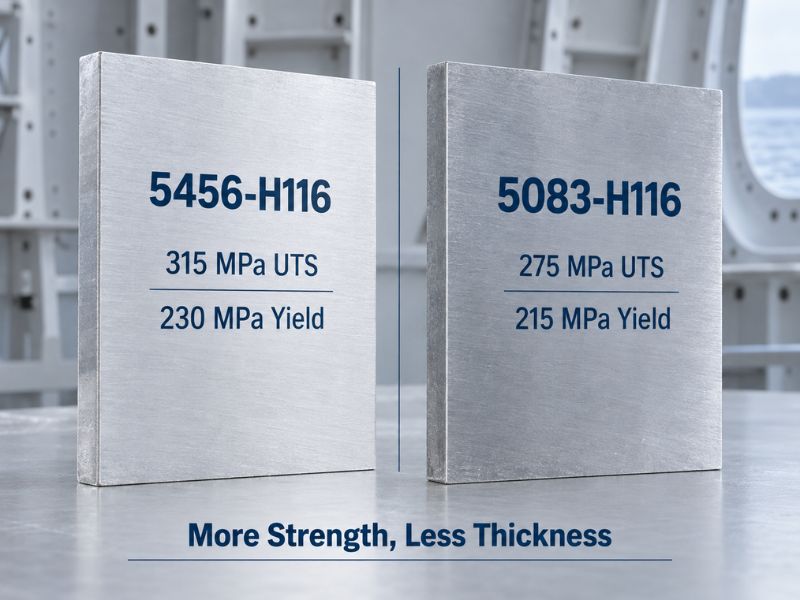
| 5456-H116 / H321 | 3–40 mm | 315 | 230 | 10 |
| 5083-H116 / H321 | 3–50 mm | 275 | 215 | 10 |
| 5086-H116 / H321 | 3–50 mm | 240 | 195 | 10 |
Burada en önemli satır ilkidir. 5083-H116 ile karşılaştırıldığında, 5456-H116 aynı kod minimumunda yaklaşık 40 MPa daha fazla çekme mukavemeti ve yaklaşık 15 MPa daha fazla akma mukavemeti sağlar; çok daha yaygın olarak stoklanan 5083 yerine bunun seçilmesinin tüm ticari gerekçesi budur.
H116 ve H321 Neden Vardır: 65°C Sensitizasyon Sınırı
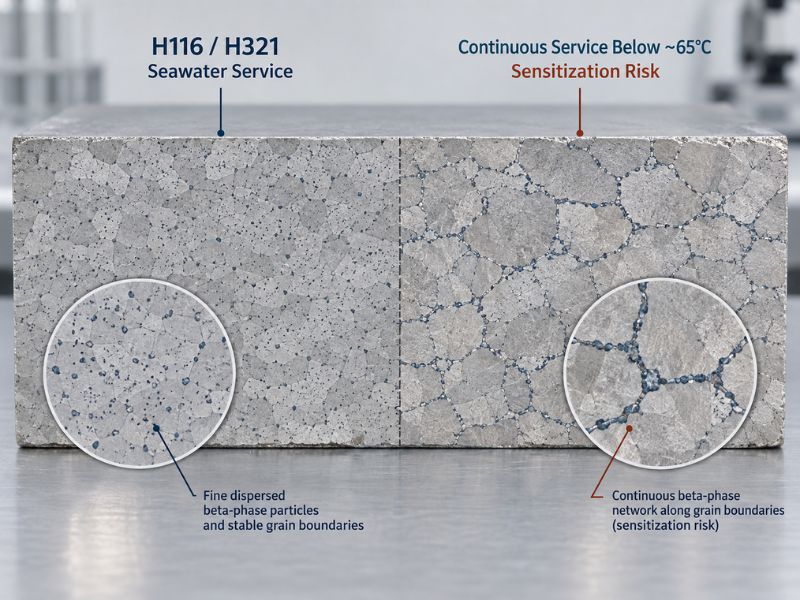
Sensitizasyon, 5456'nın nasıl spesifiye edilebileceğini belirleyen arıza modudur. Yaklaşık %3 magnezyumun üzerinde, 65 °C ve üzeri aralıkta uzun süreli maruz kalma, çözünmüş magnezyumu katı çözeltiden dışarı sürerek tane sınırları boyunca beta-fazı parçacıklarına dönüştürür. Bu parçacıklar bir kez bağlantılı bir ağ oluşturduğunda, alaşım taneler arası korozyona, eksfoliasyon korozyonuna ve gerilme korozyonlu çatlamaya karşı savunmasız hale gelir — bunların tümü içeride ilerler ve görsel muayeneyle kolayca gözden kaçar.
5456, ısıl işlemle bundan muaf tutulamaz. Isıl işlemle sertleştirilemeyen bir alaşımdır ve yerleşmiş bir tane sınırı ağını çözen bir yaşlandırma çevrimi yoktur. Sensitizasyon bir kez oluştuğunda, durum kalıcıdır.
H116 ve H321 özellikle bu mekanizmayı geciktirmek için vardır. Her ikisi de, beta-fazı parçacıklarını taneler arasında sürekli bir film yerine tanelerin içinde ince, dağılmış bir dağılıma süren stabilize edici bir ısıl işlem gören deformasyonla sertleştirilmiş koşullardır. ASTM B928 daha sonra sonucu doğrular: H116 ve H321 plaka, PB'den daha kötü olmayan bir derecelendirmede eksfoliasyon korozyon testini ve 15 mg/cm²'lik bir taneler arası korozyon kütle kaybı sınırını geçmelidir.
| Durum | Pratikte Anlamı | Tipik Teklif İfadesi |
|---|---|---|
| H116 | Deformasyonla sertleştirilmiş, B928 eksfoliasyon ve taneler arası sınırlarını karşılayacak şekilde stabilize edilmiş | Klas kuruluşu onayının gerekli olduğu yerlerde belirtilir |
| H321 | Kontrollü bir soğuk işlem adımıyla deformasyonla sertleştirilmiş ve stabilize edilmiş | Tanımlanmış mekanik minimumlara sahip kaynaklı yapılar için belirtilir |
| H112 | Fabrika işleminden hafifçe deformasyonla sertleştirilmiş, korozyon kalifikasyonu yok | Genel yapı için kabul edilebilir, tek başına deniz suyu teması için uygun değil |
| O | Tamamen tavlanmış, maksimum şekillendirilebilirlik | Zorlu şekillendirme için kullanılır, genellikle ardından kaynak yapılır |
Pratik kural basittir: parça deniz suyuyla temas ediyorsa ve yıllarca yerinde kalıyorsa, temper satırı H116 veya H321 okumalıdır. Aynı parça için H112 teklif eden bir fiyat teklifi daha ucuzdur çünkü korozyon kalifikasyonu taşımaz, metalin farklı olmasından değil.
5456 Fiziksel Özellikleri
| Mülkiyet | Tipik Değer |
|---|---|
| Yoğunluk | 2,66 g/cm³ |
| Erime Aralığı | 570–638 °C |
| Termal İletkenlik | 117–127 W/m·K |
| Elektriksel İletkenlik | ,5–29,5 IACS |
| Elastik Modül | 69–74 GPa |
| Termal Genleşme Katsayısı | 23.9 × 10-⁶ /°C |
| Manyetik Tepki | Manyetik değil |
Bu iki iletkenlik değeri çoğu tasarımcının beklediğinden düşüktür ve doğrudan magnezyum içeriğinden kaynaklanır. Katı çözeltideki her magnezyum yüzdesi elektronları ve fononları saçtığından, yaklaşık IACS ve 120 W/m·K değerlerindeki 5456, IACS ve 138 W/m·K civarındaki 5052'nin oldukça altında kalır. Parçayı iletken veya ısı yayıcı olarak kullanan her uygulama, kimyanın aleyhine çalışır.
Korozyon Direnci ve Deniz Hizmeti
Deniz suyunda ve deniz atmosferlerinde 5456 iyi performans gösterir — yeter ki temper durumu korozyon kalifikasyonunu taşısın. Kendiliğinden oluşan oksit filmi, magnezyum ve krom içeriğiyle stabilize edilir; bu, klorür saldırısını yavaşlatır ve çukurlaşmayı sığ tutar. Pratikte bu, boyalı çeliğe kıyasla daha düşük tersane bakımı ve gövde kaplamasında uzun bir hizmet geçmişi anlamına gelir.
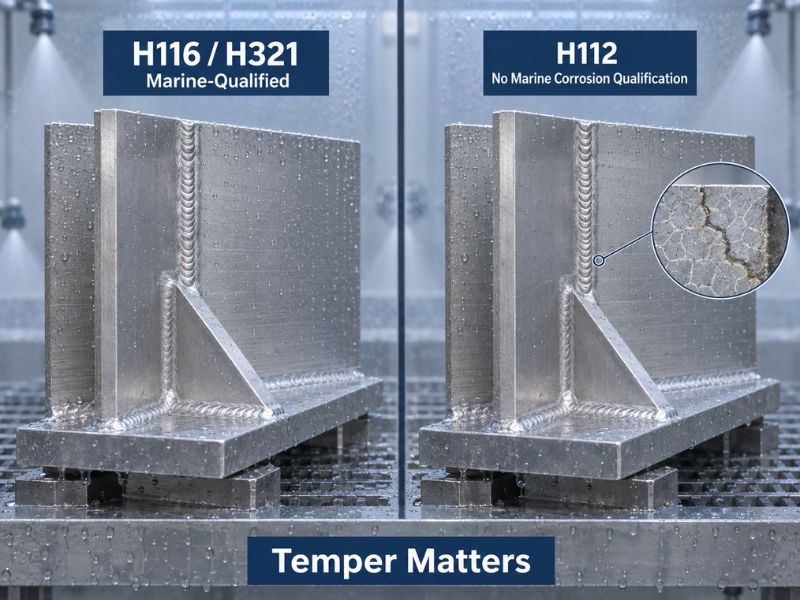
Üç koşul bu tabloyu değiştirir:
- Yaklaşık 65 °C'nin üzerinde sürekli sıcaklık. Makine dairesi yapıları, ısıtılan tanklar ve egzoz yakınındaki bağlantı parçaları klasik arıza noktalarıdır. Ya parçayı ısı kaynağından uzaklaştırın ya da daha düşük magnezyum içeriğiyle onu sensitizasyon aralığının dışında tutan 5454'e geçin.
- Sürekli çekme gerilmesi altındaki kalın kesitler. Kalın plaka, kaynak sonrasında daha fazla kısıtlama gerilmesi tutar ve SCC hem hassas bir yol hem de gerilme gerektirir. 5456 üzerindeki daha kalın kesitler açık bir mühendislik incelemesini hak eder.
- Farklı metallerle temas. Alüminyum, bakır, pirinç ve paslanmaz çeliğe göre anodiktir. İzolasyon ve drenaj hizmette keşfedilmek yerine tasarıma dahil edilmelidir.
5456 ile Çalışma: Şekillendirme, Kaynak ve İşleme
Kaynak. 5456, MIG ve TIG ile iyi kaynak yapılır, ancak birleşim tasarımı ana metal özelliklerini kullanamaz. Alaşım ısıl işlemle sertleştirilemediğinden, ısıdan etkilenen bölge O durumuna doğru tavlanır ve orada kalır — hiçbir kaynak sonrası işlem bunu geri kazandırmaz. 5083 veya 5456 ana plaka üzerine ER5556 dolgu malzemesiyle yapılan kaynak metalinin özellikleri yaklaşık 280–310 MPa çekme ve 130–165 MPa akma değerlerindedir; H116 ana metalin akma değeri ise 255 MPa'dır. Bu, birleşim yakınında akmada yaklaşık –45'lik bir düşüş anlamına gelir ve AWS D1.2 izin verilen gerilmeler bunu zaten varsaymaktadır; bu nedenle satın alınan temper durumuna göre değil, tavlanmış HAZ değerine göre tasarım yapın.
| Dolgu | Magnezyum İçeriği | Uygun Olduğu Durumlar | Dikkat Edilmesi Gerekenler |
|---|---|---|---|
| ER5556 | ~5.0% | 5456 için varsayılan — ana alaşımla eşleşir ve korozyon performansını en iyi şekilde taşır | Denizcilik tedarik zincirleri dışında sınırlı bulunabilirlik |
| ER5183 | ~4.8% | Birleşimde kaynak sonrası maksimum mukavemetin önemli olduğu durumlar | Onaylanmış prosedüre göre doğrulayın |
| ER5356 | ~4.5% | Genel 5xxx imalatı, yaygın olarak stoklanır | Yaklaşık 65 °C üzerinde sürekli servis için tercih edilmez |
| ER4043 | Silisyum içerir | 5456'da kaçının | Silisyum, magnezyum ile birleşerek kırılgan Mg₂Si oluşturur ve kaynak siyah renkte anodize olur |
Şekillendirme. Şekillendirilebilirlik temper durumunu takip eder. O ve H111 ağır bükme ve çekme işlemlerini karşılar; H116 ve H321 orta düzeyde şekillendirmeyi kabul eder ancak bükme yarıçapları, 5052'ye alışkın bir atölyenin bekleyeceğine kıyasla açılmalıdır. H321 plakayı soğuk şekillendirip sertleştirdikten sonra servise almaya çalışmak hem çatlamaya hem de daha yüksek kalıntı gerilmeye davetiye çıkarır; bu da doğrudan yukarıdaki SCC mekanizmasını besler.
İşleme. 5456 işlenebilir ancak ısıl işlemle sertleştirilebilen alaşımlardan daha yapışkandır; bu nedenle talaş tahliyesi ve keskin takımlar iş mili gücünden daha önemlidir. Talaş kontrolü, daha yüksek talaş açıları ve pozitif kesme geometrisi ile iyileşir.
Yüzey işleme. Tüm 5xxx alaşımları gibi 5456 da parlak bir yüzey yerine mat gri renkte anodize olur ve bir 6063 ekstrüzyonuyla renk uyumu sağlamaz. Görünüm bir kriter ise, sipariş verilmeden önce bu gereksinimi belirtin; montaj sırasında keşfetmeyin.
5456 vs 5083 vs 5086 vs 5052: Nasıl Seçilir
| Alaşım ve Temper | Çekme, min (MPa) | Akma, min (MPa) | Magnezyum (%) | Üstün Olduğu Alanlar |
|---|---|---|---|---|
| 5456-H116 | 315 | 230 | 4.7–5.5 | Deniz suyu temasında grubun en yüksek mukavemeti |
| 5083-H116 | 275 | 215 | 4.0–4.9 | En geniş bulunabilirlik, en iyi belgelenmiş denizcilik sicili |
| 5086-H116 | 240 | 195 | 3.5–4.5 | Daha düşük maliyetle iyi denizcilik performansı ve daha iyi şekillendirilebilirlik |
| 5052-H32 | 215 | 160 | 2.2–2.8 | Şekillendirme ağırlıklı sac işleri, sensitizasyon sınırı yok |
Magnezyum sütununu aşağı doğru okumak, bu dört alaşımın davranışını neredeyse tamamen açıklar. Daha yüksek magnezyum mukavemet kazandırır ve sıcaklık kabiliyetinden ödün verir: iki yüksek magnezyumlu kalite 65 °C kısıtlamasını taşırken, %2,2–2,8 magnezyum içeren 5052 taşımaz. Bulunabilirlik ise ters yönde işler — 5083 neredeyse her yerde stoklanırken, 5456 birçok servis merkezinde özel sipariştir; bu da hem fiyata hem de teslim süresine yansır.
Git/Gitme: 5456 Ne Zaman Belirtilmeli
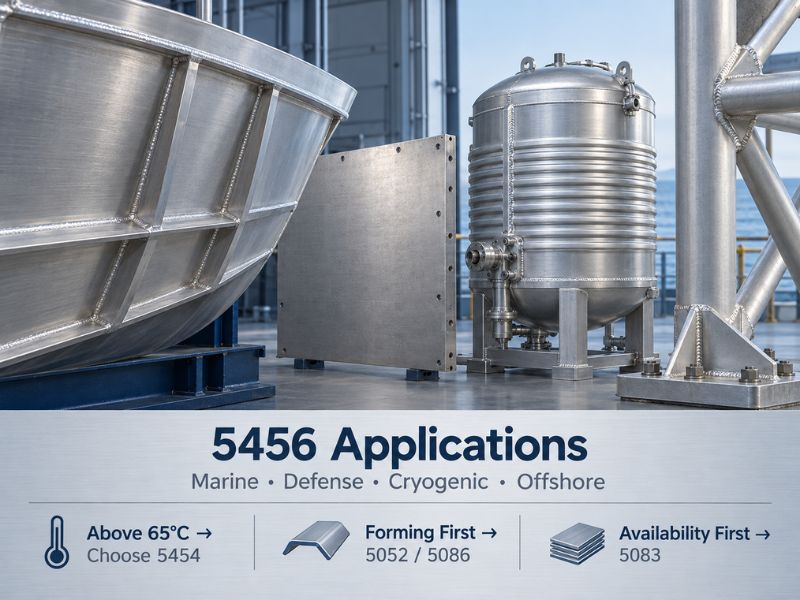
Aşağıdaki maddeler alaşımın kullanılıp kullanılmayacağını yanıtlar. Uygulamalar bir sonraki bölümde ayrıca ele alınmıştır — bu bölüm kararı, o bölüm ise kullanım yerlerini kapsar.
Git — 5456 şu durumlarda uygundur:
- Tasarım, 5083-H116'nın sağladığından daha fazla mukavemet gerektiriyor ve kalınlık telafi etmek için artırılamıyorsa
- Yapı kaynaklıdır, deniz suyu temasında kalır ve spesifikasyon B928 test sonuçlarıyla H116 veya H321 talep edebiliyorsa
- Düşük sıcaklıkta darbe direnci ve tokluk önemlidir; kriyojenik ve açık deniz servisi dahil
- Dinamik yük altında termal büyüme, belgelenmiş bir genleşme katsayısına göre öngörülebilir kalmalıdır
Gitme — şu durumlarda başka bir şey seçin:
- Sürekli metal sıcaklığı yaklaşık 65 °C'yi aşabilir — bunun yerine 5454'e geçin
- Teslim süresi ve stok bulunabilirliği karara hakimdir — 5083 daha güvenli tedarik zinciridir
- Parça parlak veya renk uyumlu anodize yüzey gerektirir — 6xxx kullanın
- Şekillendirme mukavemetten daha belirleyicidir — 5052 veya 5086 daha az maliyetli olur ve daha kolay şekillenir
- Proje yalnızca ısıl işlemin sağlayabileceği mukavemet gerektirir — ısıl işlemle sertleştirilebilir bir seriye geçin
5456 Nerelerde Kullanılır
Denizcilik ve gemi inşaatı. Devriye botları, iş botları ve yüksek hızlı teknelerde gövde kaplaması, güverteler, perdeler ve üst yapılar temel uygulama setini oluşturur. 5456, ağırlık azaltmanın bedelini ödemeye değdiği yerlerde yerini kazanır; çünkü 5083'e kıyasla mukavemet marjı, bir gövde tasarımcısının kalınlık eklemek yerine kalınlık çıkarmasına olanak tanır.
Savunma ve koruyucu yapılar. Askeri araçlar için zırh plakası, askeri köprü bileşenleri ve patlamaya dayanıklı düzenekler, balistik performansla birlikte enerji absorpsiyonu için 5456 kullanır. MIL-DTL-46027 bu alanı kapsayan bir spesifikasyondur ve ticari standartların ötesinde kendi temper ve test gereksinimlerini taşır.
Basınçlı kaplar ve ağır kaynaklı imalatlar. 5456, kaynaklı birleşim bütünlüğünün tasarımı yönlendirdiği depolama tanklarında, basınçlı kaplarda ve büyük taşıma çerçevelerinde görülür. Birleşim verimi her zaman H116 ana metal değerlerinden değil, tavlanmış HAZ özelliklerinden hesaplanmalıdır.
Kriyojenik ve açık deniz servisi. Karbon çeliğinin aksine, 5xxx alaşımları sıcaklık düştükçe sünek-gevrek geçişi yaşamaz ve hem mukavemet hem de uzama iyileşir. Bu, 5456'yı kriyojenik tanklar ve soğuk iklimlere maruz açık deniz yapıları için kullanılabilir kılar.
Artılar ve Sınırlamalar Bir Bakışta
| Boyut | Avantaj | Sınırlama |
|---|---|---|
| Güç | Yaygın 5xxx alaşımları arasında en yüksek imalat sonrası mukavemet | Daha fazla artırmak için hiçbir ısıl işlem yolu yoktur |
| Korozyon | H116/H321 sertifikasyonu ile mükemmel deniz suyu performansı | Bu temperi gerektirir; H112 korozyon sertifikası taşımaz |
| Sıcaklık | Soğuk serviste, kriyojenik dahil, kararlıdır | Sensitizasyon nedeniyle yaklaşık 65 °C üzerinde kullanılamaz |
| Kaynaklanabilirlik | Eşleşen dolgu malzemesi ile MIG ve TIG kaynağında temiz kaynak yapılır | ITAB, O koşuluna tavlanır ve ~–45 akma kaybı kalıcıdır |
| Stok Durumu | Denizcilik odaklı haddehaneler ve stokçular tarafından tedarik edilir | 5083'e kıyasla daha ince tedarik zinciri ve daha uzun teslim süreleri |
| Maliyet | Mukavemetin kalınlığı ortadan kaldırdığı yerlerde kendini kanıtlar | Daha yüksek kilo fiyatı ve genellikle gümrük temper gereksinimi |
| Şekillendirilebilirlik | O ve H111 temperlerinde işlenebilir | H116/H321 geniş büküm yarıçapları ve dikkatli soğuk şekillendirme gerektirir |
| Görünüş | Boya veya kaplama ile kabul edilebilir | Gri renkte anodize olur, 6063 ile parlak eşleşme sağlamaz |
5456 Tedariki: Neyin Belirtilmesi Gerektiği
Aşağıdaki kalemleri içeren bir 5456 sorgusu ilk seferde doğru fiyatlandırılmış olarak geri döner. İçermeyen bir sorgu ise muayeneden geçemeyecek malzeme için daha ucuz bir teklif olarak geri döner:
| Şartname Kalemi | Belirtilmesi Gerekenler | Teklifi Neden Değiştirir |
|---|---|---|
| Temper | Deniz suyuyla temas eden her şey için H116 veya H321 | Korozyon testinden geçmiş plaka, H112'den daha pahalıdır |
| Standart | Denizcilik için ASTM B928, genel ürün formu için B209 | Her biri farklı test gereksinimleri taşır |
| Kalınlık aralığı | İlgili aralıklar mekanik minimumları değiştirir | Kalınlık arttıkça minimumlar düşer |
| Eksfoliasyon / IGC testi | Parça deniz suyuyla temas ediyorsa gereklidir | B928, ≤PB ve ≤15 mg/cm² gerektirir |
| sertifikalar | MTC gereklidir; proje tarafından belirtilmişse SGS testi | İzlenebilirlik teslimatın bir parçasıdır |
| Form ve boyut | Plaka, sac, çubuk, boru veya profil, boyutlarıyla birlikte | Haddehane güzergahını ve teslim süresini belirler |
Linsy, 5456'yı plaka, sac, çubuk, boru ve ekstrüde profil olarak, en yaygın şekilde O, H111, H112, H116 ve H321 temperlerinde tedarik eder. Tipik plaka aralığı tedariki 6 mm'den 120 mm kalınlığa kadar uzanır; sac ve rulo yaklaşık 0,5 mm'ye kadar iner; diğer boyutlar sipariş şartnamesine göre görüşülebilir. Her sevkiyat, bileşimi ve mekanik özellikleri belgeleyen bir haddehane test sertifikası ile birlikte çıkar ve talep üzerine kimyasal, mekanik, ultrasonik ve boyutsal dahil olmak üzere üçüncü taraf SGS raporları düzenlenebilir. Üretim, ISO 9001, ISO 14001 ve ISO 45001 sistemleri altında yürütülür.
Stokta olmayan kalemler için özel boyutlar, alaşıma, boyutlara, işleme ve sipariş karmaşıklığına bağlı olarak tipik olarak 10–60 gün sürer ve düşük MOQ'lu özel üretim mevcuttur. Şirket içi destek, CNC işleme, MIG ve TIG kaynağı, lazer kesim ve anodizasyon ile polisaj dahil yüzey bitirme işlemlerini kapsar.
Sonuç
5456, aynı kod minimumunda 5083-H116'ya kıyasla yaklaşık 40 MPa ek mukavemet sağlar ve bunun bedelini iki katı koşulla ödetir: deniz suyuyla temas eden her şey için temper H116 veya H321 olmalıdır ve yapı yaklaşık 65 °C altında kalmalıdır ya da 5454'e geçilmelidir. 5456 projelerinin yanlış gittiği nokta bu iki kuraldır ve hiçbiri teklif aşamasında verilen bir veri sayfasında görünmez.
Linsy Aluminum tam olarak bu sınırla çalışır. 5456'yı plaka, sac, çubuk, boru ve profil olarak O, H111, H112, H116 ve H321 temperlerinde tedarik ediyoruz; her sipariş için haddehane test sertifikası düzenlenir ve projenin üçüncü taraf doğrulaması gerektirdiği durumlarda isteğe bağlı SGS raporları sunulur. Servis sıcaklığının veya temperin bir tasarım için doğru olup olmadığı konusunda herhangi bir şüphe varsa, çizimi ve çalışma koşullarını gönderin — satın alma siparişi verilmeden önce hangi şartnamenin gerçekten görünmesi gerektiğini teyit ederiz.
Sıkça Sorulan Sorular
5456, 5083'ten daha mı güçlüdür?
Evet, kod minimumunda faydalı bir farkla. ASTM B928, 5456-H116'yı 315 MPa çekme ve 230 MPa akma olarak belirler; 5083-H116 için ise 275 MPa ve 215 MPa'dır; yani aynı kalınlık aralığında fark yaklaşık 40 MPa çekme ve 15 MPa akma'dır. Ödünleşim tedariktir: 5083 çok daha yaygın olarak stoklanır ve denizcilik servis kaydı daha fazla gemi genelinde belgelenmiştir.
5456 için belirtilen sınır neden 65 °C'dir?
Yaklaşık %3 magnezyumun üzerinde, 65 °C ve üzerinde uzun süreli maruz kalma, çözünmüş magnezyumu çözeltiden çekerek tane sınırları boyunca beta fazı çökeltir. Bu, taneler arasında anodik bir yol oluşturarak taneler arası korozyona, eksfoliasyona ve gerilme korozyonlu çatlamaya kapı açar. 5456 ısıl işlem göremediği için, bu durum geliştikten sonra geri döndürülemez. Motorların, ısıtmalı tankların veya egzoz hatlarının yakınındaki parçalar olağan sorun kaynaklarıdır ve bu bölgelerde standart ikame 5454'tür.
Deniz suyuna bakan bir gövde plakası için hangi temper belirtilmelidir?
ASTM B928 ile birlikte belirtilen H116 veya H321. Her ikisi de beta fazı parçacıklarını tane sınırlarında sürekli bir film oluşturmasına izin vermek yerine tanelerin içinde dağıtan bir stabilize işlemi alır ve B928 sonucu PB veya daha iyi bir eksfoliasyon testi ve 15 mg/cm² taneler arası kütle kaybı sınırı ile doğrular. H112 bu kalifikasyonun dışındadır ve tuzlu su temasında ikame değildir.
5456 kaynaklandıktan sonra mukavemete ne olur?
Isıdan etkilenen bölge O koşuluna doğru tavlanır ve orada kalır, çünkü kaynak sonrası ısıl işlem deformasyon sertleşmesini geri kazandırmaz. 5456 ana plaka üzerinde bir ER5556 dolgusu tipik olarak 280–310 MPa çekme ve 130–165 MPa akma verir; H116 ana metal için yaklaşık 255 MPa akma değerine karşı — kaynak yakınında –45 azalma. AWS D1.2 izin verilen gerilmeleri bunu zaten varsayar, bu nedenle bağlantılar belirtilen tempere göre değil tavlanmış ITAB değerlerine göre tasarlanmalıdır.
5456 anodize edilebilir mi?
Evet, ancak çoğu kişinin beklediği yüzeyi üretmez. Tüm 5xxx alaşımları gibi parlak bir yüzey yerine mat griye anodize olur ve bir 6063 ekstrüzyonu ile renk eşleşmesi sağlamaz. Görünümün önemli olduğu durumlarda, bu sipariş öncesinde kararlaştırılmalı veya bunun yerine boya ve kaplama yoluyla ele alınmalıdır.