Co je hliník 5456?
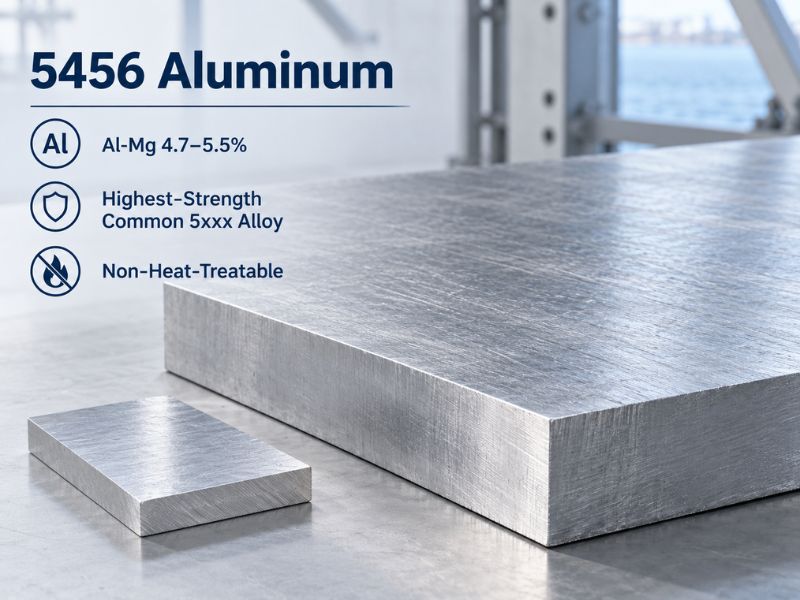
5456 je tvářená slitina hliníku a hořčíku ze série 5xxx, kde 4,7–5,5 % hořčíku nahrazuje zpevňování tuhého roztoku, ke kterému by jinak docházelo tepelným zpracováním. Není tepelně zpracovatelná, takže každý dodatečný megapascal pochází ze zpevňování deformací a obsahu legujících prvků, nikoli z cyklu kalení a stárnutí. Mangan přidává houževnatost a chrom řídí strukturu zrn, což společně dává slitině 5456 nejvyšší pevnost ve stavu po výrobě ze běžně skladovaných slitin 5xxx.
Tato hladina hořčíku je také zdrojem jediného vážného omezení této slitiny. Nad přibližně 3 % hořčíku slitina Al-Mg udržovaná po delší dobu nad přibližně 65 °C precipituje beta fázi podél hranic zrn, a tato síť je anodická vůči okolní matrici. Koroze pak postupuje podél hranic zrn namísto napříč povrchem, což je důvod, proč vysokohořčíkové jakosti vyžadují specifický stav zpracování — nejen specifickou slitinu — aby byly považovány za přijatelné pro námořní použití.
Chemické složení 5456
Níže uvedené limity jsou podle ASTM B209 pro plechy a desky. Obsah titanu se liší mezi sousedními jakostmi: 5456 povoluje max. 0,20, zatímco 5056 povoluje pouze max. 0,15, takže tyto dvě hodnoty nesmí být vzájemně zaměňovány.
| Prvek | Složení (% hmotnostně) |
|---|---|
| Křemík (Si) | 0,25 max. |
| Železo (Fe) | max 0,40 |
| Měď (Cu) | 0,10 max |
| Mangan (Mn) | 0.50–1.00 |
| Hořčík (Mg) | 4.7–5.5 |
| Chrom (Cr) | 0.05–0.20 |
| Zinek (Zn) | 0,25 max. |
| Titan (Ti) | max 0,20 |
| Ostatní, každý | 0,05 max |
| Ostatní, celkem | 0,15 max |
| Hliník (Al) | Bilance |
Dvě položky si zaslouží pozornost na objednávce. Hořčík na této úrovni je to, co dodává pevnost, která staví 5456 nad 5083, takže certifikát vykazující hořčík blízko spodní hranice rozsahu by měl vyvolat otázku, jak velká část pevnostní výhody zůstává zachována. Měď je omezena na 0,10 %, protože měď přímo působí proti korozní odolnosti v mořské vodě.
Mechanické vlastnosti 5456 podle stavu zpracování
Typické hodnoty níže jsou čerpány z dat ASM a Aluminum Association pro válcované výrobky. Jsou užitečné pro srovnání a ranou fázi návrhu, ale zaručené hodnoty se řídí příslušnou specifikací a tloušťkou a rozhodující pro skutečně dodaný materiál je atest hutního podniku.
| Temperament | Pevnost v tahu (MPa) | Mez kluzu (MPa) | Prodloužení (%) | Typická tvrdost (HB) |
|---|---|---|---|---|
| O (žíhaný) | 310 | 159 | 24 | — |
| H111 | 310 | 180 | 14 | — |
| H112 | 310 | 166 | 22 | — |
| H116 / H321 | 350 | 255 | 12 | 90 |
Pro cokoli řízené normou ASTM B928 je závazným číslem minimální hodnota podle předpisu, nikoli typická hodnota:
| Temperament | Rozsah tloušťky | Pevnost v tahu, min. (MPa) | Mez kluzu, min. (MPa) | Tažnost, min. (%) |
|---|---|---|---|---|
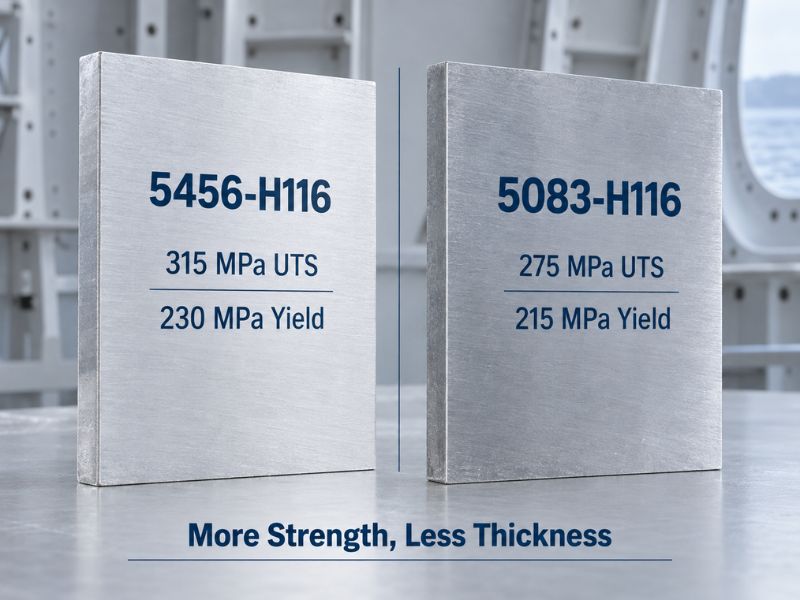
| 5456-H116 / H321 | 3–40 mm | 315 | 230 | 10 |
| 5083-H116 / H321 | 3–50 mm | 275 | 215 | 10 |
| 5086-H116 / H321 | 3–50 mm | 240 | 195 | 10 |
Řádek, který zde hraje největší roli, je první. Ve srovnání s 5083-H116 poskytuje 5456-H116 přibližně o 40 MPa vyšší pevnost v tahu a asi o 15 MPa vyšší mez kluzu při stejném minimu podle předpisu, což je celý komerční důvod pro jeho volbu namísto mnohem běžněji skladované 5083.
Proč existují H116 a H321: Limit senzibilizace při 65 °C
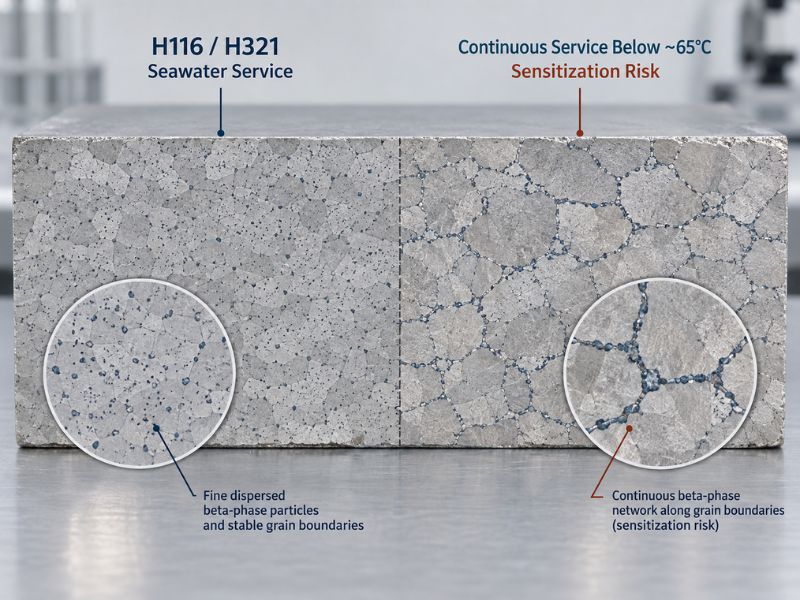
Senzibilizace je režim poruchy, který určuje, jak může být 5456 specifikována. Nad přibližně 3 % hořčíku dlouhodobé vystavení v rozsahu 65 °C a výše vytlačuje rozpuštěný hořčík z tuhého roztoku do částic beta fáze podél hranic zrn. Jakmile tyto částice vytvoří souvislou síť, slitina se stává náchylnou k mezikrystalové korozi, exfoliační korozi a koroznímu praskání za napětí — všechny tyto jevy postupují vnitřně a jsou snadno přehlédnutelné při vizuální kontrole.
5456 nemůže být z tohoto důvodu vyňata tepelným zpracováním. Je to tepelně nezpracovatelná slitina a neexistuje žádný cyklus stárnutí, který by rozpustil vytvořenou síť na hranicích zrn. Jakmile k senzibilizaci dojde, stav je trvalý.
H116 a H321 existují speciálně proto, aby tento mechanismus oddálily. Oba jsou stavy zpevněné deformací, které procházejí stabilizačním tepelným zpracováním, jež vede případné částice beta fáze do jemného, dispergovaného rozložení uvnitř zrn namísto souvislého filmu mezi nimi. ASTM B928 pak výsledek ověřuje: desky H116 a H321 musí projít zkouškou exfoliační koroze s hodnocením ne horším než PB a limitem úbytku hmotnosti při mezikrystalové korozi 15 mg/cm².
| Stav | Co to znamená v praxi | Typický jazyk nabídky |
|---|---|---|
| H116 | Zpevněno deformací, stabilizováno pro splnění limitů exfoliace a mezikrystalové koroze podle B928 | Specifikováno tam, kde je vyžadováno schválení klasifikační společnosti |
| H321 | Zpevněno deformací a stabilizováno s řízeným krokem studeného tváření | Specifikováno pro svařované konstrukce s definovanými mechanickými minimy |
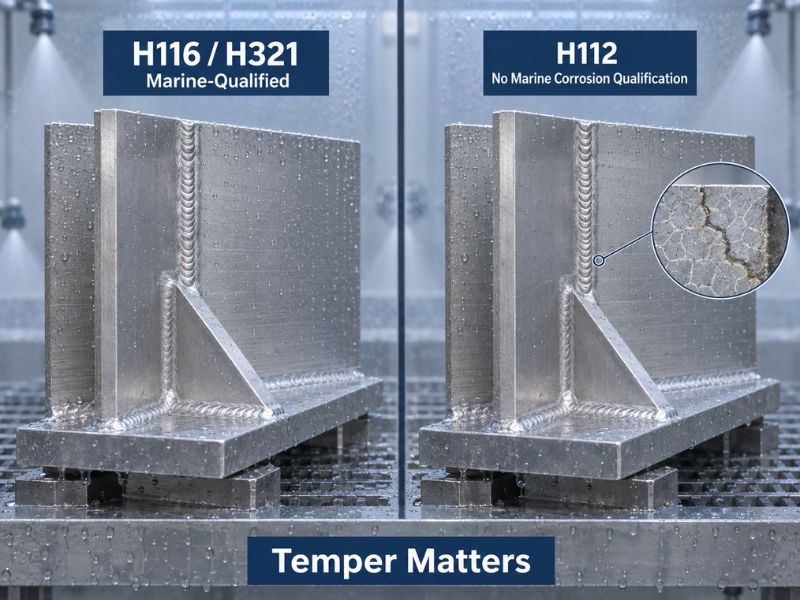
| H112 | Lehce zpevněno deformací z výrobního procesu, bez korozní kvalifikace | Přijatelné pro obecné konstrukce, nikoli samostatně pro kontakt s mořskou vodou |
| O | Plně žíháno, maximální tvařitelnost | Používá se pro náročné tváření, obvykle následované svařováním |
Praktické pravidlo je jednoduché: pokud je součást vystavena mořské vodě a zůstává na místě roky, musí řádek stavu zpracování uvádět H116 nebo H321. Nabídka, která pro stejnou součást nabízí H112, je levnější proto, že nenese korozní kvalifikaci, nikoli proto, že by kov byl nějak odlišný.
Fyzikální vlastnosti 5456
| Majetek | Typická hodnota |
|---|---|
| Hustota | 2,66 g/cm³ |
| Rozsah tání | 570–638 °C |
| Tepelná vodivost | 117–127 W/m·K |
| Elektrická vodivost | 28,5–29,5 % IACS |
| Modul pružnosti | 69–74 GPa |
| Koeficient tepelné roztažnosti | 23.9 × 10-⁶ /°C |
| Magnetická odezva | Nemagnetická |
Tyto dvě hodnoty vodivosti jsou nižší, než většina konstruktérů očekává, a přímo vyplývají z obsahu hořčíku. Každé procento hořčíku v tuhém roztoku rozptyluje elektrony a fonony, takže 5456 s přibližně 29 % IACS a 120 W/m·K se nachází výrazně pod 5052 s přibližně 35 % IACS a 138 W/m·K. Jakékoli použití, kde součást slouží jako vodič nebo tepelný rozvaděč, pracuje proti chemickému složení.
Korozní odolnost a námořní použití
V mořské vodě a námořních atmosférách si 5456 vede dobře — za předpokladu, že stav zpracování nese svou korozní kvalifikaci. Oxidový film, který se samovolně vytváří, je stabilizován obsahem hořčíku a chromu, což zpomaluje útok chloridů a udržuje důlkovou korozi mělkou. V praxi to znamená nižší údržbu v suchém doku ve srovnání s natíranou ocelí a dlouhou provozní historii na opláštění trupu.
Tři podmínky tento obraz mění:
- Trvalá teplota nad přibližně 65 °C. Konstrukce strojoven, vyhřívané nádrže a armatury v blízkosti výfuků jsou klasickými případy selhání. Buď přesuňte součást pryč od zdroje tepla, nebo přejděte na 5454, jehož nižší obsah hořčíku jej udržuje mimo rozsah senzibilizace.
- Silné průřezy pod trvalým tahovým napětím. Silná deska zadržuje více zbytkového pnutí po svařování a SCC vyžaduje jak náchylnou cestu, tak napětí. Silnější průřezy u 5456 si zaslouží výslovné inženýrské posouzení.
- Kontakt s odlišnými kovy. Hliník je anodický vůči mědi, mosazi a nerezové oceli. Izolace a odvodnění musí být navrženy, nikoli objeveny v provozu.
Práce s 5456: tváření, svařování a obrábění
Svařování. 5456 se dobře svařuje metodami MIG a TIG, ale konstrukční návrh spoje nemůže využívat vlastnosti základního materiálu. Protože slitina není vytvrzovatelná tepelným zpracováním, tepelně ovlivněná zóna se žíhá zpět směrem ke stavu O a zůstává v něm — žádné následné tepelné zpracování ji neobnoví. Vlastnosti svarového kovu z přídavného materiálu ER5556 na základní desce 5083 nebo 5456 se pohybují kolem 280–310 MPa v tahu a 130–165 MPa v kluzu, oproti 255 MPa v kluzu pro základní materiál H116. To je přibližně 35–45% pokles meze kluzu v blízkosti spoje a dovolená napětí podle AWS D1.2 s tím již počítají, proto navrhujte podle hodnoty žíhané HAZ, nikoli podle zakoupeného stavu.
| Výplň | Obsah hořčíku | Kdy se hodí | Na co si dát pozor |
|---|---|---|---|
| ER5556 | ~5.0% | Výchozí volba pro 5456 — odpovídá základní slitině a nejlépe zachovává korozní odolnost | Omezená dostupnost mimo námořní dodavatelské řetězce |
| ER5183 | ~4.8% | Kde záleží na maximální pevnosti spoje ve stavu po svařování | Ověřte podle schváleného postupu |
| ER5356 | ~4.5% | Obecná výroba z 5xxx, široce skladem | Nedoporučuje se pro trvalý provoz nad přibližně 65 °C |
| ER4043 | Obsahuje křemík | Vyhněte se u 5456 | Křemík se slučuje s hořčíkem na křehký Mg₂Si a svar se anodizací zbarví černě |
Tváření. Tvařitelnost se řídí stavem. O a H111 zvládají těžké ohýbání a tažení; H116 a H321 snesou mírné tváření, ale poloměry ohybu musí být větší, než by dílna zvyklá na 5052 očekávala. Za studena silně tvarovaná deska H321 a její následné uvedení do provozu zvyšuje riziko praskání i vyššího zbytkového napětí, což přímo přispívá k výše popsanému mechanismu SCC.
Obrábění. 5456 se obrábí přijatelně, ale je „gumovější“ než vytvrzovatelné slitiny, takže odvod třísek a ostré nástroje jsou důležitější než výkon vřetena. Řízení třísky se zlepšuje s většími úhly čela a pozitivní geometrií řezu.
Povrchová úprava. Jako všechny slitiny 5xxx se 5456 anodizací zbarví do tlumené šedé, nikoli do jasného povrchu, a nebude barevně odpovídat extrudovanému profilu z 6063. Pokud je vzhled kritériem, specifikujte tento požadavek před zadáním objednávky, místo abyste to zjistili až při montáži.
5456 vs 5083 vs 5086 vs 5052: Jak vybrat
| Slitina a stav | Pevnost v tahu, min. (MPa) | Mez kluzu, min. (MPa) | Hořčík (%) | Kde vyniká |
|---|---|---|---|---|
| 5456-H116 | 315 | 230 | 4.7–5.5 | Nejvyšší pevnost ze skupiny při kontaktu s mořskou vodou |
| 5083-H116 | 275 | 215 | 4.0–4.9 | Nejširší dostupnost, nejlépe zdokumentované zkušenosti v námořním prostředí |
| 5086-H116 | 240 | 195 | 3.5–4.5 | Dobrý výkon v námořním prostředí při nižších nákladech a lepší tvařitelnosti |
| 5052-H32 | 215 | 160 | 2.2–2.8 | Tvarově náročné plechové práce, bez limitu senzibilizace |
Čtení sloupce hořčíku vysvětluje téměř vše o chování těchto čtyř slitin. Vyšší obsah hořčíku přináší pevnost a stojí teplotní způsobilost: dva vysokohořčíkové stupně mají omezení na 65 °C, zatímco 5052 s 2,2–2,8% nikoli. Dostupnost jde opačným směrem — 5083 je skladem téměř všude a 5456 je v mnoha servisních centrech zakázková položka, což se odráží v ceně i dodací lhůtě.
Go/No-Go: Kdy specifikovat 5456
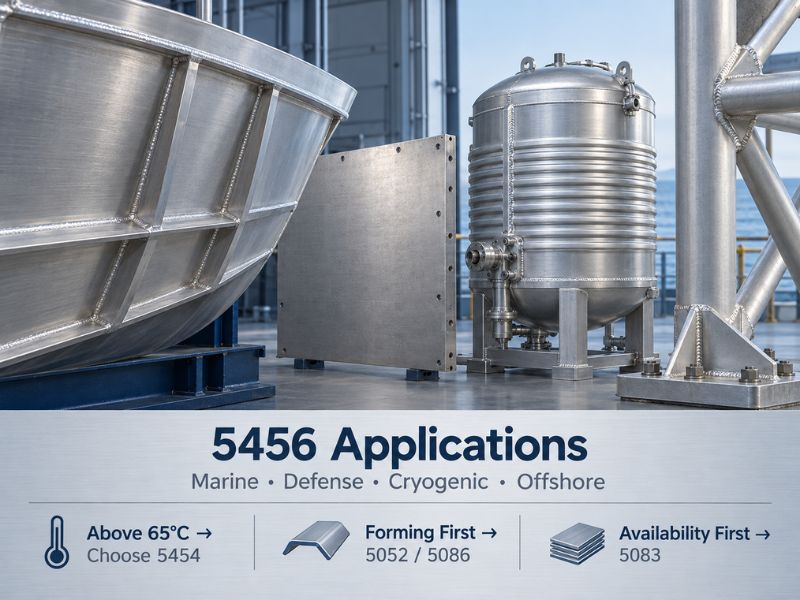
Následující položky odpovídají na otázku, zda slitinu použít. Aplikace jsou popsány samostatně v další sekci — tato sekce pokrývá rozhodnutí, tamta pokrývá cílové použití.
Go — 5456 se hodí, když:
- Návrh potřebuje vyšší pevnost, než poskytuje 5083-H116, a tloušťku nelze zvětšit jako kompenzaci
- Konstrukce je svařovaná, zůstává v kontaktu s mořskou vodou a specifikace může vyžadovat H116 nebo H321 s výsledky zkoušek podle B928
- Záleží na odolnosti proti nárazu a houževnatosti při nízkých teplotách, včetně kryogenního a offshore provozu
- Tepelná roztažnost musí zůstat předvídatelná vůči dokumentovanému koeficientu roztažnosti při dynamickém zatížení
No-Go — zvolte něco jiného, když:
- Teplota kovu může trvale překročit přibližně 65 °C — přejděte na 5454
- Rozhodnutí dominuje dodací lhůta a dostupnost skladem — 5083 je bezpečnější dodavatelský řetězec
- Díl potřebuje jasný nebo barevně sladěný anodizovaný povrch — použijte 6xxx
- Tváření převažuje nad pevností — 5052 nebo 5086 budou levnější a snáze tvarovatelné
- Projekt vyžaduje pevnost, kterou dodá pouze tepelné zpracování — přejděte na vytvrzovatelnou řadu
Kde se 5456 používá
Námořní a lodní průmysl. Trupové plátování, paluby, přepážky a nástavby na hlídkových člunech, pracovních lodích a rychlostních plavidlech jsou základní sadou aplikací. 5456 si své místo zaslouží tam, kde se vyplatí zaplatit za snížení hmotnosti, protože pevnostní rezerva oproti 5083 umožňuje konstruktérovi trupu tloušťku spíše ubrat než přidat.
Obranné a ochranné konstrukce. Pancéřové desky pro vojenská vozidla, součásti vojenských mostních konstrukcí a proti výbuchu odolné sestavy používají 5456 pro absorpci energie v kombinaci s balistickým výkonem. MIL-DTL-46027 je jedna specifikace pokrývající tuto oblast a nese vlastní požadavky na stav a zkoušení nad rámec komerčních norem.
Tlakové nádoby a těžké svařované konstrukce. 5456 se objevuje u skladovacích nádrží, tlakových nádob a velkých přepravních rámů, kde návrh řídí celistvost svařovaných spojů. Účinnost spoje se musí vždy počítat z vlastností žíhané HAZ, nikoli z hodnot základního materiálu H116.
Kryogenní a offshore provoz. Na rozdíl od uhlíkové oceli netrpí slitiny 5xxx přechodem z tvárného na křehký lom s klesající teplotou a jak pevnost, tak tažnost se zlepšují. To činí 5456 použitelnou pro kryogenní nádrže a pro offshore konstrukce vystavené chladnému klimatu.
Výhody a omezení na první pohled
| Rozměr | Výhoda | Omezení |
|---|---|---|
| Síla | Nejvyšší pevnost ve stavu po výrobě mezi běžnými slitinami 5xxx | Neexistuje žádná cesta tepelného zpracování, jak ji dále zvýšit |
| Koroze | Vynikající výkon v mořské vodě s kvalifikací H116/H321 | Vyžaduje tento stav; H112 nenese žádnou korozní kvalifikaci |
| Teplota | Stabilní v chladném provozu, včetně kryogenního | Nepoužitelné nad přibližně 65 °C kvůli senzibilizaci |
| Svařitelnost | Čistě svařitelné metodami MIG a TIG s odpovídajícím přídavným materiálem | HAZ se vyžíhá do stavu O s ~35–45% ztrátou meze kluzu, trvalou |
| Dostupnost | Dodáváno mlýny a skladovateli zaměřenými na námořní aplikace | Tenčí dodavatelský řetězec a delší dodací lhůty než 5083 |
| Náklady | Opodstatňuje se tam, kde pevnost umožňuje redukci tloušťky | Vyšší cena za kilogram a často požadavek na celní stav |
| Tvarovatelnost | Obratelný v O a H111 | H116/H321 vyžadují velké poloměry ohybu a pečlivé tváření za studena |
| Vzhled | Přijatelný s barvou nebo povlakem | Anodizuje se šedě, nebude barevně odpovídat 6063 |
Zajišťování 5456: Co specifikovat
Poptávka na 5456, která obsahuje následující položky, bude oceněna správně napoprvé. Ta, která je neobsahuje, vrátí levnější nabídku na materiál, který neprojde inspekcí:
| Položka specifikace | Co uvést | Proč to mění nabídku |
|---|---|---|
| Temperament | H116 nebo H321 pro cokoli, co přichází do styku s mořskou vodou | Korozně testovaný plech stojí více než H112 |
| Standardní | ASTM B928 pro námořní aplikace, B209 pro obecný tvar výrobku | Každý nese různé požadavky na zkoušky |
| Rozsah tloušťky | Příslušné rozsahy mění mechanická minima | Minima klesají s rostoucí tloušťkou |
| Zkouška exfoliace / IGC | Vyžadováno, pokud je díl v kontaktu s mořskou vodou | B928 vyžaduje ≤PB a ≤15 mg/cm² |
| certifikáty | MTC vyžadován; SGS testování, pokud je specifikováno projektem | Sledovatelnost je součástí dodávky |
| Tvar a velikost | Plech, tabule, tyč, trubka nebo profil s rozměry | Určuje routing mlýna a dodací lhůtu |
Linsy dodává 5456 ve formě plechu, tabule, tyče, trubky a extrudovaných profilů, nejčastěji ve stavu O, H111, H112, H116 a H321. Typická dodávka v rozsahu plechů sahá od 6 mm do 120 mm tloušťky, s plechem a svitkem až do přibližně 0,5 mm; jiné velikosti lze projednat podle specifikace objednávky. Každá zásilka odchází s certifikátem mlýna dokumentujícím složení a mechanické vlastnosti, a na vyžádání lze zajistit zprávy třetí strany SGS — včetně chemických, mechanických, ultrazvukových a rozměrových. Výroba probíhá pod systémy ISO 9001, ISO 14001 a ISO 45001.
Vlastní velikosti pro neskladové položky obvykle trvají 10–60 dní v závislosti na slitině, rozměrech, zpracování a složitosti objednávky, a je k dispozici vlastní výroba s nízkým MOQ. Interní podpora zahrnuje CNC obrábění, svařování MIG a TIG, laserové řezání a povrchové úpravy včetně anodizace a leštění.
Závěr
5456 poskytuje přibližně 40 MPa dodatečné pevnosti oproti 5083-H116 při stejném kódovém minimu, a účtuje si za to dvě tvrdé podmínky: stav musí být H116 nebo H321 pro cokoli, co přichází do styku s mořskou vodou, a konstrukce musí zůstat pod přibližně 65 °C, jinak přejít na 5454. V těchto dvou pravidlech se projekty s 5456 pokazí, a ani jedno se neobjevuje v datovém listu předaném ve fázi nabídky.
Linsy Aluminum pracuje přesně s touto hranicí. Dodáváme 5456 ve formě plechu, tabule, tyče, trubky a profilů ve stavu O, H111, H112, H116 a H321, s certifikátem mlýna vydaným pro každou objednávku a volitelnými zprávami SGS, kde projekt vyžaduje ověření třetí stranou. Pokud existují jakékoli pochybnosti o tom, zda je provozní teplota nebo stav vhodný pro daný design, pošlete výkres a provozní podmínky — potvrdíme, která specifikace skutečně musí být uvedena na objednávce před jejím zadáním.
Často kladené otázky
Je 5456 pevnější než 5083?
Ano, o užitečný rozdíl při kódovém minimu. ASTM B928 stanovuje 5456-H116 na 315 MPa v tahu a 230 MPa meze kluzu oproti 275 MPa a 215 MPa pro 5083-H116, takže rozdíl je přibližně 40 MPa v tahu a 15 MPa meze kluzu ve stejném rozsahu tloušťky. Kompromisem je zásobování: 5083 je skladováno mnohem šířeji a jeho námořní provozní záznam je dokumentován na více plavidlech.
Proč je 65 °C uvedený limit pro 5456?
Nad přibližně 3% hořčíku dlouhodobé vystavení kolem 65 °C a výše vytahuje rozpuštěný hořčík z roztoku a precipituje beta fázi podél hranic zrn. To vytváří anodickou cestu mezi zrny, otevírá dveře mezikrystalové korozi, exfoliaci a korozi za napětí. Protože 5456 nelze tepelně zpracovat, stav nelze po jeho vzniku vrátit zpět. Díly v blízkosti motorů, vyhřívaných nádrží nebo výfukových vedení jsou obvyklými viníky a 5454 je standardní náhradou v těchto zónách.
Který stav by měl být specifikován pro palubní plech čelící mořské vodě?
H116 nebo H321, uvedený s ASTM B928. Oba dostávají stabilizační úpravu, která rozptyluje částice beta fáze uvnitř zrn, místo aby jim umožnila vytvořit souvislý film na hranicích, a B928 ověřuje výsledek zkouškou exfoliace na PB nebo lepší a limitem mezikrystalového úbytku hmotnosti 15 mg/cm². H112 stojí mimo tuto kvalifikaci a není náhradou při kontaktu se slanou vodou.
Co se stane s pevností po svařování 5456?
Zóna ovlivněná teplem se vyžíhá zpět směrem ke stavu O a zůstává tam, protože žádné tepelné zpracování po svařování neobnoví deformační zpevnění. Návar ER5556 na základním plechu 5456 obvykle dává 280–310 MPa v tahu a 130–165 MPa meze kluzu, oproti přibližně 255 MPa meze kluzu pro základní kov H116 — snížení o 35–45% v blízkosti svaru. Dovolená napětí AWS D1.2 již toto předpokládají, takže spoje musí být navrženy na hodnoty vyžíhané HAZ, nikoli na specifikovaný stav.
Lze 5456 anodizovat?
Ano, ale neprodukuje to povrch, který většina lidí očekává. Jako všechny slitiny 5xxx se anodizuje do tlumené šedé spíše než na lesklý povrch a nebude barevně odpovídat extrudovanému 6063. Tam, kde záleží na vzhledu, to musí být dohodnuto před objednáním, nebo zachyceno prostřednictvím barvy a povlaku.