5754 Alüminyum Nedir?
5754, ana alaşım elementi magnezyum (%2,6–3,6) olan ve kontrollü küçük ilaveler olarak mangan ile krom içeren, ısıl işlemle sertleştirilemeyen bir dövme alüminyum-magnezyum alaşımıdır. Öncelikle bir EN standardı alaşımı, ikincil olarak küresel bir alaşımdır — UNS A95754 olarak tescil edilmiştir, ancak Kuzey Amerika stoklarından ziyade Avrupa tedarik zincirlerine çok daha derinlemesine yerleşmiştir.
Mukavemeti, magnezyumun katı çözelti sertleştirmesinden ve soğuk işlemeden kaynaklanan gerinim sertleşmesinden gelir. Çökelme sertleşmesi tepkisi yoktur, dolayısıyla T6 eşdeğeri mevcut değildir; temper tek kaldıraçtır. 5xxx ailesi içinde 5754, 5251'den daha güçlü, tavlanmış durumda 5052'den daha güçlü ve mutlak mukavemette 5083'ün altında olup şekillendirilmesi daha kolay ve daha ucuzdur.
5754'ün Kimyasal Bileşimi
| Element | İçerik (ağırlıkça %, aksi belirtilmedikçe maksimum) | Alaşımdaki rolü |
|---|---|---|
| Magnezyum (Mg) | 2.6 – 3.6 | Birincil sertleştirici; iş sertleşmesi tepkisini ve korozyon davranışını yönlendirir |
| Manganez (Mn) | 0.50 | Matrisi güçlendirir, yeniden kristalleşme sırasında tane boyutunu kontrol eder |
| Krom (Cr) | 0.30 | Tane büyümesini sınırlayan ince dispersoidler oluşturur |
| Mn + Cr (birleşik) | 0.10 – 0.60 | Birleşik sınır — alaşımın yapısını stabil tutan aralık |
| Demir (Fe) | 0.40 | Safsızlık; çukurcuk başlatabilen katodik intermetalikler oluşturur |
| Silisyum (Si) | 0.40 | Safsızlık; demir ile birleşir ve anodize görünümü etkiler |
| Çinko (Zn) | 0.20 | Safsızlık, sıkı şekilde sınırlandırılmış |
| Bakır (Cu) | 0.10 | Kesinlikle sınırlandırılmış — bakır genel korozyon direncini düşürür |
| Titanyum (Ti) | 0.15 | Döküm sırasında eklenen tane inceltici |
| Diğerleri (her biri / toplam) | 0.05 / 0.15 | Parti tutarlılığı için kontrol edilen eser elementler |
| Alüminyum (Al) | Denge | Ana metal |
Kullanımda diğerlerinden daha önemli iki üst sınır vardır. Bakır %0,10 ile sınırlandırılmıştır çünkü küçük miktarlar bile klorür ortamlarında genel korozyon direncini düşürür ve demir %0,40 ile sınırlandırılmıştır çünkü demir açısından zengin intermetalikler yerel katotlar olarak işlev görür ve çukurcuk başlatır. Her ikisi de 5754'ün deniz suyunda bu kadar iyi performans göstermesinin nedenidir.
Spesifikasyonlar ve Eşdeğer Tanımlamalar
| Standart / sicil | Tanımlama |
|---|---|
| EN (kimyasal semboller) | EN AW-5754 / EN AW-AlMg3 |
| EN standartları | EN 573-3 (bileşim), EN 485-2 (sac, şerit ve plaka için mekanik özellikler) |
| DIN / Malzeme No. | 3.3535 |
| ISO | AlMg3 |
| UNS | A95754 |
| Tipik ürün standartları | Sac, şerit, plaka; ayrıca çubuk, profil, boru ve profil |
Temperlere Göre Mekanik Özellikler
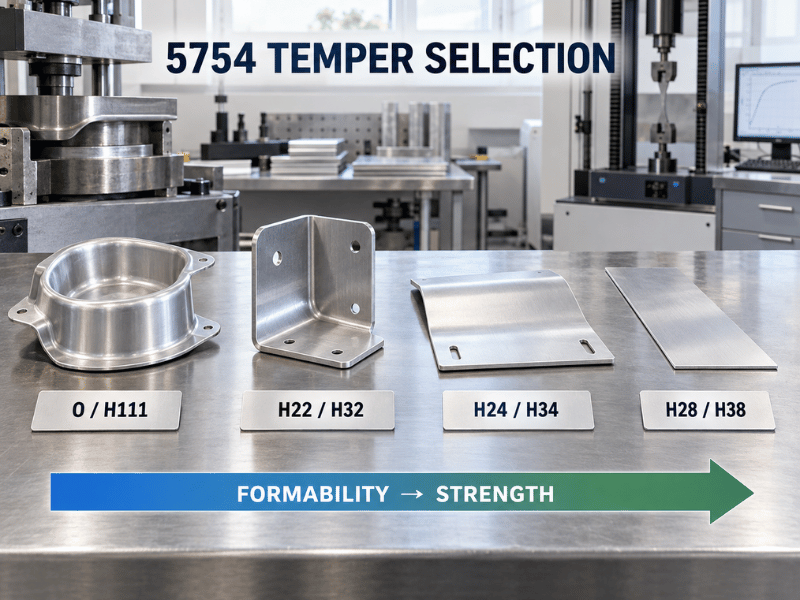
Aşağıdaki değerler sac, şerit ve plaka için EN 485-2 gereksinimleridir. Hem mukavemet aralığının hem de uzama minimumunun kalınlıkla değiştiğini unutmayın — rakamlar yaygın olarak tedarik edilen 0,5–6 mm bandı içindir.
| Temper | Çekme mukavemeti Rm (MPa) | Akma mukavemeti Rp0,2, min (MPa) | Uzama A50, min (%) | Sertlik HBW |
|---|---|---|---|---|
| O / H111 | 190 – 240 | 80 | 12 – 18 | 52 |
| H112 (plaka >6 mm) | ≥ 190 | 80 – 100 | 10 – 14 | 52 – 62 |
| H22 / H32 (çeyrek sert) | 220 – 270 | 130 | 7 – 11 | 63 |
| H24 / H34 (yarı sert) | 240 – 280 | 160 | 6 – 10 | 70 |
| H26 / H36 (üç çeyrek) | 265 – 305 | 190 | 4 – 6 | 78 |
| H28 / H38 (tam sert) | ≥ 290 | 230 | 2 – 4 | 87 |
Temperler: O, H111, H22/H32, H24/H34 ve Ötesi
H'den sonraki rakamlar tüm spesifikasyonu taşır. İlk rakam sertlik seviyesidir — 2 çeyrek sert, 4 yarı sert, 6 üç çeyrek, 8 tam sert. İkinci rakam ısıl işlemdir: H1x yalnızca iş sertleştirilmiş, H2x iş sertleştirilmiş sonra kısmen tavlanmış, H3x iş sertleştirilmiş sonra stabilize edilmiştir. H2x temperleri aynı sertlik seviyesinde H1x'ten biraz daha iyi şekillendirme davranışı sağlar, bu nedenle H22 ve H24 şekillendirilmiş panellerde yaygındır.
- O / H111: tavlanmış, H111 şekillendirmeden kaynaklanan hafif iş sertleşmesine izin verir. Bu, şekillendirme için kullanılacak durumdur ve kafesli sac için standart temperdir.
- H112: 6 mm üzeri imal edilmiş plaka, mukavemet kalınlığa bağlı olarak garanti edilir. Denizcilik ve yapısal plaka için yaygındır.
- H22 / H32: çeyrek sert — genel amaçlı yapısal sac durumu.
- H24 / H34: yarı sert, hâlâ bir miktar bükme kapasitesine ihtiyaç duyan daha düz parçalar için.
- H26 / H36 ve H28 / H38: giderek daha güçlü ve giderek daha az şekillendirilebilir, çoğunlukla sertlik veya çentik direncinin öncülük ettiği ince sacda kullanılır.
5754 ısıl işlemle sertleştirilemediğinden, metali 200–350 °C aralığına çıkaran herhangi bir işlem onu O durumuna doğru yumuşatır. Aşağıdaki kaynak ve servis sıcaklığı sınırlarının arkasındaki mekanizma budur.
Fiziksel Özellikler
| Mülkiyet | Değer |
|---|---|
| Yoğunluk | 2,66 g/cm³ |
| Erime aralığı | ~600 – 640 °C |
| Termal iletkenlik | ~125 – 135 W/m·K |
| Elektriksel iletkenlik | ~1 IACS |
| Elastisite modülü | ~68 – 70 GPa |
| Termal genleşme katsayısı (20–100 °C) | ~23,7 × 10⁻⁶ /K |
| Özgül ısı kapasitesi | ~900 J/kg-K |
| Poisson oranı | ~0.33 |
İletkenlik değerleri 5052’nin (~138 W/m·K ve ~1 IACS) biraz altındadır; bu doğrudan daha yüksek magnezyum içeriğinden kaynaklanır. Hiçbir sayı 5754'ün tercih edilme sebebi değildir, ancak parça aynı zamanda bir ısı yolu veya elektrik yolu işlevi görüyorsa her ikisi de önemlidir.
5754 ile Çalışma: Şekillendirme, Kaynak, İşleme ve Yüzey İşlemleri
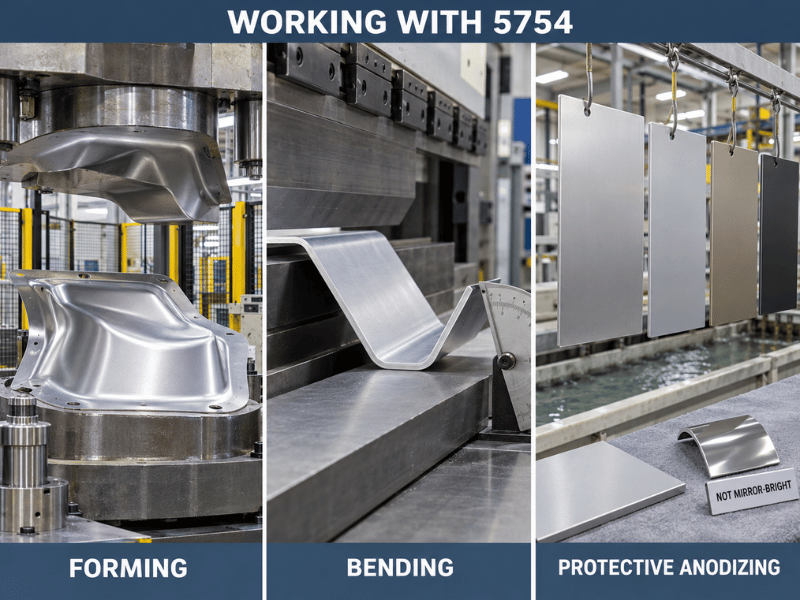
Şekillendirme. 5754 iyi şekillendirilir, en iyisi O/H111 durumunda. EN 485-2 minimum bükme yarıçapları kullanılabilir bir başlangıç noktası sunar — O/H111'de 180° bükme için yaklaşık 0,5–2,0× kalınlık, H22/H32'de 1,5–2,5× ve H24/H34'te 3,0×'e kadar, daha ince kalınlıklar için daha sıkı değerlerle. Gereksinim kalınlığa ve haddeleme yönüne göre bükme yönüne bağlı olarak değiştiğinden, kendi takımınızla bir bükme testi ile doğrulayın.
Kaynak. 5754 itibarını burada kazanır. TIG ve MIG her ikisi de mükemmel sonuçlar verir — 5356 olağan dolgu malzemesidir, daha yüksek kaynak mukavemeti gerektiğinde 5183 kullanılır. 6xxx alaşımlarının aksine, ısıdan etkilenen bölge kaynaktan sonra korozyon direncini korur. Gerçek tasarım sınırı mukavemettir: kaynak HAZ'ı tavlar, bu nedenle H22/H32 malzemesinde kaynak yanındaki bölge 220–270 MPa bandından yaklaşık 190–240 MPa'ya düşer, akma ise 130 MPa'dan yaklaşık 80 MPa'ya düşer. Bağlantıdan geçen herhangi bir yük yolunu tavlanmış değere göre boyutlandırın.
İşleme. İşlenebilirlik en iyi ihtimalle orta düzeydedir. Daha yumuşak temperler yapışkan olup temiz kesmek yerine yırtılma eğilimindedir — keskin cilalı takımlar, yüksek talaş açıları, pozitif ilerleme ve bol soğutucu yardımcı olur. Sert lehimleme zayıftır ve genellikle kaçınılır.
Yüzey işleme. 5754 iyi anodize olur, ancak parlak anodizasyon onun işi değildir. Fabrika verileri koruyucu ve sert anodizasyonu çok iyi, renkli anodizasyonu iyi olarak değerlendirir; bu da onu mimari ve araç paneli işleri için meşru bir dekoratif seçenek haline getirir. Ancak 5005, 5657 veya 6063“ün sunduğu ayna parlaklığındaki yüzey burada yalnızca ”kabul edilebilir" düzeydedir ve anodik tabaka hafif sıcak bir ton taşıyabilir — şartname parlak trim gerektiriyorsa bunun yerine o alaşımlardan birini seçin. Toz boyama, PVDF ve mekanik fırçalama hepsi iyi çalışır ve Linsy anodizasyon ile polisajı kendi bünyesinde yaptığından, yüzey malzeme ile birlikte tek siparişte belirtilebilir.
5754 Nerede Kullanılır
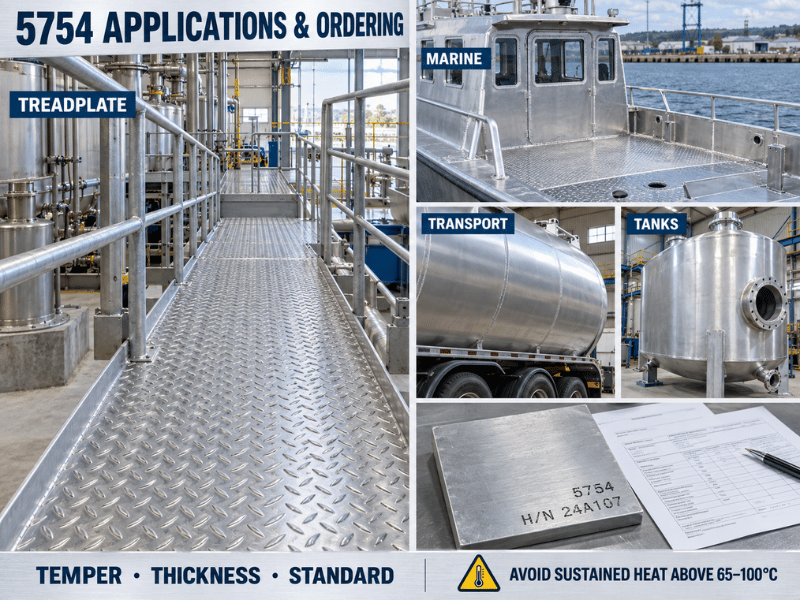
- Desenli sac ve zemin kaplaması: H111 ve H114 standart desenli sac temperleridir; yürüme yolları, tekne güverteleri, araç zeminleri ve endüstriyel erişim platformlarını kapsar. Bu, 5754’ün imza uygulamalarından biridir.
- Gemi inşası ve denizcilik: daha küçük teknelerde gövde kaplaması, üst yapılar, güverteler ve deniz suyu direncinin maksimum mukavemetten daha önemli olduğu bağlantı parçaları.
- Araç gövdeleri ve taşımacılık: gövde panelleri, kamyon ve treyler gövdeleri, yakıt tankları ve petrol tankeri kabukları.
- Proses ekipmanı: basınçlı kaplar, depolama tankları ve kimya, gıda işleme ve nükleer hizmet için kaynaklı yapılar.
- Perçinler: 5754 standart bir perçin alaşımıdır; bu, bağlantı elemanı ile sacın uyumlu korozyon davranışına ihtiyaç duyduğunda önemlidir.
- Mimari: kıyı ve endüstriyel kaplamalar; burada korozyon direnci ve renkli anodizasyon tepkisi çekiciliği oluşturur.
5754 vs 5052 vs 5083 vs 6061
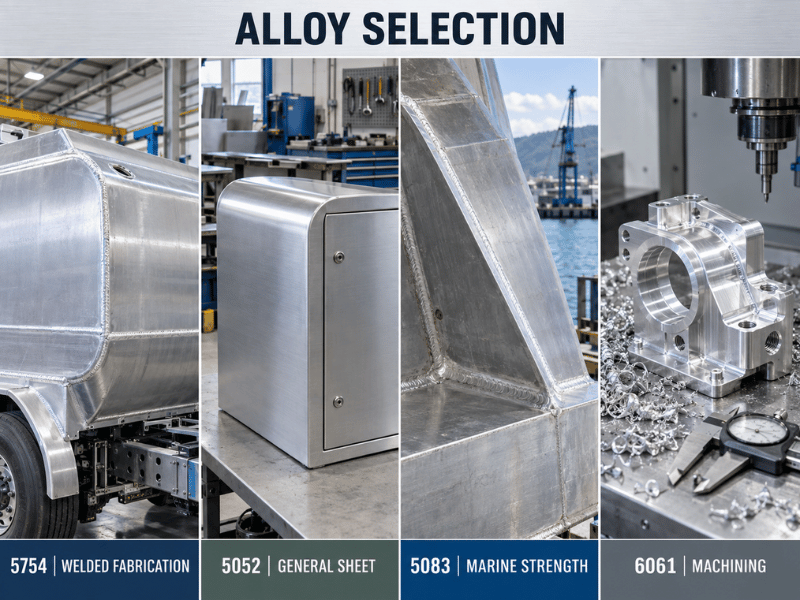
| Faktör | 5754 | 5052 | 5083 | 6061 |
|---|---|---|---|---|
| Ana alaşım elementi | Mg %2,6–3,6 | Mg %2,2–2,8 | Mg %4,0–4,9 | Mg %0,8–1,2, Si %0,4–0,8 |
| Isıl işlem uygulanabilir | Hayır | Hayır | Hayır | Evet |
| Çekme, tavlanmış (O) | 190–240 MPa | 170–215 MPa | 290–345 MPa | — |
| Çekme, çeyrek sert | 220–270 MPa (H22/H32) | 215–265 MPa (H32) | — | — |
| Çekme, en güçlü yaygın | ≥290 MPa (H28/H38) | ~290 MPa (H38) | 305–380 MPa (H116/H321) | 310 MPa (T6) |
| Akma, çeyrek sert | ≥130 MPa (H32) | ≥160 MPa (H32) | ≥215 MPa (H321) | 276 MPa (T6) |
| Deniz suyu korozyonu | Mükemmel | Mükemmel | Üstün | İyi |
| Kaynaklanabilirlik | Mükemmel | Mükemmel | Mükemmel | İyi |
| Şekillendirilebilirlik | O durumunda mükemmel | Mükemmel | İyi | Orta düzeyde |
| İşlenebilirlik | Adil | Adil | Adil | İyi |
| Sürekli yüksek sıcaklık | ~65–100 °C üzerinde dikkat | Daha uygun | ~65 °C üzerinde dikkat | İyi |
İki 5xxx kolonu farklı standartlara göre verilmiştir — 5754 için EN 485-2, 5052 için ASTM B209 — bu nedenle her birini kendi standardına göre okuyun, birinin minimumunu diğerinden çıkarmayın. Bu şekilde okunduğunda, 5754-H22/H32 ve 5052-H32 aynı çeyrek-sert aralığında yer alır (220–270'e karşı 215–265 MPa çekme), dolayısıyla H32'de aralarındaki seçim mukavemetten ziyade bulunabilirlik, fiyat ve ürün formuyla ilgilidir. Gerçek alaşım düzeyindeki fark, temper aralığının uçlarında ortaya çıkar: tavlanmış durumda yaklaşık –15 (190–240'a karşı 170–215 MPa), 5754'ün primini kazandığı yer burasıdır — H32'de sipariş edilen bir parça bunu kazandırmaz.
- 5754 — kaynaklı denizcilik, araç ve proses imalatı; kafes sac; 5052'den daha fazla tavlanmış mukavemet gerektiren şekillendirilmiş paneller.
- 5052 — genel sac metal işleri, yakıt tankları ve 5754’ün ekstra tavlanmış mukavemetinin gerekmediği durumlarda daha ucuz 5xxx varsayılanı.
- 5083 — klas sertifikalı denizcilik gövde sacı ve üçü arasında en güçlüsü, daha yüksek maliyetle ve daha katı 65 °C servis tavanıyla.
- 6061 — ısıl işlemle elde edilen mukavemet ve daha iyi işlenebilirlik, denizcilik hizmetinde daha düşük korozyon direnciyle.
Git / Gitme: 5754 Ne Zaman Doğru Tercih
5754'ü şu durumlarda seçin:
- Yapı kaynaklıdır ve deniz suyu, kimyasal veya endüstriyel atmosferlere maruz kalacaktır — 5754, HAZ boyunca korozyon direncini korur.
- Şekillendirilmiş bir panel için 5052'nin sağladığından daha fazla tavlanmış mukavemete ihtiyacınız varsa.
- Parça kafes sac, zemin kaplaması veya yürüme yolu ise — H111/H114 yerleşik temperdır.
- Uygulama, kaynak bütünlüğü ve korozyon direncinin her ikisinin de önemli olduğu bir basınç kabı, tank veya kamyon gövdesi ise.
- Bütçe 5083'e yetmiyorsa ancak 5052 sınırda kalıyorsa.
Şu durumlarda başka yerlere bakın:
- Servis sürekli olarak yaklaşık 65–100 °C üzerinde çalışıyorsa. Magnezyum %3,6'ya ulaştığında, 5754 β fazının tane sınırları boyunca çökelebileceği ve tane sınırları arası korozyon direncinin düşebileceği aralıkta yer alır. 5454, yüksek sıcaklıkta 5xxx servisi için tasarlanmış alaşımdır; 5052 daha güvenli genel tercihtir.
- Klas sertifikalı denizcilik sacında maksimum mukavemet gerekiyorsa — 5083 H116 veya H321.
- Tasarım ısıl işlemle elde edilen mukavemet gerektiriyorsa — 6061.
- Yüzey spesifikasyonu parlak veya ayna anodize ise — 5005, 5657 veya 6063.
5754 Tedariki: Sipariş Vermeden Önce Neyi Doğrulamalı
- Standart ve kalınlık bandı: EN 485-2 değerleri kalınlıkla değişir, bu nedenle geçerli standardı belirtin ve sorgulamada sadece temperı değil, kalınlık aralığını da belirtin.
- Şekillendirme sırasına uygun temper: Ağır şekillendirme ve kafes sac için O/H111, yapısal sac için H22/H32, parçanın nispeten düz kaldığı durumlarda H24/H34.
- Ürün formu: sac, şerit ve plaka standarttır; çubuk, profil, boru ve profil mevcuttur. Kafes sac normalde H111/H114'tür.
- Bulunabilirlik: 5754 bir EN alaşımıdır. Avrupa tedarik zincirlerinin dışında, 5052'ye kıyasla çok daha az yaygın olarak stoklanır, bu nedenle standart dışı temperlar veya kalınlıklar için teslim süresini programa dahil edin.
- Dokümantasyon: Her siparişle birlikte MTC; yapısal veya ihracat işleri için talep üzerine SGS kimyasal, mekanik ve boyutsal raporları mevcuttur.
Linsy Aluminum, 5754'ü plaka, sac, rulo, boru ve çubuk olarak O, H111, H22/H32, H24/H34 ve talep üzerine diğer temperlarda sunar; şirket içi CNC işleme, lazer kesim, TIG ve MIG kaynağı, anodizasyon ve polisaj hizmetleriyle birlikte. Özel ölçüler düşük MOQ ile üretilir, tipik teslim süreleri 10–60 gündür ve her siparişle birlikte bir MTC gönderilir.
Sonuç
5754 bir kaynaklı imalat alaşımıdır, mukavemet yükseltmesi değildir. Gerçek avantajları 5052'ye karşı tavlanmış mukavemet üstünlüğü, kaynaktan sonra da korunan deniz suyu korozyon direnci ve derin çekmeden tam sertliğe uzanan bir temper aralığıdır. Ödünleşim sabittir: ısıl işlem yok, 5083'ün altında mukavemet ve sürekli sıcak görevi dışlayan bir servis sıcaklığı tavanı.
Doğru spesifikasyon için temperı ve kalınlık bandını birlikte belirtin — EN 485-2 değerleri her ikisiyle de değişir — ve kaynaklı bağlantıları siparişteki tempera göre değil, tavlanmış HAZ mukavemetine göre boyutlandırın. Linsy Aluminum, 5754'ü yaygın temperlarda plaka, sac, rulo, boru ve çubuk olarak sunar; şirket içi işleme, lazer kesim, kaynak, anodizasyon ve polisaj ile malzeme ve yüzey birlikte spesifiye edilir.
Derece uygunluk incelemesi ve teklif için çiziminizi, hedef temperı ve servis koşullarınızı gönderin.
SSS
5754, 5052'den daha mı güçlü?
Tavlanmış durumda evet — 5754, 5052’nin 170–215 MPa'sına karşı 190–240 MPa değerindedir, yaklaşık –15 üstünlük. H32“de ikisi, farkın marjinal olduğu noktaya yakınsar (220–270 MPa'ya karşı 215–265 MPa), dolayısıyla burada alaşım seçiminden çok temper önemlidir. Tedarikçi özetlerinde dolaşan ”her açıdan –20 daha güçlü" iddiası, gerçek temper verilerine bakıldığında geçerliliğini korumaz.
5754 dekoratif bir yüzey için anodize edilebilir mi?
Evet, bir uyarıyla. Fabrika verileri koruyucu ve sert anodizasyonu çok iyi, renkli anodizasyonu iyi olarak derecelendirir, dolayısıyla 5754 meşru bir dekoratif anodizasyon alaşımıdır. Size vermeyeceği şey parlak, ayna yüzeydir — parlak anodizasyon yalnızca kabul edilebilir olarak derecelendirilir ve katman daha sıcak bir ton taşıyabilir. Parlak trim için 5005, 5657 veya 6063 belirtin.
Kaynak 5754'ü zayıflatır mı?
Korozyon direnci korunur; mukavemet, ısıdan etkilenen bölgede korunmaz. H22/H32 malzemede HAZ, 220–270 MPa'dan tavlanmış seviyeler olan yaklaşık 190–240 MPa'ya düşer ve akma, minimum 130 MPa'dan yaklaşık 80 MPa'ya iner. Bir kaynak boyunca geçen herhangi bir yük yolunu tavlanmış değere göre tasarlayın. Dolgu normalde 5356'dır veya daha yüksek kaynak mukavemeti için 5183'tür.
5754 deniz ortamları için uygun mudur?
Evet. Mükemmel deniz suyu ve endüstriyel atmosfer korozyon direncine sahiptir ve gövde kaplaması, güverteler, üst yapılar ve bağlantı parçaları için kullanılır. Maksimum mukavemette klas sertifikalı gövde yapısı için, H116 veya H321'de 5083 olağan bir üst kademedir.
5754 yüksek sıcaklıkta kullanılabilir mi?
Dikkatle. Magnezyum, aralığın üst sınırında %3,6'ya ulaşır; bu, yaklaşık 65–100 °C üzerinde uzun süreli maruz kalma sırasında tane sınırları boyunca β-fazı çökelmesinin tane sınırları arası korozyon direncini azaltabileceği seviyedir. Sürekli yüksek sıcaklık servisi için 5454 bunun için tasarlanmış alaşımdır ve 5052 daha güvenli genel alternatiftir.