5454 Alüminyum Nedir?
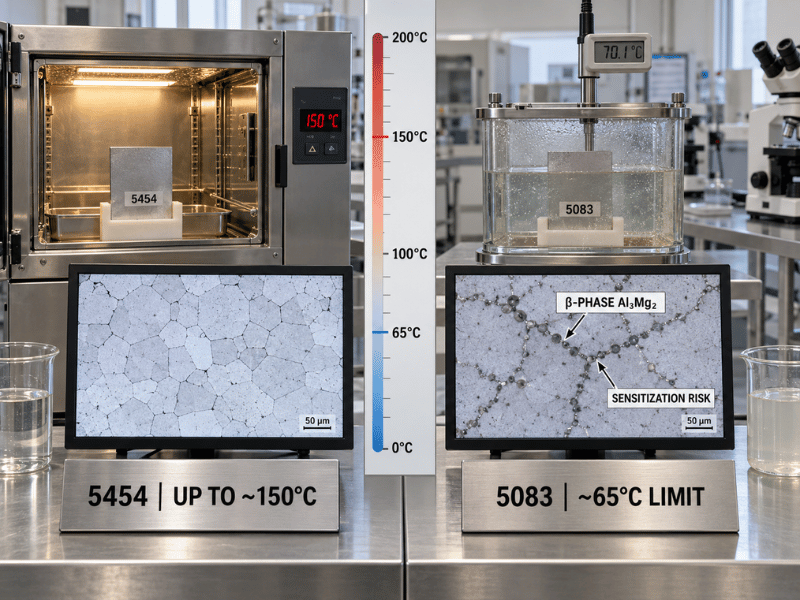
5454, belirli bir sorun için geliştirilmiş 5xxx alaşımıdır: oda sıcaklığında güçlü ve korozyona dayanıklı olan, ancak ısındığında güvenilirliğini yitiren alüminyum-magnezyum kaliteleri. Magnezyum içeriği %3,0 ile sınırlandırılmıştır ve bu, 5083 (%4,0–4,9 Mg) ve 5456 (%4,7–5,5 Mg) gibi yüksek magnezyumlu kalitelerin yaklaşık 65 °C üzerinde hassaslaşmaya başladığı ve gerilme korozyon çatlamasına karşı savunmasız hale geldiği eşiğin hemen altında tutar. Tane yapısını iyileştirmek ve bu hasar moduna yol açan tane sınırı çökelmesini bastırmak için az miktarlarda kontrol edilmiş manganez ve krom eklenir.
Sonuç, sürekli hizmette yaklaşık 150 °C'ye kadar kullanışlı mukavemet ve korozyon direncini koruyan, ısıl işlemle sertleştirilemeyen bir alaşımdır — 5454'ün yüksek sıcaklık alüminyum yapımı için ASME basınçlı kap kodlarında tanınan az sayıdaki 5xxx kalitesinden biri olmasının nedeni budur. Neredeyse tamamen plaka ve sac olarak tedarik edilir ve kaynaklı kimyasal tanklar, sıcak proses kapları, tanker gövdeleri ve ısıya maruz kalan deniz bileşenleri için belirtilir.
5454'ün olmadığı şey en güçlü seçenek olmaktır. Oda sıcaklığındaki tepe çekme mukavemetinin belirleyici faktör olduğu durumlarda 5083 kazanır ve 6061-T6 daha da fazla kazanır. 5454'ün yanıtladığı seçim sorusu farklıdır: alaşım yalnızca test tezgahında değil, hizmet sıcaklığında da bütünlüğünü koruyabilir mi?.
5454 Kimyasal Bileşimi
ASTM B209 / EN 573-3'e göre bileşim sınırları, ağırlık yüzdesi olarak.
| Element | İçerik (%) | Rol |
|---|---|---|
| Magnezyum (Mg) | 2.4 – 3.0 | Katı çözelti mukavemetlendirmesi; hassaslaşmayı sınırlamak için sınırlandırılmıştır |
| Manganez (Mn) | 0.50 – 1.00 | Mukavemeti artırır; tane yapısını iyileştirir |
| Krom (Cr) | 0.05 - 0.20 | Tane sınırı çökelmesini bastırır |
| Silisyum (Si) | 0,25 maks. | Safsızlık |
| Demir (Fe) | 0,40 maks | Safsızlık |
| Bakır (Cu) | 0,10 maks. | Korozyon direnci için düşük tutulur |
| Çinko (Zn) | 0,25 maks. | Eser miktar |
| Titanyum (Ti) | 0,20 maks. | Tane inceltici |
| Diğerleri (her biri) | 0,05 maks. | Eser safsızlıklar |
| Diğerleri (toplam) | 0,15 maks. | Eser safsızlıkların toplamı |
| Alüminyum (Al) | Kalan | Baz |
Manganez ve krom ilaveleri, 5454'ü düz Al-Mg sacdan ayıran unsurlardır. Manganez, karşılaştırılabilir bir Mg seviyesine kıyasla çekme ve akma mukavemetine yaklaşık –15 katkı sağlar ve krom ile birlikte, sürekli yük altındaki kaynaklı bağlantılarda aksi takdirde bir gerilme korozyonu yolu açacak olan tane arası çökelmeyi engeller. Bu kombinasyon, 5454'ün 5052 veya 5754'ün kabul edilmediği tank ve kap spesifikasyonlarında yer almasının nedenidir.
Temper'e Göre 5454 Mekanik Özellikleri

Plaka ve sac için tipik değerler. ASTM B209 minimum değerleri daha düşüktür ve kalınlığa göre değişir — belirli bir parti için garanti edilen rakamlar fabrika test sertifikasından alınır.
| Temper | Çekme mukavemeti (MPa) | Akma mukavemeti (MPa) | Uzama (%) | Sertlik (HB) |
|---|---|---|---|---|
| O | 250 | 117 | 22 | 62 |
| H32 | 275 | 207 | 10 | 73 |
| H34 | 305 | 241 | 10 | 81 |
| H36 | 340 | 276 | 8 | — |
| H38 | 370 | 310 | 8 | 100 |
| H111 | 260 | 179 | 14 | 70 |
| H112 | 250 | 124 | 18 | 62 |
Burada çoğu temper kararını iki şey yönlendirir. Birincisi, H32 ve H34, çoğu 5454 spesifikasyonunun gerçekte kullandığı tek iki temperdir — şekillendirilmiş ve kaynaklı kaplar için H32, daha az şekillendirme ile yük taşıyan gövdeler için H34. İkincisi, H3x serisi diğer alaşımlarda olmadığı şekilde önemlidir: H1x temperleri yalnızca gerinimle sertleştirilmiştir, H3x temperleri ise gerinimle sertleştirilir ve ardından düşük sıcaklık işlemiyle stabilize edilir. Kaynaklı bir basınçlı kapta bu stabilizasyon, kaynak sonrası tane arası korozyon direncinde ölçülebilir şekilde daha iyi sonuç sağlar. Kaynaklı yapım için, stabilize edilmemiş eşdeğerler yerine H32 veya H34 tercih edin.
H111 ve H112 bilinmeye değerdir çünkü O ile birbirlerinin yerine kullanılamazlar. H112, kalın plaka ve kaynaklı yapısal işler için kullanılan sıcak haddelenmiş durumdur ve ayrı bir soğuk işlem adımı olmadan orta düzeyde mukavemet taşır. H111, tavlamadan sonra hafifçe gerinimle sertleştirilmiştir ve sünekliğinin çoğunu korurken O'dan biraz daha fazla mukavemet sağlar.
5454 Neden Gerilme Korozyon Çatlamasına Direnir
Bu, alaşımı gerekçelendiren bölümdür, bu nedenle mekanizma konusunda kesin olmakta fayda var.
Yaklaşık %3'ten fazla magnezyum içeren alüminyum-magnezyum alaşımlarında, yaklaşık 65 °C üzerinde sürekli maruz kalma, magnezyumun tane sınırları boyunca β-fazı (Al₃Mg₂) olarak çökelmesine neden olur. Bu sınırlar anodik hale gelir ve tane arası saldırıya duyarlı olur; korozif bir ortamda sürekli çekme gerilmesi altında bu, gerilme korozyon çatlamasına dönüşür. Hasar birikimlidir ve ısıl işlemle geri döndürülemez; bu nedenle 5083 ve 5456 plakası bir onarım prosedürü yerine hizmet sıcaklığı uyarısı taşır.
Magnezyumu %3,0 ile sınırlayarak ve krom ekleyerek 5454 bu çökelmeyi en aza indirir. Pratik sonuç, 5083’ün kapandığı yerde açılan bir hizmet penceresidir:
| Hizmet koşulu | 5454 | 5083 |
|---|---|---|
| Ortam sıcaklığında sürekli hizmet | Mükemmel | Mükemmel |
| ~65 °C üzerinde sürekli hizmet | Kabul edilir — yaklaşık 150 °C'ye kadar derecelendirilmiştir | Önerilmez; SCC riski |
| Sıcak hizmette kaynak sonrası bütünlük | Güçlü — stabilize edilmiş H3x temperleri tercih edilir | H116/H321 koşulu ve sıcaklık kontrolü gerektirir |
| ASME basınçlı kap tanınırlığı, yüksek sıcaklık | Evet | Sıcaklık tavanı ile sınırlıdır |
Mukavemet de her alüminyum alaşımında olduğu gibi sıcaklıkla düşer. 150 °C'de 5454-H32, oda sıcaklığındaki 275 MPa değerine karşı yaklaşık 200 MPa çekme mukavemetini korur — yaklaşık korunma, ki bu artık bir değil, çalışma yüküdür. Yaklaşık 200 °C üzerinde düşüş alaşımdan bağımsız olarak dikleşir ve paslanmaz veya nikel alaşımları standart malzeme seçimi haline gelir.
Basınç hizmeti için tasarım gerilmeleri, yukarıdaki tablodaki oda sıcaklığı değerlerinden değil, gerçek tasarım sıcaklığı için geçerli kodun izin verilen gerilme tablolarından alınmalıdır. ~150 °C rakamı yaygın olarak kabul edilen bir sürekli hizmet kılavuzudur ve ASME kapsamı nitelikli basınç hizmeti için 150–200 °C bandına uzanır.
5454 Fiziksel Özellikleri
| Mülkiyet | Değer |
|---|---|
| Yoğunluk | 2,69 g/cm³ |
| Erime aralığı | 602 – 646 °C |
| Termal iletkenlik | ~134 W/m·K |
| Elektriksel iletkenlik | ~ IACS |
| Termal genleşme katsayısı | 23,6 × 10⁻⁶ /°C (20–100 °C) |
| Özgül ısı kapasitesi | ~900 J/kg-K |
| Elastisite modülü | ~70 GPa |
| Poisson oranı | 0.33 |
İletkenlik değerleri 5052’ninkinden (~138 W/m·K, ~ IACS) daha düşüktür çünkü 5454 katı çözeltide daha fazla magnezyum ve manganez taşır. Bu beklenen bir denge değişimidir: mukavemet ve ısıl kararlılık için alaşımlama bir miktar iletkenliğe mal olur. Uygulamanın yapısal yerine ısıl odaklı olduğu durumlarda, 5052 veya 3005 genellikle daha iyi ve daha ucuz seçim olacaktır.
5454 Alüminyum Plaka ve Sac: Formlar, Boyutlar ve Temperler
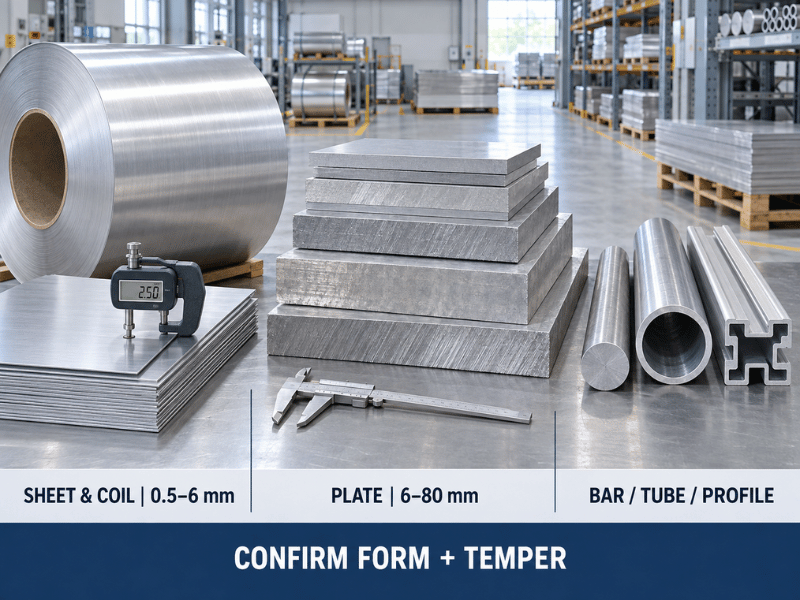
5454 ezici çoğunlukla düz haddelenmiş bir alaşımdır ve plaka-sac ayrımı belirtilirken çözülmesi gereken ilk konudur. Ayrım çizgisi nominal kalınlıktır: sac yaklaşık 0,5 mm'den 6 mm'ye kadar uzanır ve plaka 6 mm'de başlar. Plaka, kalınlığın yükü taşıdığı kaynaklı gövdeler, bölmeler ve yapısal elemanlar için kullanılır; 5454 alüminyum sac ise panelin yük taşıyıcı yerine şekillendirildiği kalıplanmış tank astarları, bölme panelleri ve kaplamalar için kullanılır.
| Form | Kalınlık / boyut aralığı | Yaygın temperler |
|---|---|---|
| Levha ve bobin | 0,5 – 6 mm | O, H32, H34, H38 |
| Tabak | 6 – 80 mm | H32, H34, H111, H112 |
| Çubuk (yuvarlak, düz, kare) | 6 – 300 mm | O, H111, H112 |
| Boru ve boru (dikişsiz / kaynaklı) | Dış çap 6 – 400 mm, et kalınlığı 0,5 – 40 mm | O, H32, H34, H111, H112 |
| Ekstrüde profil | Talep üzerine | H111, H112 |
5454 alüminyum plaka ve sac spesifikasyonuna ilişkin birkaç pratik not:
- Daha kalın plaka neredeyse her zaman H112 veya H32'dir. Soğuk işlenmiş temperler yaklaşık 25 mm'nin üzerinde üretimi zorlaşır ve daha az kullanışlı hale gelir; bu nedenle ağır kesitler sıcak haddelenmiş veya stabilize edilmiş durumda teslim edilir.
- H38 bir sac ve ince plaka temperidir. 370 MPa'ya ulaşır ancak uzama %8%'ye düşer; bu nedenle yarıçaplı parçalardan ziyade aşınmaya dayanıklı güverte kaplamaları ve şekillendirilmemiş parçalar için uygundur.
- Standart 5454 alüminyum sac, plakadan daha sıkı bükülür. H32'de ince sac, malzeme kalınlığına yaklaşan bükülme yarıçapları alır; H34'teki plaka genellikle kalınlığın bir ila iki katı yarıçap gerektirir ve daha kalın kesitler daha fazlasını gerektirir.
- Çubuk ve boru, sacdan farklı temperlerde teslim edilir. H32/H34 aralığı düz haddelenmiş bir tanımlamadır; çubuk, boru ve ekstrüde profil O, H111 veya H112 olarak gelir. Bir sac temperini doğrulamadan çubuk veya profil spesifikasyonuna taşımayın.
Korozyon Direnci ve Servis Limitleri
5454 deniz suyuna, deniz atmosferine, endüstriyel atıklara ve bir dizi kimyasal maruziyete dayanır. Orta düzeydeki magnezyum içeriği genel korozyon direncini yüksek tutarken, sınırlandırılmış kimya, daha yüksek magnezyumlu kaliteleri sınırlayan hassaslaşma yolunu ortadan kaldırır. Bu kombinasyon — korozyon direnci, kaynaklanabilirlik ve termal stabiliteyi tek bir alaşımda birleştirmesi — 5454'ü amonyum nitrat ve belirli petrokimyasal depolama ile içeriğin sıcak geldiği karayolu tanker gövdeleri ve proses kapları için standart bir malzeme haline getiren şeydir.
Göz önünde tutulması gereken iki sınır vardır. 5454, ağır yüklü bir yapıda sürekli deniz suyu daldırması için tercih değildir: 5083 ve 5086 daha güçlüdür ve tanınmış gövde plakası kaliteleridir; sıcaklık tavanları bir kısıtlama oluşturmadığında daha iyi spesifikasyondur. Ve her alüminyum alaşımı gibi, 5454 ıslak ortamda daha asil bir metale elektriksel olarak bağlandığında hızla korozyona uğrar; bu nedenle çelik veya bakır alaşımlarıyla doğrudan temas bir yalıtım bariyeri gerektirir.
5454 ile Çalışma

Kaynak. GTAW (TIG), GMAW (MIG), direnç kaynağı ve sürtünme karıştırma kaynağı hepsi çalışır. Asıl önemli olan dolgu malzemesi kararıdır:
| Dolgu | Kimya | Kaynak sonrası mukavemet | Yüksek sıcaklık performansına etkisi |
|---|---|---|---|
| ER5356 | Al-5% Mg | Daha yüksek | Sıcak serviste kaynak bölgesi SCC direncini hafifçe azaltır |
| ER5554 | Al-2,7% Mg | Biraz daha düşük | Ana metalle eşleşir; tam termal ve korozyon derecesini korur |
Yapısal bağlantılar ve sıcak çalışacak her şey için ER5554 standart öneridir çünkü ana alaşımla eşleşir ve kaynak bölgesinin korozyon davranışını plaka ile tutarlı tutar. Kaynak sonrası mukavemetin baskın olduğu ve servis sıcaklığının düşük kaldığı durumlarda ER5356 doğru tercihtir. Kod kapsamındaki işler için dolgu malzemesi kaynak prosedür spesifikasyonuna ve tasarım sıcaklığına göre doğrulanmalıdır.
Ön ısıtma ve kaynak sonrası ısıl işlem gerekmez. Her ısıl işlem görmeyen alaşımda olduğu gibi, ısıdan etkilenen bölge tavlanmış mukavemete geri döner ve ısıl işlemle geri kazanılamaz — bağlantıyı ana metal temperine göre değil, tavlanmış değerlere göre tasarlayın.
Şekillendirme. 5454, O ve H32'de iyi şekillendirilir. Derin çekme ve dar yarıçaplı bükme O'da pratiktir; 6–8 mm plakada abkant pres işi H32'de ara tavlama olmadan yaygındır. İş sertleştirme hızı 5052 ile 5083 arasındadır — mukavemeti hızla oluşturacak kadar yeterli, ancak şekillendirmeyi çok adımlı bir operasyona dönüştürecek kadar fazla değil.
İşleme. Orta ile iyi arası, ve H34'te daha yumuşak temperlere göre belirgin şekilde daha iyi. Yapışkan talaşlar ve yığılmış kenar bekleyin; bu nedenle keskin takımlar, yüksek kesme hızları ve bol yağlama kullanın. Bir parçanın kaplardan ziyade işleme ağırlıklı olduğu durumlarda, 6061-T6 daha iyi bir başlangıç noktasıdır.
Tavlama. Gerilim giderme tipik olarak yaklaşık 343 °C (650 °F) civarında hava soğutmalı olarak yapılır. Yaklaşık 220 °C'nin üzerinde sürekli maruziyetten kaçınılmalıdır, çünkü bu soğuk işlenmiş yapıyı geri kazanmak yerine yumuşatır.
Eloksal. Sorun haline gelmeden önce bilinmesi gerekenler: 5xxx alaşımları parlak, tekdüze bir yüzey yerine donuk gri olarak anodize olur — 6xxx ekstrüzyon kalitelerinin ürettiği gibi. Eğer çizim dekoratif anodize görünüm gerektiriyorsa, 5454 yanlış alaşımdır ve bu gereksinim anodizlemeden sonra değil, spesifikasyon aşamasında gündeme getirilmelidir.
5454 vs 5052 vs 5083 vs 6061
| Alaşım ve temper | Çekme (MPa) | Akma (MPa) | Uzama (%) | Sertlik (HB) | Sıcak servis | İçin en iyisi |
|---|---|---|---|---|---|---|
| 5454-H32 | 275 | 207 | 10 | 73 | ~150 °C | Kaynaklı basınç kapları, sıcak kimyasal ve deniz servisi |
| 5454-H34 | 305 | 241 | 10 | 81 | ~150 °C | Yük taşıyan tank gövdeleri, tanker gövdeleri |
| 5052-H32 | 228 | 193 | 12 | 60 | Daha düşük sıcak mukavemet | Genel sac metal işleri, yakıt tankları, muhafazalar |
| 5083-H116 | 317 | 228 | 16 | — | ~65 °C limiti | Deniz gövde plakası, kriyojenik muhafaza |
| 6061-T6 | 310 | 276 | 12 | 95 | Mukavemet ısıyla azalır | Yapısal çerçeveler, işlenmiş bileşenler |
5454 vs 5052. 5052, daha ucuz ve daha yaygın stoklanan genel amaçlı Al-Mg sac alaşımıdır. 5454, manganez ve krom ekler; bu, karşılaştırılabilir bir magnezyum seviyesinde çekme mukavemetini yaklaşık % artırır ve — daha da önemlisi — yüksek sıcaklıkta mukavemet korunumunu ve kaynak sonrası korozyon davranışını iyileştirir. Termal gereksinimi olmayan maliyet odaklı genel imalat için 5052'yi seçin; kap veya tank sıcak çalıştığında veya bir kod kalifikasyonu taşıdığında 5454'ü seçin.
5454 vs 5083. 5083 oda sıcaklığında yaklaşık –12% daha güçlüdür ve standart deniz gövde plakası kalitesidir. Ayrıca ~65 °C hassaslaşma limitini taşır. Tasarım sıcaklığı bu çizgiyi geçerse, 5454 belirtilen alaşımdır — kimyasal taşıma tankları, asfalt ve sıcak proses kapları ile deniz egzoz bileşenleri klasik durumlardır. Geçmezse, 5083’ün ekstra mukavemeti ve deniz sertifikasyonu genellikle kazanır.
5454 vs 6061. Farklı kategoriler. 6061-T6 ısıl işlem görebilir, çekme dayanımı açısından kabaca karşılaştırılabilir, çok daha işlenebilir ve yapısal ile işlenmiş parçalar için standart tercihtir. Ancak varsayılan basınç kabı veya kimyasal servis kalitesi değildir ve çıplak 6061 tuzlu suda ve birçok kimyasalda korozyona uğrar. Korozyon bütünlüğü ve kaynaklanabilirliğin işlenebilirlikten daha önemli olduğu yerlerde cevap 5454'tür.
Git/Gitme: 5454 Ne Zaman Belirtilmeli
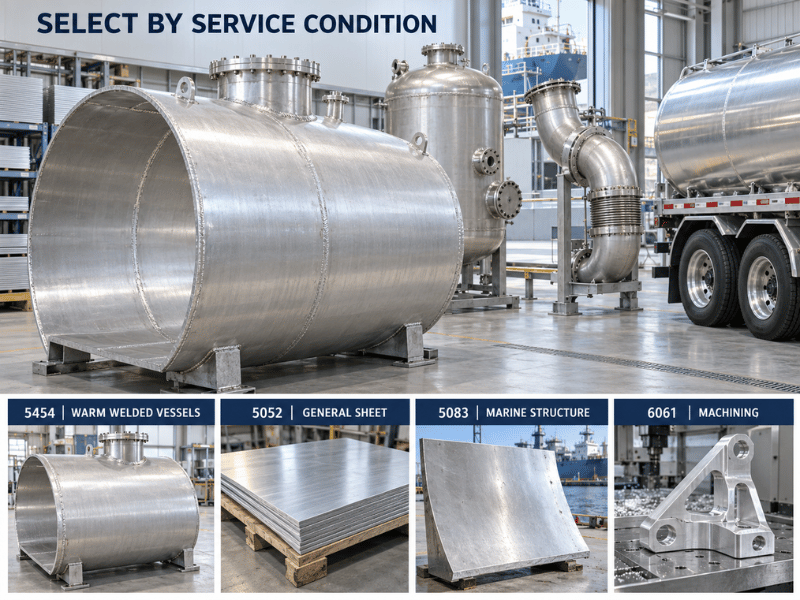
5454'ü şu durumlarda belirtin:
- Sürekli servis sıcaklığı kabaca 65 °C ile 150 °C arasında olduğunda ve ortam tuzlu su, kimyasallar veya endüstriyel atık içerdiğinde — bu, 5454’ün tanımlayıcı penceresidir
- Uygulama, kod kalifikasyonu gerektiren kaynaklı bir basınç kabı veya depolama tankı olduğunda
- Korozyon direnci, kaynaklanabilirlik ve termal stabilite tek bir malzemede birlikte gerektiğinde
- Parça, şekillendirilip kaynaklanacak düz haddelenmiş plaka veya sac olduğunda
- Belgelendirilmiş bir fabrika test sertifikası ile orta düzeyde dayanım gerektiğinde
Şu durumlarda başka yerlere bakın:
- Oda sıcaklığındaki çekme dayanımının kabaca 330 MPa'nın üzerinde olması birincil gereklilik olduğunda — 5083-H116 daha güçlüdür ve ısıl işlem görebilir bir alaşım kabul edilebilirse 6061-T6 veya 7075-T6 daha da güçlüdür
- Sürekli servis sıcaklığı yaklaşık 150 °C'yi aştığında veya zirveler kabaca 200 °C'nin ötesine geçtiğinde — alüminyum bu aralıkta hızla dayanım kaybeder ve paslanmaz veya nikel alaşımları standart tercih haline gelir
- Parlak, homojen bir anodize yüzey belirtildiğinde — 5xxx alaşımları donuk griye anodize olur
- Yüklü bir yapıda sürekli deniz suyu daldırması olduğunda — H116/H321 koşulunda 5083 veya 5086
- Yüksek hacimli CNC işleme birincil üretim yöntemi olduğunda — 6061-T6 veya 7075-T6 çok daha iyi işlenir
- Maliyet baskın kısıt olduğunda ve termal gereklilik olmadığında — 5052 veya 5754 aynı işi daha ucuza yapar
5454 Nerede Kullanılır
| Sektör | Tipik parçalar | Neden 5454 |
|---|---|---|
| Kimyasal işleme | Nitratlar ve petrokimyasallar için depolama tankları, taşıma kapları, boru tesisatı | Yüksek sıcaklık korozyon direnci artı kaynaklanabilirlik |
| Basınçlı kaplar | Orta sıcaklık servisi için ASME kodlu kaynaklı kaplar | Kod tanınırlığı ve ~150 °C'ye kadar korunan dayanım |
| Nakliye | Karayolu tanker gövdeleri, demiryolu tank vagonları, yakıt ve kimyasal tank kabukları | Sıcak yük toleransı ile dayanım-ağırlık oranı |
| Denizcilik ve açık deniz | Egzoz bileşenleri, soğutma suyu boru tesisatı, sıcak proses tankları, güverte bağlantı parçaları | 5083’ün sıcaklık sınırının geçerli olduğu yerlerde deniz korozyon direnci |
| Endüstriyel ekipman | Isı değiştirici kabukları, proses boru tesisatı, yıkayıcı bileşenleri | Sürekli yük altında termal stabilite |
Artılar ve Sınırlamalar Bir Bakışta
| Boyut | Avantaj | Dikkat Edilmesi Gerekenler |
|---|---|---|
| Yüksek sıcaklık | ~150 °C sürekli için derecelendirilmiştir, 5083 ise ~65 °C'de durur | Dayanım yine de azalır; ~200 °C'nin üzerinde diğer malzemelere bakın |
| Korozyon | Mükemmel deniz, kimyasal ve endüstriyel atık direnci | Yüklü sürekli deniz suyu daldırması için uygun değildir |
| Kaynaklanabilirlik | Temiz TIG/MIG/FSW; ön ısıtma veya kaynak sonrası ısıl işlem gerekmez | IEB tavlanmış dayanıma doğru geriler — tasarımı buna göre yapın |
| SCC direnci | Güçlü, kaynaklı bağlantılar dahil | Dolgu seçimi önemlidir — sıcak servis için ER5554 |
| Güç | Karşılaştırılabilir Mg'de 5052'den yüksek | 5083'ün altında ve 6061-T6'nın oldukça altında |
| Şekillendirilebilirlik | O ve H32'de iyi; H3x stabilizasyonu kaynaklı işlere yardımcı olur | H38, %8% uzamalı bir sac temperidir |
| Talaşlı İmalat | İşlenebilir | Yapışkan talaşlar; 6061'in açık bir farkla gerisinde |
| Yüzey işlemi | Boya, toz kaplama ve haddelenmiş yüzeyi iyi kabul eder | Donuk griye anodize olur — dekoratif bir alaşım değildir |
| Maliyet ve bulunabilirlik | Standart plaka ve sac ürünü | 5052'nin üzerinde fiyatlandırılır; özel bir kalitedir |
Sonuç
5454, alüminyum-magnezyum alaşımları ısındığında güvenilirliğini kaybettiği için vardır — ve bazı uygulamalar bunu tolere edemez. Magnezyumu %3,0% ile sınırlayıp manganez ve krom ekleyerek, 5083 ve 5456'nın hassaslaşmaya başladığı noktanın ötesinde, yaklaşık 150°C'ye kadar kullanışlı dayanım ve korozyon direncini korur ve yüksek sıcaklık basınç servisi için ASME tanınırlığı kazanır. Bedeli, oda sıcaklığında 5083'e karşı orta düzeyde dayanım, donuk anodize yüzey ve 5052'ye göre bir primdir — kap sıcak çalıştığında ve bağlantı kaynaklandığında adil ödünleşimler, oda sıcaklığındaki bir muhafaza veya işlenmiş bir braket için yanlış olanlardır. Bu nedenle önce tasarım sıcaklığını, ikinci olarak temperi belirleyin; kararın geri kalanı kendiliğinden ortaya çıkar.
Linsy Aluminum tedarik eder 5454, levha, sac, rulo, çubuk, boru, ve ekstrüde profil olarak yaygın temperlerde, şirket içi işleme, kaynak, lazer kesim, anodizasyon ve polisaj ile — çiziminizi tasarım sıcaklığı ve kaynak detaylarıyla birlikte gönderin, siz taahhüt etmeden önce servis limitini ve dolgu malzemesini kontrol edelim.
Sıkça Sorulan Sorular
5454 alüminyumu yüksek sıcaklık servisi için uygun kılan nedir?
Magnezyum içeriği %3,0 ile sınırlandırılmıştır. Yaklaşık %3 Mg üzerinde, 5xxx alaşımları yaklaşık 65 °C üzerinde gerilme korozyonu çatlamasına yatkın hale gelir; çünkü magnezyum tane sınırları boyunca β-fazı (Al₃Mg₂) olarak çökelir. Magnezyumun sınırlandırılması ve bu çökelmeyi engellemek için krom eklenmesi, 5454'ü korozyon direnci bozulmadan yaklaşık 150 °C'ye kadar sürekli serviste kullanılabilir kılar. Basınç servisi için tasarım gerilmeleri yine de gerçek tasarım sıcaklığına ilişkin geçerli kod tablolarından alınmalıdır.
5454 alüminyum ne kadar serttir?
Tipik Brinell sertliği, tavlanmış O koşulunda 62 HB, H32'de 73 HB, H34'te 81 HB ve H38'de 100 HB'dir. H111 ve H112 koşulları sırasıyla yaklaşık 70 HB ve 62 HB civarındadır. Yayımlanan değerler kaynağa ve kalınlığa göre bir miktar farklılık gösterir; bu nedenle bunları tipik olarak değerlendirin ve garanti edilen değerleri fabrika test sertifikasına göre doğrulayın. Sertlik, giriş muayenesi için faydalıdır; boyutlandırma hesaplamaları çekme ve akma dayanımını kullanmalıdır.
5454-H32 ile H34 arasındaki fark nedir?
Her ikisi de soğuk şekil verme ile sertleştirilmiş ve stabilize edilmiştir, bu nedenle her ikisi de özelliklerini korur ve yaşlanma ile yumuşamaz. H32 çeyrek serttir — yaklaşık 275 MPa çekme ve 207 MPa akma — ve şekillendirilmiş ve kaynaklı kaplar için standart tercihtir. H34 yarı serttir, yaklaşık 305 MPa çekme ve 241 MPa akma ile, daha az şekillendirme gereken yük taşıyan kabuklar için kullanılır. H32'den H34'e geçmek yaklaşık daha fazla dayanım sağlar ve bir miktar şekillendirilebilirlik kaybına neden olur; bu nedenle H32, bükülen her şey için daha güvenli varsayılan seçenek olmaya devam eder.
5454 kaynağında hangi dolgu metali kullanılmalıdır?
ER5554, yapısal bağlantılar ve sıcak çalışan her şey için standart öneridir; çünkü yaklaşık %2,7 magnezyum içeriği ana alaşımla eşleşir ve kaynak bölgesinin korozyon direncini ve termal derecelendirmesini korur. ER5356 daha yüksek kaynak sonrası dayanım sağlar ancak yüksek sıcaklıkta kaynak bölgesi SCC direncini bir miktar azaltır; bu nedenle dayanımın baskın olduğu düşük sıcaklık servisi için uygundur. Kod nitelikli basınç işleri için dolgu malzemesini kaynak prosedür şartnamesine ve tasarım sıcaklığına göre doğrulayın.
5454, 5754 ile aynı mıdır?
Hayır — ilişkilidirler ancak birbirlerinin yerine kullanılamazlar. 5754, %2,6–3,6 magnezyum içeren ve krom ilavesi olmayan bir Al-Mg alaşımıdır; derin şekillendirilebilirliğin en önemli olduğu otomotiv ve genel sac işleri için yaygın olarak kullanılır. 5454, yaklaşık –15 daha fazla dayanım için mangan ve tane sınırı kontrolü için krom ekler; bu da gerilme korozyonu performansını ve yüksek sıcaklık derecelendirmesini iyileştiren şeydir. Bir şartname basınç kabı veya sıcak kimyasal servis gerektiriyorsa, doğru kalite 5454'tür ve 5754 bir ikame değildir.