Key Highlights
- 7003 aluminum is a strong alloy from the 7000 series. It has zinc in it, and this helps to improve the mechanical properties.
- It has very good tensile strength and yield strength. This is why people use it for car frames and other parts that have to be tough.
- This alloy is light, easy to machine, and has moderate resistance to corrosion. Because of all this, it is used in many different industries.
- The chemical composition of 7003 aluminum includes zinc, magnesium, and zirconium. These elements help make the alloy more durable and useful.
- You can buy 7003 aluminum in several tempers, such as T5, T6, and T651. Every temper works for a different need.
Introduction
Aluminum alloys are important in the world today. These alloys have changed many things in metal work because they are strong but not heavy. One type, called 7003 aluminum, stands out for its special mix of elements and good strength. This alloy is part of the 7000 series and uses zinc as the main extra part. Because of the zinc, it becomes much stronger. The 7003 alloy is tough, simple to shape, and can fight against corrosion. So, people pick it when they need something that works well and lasts a long time. That is why 7003 aluminum stays a favorite for factories and building jobs.
What Is 7003 Aluminum?

7003 aluminum, part of the 7000 series, contains zinc for high strength. First used in 1975, the Aluminum Association references it as A97003. With zinc, magnesium, and zirconium, it offers excellent mechanical properties, ideal for strong applications, though it can corrode under stress, necessitating careful handling and protection.
Standard tempers like T5 and T6 provide versatile options across various industries. The alloy is lightweight yet durable, allowing engineers to create longer-lasting products, beneficial in automotive and construction sectors. Choosing 7003 aluminum ensures good yield and tensile strength, without sacrificing strength or precision, even under heavy use. The extrusion process enhances these properties to meet manufacturing demands.
Key Properties and Features of 7003 Aluminum
The mechanical properties of 7003 aluminum show why many people use it. Below is a table summarizing the key properties of 7003 aluminum alloy.
|
Property |
Value/Description |
|---|---|
|
Density |
2.78 g/cm³ |
|
Melting Point |
~475–635°C |
|
Tensile Strength (T6 Temper) |
~360–400 MPa (estimated) |
|
Yield Strength (T6 Temper) |
~320–360 MPa (estimated) |
|
Corrosion Resistance |
Moderate, may require coatings in harsh environments |
|
Thermal Conductivity |
~130–150 W/m·K (estimated) |
|
Electrical Conductivity |
~30–35% IACS (estimated) |
|
Weldability |
Good, especially with friction stir welding |
|
Formability |
Good for extrusion, moderate for complex shapes |
|
Thermal Expansion Rate |
23.2 × 10⁻⁶ /°C (estimated) |
The 7003 aluminum alloy is high-strength, perfect for tough and lightweight applications.
This alloy shines with:
- Lightweight Density: At 2.78 g/cm³, it’s light for a 7000-series alloy, ideal for performance parts.
- High Strength: With tensile strength around 360–400 MPa in T6 temper, it’s great for heavy-duty structures.
- Moderate Corrosion Resistance: Works well in many settings but may need protection in harsh conditions.
- Good Formability: Easily extruded into profiles like tubes or beams, suitable for structural uses.
- Good Weldability: Welds effectively for strong assemblies, especially with advanced techniques.
Chemical Composition
7003 aluminum is part of the 7000 series and is a strong alloy. It is known for its good mechanical properties. This alloy does a good job of fighting corrosion. The main part of it is zinc, which makes up about 5.0% to 6.5%. There is also some magnesium in it, about 0.5% to 1.0%. This helps the alloy get more strength. Because of these features, people use it to make car and railway parts. A small amount of zirconium and manganese is added, too. These things help the metal be tougher and make it easier to shape.
|
Element |
Composition Range (% by weight) |
Description |
|---|---|---|
|
Aluminum (Al) |
90.7 – 94.0 |
The primary component, providing a lightweight and corrosion-resistant base. |
|
Zinc (Zn) |
5.0 – 6.5 |
Boosts strength significantly, making it ideal for high-stress applications. |
|
Magnesium (Mg) |
0.5 – 1.0 |
Enhances strength and corrosion resistance for durable performance. |
|
Zirconium (Zr) |
0.05 – 0.25 |
Improves grain refinement, enhancing toughness and extrudability. |
|
Manganese (Mn) |
0.3 (max) |
Adds toughness and supports structural stability in small amounts. |
|
Iron (Fe) |
0.35 (max) |
Kept low to maintain corrosion resistance and alloy purity. |
|
Silicon (Si) |
0.3 (max) |
Limited to ensure optimal mechanical properties. |
|
Copper (Cu) |
0.2 (max) |
Minimal to avoid impacting corrosion resistance. |
|
Titanium (Ti) |
0.2 (max) |
Refines grain structure for better manufacturing quality. |
|
Chromium (Cr) |
0.2 (max) |
Enhances toughness and wear resistance in trace amounts. |
|
Others (each) |
0.05 (max) |
Trace elements, controlled to ensure alloy consistency. |
|
Others (total) |
0.15 (max) |
Total minor elements, kept low to maintain performance. |
This mix in 7003 aluminum gives it good strength for how light it is. It is also easy to work with. But, because it has a lot of zinc, 7003 aluminum needs the right surface care when in tough places. Doing this helps stop corrosion and makes it last longer, especially if you use it near the sea or where there is much moisture.
Industrial Applications and Benefits
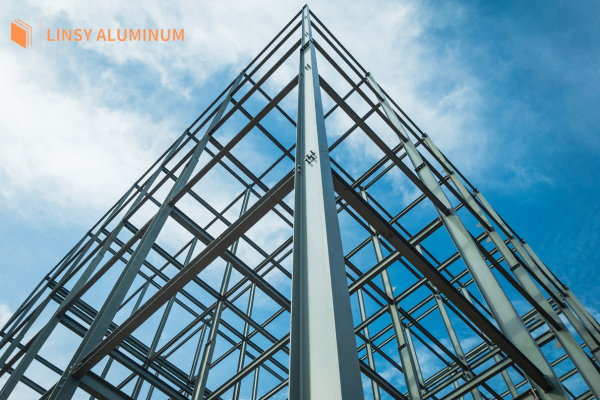
7003 aluminum is an excellent alloy widely used in the industry. It meets diverse needs and tempers, making it popular for car body frames and chassis due to its lightweight and strength, which enhance fuel efficiency and handling. When treated, it resists corrosion, and its weather durability makes it suitable for various applications.
In architecture, extrusion of this alloy is valued for its strength and ease of shaping, allowing for robust frames and complex designs quickly. It is recyclable, promoting environmental sustainability and minimizing waste across industries.
The alloy’s durability and lightweight nature make it ideal for components near engines or batteries where weight is critical. Treatments like anodizing or heat treatment further enhance its performance in challenging conditions, ensuring long-term reliability.
7003 Aluminum vs. Other Alloys
When you look at the various aluminum alloys, you’ll find that 7003 aluminum is an excellent choice. It combines good strength, lower costs, and some resistance to corrosion. While 7003 is not as strong as 7075, it is easier to work with, which is beneficial if you prefer using extrusion in your projects. Although 7003 isn’t as effective at preventing corrosion as 6061 aluminum, it does provide better yield and tensile strength.
7003 has a unique composition and was manufactured with custom finishes, making it an ideal option in industries that require materials that are strong yet not overly heavy. Now, let’s examine how 7003 compares to other alloys, such as 7075 and 6061, in more detail.
7003 vs. 7075 vs. 6061 Aluminum

7003 aluminum is easier to work with on machines than 7075. This is good if you want more choices for making shapes by extrusion. 6061 is strong at stopping corrosion because it has magnesium and silicon in it. But 7003 is even stronger, so it is used for big jobs where you need tough materials.
|
Alloy |
Key Characteristics |
Strength |
Corrosion Resistance |
Weldability |
Typical Applications |
|---|---|---|---|---|---|
|
High strength, heat-treatable, good extrudability |
High (T6: ~370 MPa) |
Good |
Good |
Automotive frames, structural extrusions |
|
|
Exceptional strength, heat-treatable, high fatigue resistance |
Very High (T6: ~570 MPa) |
Moderate |
Poor |
Aerospace, high-stress components, military equipment |
|
|
Versatile, heat-treatable, balanced strength and formability |
Moderate (T6: ~310 MPa) |
Very Good |
Excellent |
Structural components, marine fittings, general use |
In Summary:
- 7003 Aluminum: High strength and extrudability for automotive and structural uses.
- 7075 Aluminum: Top strength for high-stress aerospace and military applications.
- 6061 Aluminum: Versatile, corrosion-resistant for general structural needs.
Choose 7003 for extrudable automotive parts, 7075 for maximum strength, and 6061 for flexible, corrosion-resistant applications.
Comparing 7003 T5, T6, and T651 Tempers
7003 aluminum comes in various tempers, each altering its mechanical properties.
- The T5 temper uses fast cooling post-extrusion, achieving a tensile strength of up to 350 MPa while maintaining balanced yield strength, making it suitable for automotive parts like frames or chassis.
- The T6 temper results from improved heat treatment, boosting tensile strength to 370 MPa and yield strength to 310 MPa, ideal for strong, non-bending parts.
- The T651 temper stretches the metal, relieving stress while preserving strength.
|
Temper |
Key Characteristics |
Strength |
Corrosion Resistance |
Formability |
Typical Applications |
|---|---|---|---|---|---|
|
7003 T5 |
Cooled from hot working, artificially aged, balanced strength |
Moderate (~340 MPa) |
Good |
Moderate |
Automotive frames, structural extrusions |
|
7003 T6 |
Solution heat-treated, artificially aged, high strength |
High (~370 MPa) |
Good |
Lower |
High-strength automotive and structural components |
|
7003 T651 |
T6 with stress relief by stretching, high strength, improved stability |
High (~370 MPa) |
Good |
Lower |
Precision structural parts, stress-sensitive applications |
Choosing the right temper relies on job requirements, including working methods, desired strength, and environmental conditions.
In Summary:
- 7003 T5: Balanced strength for extruded automotive and structural parts.
- 7003 T6: High strength for robust structural components.
- 7003 T651: High strength with stress relief for precision and stability.
Choose T5 for balanced extrusions, T6 for higher strength, and T651 for stress-sensitive, stable applications.
Tips for Sourcing 7003 Aluminum
- Check Quality Certifications: Make sure the suppliers have ISO-certified 7003 aluminum. The aluminum should meet standards like ASTM B221 for extruded profiles, or EN 573-3 for the right chemical mix. Linsy Aluminum gives you 7003 aluminum that has high strength and protects against corrosion. It meets all the main rules for big uses.
- Confirm Manufacturing Expertise: Pick suppliers who know how to do extrusion and heat treatment well. This way, you get 7003 aluminum that is always the same quality. Linsy Aluminum gives you 7003 aluminum in both T4 and T6 tempers. This makes the aluminum strong but not hard to shape. The company is good at making it work in big parts.
- Match Application Needs: If you need material that is strong and not heavy, 7003 aluminum is a good pick. People use it in aerospace, car making, or for sports gear like bikes. Linsy Aluminum makes 7003 alloys for planes, frames of cars, and good gear.
- Ensure Flexible Supply Options: Look for suppliers that let you get small orders and send orders to anywhere in the world fast. Linsy Aluminum helps you get 7003 aluminum quickly. The company gives free samples and makes special shapes just for your job.
Work with Linsy Aluminum when you want good 7003 aluminum. You can get a free quote today!
Conclusion
To sum up, 7003 aluminum is known for being strong but still light. It has a high strength-to-weight ratio. You can use it in many types of industry. It helps to know the main things about this alloy, like what the metal is made of and how it is not the same as other aluminum alloys such as 7075 and 6061. Knowing about these things makes it easier for you to choose the right material. It does not matter if you pick 7003 T5, T6, or T651. When you have the right info, you can use the alloy in the best way for your project. If you want to see what 7003 aluminum can do for you, ask for quotes from suppliers. This is a good way to make the best choice for what you need.
Why Choose Linsy 7003 Aluminum?
Linsy Aluminum is a trusted name in the aluminum world. We give you top quality 7003 alloy. The alloy meets ISO 9001, ASTM B221, GB/T 3190, AMS, and JIS standards. The company has been in this for over 20 years. Every year, we make up to 300,000 tons, so there is always something that can fit your needs. You can pick sheets, bars, tubes, extrusions, and profiles, and get them in many sizes. If you have a special size, we can make it, and we also take small orders.
Our team knows what they are doing. We work fast to get your order sent to more than 20 countries. Prices stay good, and you also get help and support after we sell you what you need. Go with Linsy’s 7003 alloy if you want it strong and safe from corrosion. A lot of people use this alloy for planes, cars, and building things. Reach out and get your Free Quote today.

Frequently Asked Questions
What industries commonly use 7003 Aluminum?
Industries that use 7003 aluminum include the automotive field, structural design, and machine making. This type of aluminum is good for extrusion. It is strong and lasts a long time. It can also be finished with many kinds of coatings. Because of this, people use it for automotive body frames, chassis parts, and components that need to be strong but light. The high strength-to-weight ratio is very important for these uses.
How does 7003 Aluminum compare to other aluminum alloys?
Compared to other aluminum alloys, 7003 gives you a good mix of yield strength at 300 MPa and tensile strength at 350 MPa. This alloy is also easier on your budget. It does not have as much protection from corrosion as 6061, but it does offer better mechanical strength. So, it is a good option for high-performance jobs where you have to have both strong build and real-world use.