7075 aluminum sheet and plate is heat-treatable Al-Zn-Mg-Cu flat product from 0.5 mm sheet to 200 mm plate. At 570 MPa in T6 it is the strongest aluminium in general commercial supply, specified when the part must be as strong as the material allows: moulds, tooling plates, high-load structural components. Not weldable in practice, and bare 7075 carries a real stress-corrosion risk in thick sections.
Thickness: 0.5–200 mm
Width: 500–2,600 mm
Length: 500–12,000 mm, cut to size
Tempers: O / T6 / T651 / T73 / T7351
Quality documents: MTC report with every order
7075 aluminum sheet and plate is heat-treatable Al-Zn-Mg-Cu flat product, supplied from 0.5 mm sheet to 200 mm plate. With a zinc content of 5.1–6.1% and T6 tensile strength of 570 MPa, it is the strongest aluminium in general commercial supply — close to mild steel at a third of the weight. It is specified when the part has to be as strong as the material allows: moulds, tooling plates, high-load structural components, aerospace fittings. Two limits belong on the drawing: 7075 is not weldable in practice, and bare 7075 has only moderate corrosion resistance, with a real stress-corrosion risk in thick sections. Alloy data: 7075 aluminum alloy.
| Item | Range |
|---|---|
| Thickness | 0.5 – 200 mm (sheet to 6 mm, plate above) |
| Width | 500 – 2,600 mm |
| Length | 500 – 12,000 mm, cut to size |
| Tempers | O / T6 / T651 / T73 / T7351 |
| Standard | ASTM B209 |
| Designation | UNS A97075 / EN AW-7075 / AlZn5.5MgCu |
On the designation. T651 and T7351 are plate tempers: the plate is stretched after quenching to relieve the stress that would otherwise make it bow when machined. That is why tooling plate is ordered as T651 or T7351 rather than T6, and why a T6 plate machined on both faces is a common and expensive mistake. T6 sheet and thin plate are supplied where the part is not heavily machined.
| Temper | Tensile (MPa) | Yield (MPa) | Elongation | Shear (MPa) |
|---|---|---|---|---|
| O | 230 – 290 | 95 – 145 | 10 – 13% | 150 |
| T6 | 540 – 570 | 480 – 505 | 8 – 11% | 330 |
| T651 | 540 – 570 | 480 – 505 | 8 – 11% | 330 |
| T73 / T7351 | 470 – 500 | 390 – 420 | 8 – 11% | 285 |
Typical AA reference figures; confirm against the MTC. Density 2.81 g/cm³, elastic modulus 71.7 GPa. The gap between T6 and T73 is roughly 70 MPa of tensile — that is what stress-corrosion resistance costs on this alloy.
T6 is peak strength for thin sheet and parts that are not machined after forming. T651 is the same strength, stress relieved — and on plate that is not optional: if you remove material from one face of a T6 plate, it will bow, because the residual stress from quenching was never relieved.
T73 and T7351 are overaged on purpose. They give up about 70 MPa to buy much better resistance to stress-corrosion cracking, which is 7075’s real weakness in thick sections and in wet or salty service. T7351 is the stretched plate version. Rule of thumb: thin part in a dry shop, T651; thick section or aggressive environment, T7351.
| Alloy / temper | Tensile (MPa) | Yield (MPa) | Weldability | Where it fits |
|---|---|---|---|---|
| 7075-T6 / T651 | 570 | 505 | Not weldable | Tooling plate, moulds, maximum-strength non-welded parts |
| 2024-T3 | 483 | 345 | Not weldable | Fatigue-critical skins and structure |
| 6061-T6 / T651 | 310 | 276 | Good | Weldable structures, general plate, anodized panels |
7075 delivers roughly 85% more tensile strength than 6061 in the same thickness, and costs more for it. Specify 7075 when strength is the binding constraint — when the design is already as thick as it can be and still fails. If a thicker 6061 plate would carry the load, that is usually the cheaper answer, and it can be welded.
Cutting: plate is sawn, sheet is guillotined or laser cut; cut-to-size as standard. Plate edges are typically sawn square and can be milled on request.
Machining: excellent in T6 and T651. Use sharp carbide, climb-mill where finish matters, and order T651 so the plate does not move as material comes off. 7075 work-hardens at the cut if the tool rubs.
Surface: anodizing is possible but gives less protection than on 6xxx because of the copper and zinc content, and it darkens. Where corrosion protection is the point, use hard anodizing or a coating, and consider T73 as well. PVC film is available for plate that will be handled before machining.
Moulds and tooling plates, jigs and fixtures, high-strength structural components, aircraft fittings, defence equipment, sporting goods such as archery risers and climbing hardware, precision machine parts, gantries and cantilevered arms where weight matters more than cost.
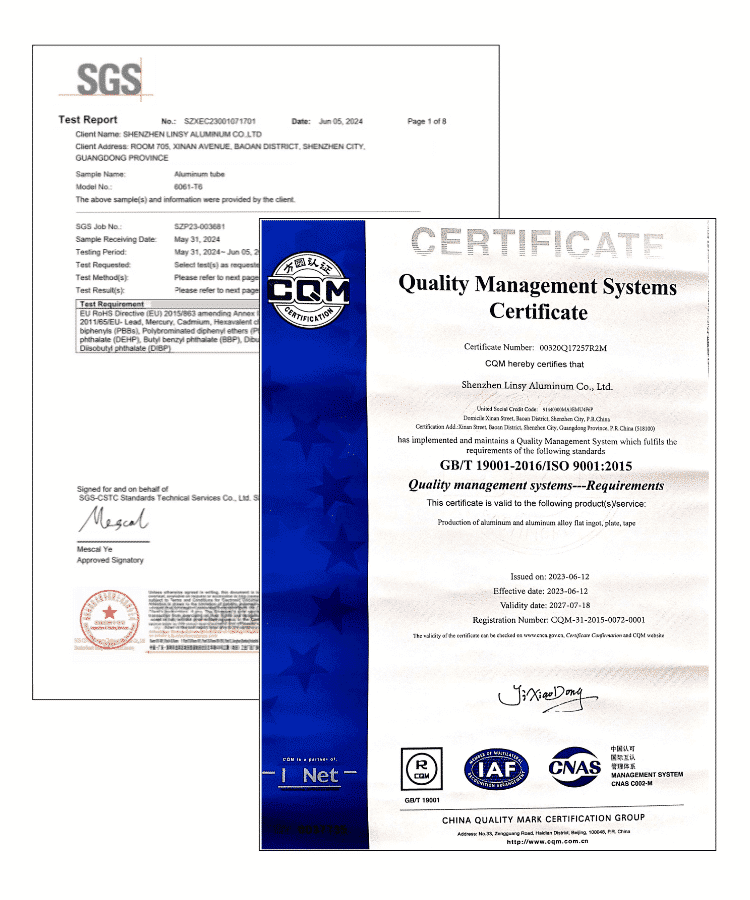
Every order ships with an MTC reporting alloy, temper, chemical composition and mechanical results against ASTM B209. Flatness and thickness tolerance can be certified to the class ordered. Third-party testing is available on request at additional cost; production runs under ISO 9001, ISO 14001 and ISO 45001 certified systems.
Sales confirm stock or custom lead time for that exact combination.
Shenzhen-based aluminum factory, more than 20 years in the industry, supplying 1000–8000 series alloys in standard specifications and custom sizes.
Q: Do I need T651 or is T6 enough?
A: If the plate is machined on more than one face, use T651. T6 plate carries residual stress and will bow as material is removed — same strength, different stability.
Q: When should I use T7351 instead of T651?
A: When the section is thick or the service is wet or salty. T7351 gives up about 70 MPa but resists stress-corrosion cracking far better, and thick 7075 sections are where that matters.
Q: Can 7075 plate be welded?
A: No. Fusion welding causes hot cracking and destroys the temper in the heat-affected zone. Design for mechanical fastening or bonding.
Q: Does 7075 anodize well?
A: It anodizes, but the film protects less than on 6xxx because of the copper and zinc content, and it darkens. Use hard anodizing or a coating where corrosion protection is the objective.
Q: What thicknesses do you supply?
A: 0.5–200 mm, up to 2,600 mm wide and 12,000 mm long, cut to size in O, T6, T651, T73 and T7351.
Linsy Advantages
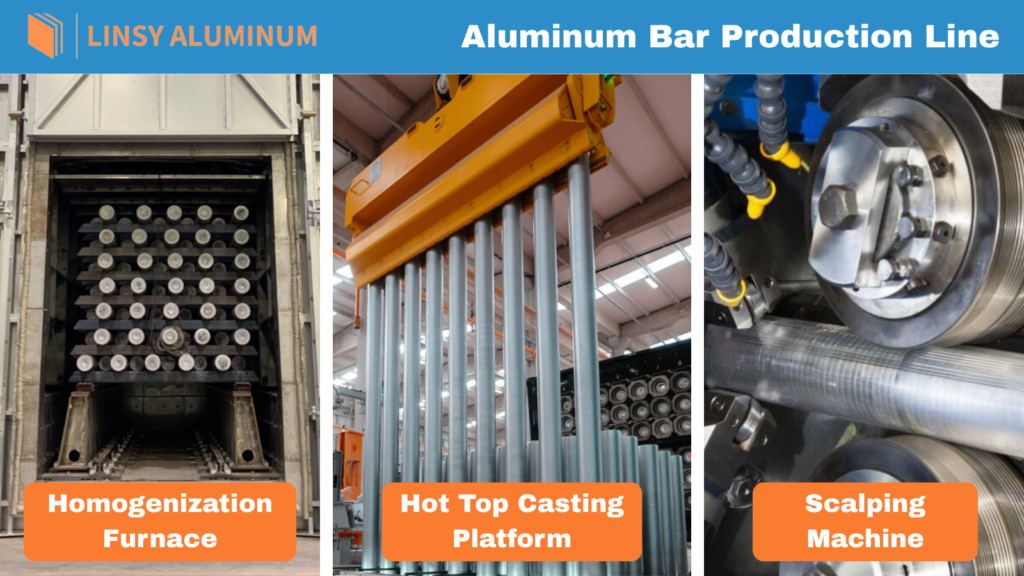
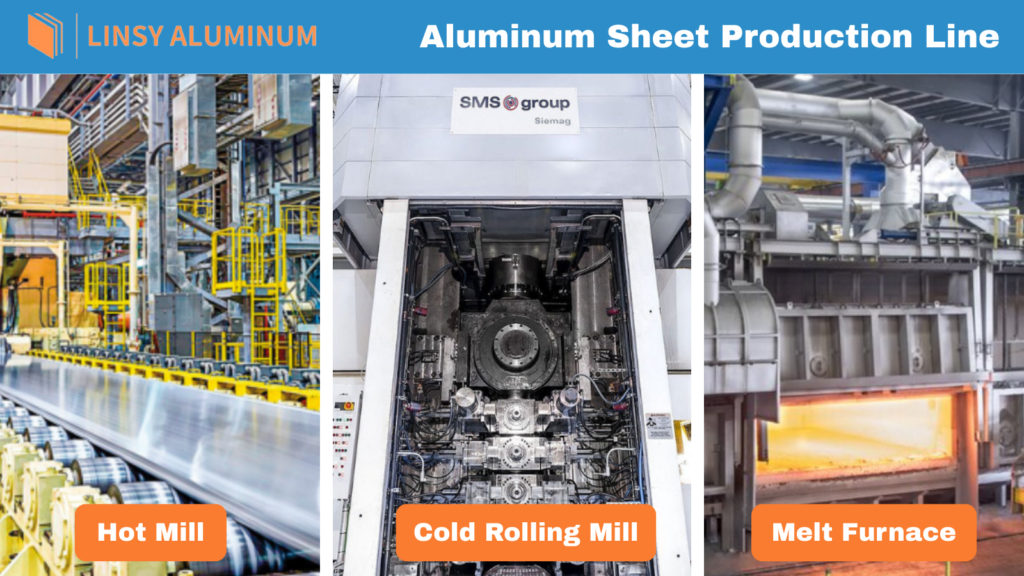
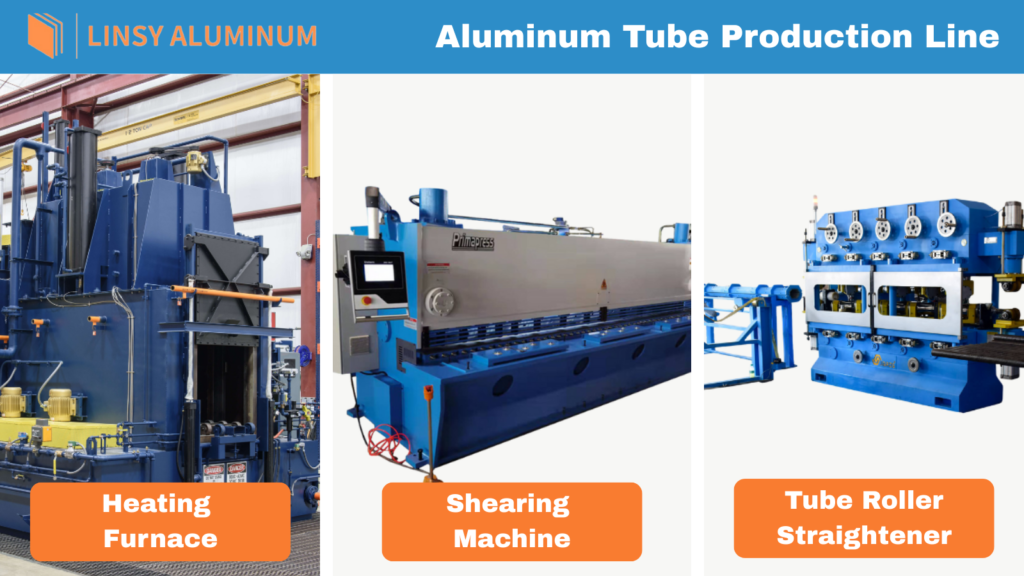
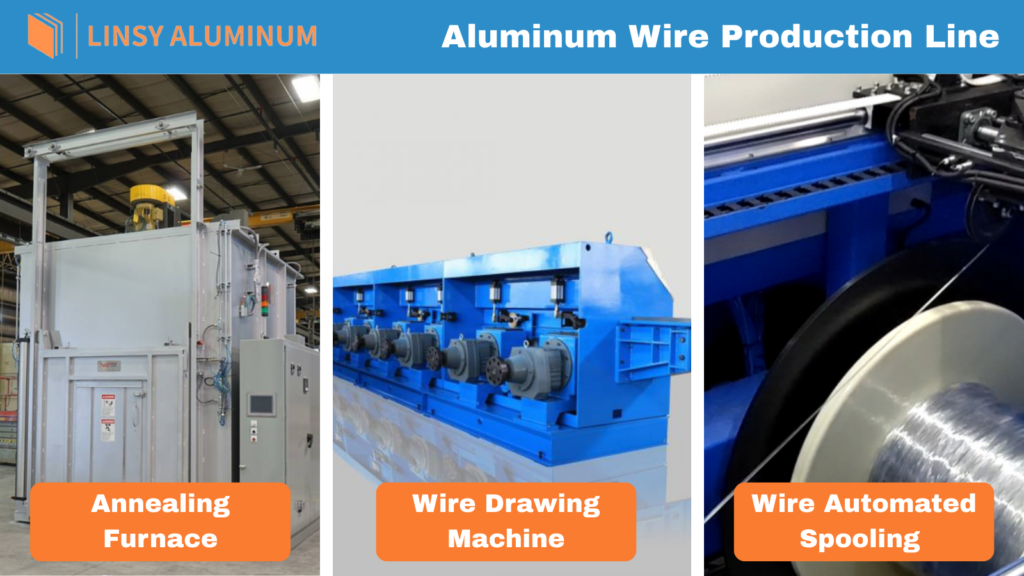
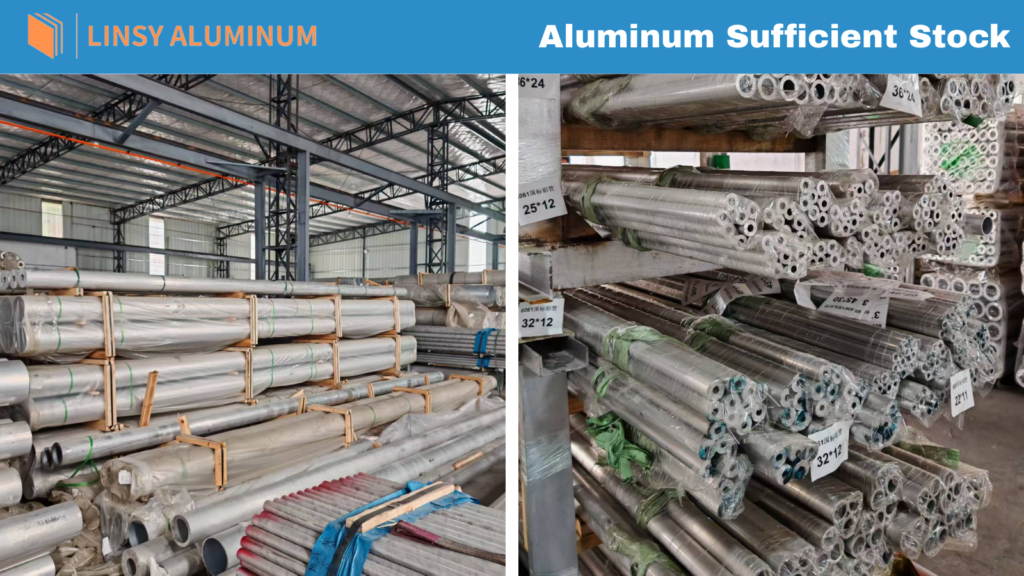
Linsy Aluminum is a leading supplier of aluminum processing products, serving diverse industries including aerospace, general engineering, automotive, marine, shipbuilding and other specialized industrial applications.
We are committed to maintaining the highest standards of quality and environmental responsibility, as demonstrated by our certifications: ISO 9001:2008, ISO 14001:2004 and SGS.