1050 Alüminyum Nedir?
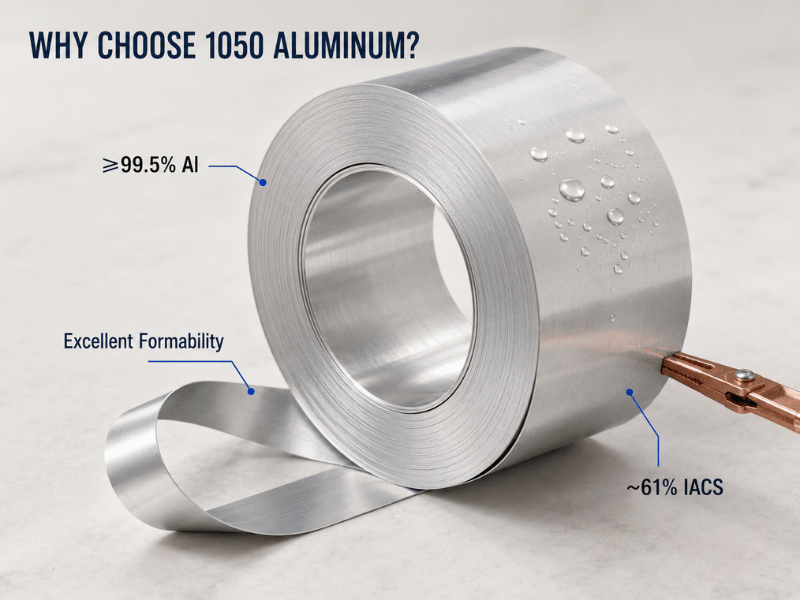
1050 alüminyum, 1xxx serisinde yer alan, minimum ,5 alüminyum içeriğine sahip ticari saflıkta dövme bir alaşımdır. Neredeyse saf alüminyum olduğundan, ana metalin en iyi özelliklerini korur: yüksek süneklik, mükemmel korozyon direnci ve güçlü elektrik ile ısı iletkenliği. AA 1050/UNS A91050 ve EN AW-1050A, farklı sistemler altında yakından ilişkili tanımlamalardır; kompozisyon limitleri hafifçe farklılık gösterebileceğinden, satın alma siparişinde geçerli standardın belirtilmesi gerekir.
1050, ısıl işlem uygulanabilir bir alaşım değildir. 2xxx veya 6xxx alaşımları gibi çözeltiye alma ısıl işlemi veya yaşlandırma ile güçlendirilemez; mukavemeti esas olarak H-temper ailesi ile ifade edilen soğuk işleme (deformasyon sertleşmesi) yoluyla artırılır. Bu tek gerçeği anladığınızda, alaşımın geri kalan davranışı — yumuşak O temperi, kademeli olarak sertleşen H12/H14/H16/H18 temperleri ve mukavemet ile şekillendirilebilirlik arasındaki denge — yerli yerine oturur.
Kimyasal Bileşim
| Element | Maksimum İçerik (%) | Rol |
| Alüminyum (Al) | 99,5 (minimum) | Ana metal; yüksek saflık iletkenliği, şekillendirilebilirliği ve korozyon direncini sağlar |
| Demir (Fe) | 0.40 | En bol bulunan safsızlık; mukavemeti ve yüzey kalitesini etkiler |
| Silisyum (Si) | 0.25 | Kontrollü safsızlık; bu seviyede önemsiz etki |
| Bakır (Cu) | 0.05 | Korozyon direncini korumak için çok düşük tutulur |
| Manganez (Mn) | 0.05 | Minimum düzeyde mukavemet artırıcı etki |
| Magnezyum (Mg) | 0.05 | Neredeyse hiç çökelme sertleşmesi etkisi yoktur |
| Çinko (Zn) | 0.05 | Kontrollü eser element; aşırı seviyeler özellikleri etkileyebilir |
| Titanyum (Ti) | 0.03 | Tane yapısını etkileyebilecek eser element |
| Diğerleri (her biri) | 0.03 | Kalan eser elementler |
Kompozisyon bilinçli olarak basittir. En az ,5 alüminyum, alaşımı hafif, yumuşak, şekillendirilebilir ve iletken tutarken, en büyük miktarlarda bulunan iki safsızlık olan demir ve silisyum, 1050'yi çökelme sertleşmeli bir alaşıma dönüştürmeden mukavemeti, iletkenliği, işlenebilirliği ve yüzey tepkisini etkiler. Bu yüksek saflık, 1050'nin bu kadar iyi bükülmesinin, çekilmesinin ve iletken olmasının ve ısıl işlem uygulanamaz kalmasının tam nedenidir.
Mekanik ve Fiziksel Özellikler
Temperlere Göre Özellikler
1050 deformasyon sertleşmesine tabi tutulduğundan, mukavemet büyük ölçüde tempere bağlıdır. Aşağıdaki tablo temsili aralıkları verir, evrensel kabul limitlerini değil; kesin minimum ve maksimum değerler ürün formuna, kalınlığa, yöne ve geçerli standarda göre değişir. Yaygın referanslar arasında sac ve levha için ASTM B209/B209M, haddelenmiş veya soğuk işlenmiş çubuk, tel ve filmaşin için ASTM B211/B211M ve boru formuna ve hizmet koşullarına bağlı olarak ASTM B210/B210M, B221/B221M, B241/B241M, B483/B483M veya B491/B491M yer alır.
| Temper | Çekme Dayanımı (MPa) | Akma Dayanımı (MPa) | Uzama (%) |
| O (tavlanmış) | 60–100 | 20–35 | 35–40 |
| H12 (çeyrek sert) | 85–125 | 65–95 | 12–20 |
| H14 (yarı sert) | 105–145 | 85–115 | 8–12 |
| H16 (üç çeyrek sert) | 120–160 | 100–130 | 6–10 |
| H18 (tam sert) | ≥135 | ≥6 | 2–6 |
O'dan H18'e soğuk işleme arttıkça, çekme ve akma mukavemeti yükselirken uzama düşer — H18, ticari olarak neredeyse maksimum mukavemete ulaşır ancak sünekliğinin çoğunu kaybeder. Sertlik aynı eğilimi izler (O'da yaklaşık 20 HB'den H18'de ~70 HB'ye kadar).
Fiziksel Özellikler
| Mülkiyet | Değer |
| Yoğunluk | 2,71 g/cm³ |
| Erime noktası | 646–660 °C |
| Termal iletkenlik | 222–230 W/m·K |
| Elektriksel iletkenlik | ~ IACS (tavlanmış) |
| Termal genleşme katsayısı | 23,6 µm/m·K |
| Young modülü | 69 GPa |
Bu değerler temperler arasında neredeyse sabittir: soğuk işleme mukavemeti ve sertliği değiştirir, temel fiziksel sabitleri değil. ~ IACS iletkenlik, 1050'yi baralar ve hafif hizmet iletkenleri için aday yapar ve 1350 gibi özel elektrik kalitelerinin hemen altında yer alır.
1050 Alüminyum Temperleri
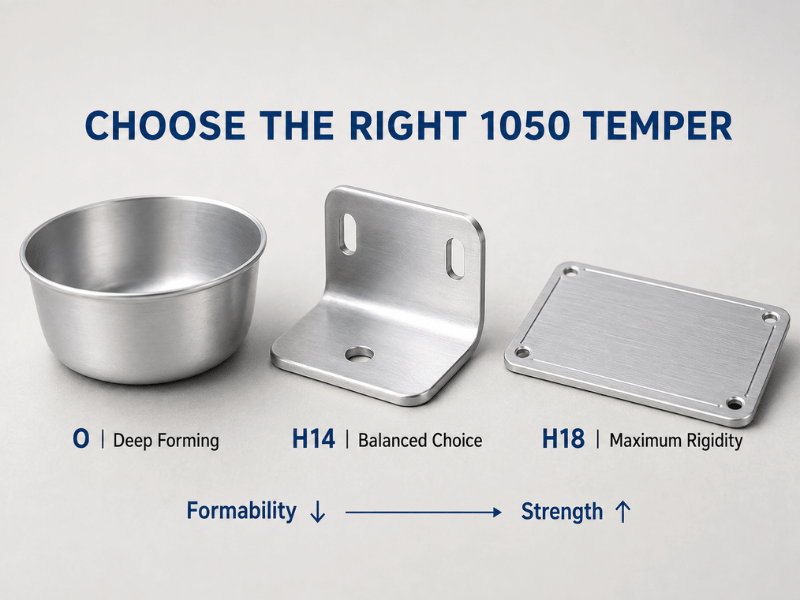
1050, deformasyon sertleşmeli H-temper aralığının tamamında ve tamamen tavlanmış O koşulunda tedarik edilir. Her adım, şekillendirilebilirliği mukavemetle takas eder; bu nedenle temper seçimi gerçekte bir mukavemet-şekillendirilebilirlik kararıdır.
1050-O Alüminyum
O, tamamen tavlanmış, en yumuşak durumdur. Ailenin en yüksek sünekliğine ve en iyi iletkenliğine sahiptir; bu nedenle derin çekme, döndürme ve kullanımdan önce karmaşık bir şekle getirilmesi gereken herhangi bir parça için varsayılan seçimdir. Reflektörler, lamba gövdeleri ve tencere gövdeleri tipik olarak O temperindedir çünkü yük taşımaları değil, şekillendirilmeleri gerekir.
1050-H12, H14, H16 ve H18 Alüminyum
Bunlar kademeli olarak deformasyon sertleşmesine tabi tutulmuş temperlerdir. 1050-H12 çeyrek serttir ve hâlâ kolayca şekillenir; 1050-H14, orta düzeyde yüklü braketler, isim plakaları ve bükülmüş paneller için kullanılan yarı sert çalışkan malzemedir; 1050-H16, daha rijit bileşenler için üç çeyrek serttir; 1050-H18 tam serttir ve baskı plakaları ile dekoratif isim plakaları gibi rijit, hafif şekillendirilmiş parçalar için en yüksek ticari mukavemeti sunar. Her adımda mukavemet artar ve şekillendirilebilirlik düşer; bu nedenle şekillendirme prosesinizin hâlâ kabul edebileceği en sert temperi seçin.
Doğru 1050 Temperi Nasıl Seçilir
Şekillendirme operasyonundan başlayın. Parça derin çekilecek, döndürülecek veya dar bir yarıçapa bükülecekse, 1050-O seçin; daha sert temperler çatlama riskini artırır ve daha büyük bir bükme yarıçapı veya ara tavlama gerektirebilir. Bükülebilirliği koruyan orta düzeyde mukavemete ihtiyacınız varsa, en yaygın ara temper olan 1050-H14'ü seçin. 1050-H18'i yalnızca parça neredeyse düz veya basit şekilli olduğunda ve maksimum rijitlik istediğinizde seçin. Herhangi bir H-temper parçayı kaynaklamanın, ısıdan etkilenen bölgeyi O durumuna doğru tavladığını unutmayın; bu nedenle tasarımı yumuşamış ısıdan etkilenen bölgenin daha düşük mukavemetine göre yapın.
1050 Alüminyum Nerelerde Kullanılır
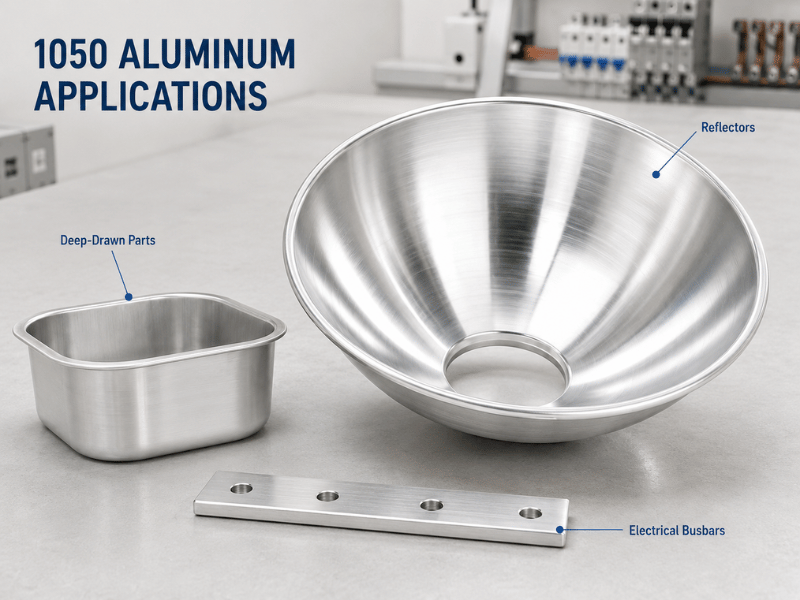
1050, şekillendirilebilirlik ve korozyon direncinin mukavemetten daha önemli olduğu uygulamalara uygundur. Korozyon direnci, birçok gıda endüstrisi kabı ve kimyasal proses bileşeni için uygundur; ancak uygunluk, ortama, sıcaklığa, yüzey koşuluna ve geçerli gıda teması veya proses düzenlemelerine bağlıdır. Genel sac metal işlerinde mimari çatı kaplama profilleri, ısı eşanjörü kanatçıkları ve yansıtıcı aydınlatma panelleri halinde kolayca şekillenir. İletkenliği onu baralara ve hafif elektrik iletkenlerine yerleştirirken, parlak ve yansıtıcı yüzeyi onu lamba reflektörleri ve dekoratif isim plakaları için standart hale getirir.
1050 vs. 1060, 1100 ve 3003
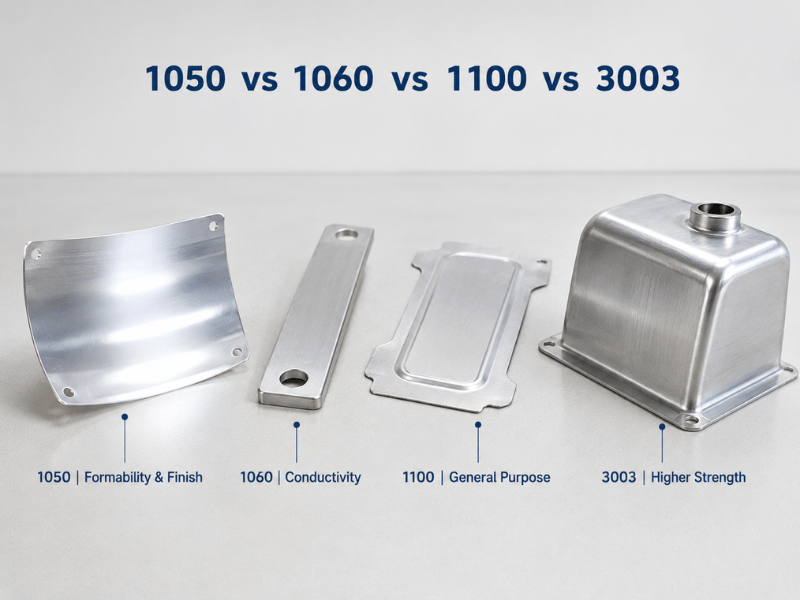
| Özellik | 1050 | 1060 | 1100 | 3003 |
| Alüminyum içeriği | En az ,5 | En az ,6 | En az ,0; kontrollü Cu | Al dengesi; tipik olarak %1,0–1,5 Mn |
| Mukavemet (O, MPa) | ~75 | ~70 | ~90 | ~110 |
| Korozyon direnci | Mükemmel | Mükemmel | Mükemmel | Çok iyi |
| Elektriksel iletkenlik | ~ IACS | 61-62% IACS | 59-62% IACS | 40-50% IACS |
| Şekillendirilebilirlik | Mükemmel | Mükemmel | Mükemmel | İyi (biraz daha rijit) |
| Tipik kullanım | Reflektörler, tavalar, tel | Kablolar, ışık parçaları | Folyo, teller | Tencere, tanklar |
1050 ve 1060 neredeyse saftır ve her ikisi de iyi iletkendir; bu nedenle yumuşak elektrik ve şekillendirme işlerine uygundurlar. 1100, iyi iletkenliği korurken biraz daha fazla mukavemet için kontrollü bakır içerir; folyo ve tel için uygundur. 3003, iletkenliği manganez kaynaklı mukavemetle takas eder; daha sağlam tencere ve tanklar için uygundur. Tablodaki karşılaştırma değerleri temsilidir ve tempere, ürün formuna ve standarda göre değişir. Maksimum şekillendirilebilirlik, yüzey kalitesi ve berrak eloksal önemli olduğunda 1050'yi seçin; parça daha yüksek mukavemet gerektirdiğinde 3003'e geçin.
1050 Alüminyum ile Çalışma
Şekillendirilebilirlik
Şekillendirilebilirlik öne çıkan özelliktir. 1050, çatlama olmadan çok dar yarıçaplara derin çekilir, döndürülür ve bükülür; bu nedenle reflektörler, tencere ve mimari çatı kaplama profillerinde baskındır. Daha yumuşak temperler en iyi şekilde şekillenir; daha sert temperler daha geniş bükme yarıçapları gerektirir.
Kaynak
1050, MIG ve TIG ile son derece iyi kaynaklanır. ER1100 veya başka bir kalifiye dolgu metali, birleştirme tasarımına ve hizmet gereksinimlerine göre seçilebilir ve çevredeki malzemeyi korumak için ısı girdisi kontrol edilmelidir. Kritik uyarı: ısıdan etkilenen bölge, soğuk işlemeden kazanılan mukavemeti kaybeder ve O koşuluna doğru tavlanır. Tasarımı yumuşamış ısıdan etkilenen bölgenin daha düşük mukavemetine göre yapın.
Talaşlı İmalat
İşlenebilirlik, özellikle yumuşak O temperinde zayıftır. Malzeme yapışkandır ve kesme takımı üzerinde birikme eğilimindedir (talaş yığılması). Yüksek pozitif talaş açısına sahip çok keskin takımlar, hafif ilerleme ile yüksek kesme hızları ve iyi yağlama kullanın. H14 gibi daha sert temperler, O'dan belirgin şekilde daha iyi işlenir.
Eloksal
1050, görünümü önemli ölçüde değiştirmeden korozyon direncini artırabilen ve onu fonksiyonel ile mimari kaplamalar için kullanışlı kılan berrak, şeffaf bir Tip II oksit tabakasına temiz bir şekilde eloksallanır. Renkli görünüm, yüzey koşuluna, banyo kimyasına, boya sistemine ve proses kontrolüne bağlıdır; bu nedenle kozmetik gereksinimler bir numune ile doğrulanmalıdır. Bazı 6xxx kaplamalar gibi tek tip, opak bir görünüm gerektiğinde en iyi seçim olmayabilir.
1050 Alüminyumun Avantajları ve Sınırlamaları
Güçlü Yönler
• Derin çekme, döndürme ve dar yarıçaplı bükme için mükemmel şekillendirilebilirlik
• Dış mekan ve nemli ortamlarda üstün korozyon direnci
• Yüksek ısı ve elektrik iletkenliği (~ IACS)
• Üstün berrak eloksal tepkisi
• Yaygın olarak geri dönüştürülebilir; gıda teması kullanımı geçerli düzenlemelere uyum gerektirir
Sınırlamalar
• Düşük mukavemet — genellikle birincil yük taşıyan yapısal parçalar için uygun değildir
• Isıl işlem uygulanamaz; mukavemet esas olarak soğuk işleme ile artırılır
• Özellikle O temperinde zayıf işlenebilirlik
• Renkli eloksal görünümü, proses kontrolü ve numune onayı gerektirir
• Kaynaklı bölgeler O tav durumuna doğru yumuşar
Sonuç
1050, bir parçanın yük taşımaktan ziyade şekillendirilmesi, iletkenlik sağlaması veya korozyona dayanması gerektiğinde doğru tercihtir — ancak düşük mukavemeti ve zayıf işlenebilirliği, onu birincil yük taşıyan yapısal görevler için genellikle uygunsuz kılar. Güvenilir bir ticari saf kalite için Linsy, 1050'yi tel, bobin ve levha formlarında tedarik eder; CNC işleme, TIG/MIG kaynak, lazer kesim ve yüzey finisajı mevcuttur; ayrıca sipariş başına MTC ve ISO 9001/14001/45001 sertifikasyonu sunulur; talep üzerine SGS veya diğer üçüncü taraf testleri düzenlenebilir. Stok kontrolü ve fiyat teklifi için çiziminizi veya şartnamenizi Linsy Aluminum'a gönderin.
Sıkça Sorulan Sorular
1050 alüminyum, mukavemeti artırmak için ısıl işleme tabi tutulabilir mi?
Hayır. 1050 ısıl işlem uygulanabilir bir alaşım değildir — 2xxx veya 6xxx alaşımları gibi çözeltiye alma veya yaşlandırma işlemine tabi tutulamaz. Mukavemet esas olarak soğuk işlemle artırılır; bu nedenle daha fazla yük kapasitesine ihtiyacınız varsa daha sert bir H-tavı (H14, H16, H18) seçin.
1050-O ile 1050-H14 arasındaki fark nedir?
O tamamen tavlanmıştır: en yumuşak, en sünek ve derin çekme ile spin şekillendirme için en uygun olanıdır. H14 yarı serttir: O için 60–100 MPa'ya kıyasla yaklaşık 105–145 MPa çekme mukavemeti sunar ve çok daha düşük uzama değerine sahiptir. Parçayı şekillendirmeniz gerektiğinde O'yu seçin; şekillendirme sonrası orta düzeyde mukavemet gerektiğinde H14'ü seçin.
1050 alüminyumun kaynağı kolay mıdır?
Evet. MIG ve TIG ile iyi kaynak yapılır. Birleştirme tasarımına ve hizmet gereksinimlerine göre ER1100 veya başka bir uygun dolgu metali seçilebilir. Isıdan etkilenen bölge yumuşak O durumuna doğru tavlanır; bu nedenle herhangi bir kaynaklı montajda yerel yumuşamayı hesaba katın.
1050, 1350 alüminyumdan nasıl farklıdır?
1350, marjinal olarak daha yüksek iletkenlik ile elektrik iletkenleri için optimize edilmiştir; 1050 ise net bir eloksal kaplama ile şekillendirilebilirlik ve korozyon direncini ön planda tutar. İletkenler için 1350'yi, şekillendirme ve yüzey görünümünün önemli olduğu yerlerde 1050'yi kullanın.
Neden 1060 veya 1100 yerine 1050'yi tercih etmelisiniz?
1050 ve 1060 her ikisi de safa yakındır ve iyi iletkenlik sağlar; 1050’nin biraz daha düşük saflığı yine de mükemmel şekillendirilebilirlik ve net bir eloksal kaplama sunar. 1100, daha fazla mukavemet için kontrollü bakır içerir ancak iletkenliği biraz daha düşüktür. Şekillendirilebilirlik, yüzey kalitesi ve korozyon direnci şartnameye öncülük ettiğinde 1050'yi seçin.