Co to jest aluminium 1050?
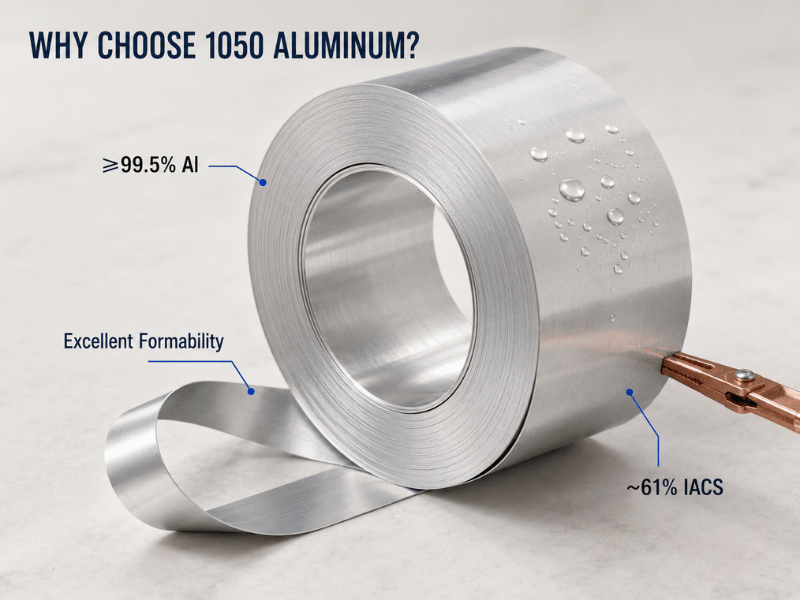
Aluminium 1050 to komercyjnie czysty stop przerabiany plastycznie z serii 1xxx, o minimalnej zawartości aluminium wynoszącej 99,51 TP3T. Ponieważ jest to prawie czyste aluminium, zachowuje najlepsze cechy metalu bazowego: wysoką ciągliwość, doskonałą odporność na korozję oraz wysokie przewodnictwo elektryczne i cieplne. Oznaczenia AA 1050/UNS A91050 oraz EN AW-1050A są blisko powiązanymi oznaczeniami w różnych systemach; zamówienie powinno określać obowiązującą normę, ponieważ dopuszczalne składy mogą się nieznacznie różnić.
Stop 1050 jest stopem nieumacnianym wydzieleniowo. Nie może być wzmacniany przez obróbkę cieplną z przesycaniem lub starzenie, jak stopy z serii 2xxx czy 6xxx; jego wytrzymałość jest zwiększana głównie poprzez obróbkę plastyczną na zimno (umocnienie odkształceniowe), wyrażaną przez rodzinę stanów H. Po zrozumieniu tego jednego faktu, pozostałe zachowania stopu — miękki stan O, coraz twardsze stany H12/H14/H16/H18 oraz kompromis między wytrzymałością a podatnością do formowania — układają się w logiczną całość.
Skład chemiczny
| Element | Maksymalna zawartość (%) | Rola |
| Aluminium (Al) | 99,5 (minimum) | Metal bazowy; wysoka czystość zapewnia przewodnictwo, podatność do formowania i odporność na korozję |
| Żelazo (Fe) | 0.40 | Najbardziej rozpowszechnione zanieczyszczenie; wpływa na wytrzymałość i jakość powierzchni |
| Krzem (Si) | 0.25 | Kontrolowane zanieczyszczenie; niewielki wpływ na tym poziomie |
| Miedź (Cu) | 0.05 | Utrzymywane na bardzo niskim poziomie w celu zachowania odporności na korozję |
| Mangan (Mn) | 0.05 | Minimalny efekt wzmacniający |
| Magnez (Mg) | 0.05 | Praktycznie brak efektu umocnienia wydzieleniowego |
| Cynk (Zn) | 0.05 | Kontrolowany pierwiastek śladowy; nadmierne poziomy mogą wpływać na właściwości |
| Tytan (Ti) | 0.03 | Pierwiastek śladowy, który może wpływać na strukturę ziarna |
| Inni (każdy) | 0.03 | Pozostałe pierwiastki śladowe |
Skład jest celowo prosty. Co najmniej 99,51 TP3T aluminium zapewnia stopowi lekkość, miękkość, podatność do formowania i przewodnictwo, podczas gdy żelazo i krzem — dwa zanieczyszczenia występujące w największych ilościach — wpływają na wytrzymałość, przewodnictwo, obrabialność i reakcję powierzchni, nie przekształcając stopu 1050 w stop umacniany wydzieleniowo. Ta wysoka czystość jest właśnie powodem, dla którego stop 1050 tak dobrze się zgina, tłoczy i przewodzi prąd oraz dlaczego pozostaje stopem nieumacnianym wydzieleniowo.
Właściwości mechaniczne i fizyczne
Właściwości w zależności od stanu
Ponieważ stop 1050 jest umacniany odkształceniowo, wytrzymałość w dużej mierze zależy od stanu. Poniższa tabela przedstawia typowe zakresy wartości, a nie uniwersalne granice dopuszczalne; dokładne wartości minimalne i maksymalne różnią się w zależności od postaci produktu, grubości, orientacji i obowiązującej normy. Typowe odniesienia obejmują ASTM B209/B209M dla blach i płyt, ASTM B211/B211M dla walcowanych lub ciągnionych na zimno prętów, okrągłych prętów i drutu oraz, w zależności od formy rury i zastosowania, ASTM B210/B210M, B221/B221M, B241/B241M, B483/B483M lub B491/B491M.
| Temperament | Wytrzymałość na rozciąganie (MPa) | Granica plastyczności (MPa) | Wydłużenie (%) |
| O (wyżarzony) | 60–100 | 20–35 | 35–40 |
| H12 (ćwierć twardy) | 85–125 | 65–95 | 12–20 |
| H14 (półtwardy) | 105–145 | 85–115 | 8–12 |
| H16 (trzy czwarte twardy) | 120–160 | 100–130 | 6–10 |
| H18 (pełny twardy) | ≥135 | ≥120 | 2–6 |
Wraz ze wzrostem odkształcenia na zimno od stanu O do H18, wytrzymałość na rozciąganie i granica plastyczności rosną, podczas gdy wydłużenie gwałtownie spada — stan H18 osiąga niemal maksymalną wytrzymałość komercyjną, ale traci większość swojej ciągliwości. Twardość podąża za tym samym trendem (od około 20 HB w stanie O do około 70 HB w stanie H18).
Właściwości fizyczne
| Nieruchomość | Wartość |
| Gęstość | 2,71 g/cm³ |
| Temperatura topnienia | 646–660 °C |
| Przewodność cieplna | 222–230 W/m·K |
| Przewodność elektryczna | ~61% IACS (wyżarzony) |
| Współczynnik rozszerzalności cieplnej | 23,6 µm/m·K |
| Moduł Younga | 69 GPa |
Te wartości są prawie stałe we wszystkich stanach: obróbka na zimno zmienia wytrzymałość i twardość, ale nie podstawowe stałe fizyczne. Przewodnictwo na poziomie ~61% IACS sprawia, że stop 1050 jest kandydatem do szyn zbiorczych i lekkich przewodników elektrycznych, plasując się tuż poniżej dedykowanych gatunków elektrotechnicznych, takich jak 1350.
Stany aluminium 1050
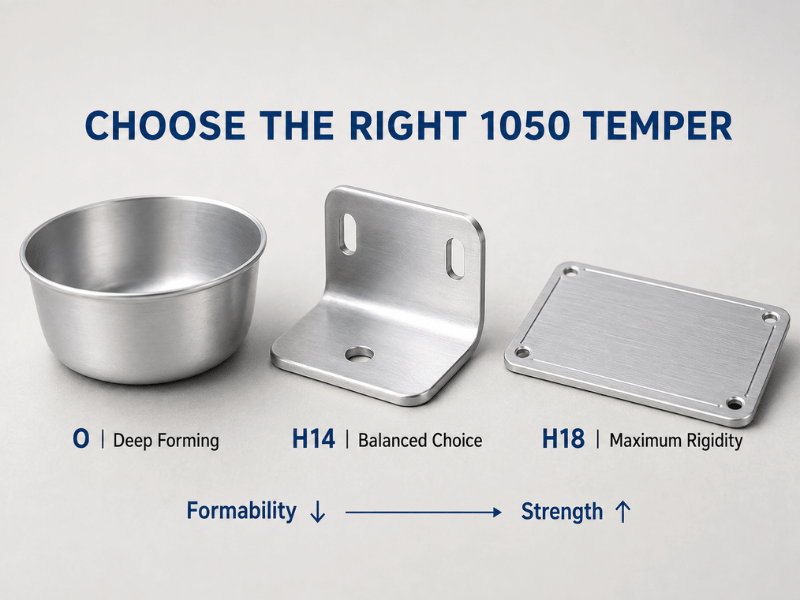
Stop 1050 jest dostarczany w całym zakresie stanów umocnionych odkształceniowo z rodziny H oraz w w pełni wyżarzonym stanie O. Każdy kolejny stopień stanowi kompromis między podatnością do formowania a wytrzymałością, dlatego wybór stanu jest w istocie decyzją między wytrzymałością a podatnością do formowania.
Aluminium 1050-O
Stan O to w pełni wyżarzony, najmiększy stan. Charakteryzuje się najwyższą ciągliwością i najlepszym przewodnictwem w całej rodzinie, dlatego jest domyślnym wyborem do głębokiego tłoczenia, wyoblania i wszelkich części, które przed użyciem muszą być uformowane w złożony kształt. Reflektory, obudowy lamp i korpusy naczyń kuchennych są zwykle w stanie O, ponieważ muszą być formowane, a nie obciążane.
Aluminium 1050-H12, H14, H16 i H18
Są to stany stopniowo umacniane odkształceniowo. Stan 1050-H12 to ćwierć twardy, który nadal łatwo się formuje; 1050-H14 to półtwardy stan uniwersalny stosowany do umiarkowanie obciążonych wsporników, tabliczek znamionowych i giętych paneli; 1050-H16 to trzy czwarte twardy stan do sztywniejszych komponentów; 1050-H18 to stan pełny twardy oferujący najwyższą wytrzymałość komercyjną do sztywnych, lekko formowanych części, takich jak płyty drukarskie i dekoracyjne tabliczki znamionowe. Wytrzymałość rośnie z każdym kolejnym stopniem, a podatność do formowania maleje, dlatego należy wybrać najtwardszy stan, który proces formowania jest jeszcze w stanie zaakceptować.
Jak wybrać odpowiedni stan stopu 1050
Należy zacząć od operacji formowania. Jeśli część musi być głęboko tłoczona, wyoblana lub gięta z małym promieniem, należy wybrać stan 1050-O; twardsze stany zwiększają ryzyko pękania i mogą wymagać większego promienia gięcia lub wyżarzania pośredniego. Jeśli potrzebna jest umiarkowana wytrzymałość z zachowaniem giętności, należy wybrać stan 1050-H14, najczęściej stosowany stan pośredni. Stan 1050-H18 należy wybierać tylko wtedy, gdy część jest prawie płaska lub ma prosty kształt i wymagana jest maksymalna sztywność. Należy pamiętać, że spawanie dowolnej części w stanie H wyżarza strefę wpływu ciepła z powrotem do stanu O, dlatego projekt należy oprzeć na niższej wytrzymałości zmiękczonej strefy wpływu ciepła.
Gdzie stosuje się aluminium 1050
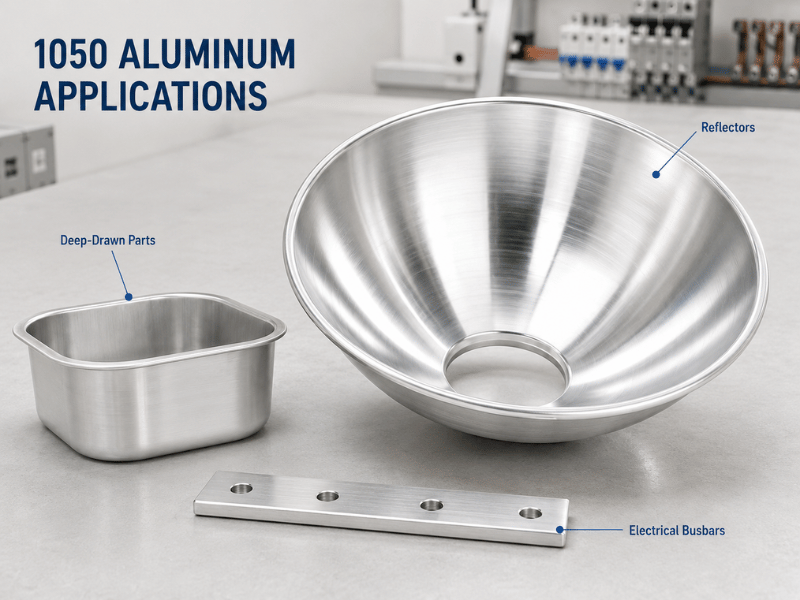
Stop 1050 znajduje zastosowanie tam, gdzie podatność do formowania i odporność na korozję są ważniejsze niż wytrzymałość. Jego odporność na korozję sprawdza się w wielu zbiornikach przemysłu spożywczego i elementach instalacji chemicznych, chociaż przydatność zależy od medium, temperatury, stanu powierzchni oraz obowiązujących przepisów dotyczących kontaktu z żywnością lub procesów technologicznych. W ogólnych pracach blacharskich łatwo formuje się w architektoniczne obróbki blacharskie, żebra wymienników ciepła i refleksyjne panele oświetleniowe. Jego przewodnictwo sprawia, że jest stosowany w szynach zbiorczych i lekkich przewodnikach elektrycznych, a jasna, refleksyjna powierzchnia czyni go standardem w reflektorach lamp i dekoracyjnych tabliczkach znamionowych.
Stop 1050 vs. 1060, 1100 i 3003
| Cecha | 1050 | 1060 | 1100 | 3003 |
| Zawartość aluminium | min. 99,51 TP3T | min. 99,61 TP3T | min. 99,01 TP3T; kontrolowana zawartość Cu | Reszta Al; typowo 1,0–1,51 TP3T Mn |
| Wytrzymałość (O, MPa) | ~75 | ~70 | ~90 | ~110 |
| Odporność na korozję | Doskonały | Doskonały | Doskonały | Bardzo dobra |
| Przewodność elektryczna | ~61% IACS | 61-62% IACS | 59-62% IACS | 40-50% IACS |
| Formowalność | Doskonały | Doskonały | Doskonały | Dobra (nieco sztywniejszy) |
| Typowe zastosowanie | Reflektory, patelnie, drut | Przewody, części oświetleniowe | Folia, przewody | Naczynia kuchenne, zbiorniki |
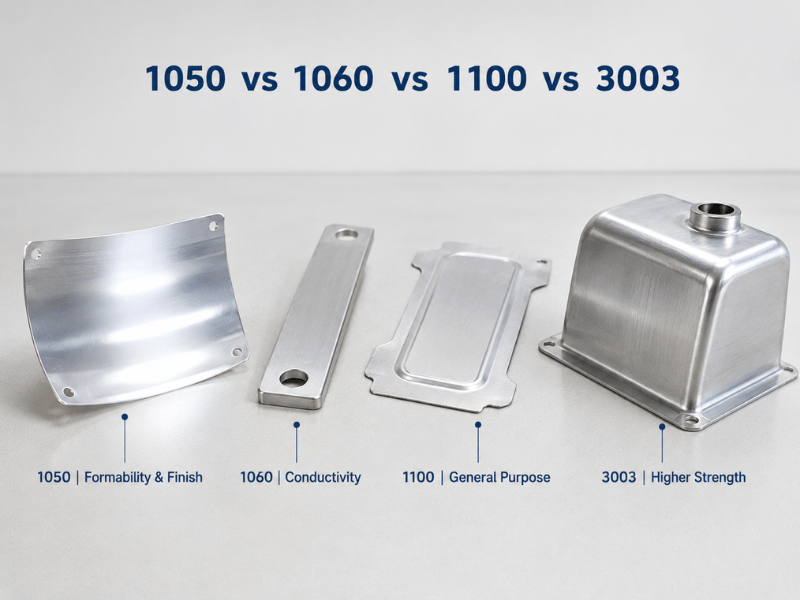
Stopy 1050 i 1060 są prawie czyste i oba dobrze przewodzą prąd, dlatego nadają się do miękkich zastosowań elektrycznych i formowania. Stop 1100 zawiera kontrolowaną miedź dla nieco większej wytrzymałości przy zachowaniu dobrego przewodnictwa, co sprzyja zastosowaniom w folii i drucie. Stop 3003 wymienia przewodnictwo na wytrzymałość uzyskaną dzięki manganowi, co sprawdza się w bardziej wytrzymałych naczyniach kuchennych i zbiornikach. Wartości porównawcze w tabeli są reprezentatywne i różnią się w zależności od stanu, postaci produktu i normy. Stop 1050 należy wybierać, gdy kluczowe znaczenie mają maksymalna podatność do formowania, jakość powierzchni i bezbarwne anodowanie; stop 3003 — gdy część wymaga większej wytrzymałości.
Praca z aluminium 1050
Formowalność
Podatność do formowania jest cechą nadrzędną. Stop 1050 głęboko tłoczy się, wyobla i zgina z bardzo małymi promieniami bez pękania, dlatego dominuje w reflektorach, naczyniach kuchennych i architektonicznych obróbkach blacharskich. Miększe stany formują się najlepiej; twardsze stany wymagają większych promieni gięcia.
Spawanie
Stop 1050 spawa się wyjątkowo dobrze metodami MIG i TIG. W zależności od konstrukcji złącza i wymagań eksploatacyjnych można dobrać spoiwo ER1100 lub inne kwalifikowane spoiwo, a doprowadzanie ciepła należy kontrolować, aby chronić materiał otaczający. Kluczowe zastrzeżenie: strefa wpływu ciepła traci wytrzymałość uzyskaną przez obróbkę na zimno i wyżarza się z powrotem do stanu O. Projekt należy oprzeć na niższej wytrzymałości zmiękczonej strefy wpływu ciepła.
Obróbka skrawaniem
Skrawalność jest słaba, zwłaszcza w miękkim stanie O. Materiał jest lepki i ma tendencję do narastania na narzędziu skrawającym (narost). Należy stosować bardzo ostre narzędzia z dużym dodatnim kątem natarcia, wysokie prędkości skrawania z małym posuwem oraz dobre smarowanie. Twardsze stany, takie jak H14, obrabiają się znacznie lepiej niż stan O.
Anodowanie
Stop 1050 anoduje się czysto, tworząc przezroczystą warstwę tlenkową typu II, która może poprawić odporność na korozję bez istotnej zmiany wyglądu, co czyni go przydatnym do wykończeń funkcjonalnych i architektonicznych. Wygląd kolorystyczny zależy od stanu powierzchni, składu kąpieli, systemu barwników i kontroli procesu, dlatego wymagania kosmetyczne należy potwierdzić na próbce. Stop ten może nie być najlepszym wyborem, gdy wymagany jest jednolity, nieprzezroczysty wygląd, jak w przypadku niektórych wykończeń stopów z serii 6xxx.
Zalety i ograniczenia aluminium 1050
Zalety
• Doskonała podatność do formowania do głębokiego tłoczenia, wyoblania i gięcia z małym promieniem
• Wyjątkowa odporność na korozję w środowiskach zewnętrznych i wilgotnych
• Wysokie przewodnictwo cieplne i elektryczne (~61% IACS)
• Doskonała reakcja na bezbarwne anodowanie
• Szeroko poddawany recyklingowi; zastosowania w kontakcie z żywnością wymagają zgodności z obowiązującymi przepisami
Ograniczenia
• Niska wytrzymałość — zasadniczo nienadający się do podstawowych elementów konstrukcyjnych przenoszących obciążenia
• Nieumacniany wydzieleniowo; wytrzymałość zwiększana głównie przez obróbkę na zimno
• Słaba skrawalność, szczególnie w stanie O
• Kolorowe anodowanie wymaga kontroli procesu i zatwierdzenia próbek
• Strefy spawania miękną powracając do stanu O
Wnioski
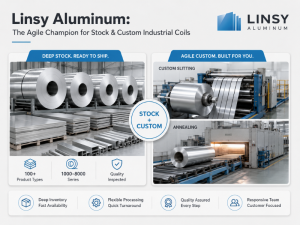
1050 jest właściwym wyborem, gdy element musi być formowany, przewodzić prąd lub odporny na korozję w większym stopniu niż przenosić obciążenia — jednak jego niska wytrzymałość i słaba skrawalność czynią go zasadniczo nieodpowiednim do podstawowych zastosowań konstrukcyjnych przenoszących obciążenia. Jako niezawodny gatunek czystego aluminium handlowego, Linsy dostarcza stop 1050 w postaci drutu, zwojów i płyt, z możliwością obróbki CNC, spawania TIG/MIG, cięcia laserowego i wykańczania powierzchni, a także świadectwem jakości MTC do każdego zamówienia oraz certyfikacją ISO 9001/14001/45001; badania przez SGS lub inne strony trzecie mogą być zorganizowane na życzenie. Wyślij swój rysunek lub specyfikację do Linsy Aluminum w celu sprawdzenia dostępności magazynowej i wyceny.
Często zadawane pytania
Czy aluminium 1050 może być poddane obróbce cieplnej w celu zwiększenia wytrzymałości?
Nie. Stop 1050 nie jest poddawany obróbce cieplnej — nie może być przesycany ani starzony jak stopy z serii 2xxx czy 6xxx. Wytrzymałość zwiększa się głównie poprzez obróbkę plastyczną na zimno, dlatego wybierz twardszy stan H (H14, H16, H18), jeśli potrzebujesz większej nośności.
Jaka jest różnica między 1050-O a 1050-H14?
Stan O to pełne wyżarzenie: najmiększy, najbardziej plastyczny, najlepszy do głębokiego tłoczenia i wyoblania. Stan H14 to półtwardy: wytrzymałość na rozciąganie około 105–145 MPa w porównaniu z 60–100 MPa dla stanu O, przy znacznie niższym wydłużeniu. Wybierz stan O, gdy element musi być formowany; wybierz stan H14, gdy potrzebujesz umiarkowanej wytrzymałości po formowaniu.
Czy aluminium 1050 jest łatwe do spawania?
Tak. Spawa się dobrze metodami MIG i TIG. W zależności od konstrukcji złącza i wymagań eksploatacyjnych można dobrać spoiwo ER1100 lub inne kwalifikowane. Strefa wpływu ciepła wyżarza się z powrotem do miękkiego stanu O, dlatego należy uwzględnić lokalne zmiękczenie w każdej spawanej konstrukcji.
Czym różni się stop 1050 od aluminium 1350?
Stop 1350 jest zoptymalizowany pod kątem przewodników elektrycznych o nieco wyższej przewodności, podczas gdy 1050 sprzyja formowalności i odporności na korozję z wyraźnym wykończeniem anodowanym. Stosuj 1350 do przewodników, a 1050 tam, gdzie liczą się kształtowanie i wygląd powierzchni.
Dlaczego wybrać 1050 zamiast 1060 lub 1100?
Stopy 1050 i 1060 są oba prawie czyste i dobrze przewodzą prąd; nieco niższa czystość 1050 nadal zapewnia doskonałą formowalność i wyraźne wykończenie anodowane. Stop 1100 zawiera kontrolowaną ilość miedzi dla większej wytrzymałości, ale nieco niższej przewodności. Wybierz 1050, gdy formowalność, wykończenie i odporność na korozję są wiodące w specyfikacji.