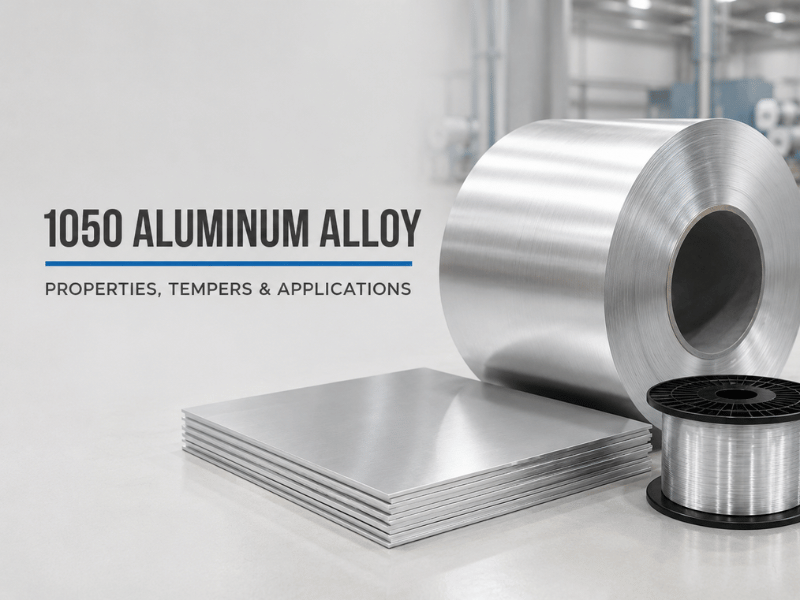
Co je hliník 1050?
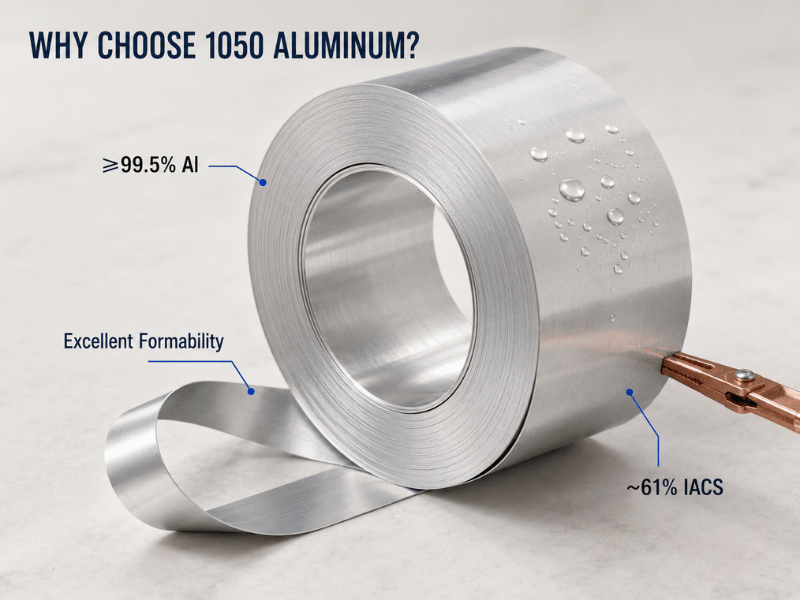
Hliník 1050 je komerčně čistá tvářená slitina z řady 1xxx s minimálním obsahem hliníku 99,5 %. Protože se jedná o téměř čistý hliník, zachovává si nejlepší vlastnosti základního kovu: vysokou tažnost, vynikající odolnost proti korozi a vysokou elektrickou a tepelnou vodivost. Označení AA 1050/UNS A91050 a EN AW-1050A jsou blízce příbuzná označení v různých systémech; objednávka by měla specifikovat rozhodnou normu, protože mezní hodnoty složení se mohou mírně lišit.
Slitina 1050 je tepelně nezpracovatelná slitina. Nelze ji zpevnit roztokovým žíháním ani stárnutím jako slitiny řady 2xxx nebo 6xxx; její pevnost se zvyšuje především tvářením za studena (deformačním zpevněním), které se vyjadřuje řadou stavů H. Jakmile pochopíte tento jediný fakt, ostatní chování slitiny — měkký stav O, postupně tvrdší stavy H12/H14/H16/H18 a kompromis mezi pevností a tvařitelností — zapadá do souvislostí.
Chemické složení
| Prvek | Maximální obsah (%) | Role |
| Hliník (Al) | 99,5 (minimálně) | Základní kov; vysoká čistota zajišťuje vodivost, tvařitelnost a odolnost proti korozi |
| Železo (Fe) | 0.40 | Nejhojnější nečistota; ovlivňuje pevnost a povrchovou úpravu |
| Křemík (Si) | 0.25 | Řízená nečistota; při této úrovni má malý vliv |
| Měď (Cu) | 0.05 | Udržována na velmi nízké úrovni pro zachování odolnosti proti korozi |
| Mangan (Mn) | 0.05 | Minimální zpevňující účinek |
| Hořčík (Mg) | 0.05 | Téměř žádný efekt precipitačního zpevnění |
| Zinek (Zn) | 0.05 | Řízený stopový prvek; nadměrné množství může ovlivnit vlastnosti |
| Titan (Ti) | 0.03 | Stopový prvek, který může ovlivnit strukturu zrna |
| Ostatní (každý) | 0.03 | Zbývající stopové prvky |
Složení je záměrně jednoduché. Minimálně 99,5 % hliníku zajišťuje, že slitina je lehká, měkká, tvařitelná a vodivá, zatímco železo a křemík — dvě nečistoty přítomné v největším množství — ovlivňují pevnost, vodivost, obrobitelnost a povrchovou reakci, aniž by se z 1050 stala precipitačně zpevňovaná slitina. Právě tato vysoká čistota je důvodem, proč se 1050 tak dobře ohýbá, tvaruje a vede elektrický proud, a proč zůstává tepelně nezpracovatelnou slitinou.
Mechanické a fyzikální vlastnosti
Vlastnosti podle stavu
Protože je 1050 zpevňována tvářením za studena, pevnost silně závisí na stavu. Níže uvedená tabulka uvádí reprezentativní rozsahy, nikoli univerzální přípustné meze; přesná minima a maxima se liší podle formy výrobku, tloušťky, orientace a rozhodné normy. Běžnými referencemi jsou ASTM B209/B209M pro plechy a desky, ASTM B211/B211M pro válcované nebo za studena dokončené tyče, pruty a dráty, a v závislosti na formě trubek a provozních podmínkách ASTM B210/B210M, B221/B221M, B241/B241M, B483/B483M nebo B491/B491M.
| Temperament | Pevnost v tahu (MPa) | Mez kluzu (MPa) | Prodloužení (%) |
| O (žíhaný) | 60–100 | 20–35 | 35–40 |
| H12 (čtvrtina tvrdá) | 85–125 | 65–95 | 12–20 |
| H14 (polotvrdá) | 105–145 | 85–115 | 8–12 |
| H16 (tři čtvrtiny tvrdá) | 120–160 | 100–130 | 6–10 |
| H18 (plně tvrdá) | ≥135 | ≥120 | 2–6 |
S rostoucím tvářením za studena od stavu O do H18 roste pevnost v tahu a mez kluzu, zatímco tažnost prudce klesá — stav H18 dosahuje téměř maximální komerční pevnosti, ale ztrácí většinu své tažnosti. Tvrdost sleduje stejný trend (přibližně 20 HB ve stavu O až ~70 HB ve stavu H18).
Fyzikální vlastnosti
| Majetek | Hodnota |
| Hustota | 2,71 g/cm³ |
| Teplota tání | 646–660 °C |
| Tepelná vodivost | 222–230 W/m·K |
| Elektrická vodivost | ~61 % IACS (žíháno) |
| Součinitel tepelné roztažnosti | 23,6 µm/m·K |
| Youngův modul pružnosti | 69 GPa |
Tyto hodnoty jsou téměř konstantní napříč stavy: tváření za studena mění pevnost a tvrdost, nikoli základní fyzikální konstanty. Vodivost ~61 % IACS je důvodem, proč je 1050 kandidátem pro přípojnice a lehké elektrické vodiče, těsně pod specializovanými elektrotechnickými jakostmi, jako je 1350.
Stavy hliníku 1050
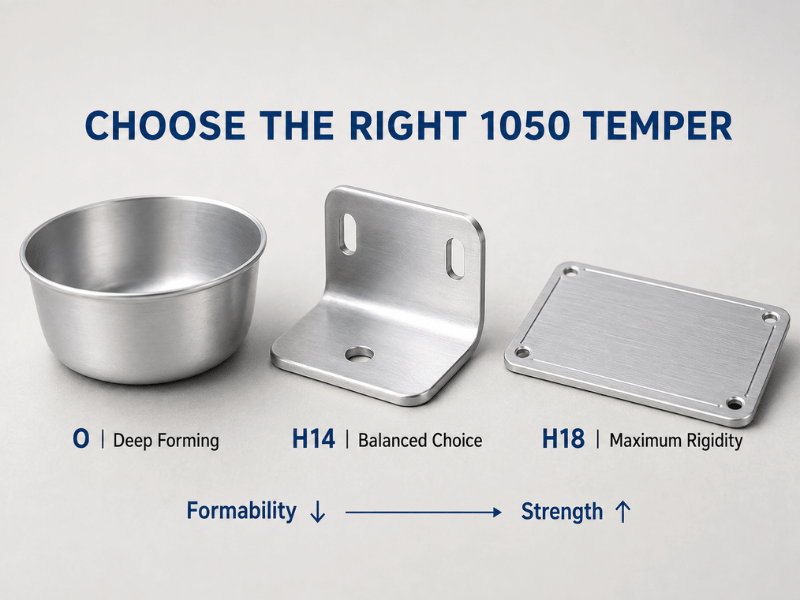
Slitina 1050 se dodává v celém rozsahu deformačně zpevněných stavů H plus plně žíhaném stavu O. Každý krok představuje kompromis mezi tvařitelností a pevností, takže volba stavu je v podstatě rozhodnutím mezi pevností a tvařitelností.
Hliník 1050-O
Stav O je plně žíhaný, nejměkčí stav. Má nejvyšší tažnost a nejlepší vodivost z celé rodiny, což je důvod, proč je výchozí volbou pro hluboké tažení, protlačování a jakékoli díly, které musí být před použitím tvarovány do složitých tvarů. Reflektory, kryty lamp a těla kuchyňského nádobí jsou obvykle ve stavu O, protože musí být tvarovány, nikoli zatěžovány.
Hliník 1050-H12, H14, H16 a H18
Jedná se o postupně deformačně zpevňované stavy. 1050-H12 je čtvrtina tvrdá a stále se snadno tvaruje; 1050-H14 je polotvrdý pracovní stav používaný pro mírně zatěžované konzoly, štítky a ohýbané panely; 1050-H16 je tři čtvrtiny tvrdý pro tužší součásti; 1050-H18 je plně tvrdý a nabízí nejvyšší komerční pevnost pro tuhé, mírně tvarované díly, jako jsou tiskové desky a dekorativní štítky. Pevnost s každým krokem roste a tvařitelnost klesá, proto zvolte nejtvrdší stav, který váš tvářecí proces ještě zvládne.
Jak vybrat správný stav 1050
Začněte od tvářecí operace. Pokud musí být díl hluboce tažen, protlačován nebo ohýbán s malým poloměrem, zvolte 1050-O; tvrdší stavy zvyšují riziko praskání a mohou vyžadovat větší poloměr ohybu nebo mezilehlé žíhání. Pokud potřebujete střední pevnost se zachovanou ohybatelností, zvolte 1050-H14, nejběžnější mezistav. Stav 1050-H18 zvolte pouze tehdy, když je díl téměř plochý nebo jednoduše tvarovaný a požadujete maximální tuhost. Pamatujte, že svařování jakéhokoli dílu ve stavu H žíhá tepelně ovlivněnou zónu zpět směrem ke stavu O, proto navrhujte s ohledem na nižší pevnost změklé tepelně ovlivněné zóny.
Kde se hliník 1050 používá
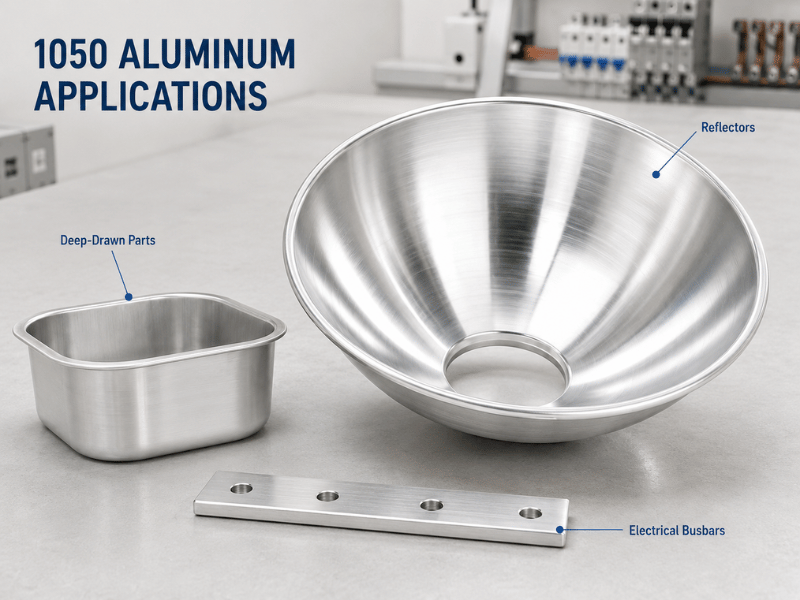
Slitina 1050 se hodí pro aplikace, kde záleží více na tvařitelnosti a odolnosti proti korozi než na pevnosti. Její odolnost proti korozi vyhovuje mnoha nádobám pro potravinářský průmysl a součástem chemických procesů, i když vhodnost závisí na médiu, teplotě, stavu povrchu a příslušných předpisech pro styk s potravinami nebo procesních předpisech. V obecném plechářství se snadno tvaruje do architektonických oplechování, žeber tepelných výměníků a reflexních osvětlovacích panelů. Její vodivost ji řadí mezi přípojnice a lehké elektrické vodiče, zatímco její jasný, reflexní povrch z ní činí standard pro lampové reflektory a dekorativní štítky.
Srovnání 1050 vs. 1060, 1100 a 3003
| Funkce | 1050 | 1060 | 1100 | 3003 |
| Obsah hliníku | min. 99,5 % | min. 99,6 % | min. 99,0 %; řízený obsah Cu | Zbytek Al; typicky 1,0–1,5 % Mn |
| Pevnost (O, MPa) | ~75 | ~70 | ~90 | ~110 |
| Odolnost proti korozi | Vynikající | Vynikající | Vynikající | Velmi dobrá |
| Elektrická vodivost | ~61 % IACS | 61-62% IACS | 59-62% IACS | 40-50% IACS |
| Tvarovatelnost | Vynikající | Vynikající | Vynikající | Dobrá (o něco tužší) |
| Typické použití | Reflektory, pánve, dráty | Dráty, světelné díly | Fólie, dráty | Nádobí, nádrže |
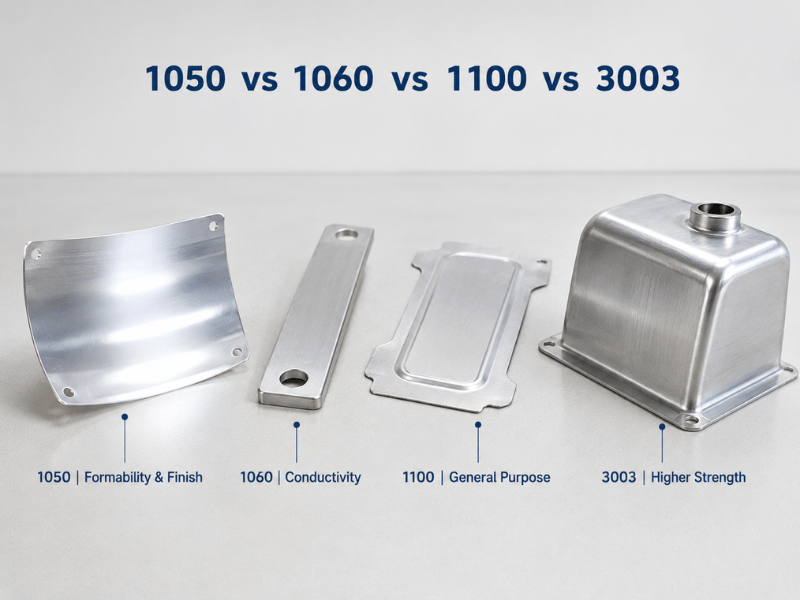
Slitiny 1050 a 1060 jsou téměř čisté a obě dobře vedou elektrický proud, proto se hodí pro měkké elektrotechnické a tvářecí aplikace. Slitina 1100 obsahuje řízenou měď pro mírně vyšší pevnost při zachování dobré vodivosti, což zvýhodňuje fólie a dráty. Slitina 3003 vyměňuje vodivost za pevnost řízenou manganem, což vyhovuje pevnějšímu kuchyňskému nádobí a nádržím. Srovnávací hodnoty v tabulce jsou reprezentativní a liší se podle stavu, formy výrobku a normy. Zvolte 1050, když záleží na maximální tvařitelnosti, kvalitě povrchu a čiré eloxaci; přejděte na 3003, když díl potřebuje vyšší pevnost.
Práce s hliníkem 1050
Tvarovatelnost
Hlavní vlastností je tvařitelnost. Slitina 1050 se hluboce táhne, protlačuje a ohýbá s velmi malými poloměry bez praskání, což je důvod, proč dominuje v reflektorech, kuchyňském nádobí a architektonických oplechováních. Měkčí stavy se tvarují nejlépe; tvrdší stavy vyžadují větší poloměry ohybu.
Svařování
Slitina 1050 se výjimečně dobře svařuje metodami MIG a TIG. Přídavný materiál ER1100 nebo jiný kvalifikovaný může být zvolen podle konstrukce spoje a provozních požadavků, a tepelný příkon by měl být řízen, aby byla chráněna okolní materiál. Kritické upozornění: tepelně ovlivněná zóna ztrácí pevnost získanou tvářením za studena a žíhá se zpět směrem ke stavu O. Navrhujte s ohledem na nižší pevnost změklé tepelně ovlivněné zóny.
Obrábění
Obráběcí schopnost je špatná, zejména v měkkém stavu O. Materiál je lepivý a má tendenci se hromadit na řezném nástroji (nárůstek na břitu). Používejte velmi ostré nástroje s vysokým kladným úhlem čela, vysoké řezné rychlosti s nízkým posuvem a dobré mazání. Tvrdší stavy, jako je H14, se obrábějí výrazně lépe než stav O.
Eloxování
Slitina 1050 se čistě eloxuje do čiré, transparentní vrstvy typu II, která může zlepšit odolnost proti korozi bez výrazné změny vzhledu, což ji činí užitečnou pro funkční a architektonické povrchové úpravy. Barevný vzhled závisí na stavu povrchu, chemismu lázně, barvicím systému a řízení procesu, proto by kosmetické požadavky měly být potvrzeny vzorkem. Nemusí být nejlepší volbou, když je vyžadován jednotný neprůhledný vzhled jako u některých povrchových úprav řady 6xxx.
Výhody a omezení hliníku 1050
Přednosti
• Vynikající tvařitelnost pro hluboké tažení, protlačování a ohýbání s malým poloměrem
• Vynikající odolnost proti korozi ve venkovním a vlhkém prostředí
• Vysoká tepelná a elektrická vodivost (~61 % IACS)
• Vynikající reakce na čirou eloxaci
• Široce recyklovatelný; použití ve styku s potravinami vyžaduje soulad s příslušnými předpisy
Omezení
• Nízká pevnost — obecně nevhodný pro primární nosné konstrukční díly
• Tepelně nezpracovatelný; pevnost se zvyšuje především tvářením za studena
• Špatná obrobitelnost, zejména v temperu O
• Barevný eloxovaný vzhled vyžaduje řízení procesu a schválení vzorku
• Svarové zóny měknou zpět směrem k temperu O
Závěr
1050 je správná volba, když musí být díl tvarován, vést proud nebo odolávat korozi více, než musí nést zatížení — ale jeho nízká pevnost a špatná obrobitelnost jej činí obecně nevhodným pro primární nosné konstrukční účely. Pro spolehlivou komerčně čistou jakost dodává Linsy 1050 ve formě drátu, svitků a plechů, s možností CNC obrábění, svařování TIG/MIG, laserového řezání a povrchové úpravy, dále s MTC ke každé objednávce a certifikací ISO 9001/14001/45001; testování třetí stranou SGS nebo jinou lze zajistit na vyžádání. Zašlete svůj výkres nebo specifikaci společnosti Linsy Aluminum pro kontrolu skladových zásob a cenovou nabídku.
Často kladené otázky
Lze hliník 1050 tepelně zpracovat pro zvýšení pevnosti?
Ne. 1050 není tepelně zpracovatelný — nelze jej rozpouštěcím žíháním ani vytvrzováním zpracovat jako slitiny 2xxx nebo 6xxx. Pevnost se zvyšuje především tvářením za studena, proto zvolte tvrdší H-temper (H14, H16, H18), pokud potřebujete vyšší nosnost.
Jaký je rozdíl mezi 1050-O a 1050-H14?
O je plně žíhaný: nejměkčí, nejtvárnější, nejvhodnější pro hluboké tažení a odstředivé tváření. H14 je polotvrdý: přibližně 105–145 MPa pevnost v tahu oproti 60–100 MPa u O, s výrazně nižší tažností. Zvolte O, když musíte díl tvarovat; zvolte H14, když potřebujete střední pevnost po tvarování.
Je hliník 1050 snadno svařitelný?
Ano. Svařuje se dobře metodami MIG a TIG. Přídavný materiál ER1100 nebo jiný kvalifikovaný může být zvolen podle konstrukce spoje a provozních požadavků. Tepelně ovlivněná zóna se žíhá zpět do měkkého stavu O, proto počítejte s lokálním změknutím u každé svařované sestavy.
Jak se 1050 liší od hliníku 1350?
1350 je optimalizován pro elektrické vodiče s mírně vyšší vodivostí, zatímco 1050 upřednostňuje tvařitelnost a odolnost proti korozi s čirým eloxovaným povrchem. Použijte 1350 pro vodiče a 1050 tam, kde záleží na tvarování a vzhledu povrchu.
Proč zvolit 1050 místo 1060 nebo 1100?
1050 i 1060 jsou téměř čisté a dobře vedou proud; mírně nižší čistota 1050 stále poskytuje vynikající tvařitelnost a čirý eloxovaný povrch. 1100 obsahuje řízený obsah mědi pro vyšší pevnost, ale mírně nižší vodivost. Zvolte 1050, když tvařitelnost, povrch a odolnost proti korozi vedou specifikaci.