

6201 aluminum wire is the AAAC conductor alloy: about 52% IACS but roughly twice the tensile strength of 1350 EC wire in T81, which is what allows longer spans and wider tower spacing. It is not a substitute for EC grade — it is a different answer to the same problem.
Průměr: 0,8–30 mm, ±0,02–0,05 mm
Tempery: O / T4 / T6 / T81
Hmotnost cívky: od 50 kg
Normy: ASTM B233, ASTM B398
Dokumenty týkající se kvality: MTC s vodivostí a pevností v tahu
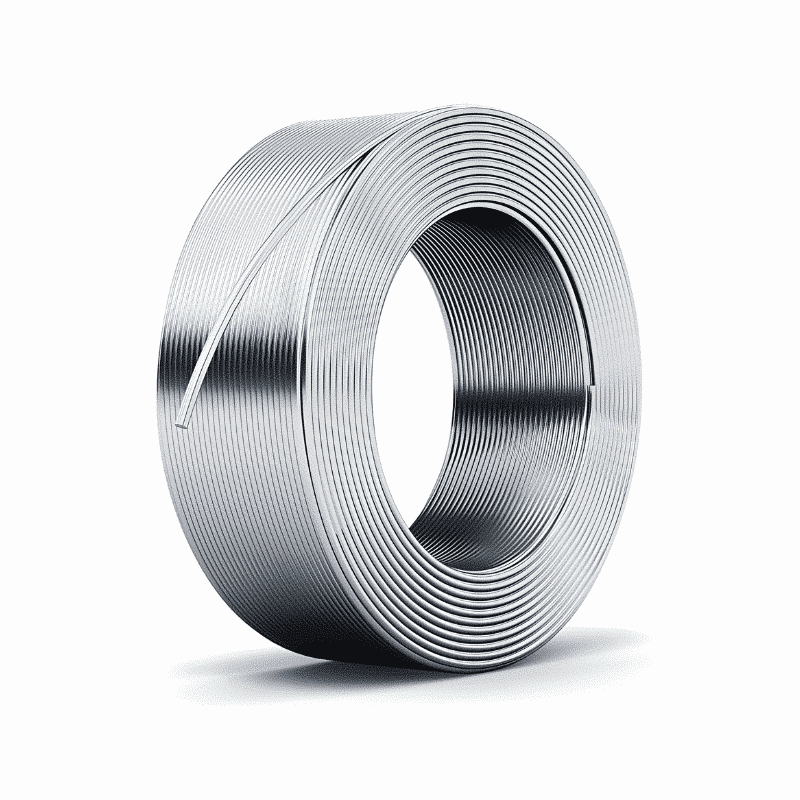
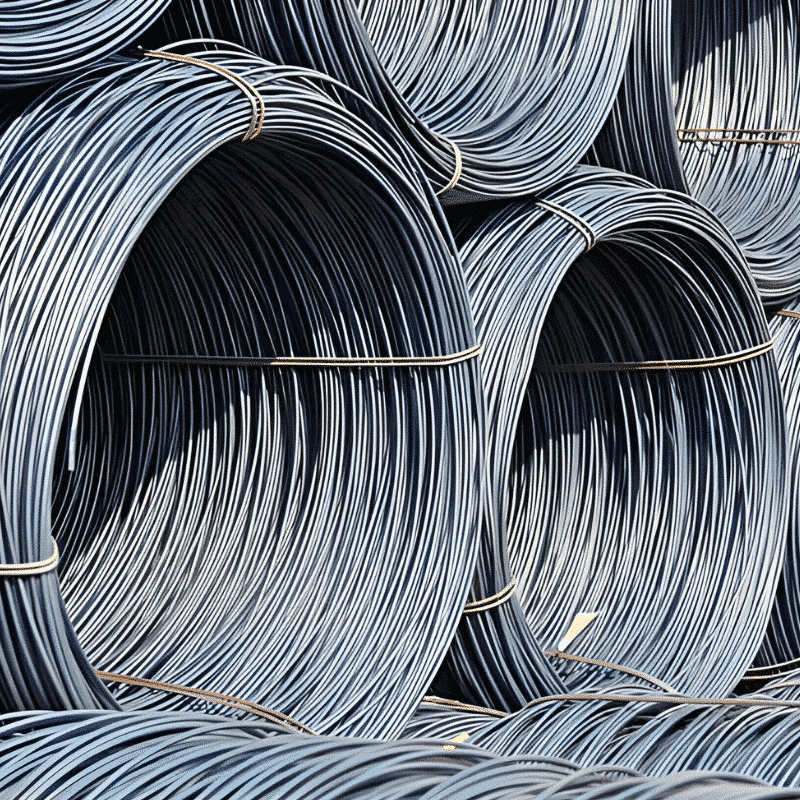
6201 aluminum wire is a heat-treatable Al-Mg-Si conductor alloy supplied to the AAAC (all-aluminium alloy conductor) industry, where strength matters as much as conductivity. At about 52% IACS it conducts less than 1350 EC wire (about 61%), but T81 gives roughly twice the tensile strength — which is why AAAC spans can be longer and towers further apart than plain aluminium. It is not an electrical-grade substitute for 1350; it is a different answer to the same problem. Alloy data: Slitina hliníku 6201.
| Položka | Rozsah |
|---|---|
| Průměr | 0,8 – 30 mm |
| Tolerance | ±0.02 – 0.05 mm (drawn), tighter on request |
| Hmotnost svitku | Minimálně 50 kg, jiné množství na vyžádání |
| Formulář | Coil or spool, drawn bright |
| Normy | ASTM B233 (6201 wire), ASTM B398 |
Diameter tolerance is the number that decides whether the wire runs: on a stranding line a wire outside tolerance causes tension variation and birdcaging, and on a drawing line it changes the die load. State the tolerance class with the diameter rather than leaving it to the standard.
| Temperament | Pevnost v tahu (MPa) | Mez kluzu (MPa) | Vodivost (% IACS) | Typické použití |
|---|---|---|---|---|
| O | ~110 | — | ~52 | Feedstock for drawing and stranding |
| T4 | ~180 | — | ~52 | Formed parts, naturally aged |
| T6 | ~260 | ~215 | ~52 | Where full cold work is not applied |
| T81 | ~295 | ~255 | ~52 | AAAC conductors, overhead line |
Typical values; confirm against the MTC. Density 2.70 g/cm³, resistivity about 0.0328 Ω·mm²/m at 20 °C. T81 is the conductor temper: cold worked after quenching and then aged, which is what produces both the strength and the stable conductivity.
T81 is the conductor answer and the reason 6201 exists. The cold work before ageing raises strength without the drop in conductivity that comes from alloying further, and the result is stable in service at line temperature.
T6 is used where full cold work is not applied — formed parts and applications that need strength but not the drawn condition. O is feedstock for drawing and stranding, not a finished conductor temper.
| Slitina | Pevnost v tahu (MPa) | Vodivost (% IACS) | Kde se hodí |
|---|---|---|---|
| 6201-T81 | ~295 | ~52 | AAAC overhead conductors, long spans, high tower spacing |
| 1350-H19 | ~160–200 | ~61 | ACSR and plain conductor, standard electrical grade |
| 1370-H18 | ~170–200 | ~61.5 | High-purity conductor where conductivity is the priority |
The trade is explicit: 6201 gives up about 9 points of conductivity to nearly double the strength. That is worth it when span length or ice loading governs; it is not worth it when the line is short and conductivity losses dominate. Neither alloy substitutes for the other on a specification.
Vodičový drát is judged on conductivity, strength and how it strands: 6201, 1350, 1370 and 1050 sit in this family. Mechanický drát is judged on formability, weldability or corrosion: 5052, 5056, 5083, 3003, 6061, 6082. The two families share a product form but nothing else — a spec written for one is not usable for the other.
For 6201 specifically, the certification matters as much as the metal: conductivity is measured on the finished wire and reported with the tensile result, and a line operator will want both on the same document.
Jak se specifikuje vodivost. Conductivity is expressed as a percentage of the International Annealed Copper Standard, so about 52% IACS means 61% of the conductivity of annealed copper. It is measured on the hotovém drátu, pomocí odporu na jednotku délky při stanovené teplotě (obvykle 20 °C), a protože odpor hliníku stoupá asi o 0,4 % na °C, musí být teplota měření deklarována, jinak číslo nic neznamená. To je důvod, proč certifikát vodiče uvádí vodivost a teplotu zkoušky společně, a proč lze o hodnotě naměřené při pokojové teplotě za chladného rána diskutovat.
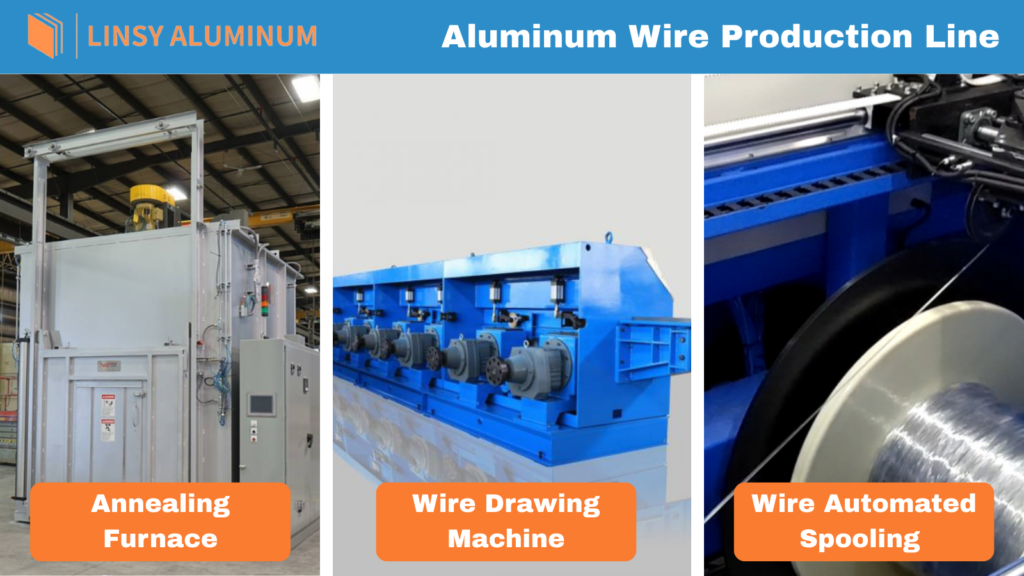
Tažení: supplied drawn to finish diameter, bright surface, with drawing lubricant removed. Residual lubricant causes problems in stranding and in subsequent annealing, so state if the wire is to be cleaned to a particular standard.
Navíjení: coils from 50 kg, spools on request. Give us the spool type and the bore your payoff accepts — it is a common cause of a rejected delivery.
Spojování: 6201 is not normally welded; conductors are joined with compression fittings or splices. Welding is not a route for this alloy.
AAAC overhead conductors, overhead line cores, stranded cable, busbar and substation connections, messenger and support wire, and drawn feedstock for further stranding.
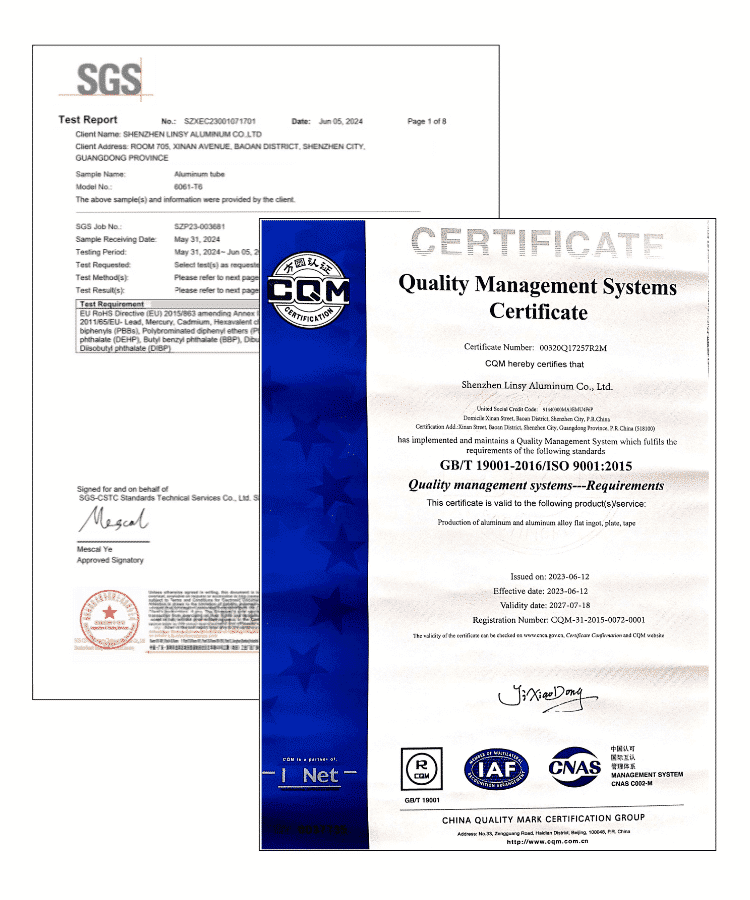
Every order ships with an MTC reporting alloy, temper, diameter, tensile strength and electrical conductivity — conductivity on the finished wire, not the billet. Third-party testing is available on request at additional cost; production runs under ISO 9001, ISO 14001 and ISO 45001 certified systems.
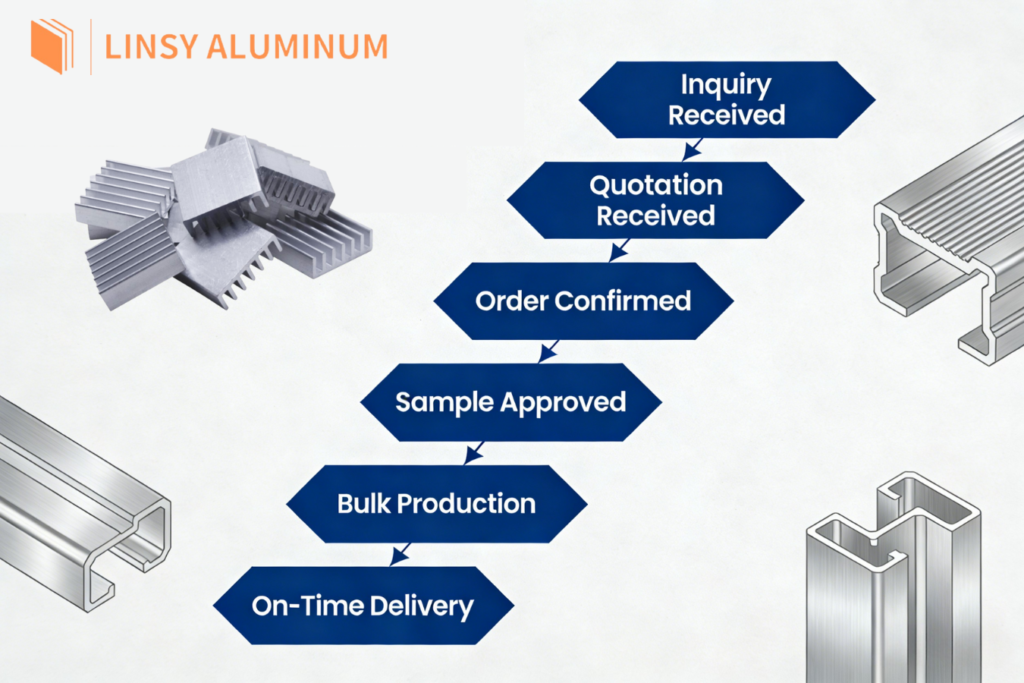
Pro nabídku v jednom kole pošlete: průměr a tolerance, stav zpracování (T81 for conductors), hmotnost cívky nebo špulky a typ cívky, požadavek na vodivost a pevnost v tahu, surface/cleaning standard, a místo určení.
Hliníkárna se sídlem v Shenzhenu, více než 20 let v oboru, dodávající slitiny řady 1000–8000 ve standardních specifikacích a zakázkových rozměrech.
Q: Why use 6201 instead of 1350 for a conductor?
A: Strength. 6201-T81 gives roughly twice the tensile of 1350-H19 at about 9 points less conductivity, which pays off on long spans and in ice loading.
Q: Is T81 better than T6 for overhead line?
A: Yes. For conductors T81 is preferred because the cold work plus ageing gives the highest strength at a stable conductivity; T6 is used where full cold work is not applied.
Q: Can 6201 wire be welded?
A: Not as a rule. Conductors are joined with compression fittings or splices rather than welded.
Q: Is conductivity tested on the wire or the billet?
A: On the finished wire. Ask for the conductivity and tensile on the same certificate — that is what a line operator will check.
Otázka: Jaké rozměry a svitky dodáváte?
A: Průměr 0,8–30 mm při ±0,02–0,05 mm, svitky od 50 kg, cívky na vyžádání.
Výhody Linsy
Společnost Linsy Aluminium je předním dodavatelem výrobků pro zpracování hliníku, které slouží různým průmyslovým odvětvím včetně leteckého průmyslu, všeobecného strojírenství, automobilového průmyslu, lodního průmyslu, stavby lodí a dalších specializovaných průmyslových aplikací.
Zavázali jsme se dodržovat nejvyšší standardy kvality a odpovědnosti vůči životnímu prostředí, což dokazují naše certifikáty: ISO 9001:2008, ISO 14001:2004 a SGS.