Co je hliník 5086
5086 patří do rodiny hliník–hořčík. Hořčík je hlavním legujícím prvkem a zdrojem jak pevnosti tuhého roztoku, tak odolnosti ve mořské vodě; mangan a chrom jsou záměrné přídavky, které řídí strukturu zrn a omezují mezikrystalové napadení. Měď je omezena na maximálně 0,10 %, protože i malá množství zhoršují odolnost proti chloridové korozi.
Protože není tepelně zpracovatelný, 5086 nelze zpevnit rozpouštěcím žíháním a vytvrzováním. Jeho pevnost pochází ze studeného zpracování, vyjádřeného v temperech H, a z hořčíku udržovaného v tuhém roztoku. Tato jediná skutečnost řídí většinu jeho inženýrského chování:
- Svařování nevyžaduje tepelné zpracování po svařování — neexistuje žádný precipitát, který by se rozpustil nebo znovu vytvořil.
- Svařování však změkčuje tepelně ovlivněnou zónu — studené zpracování se lokálně vyžíhá. Viz sekce o svařování, protože toto je bod, ve kterém se většina technických listů mýlí.
- Volba temperu je volbou pevnosti. Objednání “5086” bez temperu nechává hutě hádat.
Pro válcované ploché výrobky jsou rozhodujícími specifikacemi ASTM B209 (plech a deska) a ASTM B928/B928M (plech a deska s vysokým obsahem hořčíku pro námořní použití, kde jsou definovány a testovány tempery H116 a H321). Trubky a potrubí spadají pod ASTM B210/B221/B241, a práce na tlakových nádobách odkazují na ASME SB-209. Mezinárodní ekvivalenty jsou EN AW-5086 / AlMg4 / 3.3545 a UNS A95086.
Chemické složení 5086
Níže uvedené limity odpovídají ASTM B209. Křemík, železo, měď, zinek a titan jsou kontrolované nečistoty, nikoli funkční přídavky — křemík zejména “nezlepšuje tvařitelnost” a jeho považování za konstrukční proměnnou je časté nesprávné čtení tabulek složení.
| Prvek | Hmotnost % | Role ve slitině |
|---|---|---|
| Hořčík (Mg) | 3.5 – 4.5 | Primární zpevňující prvek; řídí odolnost proti korozi v mořské vodě |
| Mangan (Mn) | 0.20 – 0.70 | Řízení struktury zrn, odezva na deformační zpevnění |
| Chrom (Cr) | 0.05 - 0.25 | Omezuje mezikrystalovou korozi a růst zrn |
| Křemík (Si) | max 0,40 | Nečistota — kontrolovaná, nikoli funkční |
| Železo (Fe) | max 0,50 | Nečistota — nadměrné hladiny poškozují tažnost |
| Měď (Cu) | 0,10 max | Nečistota — udržována nízko pro ochranu odolnosti proti korozi |
| Zinek (Zn) | 0,25 max. | Nečistota |
| Titan (Ti) | 0,15 max | Modifikátor zrn během odlévání |
| Ostatní (každý / celkem) | 0,05 / 0,15 max | — |
| Hliník (Al) | Zbytek | Nobelmetal |
Rozsah hořčíku je číslo, které stojí za zapamatování. Při 3,5–4,5 % se 5086 pohybuje kolem prahu ~3,5 %, nad nímž může hořčík precipitovat na hranicích zrn jako beta fáze (Al₃Mg₂) během dlouhodobého teplého provozu. To je mechanismus za teplotním limitem diskutovaným později a je to důvod, proč volba temperu není u této slitiny kosmetická.
Fyzikální vlastnosti
| Majetek | Hodnota |
|---|---|
| Hustota | 2,66 g/cm³ (0,096 lb/in³) |
| Rozsah tavení | 574 – 638 °C (1 065 – 1 180 °F) |
| Tepelná vodivost | 117 – 127 W/m·K při 25 °C (závislé na temperu) |
| Elektrická vodivost | 29 – 31 % IACS při 20 °C |
| Součinitel tepelné roztažnosti | 23,8 × 10⁻⁶ /°C (20–100 °C) |
| Měrná tepelná kapacita | ~900 J/kg-K |
| Modul pružnosti (v tahu) | 71 GPa (10 300 ksi) |
| Poissonův poměr | 0.33 |
Dvě z těchto čísel rozhodují více než ostatní. Tepelná vodivost je znatelně nižší než ~138 W/m·K u 5052, což je důležité pro svařované chladiče a jakoukoli součást, od níž se očekává odvod tepla. A koeficient roztažnosti 23,8 × 10⁻⁶ /°C je dostatečně vysoký na to, aby dlouhé hliníkové úseky v sestavě z různých materiálů vyžadovaly přídavek na roztažnost — detail, který se při ignorování projeví jako vyboulené palubní panely.
Mechanické vlastnosti podle způsobu temperování
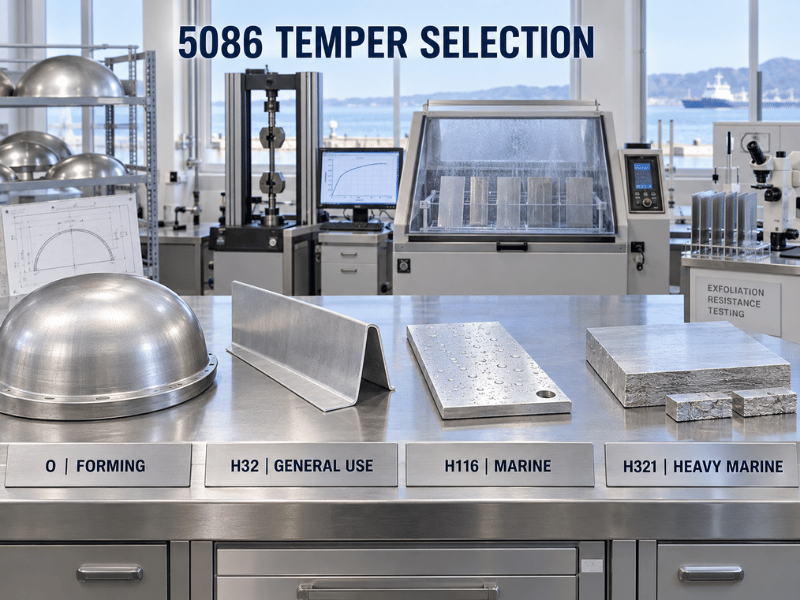
Níže uvedené hodnoty jsou typické rozsahy pro plech a desku; zaručená minima se liší podle tloušťky a specifikace a čísla, která řídí přejímku, jsou ta na huťovém atestu. Všimněte si, že H32 a H116 jsou si pevností blízké — rozdíl mezi nimi je v korozním testování, nikoli v mechanickém výkonu.
| Temperament | Pevnost v tahu (MPa) | Mez kluzu (MPa) | Prodloužení (%) | Typické použití |
|---|---|---|---|---|
| O | 240 – 305 | 95 – 145 | 14 – 22 | Hluboké tažení, tvarované dno, rotovaná čela nádrží |
| H111 | ~275 | ~125 | ≥ 12 | Lehce zpracované konstrukční díly |
| H112 | 250 – 290 | 95 – 125 | 8 – 12 | Silná deska, obráběné díly, tvary ve stavu po výrobě |
| H32 | 275 – 345 | 195 – 240 | 6 – 12 | Obecné námořní panely, karoserie nákladních vozidel, panely přívěsů |
| H34 | 305 – 365 | 220 – 275 | 4 – 10 | Vysoce pevné ploché konstrukce |
| H116 | 275 – 365 | 195 – 215 | 8 – 12 | Plátování trupu, paluby, ponořená námořní konstrukce |
| H321 | 275 – 365 | 195 – 215 | 8 – 12 | Těžká námořní deska vyžadující odolnost proti exfoliaci |
ASTM B928 stanovuje přejímací minimum pro námořní desku na 240 MPa pevnost v tahu / 195 MPa mez kluzu / 10 % tažnost pro 5086-H116 a H321 v rozsahu 3–50 mm. Tato minima jsou nižší než výše uvedené typické hodnoty, protože musí platit v celém pásmu tlouštěk — nepoužívejte typické hodnoty jako konstrukční minimum a nepoužívejte minima B928 k odhadu toho, co tenký svitek skutečně dodá.
K čemu je každý temper skutečně určen
O je vyžíhaný a zcela měkký. Je to temper pro hluboké tažení, ohýbání s těsným poloměrem a rotovaná nebo tvarovaná čela nádrží; pokud součást vyžaduje výraznou plastickou deformaci, začíná zde. H111 a H112 jsou lehce zpracované nebo ve stavu po výrobě, kde mechanické vlastnosti nejsou rozhodujícím požadavkem — běžné u silné desky, která bude obráběna.
H32 je univerzální pracovní temper, přibližně o 20 % pevnější než 5052-H32 a výchozí volba pro neponořené námořní panely, karoserie vozidel a průmyslové rámy. H34 nese vyšší pevnost s reálnou ztrátou tvařitelnosti.
H116 a H321 jsou námořní tempery a tento rozdíl je důležitější, než naznačuje sloupec pevnosti. Oba jsou zpracovány tak, aby řídily precipitaci na hranicích zrn, a musí projít testováním exfoliace a mezikrystalové koroze podle ASTM B928. H116 je deformačně zpevněný a stabilizovaný; H321 je deformačně zpevněný a poté tepelně stabilizovaný, což dává předvídatelnější chování v silných průřezech. Pro cokoli v trvalém kontaktu s mořskou vodou je specifikací jeden z těchto dvou — H32 není náhradou, i když čísla pevnosti vypadají podobně.
Odolnost proti korozi a limit 65 °C
5086 vytváří hustý, samohojící se film oxidu hlinitého a kombinace vysokého obsahu hořčíku s téměř nulovým obsahem mědi mu dává vynikající vlastnosti v mořské vodě, mořské atmosféře a mnoha průmyslových chemikáliích. Nelakovaný trupový plech z 5086 má desítky let provozní historie. Dlouhodobé zkoušky v mořském prostředí vykazují nízký úbytek mechanických vlastností po deseti letech.
Omezení je tepelné a je to jediné omezení, které projekty zaskočí.
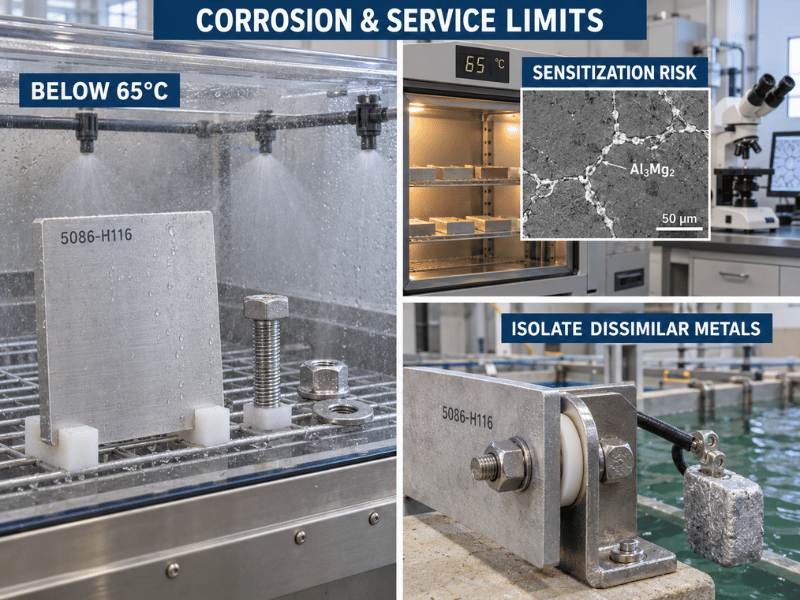
Nad přibližně 65 °C (150 °F) při trvalém provozu může hořčík v tuhém roztoku precipitovat podél hranic zrn jako beta fáze (Al₃Mg₂). Tato síť je anodická vůči okolní matrici, takže slitina se stává náchylnou k mezikrystalové korozi, exfoliaci a koroznímu praskání za napětí. Proces je závislý na čase a teplotě a je nevratný — plech, který sensitizoval, nelze obnovit tepelným zpracováním.
Praktické důsledky:
- Udržujte 5086 mimo neizolované výfukové trasy, horká místa ve strojovně a procesní zařízení, která setrvávají nad 65 °C.
- Pro teplý provoz specifikujte H116 nebo H321 a uveďte provozní teplotu v poptávce, aby huť mohla dodat se správnou stabilizační úpravou.
- Tam, kde jsou trvalé teploty nad 65 °C nevyhnutelné, zvažte slitinu s nižším obsahem hořčíku (5052) nebo vytvrditelnou jakost (6061) místo snahy obejít sensitizaci konstrukčním řešením.
Galvanická koroze je druhá výhrada. 5086 je anodická vůči oceli, nerezové oceli a slitinám mědi; ve sestavě z různých kovů za přítomnosti elektrolytu se obětuje. Izolujte spoj nebo instalujte obětované anody — jde o konstrukční záležitost, nikoli o vadu materiálu.
Svařování 5086
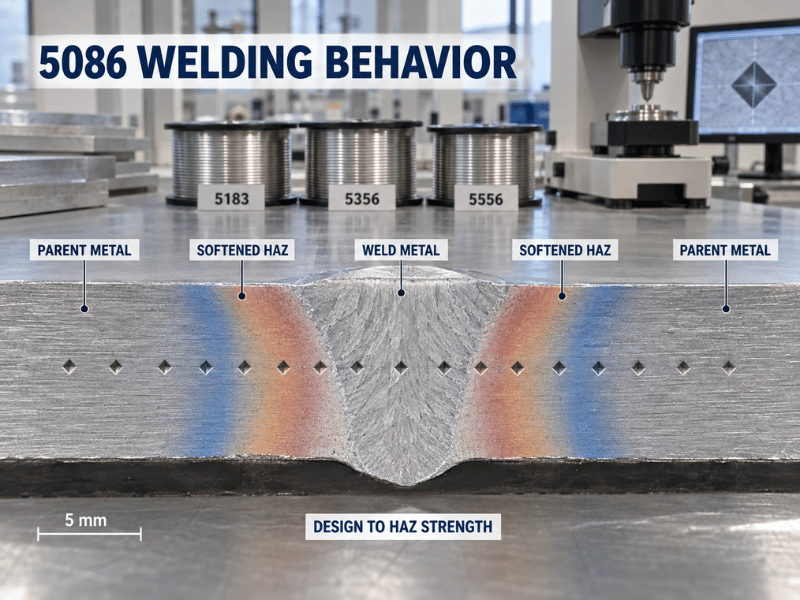
5086 se dobře svařuje metodami GMAW (MIG) a GTAW (TIG), nevykazuje žádnou významnou tendenci k tvorbě horkých trhlin, nevyžaduje předehřev u tenkých průřezů a nevyžaduje tepelné zpracování po svařování. To je skutečně vynikající svařitelnost, a proto tato slitina dominuje ve svařovaných mořských konstrukcích.
Co však nedělá, je zachování pevnosti získané za studena přes svar. Teplotně ovlivněná zóna je žíhána svařovacím cyklem — deformační zpevnění je lokálně odstraněno a HAZ se vrací ke O stavu. V praxi sestava H32 zachovává přibližně 70–75 % meze kluzu základního materiálu přes změkčené pásmo, přičemž mez kluzu klesá z ~210–230 MPa na ~115–145 MPa.
Návrhové pravidlo vyplývá přímo: dimenzujte svařovanou konstrukci z 5086 podle vlastností žíhané HAZ, nikoli podle vlastností základního materiálu v daném stavu. Spoj vypočtený na mez kluzu 230 MPa bude přenášet zatížení v zóně, která kluzuje při přibližně 130 MPa. AWS D1.2 zveřejňuje dovolená napětí pro tento účel a je referencí, ze které je třeba vycházet.
Volba přídavného materiálu je druhá polovina spoje:
- ER5183 — obvykle první volba pro svařování 5086 se sebou samým. Nejblíže odpovídající pevnost základnímu materiálu a dobré korozní chování v mořském provozu.
- ER5356 — univerzální přídavný materiál řady 5xxx. Mírně nižší pevnost ve stavu po svařování než 5183, široce dostupný, přijatelný pro většinu nekritických spojů.
- ER5556 — vyšší pevnost ve stavu po svařování než 5356, používá se tam, kde rozhoduje pevnost spoje a přídavný materiál s vyšším obsahem hořčíku je přijatelný.
Vše výše uvedené předpokládá čistý materiál. Oxid hlinitý, olej a — kriticky — vložené částice železa ze sdíleného nářadí jsou hlavními příčinami většiny selhání svarů a povlaků. Vyhrazené nerezové kartáče a oddělená manipulace od uhlíkové oceli nejsou volitelné. Volba přídavného materiálu je podrobněji popsána v našem průvodci svařovacími dráty pro hliník.
Tváření, obrábění a povrchová úprava
Tvarování je nejlepší ve stavu O a zpracovatelný v H32, s poloměry ohybu, které se musí zvětšovat s rostoucí tvrdostí stavu. 5086 je obecně o něco tolerantnější než 5083 při komplexním tváření, což je jeden z důvodů, proč se specifikuje pro nástavby a tankové práce. Očekávejte větší odpružení než u 5052 a naplánujte přídavek na ohyb odpovídajícím způsobem.
Obrábění obrobitelnost je přijatelná až dobrá. Tvrdší stavy (H32, H34) se obrábějí čistěji s lepším lámáním třísky než měkký materiál O, který má tendenci být lepivý. Standardními doporučeními jsou karbidové nástroje, geometrie s pozitivním úhlem čela a vydatné řezné chladicí medium. Není ve stejné třídě jako 6061 nebo 2011 a dílny, které kalkulují proti volně obrobitelným slitinám, rozdíl pocítí.
Eloxování funguje, ale funkčně, nikoli dekorativně. 5086 se anodizuje na tvrdší, ochrannější povrch; neposkytuje jasný, jednotný vzhled jako 5005 nebo 6063 a vyšší obsah hořčíku ztěžuje udržení shody barev mezi šaržemi. Specifikujte jej pro ochranu, ne pro vzhled. Náš průvodce kvalitou anodizace pokrývá, kde tyto úpravy selhávají.
Kde se 5086 používá
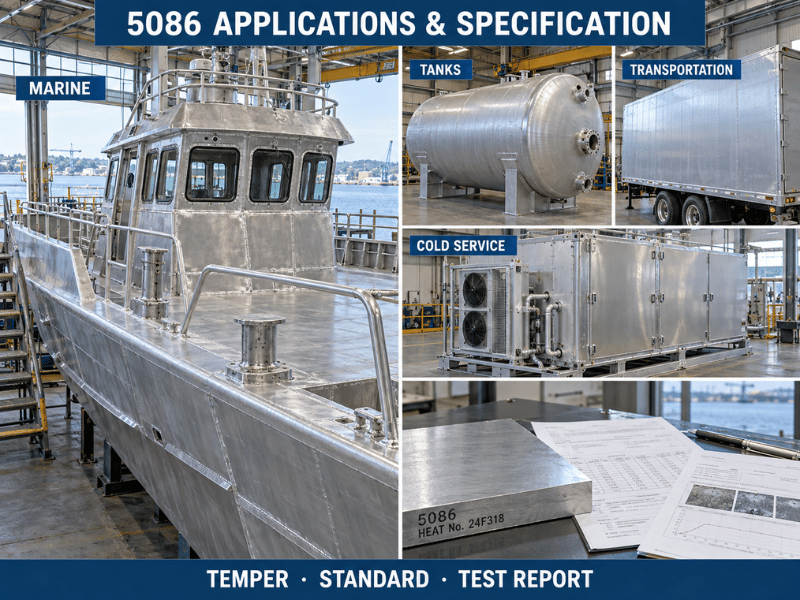
Námořní a loďařství je klíčová aplikace: trupové plechy na malých a středně velkých plavidlech, paluby, přepážky, nástavby, lávky, stěžně a palivové a vodní nádrže. 5083 má tendenci vítězit u ponořeného spodního trupu; 5086 vítězí u horní konstrukce, kde je více tváření a více svařování a méně hydrostatického zatížení.
Tlakové nádoby a nádrže — 5086 je standardní materiál pro nesvařované tlakové nádoby podle ASME Section VIII a pro silniční cisterny přepravující palivo, vodu a řadu chemikálií, které nenapadají hliník. Jeho chování při nízkých teplotách je zde důležité: na rozdíl od uhlíkové oceli nemá přechod z tvárného na křehký lom a zachovává houževnatost až do kryogenních teplot, což je důvod, proč se objevuje v aplikacích souvisejících s LNG a v chlazeném provozu.
Doprava pokrývá karoserie nákladních vozidel a přívěsů, sklápěcí korby, panely železničních vozů a pancéřování vozidel. H131 stav 5086 je kvalifikován podle MIL-DTL-46027 pro lehká obrněná vozidla — nika, ale skutečná specifikace, kterou má jen málo jiných slitin řady 5xxx.
Ostatní konstrukční práce zahrnuje součásti vrtných souprav, pobřežní konstrukce, televizní a přenosové věže a kryty kryogenních nebo nemagnetických zařízení, kde je nemagnetická povaha slitiny funkčním požadavkem, nikoli bonusem.
5086 vs 5083, 5052 a 6061
5083 a 5086 se často poptávají zaměnitelně, ale nejsou. Rozdíl je asi 10–15 % pevnosti vyměněné za tvařitelnost, svařitelnost a náklady.
| Majetek | 5086 | 5083 | 5052 | 6061 |
|---|---|---|---|---|
| Hlavní legující prvky | Mg 3,5–4,5 %, Mn 0,2–0,7 % | Mg 4,0–4,9 %, Mn 0,4–1,0 % | Mg 2,2–2,8% | Mg 0,8–1,2%, Si 0,4–0,8% |
| Pevnost v tahu (MPa, typická) | 275 – 345 (H32) | 300 – 350 (H32) | 210 – 260 (H32) | ~310 (T6) |
| Mez kluzu (MPa, typická) | 195 – 240 (H32) | 215 – 260 (H32) | 160 – 195 (H32) | ~275 (T6) |
| Prodloužení (%) | 6 – 12 | 10 – 14 | 12 – 20 | 8 – 12 |
| Hustota (g/cm³) | 2.66 | 2.66 | 2.68 | 2.70 |
| Tepelná vodivost (W/m·K) | 117 – 127 | 117 – 121 | ~138 | ~167 |
| Tepelně zpracovatelný | Ne | Ne | Ne | Ano |
| Korozní odolnost v mořském prostředí | Vynikající | Vynikající | Dobrý | Mírná |
| Relativní náklady vs 5052 | Mírná přirážka | Vyšší cena | Základní údaje | Dolní |
Volba mezi 5086 a 5083 je obvykle jediná otázka: je omezujícím faktorem pevnost, nebo zpracovatelnost?
- Zvolte 5083 tam, kde rozhoduje pevnost — ponořený trupový plech, primární offshore konstrukce, kryogenní provoz, tlakové nádoby, kde vyšší dovolené napětí podle ASME umožňuje ztenčit stěnu, nebo kdekoli, kde klasifikační společnost požaduje maximální rezervu. Kompletní data naleznete v našem průvodce hliníkem 5083.
- Zvolte 5086 tam, kde rozhoduje zpracovatelnost — svařované nástavby a nádrže, díly vyžadující těsnější ohyby, než 5083 toleruje, sekundární konstrukce, nebo projekt, kde si příplatek za 5083 kupuje pevnost, kterou návrh nevyužije.
Obvyklá odpověď u větších plavidel je obojí: 5083-H116 pod čarou ponoru, 5086-H116 pro horní trup a paluby, 5086-H32 pro suchou vnitřní konstrukci. Tato kombinace obvykle vyjde o několik procent levněji než stavba celá z 5083, aniž by cokoli ztratila v provozu.
5052 je volbou, když není vyžadována ani pevnost, ani námořní certifikace a rozhoduje tvařitelnost nebo cena — viz průvodce hliníkem 5052. 6061 vítězí, když je díl obráběný spíše než svařovaný a potřebuje vytvrzovatelnou pevnost; jeho svařovaná pevnost i odolnost v mořské vodě jsou obě horší než u 5086. Podrobnosti v průvodce hliníkem 6061.
Kdy je 5086 špatnou volbou
Podmínky jsou důležitější než označení aplikace, proto je toto psáno jako podmínky, nikoli jako seznam dílů.
Specifikujte 5086, když:
- Konstrukce je svařovaná a přichází do styku s mořskou vodou nebo námořní atmosférou a v objednávce je uvedeno H116 nebo H321.
- Díl vyžaduje větší tvařitelnost, než 5083 umožňuje, při zachování korozní odolnosti v námořní kvalitě.
- Návrh je pevnostně vyhovující na úrovních 5086 a příplatek za 5083 nic nepřináší.
- Provozní teplota zůstává pod 65 °C, nebo jsou teplé zóny izolovány.
- Je vyžadována houževnatost při nízkých teplotách — kryogenní nebo chlazený provoz, kde by uhlíková ocel zkřehla.
Hledejte jinde, když:
- Trvalý provoz překračuje ~65 °C v korozním prostředí. Senzibilizace beta fází je nevratná; použijte 5052 nebo 6061.
- Dekorativní eloxování je konečná úprava. 5086 se eloxuje ochranně, nikoli atraktivně — správnou volbou je 5005 nebo 6063.
- Díl je primárně obráběný z plného materiálu ve velkém objemu. 6061 nebo 2011 budou rychlejší a levnější.
- Požadavkem je maximální pevnost a svařování je minimální. 6061-T6 nebo 7075-T651 překonají jakoukoli slitinu řady 5xxx.
- Sestava spojuje 5086 s ocelí nebo slitinami mědi bez izolace a bez obětní ochrany. Galvanická koroze bude režimem poruchy.
V rámci celé řady 5xxx jako celku námořní hliníková přehled pokrývá, jak si 5052, 5083 a 5086 rozdělují aplikace mezi sebou.
Normy, ekvivalenty a dokumentace
| Standardní | Rozsah |
|---|---|
| ASTM B209 | Hliníkový a hliníkový slitinový plech a deska |
| ASTM B928/B928M | Plech a deska s vysokým obsahem hořčíku pro námořní použití (definuje H116 / H321) |
| ASTM B221 | Lisované tyče, pruty, dráty, profily a trubky |
| ASTM B210 / B241 | Bezešvé a svařované trubky a potrubí |
| ASME SB-209 | Použití plechu a desky 5086 pro tlakové nádoby |
| AWS A5.10 / D1.2 | Klasifikace přídavného materiálu a návrh konstrukčních svarů |
| EN 485 / EN 573 | Evropské požadavky na plech, pás, desku a složení |
| MIL-DTL-46027 | Pancéřová kvalita 5086 (H131) |
Ekvivalentní označení: UNS A95086, EN AW-5086, AlMg4, Werkstoff 3.3545, ISO AlMg4.
Pro zadávání zakázek nesou váhu tři dokumenty. certifikát o zkoušce z výroby (MTC) podle EN 10204 3.1 by měl být standardem u každé objednávky — spojuje mechanické hodnoty a číslo tavby s materiálem ve vašich rukou. ASTM B928 objednávání vyžaduje výsledky zkoušek exfoliační a mezikrystalové koroze, nejen prohlášení o shodě. Inspekce třetí stranou (SGS nebo ekvivalent) stojí za to přidat, když materiál míří do klasifikované námořní konstrukce. Schválení klasifikačními společnostmi (DNV, ABS, LR, CCS) se sjednávají pro každý projekt individuálně, nikoli genericky — nastolte to včas se svou loděnicí, protože lhůta pro schválení je obvykle delší než lhůta pro dodání materiálu.
Praktické poznámky pro objednávku: uveďte výslovně stav zpracování, uveďte řídící normu (B209 nebo B928 — nejsou zaměnitelné), uveďte tloušťku a toleranci namísto jmenovitého rozměru, pojmenujte povrch a případnou ochrannou fólii a přiložte požadavky na zkoušky. Většina problémů s 5086 jsou problémy specifikace, nikoli metalurgie.
Spolupráce s Linsy Aluminum
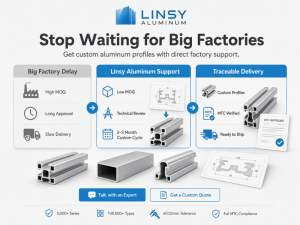
Společnost Linsy Aluminum dodává Hliník 5086 jako deska a plech ve stavu O, H111, H112, H32, H34, H116 a H321 a jako tyč ve stavu H111 a H112 — tyč se nevyrábí v námořních stavech zpracování, protože H116 a H321 jsou specifikace pro ploché válcované výrobky. Vlastní kapacity pokrývají CNC obrábění, svařování, laserové řezání a povrchové úpravy; kování je koordinováno prostřednictvím partnerských procesních zařízení, nikoli prováděno interně, takže s ním při plánování počítejte, pokud váš díl vyžaduje kování.
Každá zásilka je dodávána s hutním atestem (MTC) a testování SGS lze zajistit na vyžádání. Certifikáty klasifikačních společností standardně nevydáváme — pokud je vyžadováno schválení DNV, ABS, LR nebo CCS, potvrďte to včas se svou loděnicí a my budeme postupovat podle schvalovací cesty projektu. Pro nestandardní rozměry je typická dodací lhůta 10–60 dní a podporujeme nízké minimální objednací množství u zkušebních a prototypových sestav.
Pošlete nám svůj výkres nebo specifikaci a my potvrdíme dostupné stavy zpracování, rozměry, tolerance a dokumentaci a upozorníme na cokoli v provozních podmínkách, co ukazuje na jinou slitinu.
Závěr
5086 si zaslouží své místo jako praktický střed námořní řady 5xxx: více pevnosti než 5052, více tvařitelnosti a svařitelnosti než 5083 a vynikající odolnost proti korozi v mořské vodě ve stavech, které jsou pro ni testovány. Tři věci, které rozhodují o tom, zda je vhodná pro danou úlohu, jsou stav zpracování v objednávce, strop 65 °C a způsob, jakým je svařovaný spoj navržen s ohledem na změkčení v tepelně ovlivněné zóně. Pokud je uděláte správně, 5086 je shovívavá, dobře zdokumentovaná slitina s desetiletími provozu za sebou. Pokud je uděláte špatně — H32 specifikovaný pro ponořený provoz, trvalý teplý provoz nebo svar dimenzovaný na pevnost základního materiálu — porucha bude vypadat jako problém materiálu, když šlo o problém specifikace.
Často kladené otázky
Je 5086 pevnější než 5083?
Ne. 5083 má přibližně o 10–15 % vyšší pevnost v tahu a mez kluzu díky vyššímu rozsahu hořčíku (4,0–4,9 % oproti 3,5–4,5 %). 5086 vyměňuje tuto rezervu za lepší tvařitelnost, snadnější svařování a obvykle nižší náklady na materiál. Tam, kde návrh nepotřebuje extra pevnost 5083, je 5086 ekonomičtější volbou.
Co je limit 65 °C u 5086?
Trvalý provoz nad přibližně 65 °C (150 °F) může způsobit, že hořčík precipituje na hranicích zrn jako beta fáze (Al₃Mg₂), která je anodická vůči okolnímu kovu a otevírá slitinu mezikrystalové korozi, exfoliaci a koroznímu praskání za napětí. Tato změna není vratná tepelným zpracováním. Stavy H116 a H321 jsou zpracovány a testovány tak, aby tomu odolávaly, ale teplotní strop stále platí.
Ztrácí 5086 pevnost při svařování?
Ano, v tepelně ovlivněné zóně. 5086 je nevytvrditelná tepelným zpracováním, takže svařovací cyklus lokálně odstraní zpevnění za studena a HAZ se vrací směrem ke stavu O — sestava H32 si v tomto pásmu zachovává přibližně 70–75% meze kluzu základního materiálu, přičemž mez kluzu klesá z ~210–230 MPa směrem k ~115–145 MPa. Svařovaná konstrukce by měla být dimenzována podle vlastností vyžíhané HAZ dle AWS D1.2, nikoli podle hodnot stavu základního materiálu.
Který přídavný drát mám použít pro 5086?
ER5183 je obvykle první volbou pro svařování 5086 se sebou samým, poskytuje nejbližší shodu pevnosti se základním materiálem a dobré chování při korozivzdornosti v mořském prostředí. ER5356 je univerzální alternativa a má mírně nižší pevnost ve stavu po svařování. ER5556 se předepisuje tam, kde je rozhodující pevnost spoje a je přijatelný přídavný materiál s vyšším obsahem hořčíku.
Je 5086 vhodný pro tlakové nádoby?
Ano. 5086 je standardní materiál pro svařované tlakové nádoby bez ohřevu podle ASME Section VIII, dodávaný dle ASME SB-209, a je široce používán pro silniční cisterny a chemické skladovací nádrže. Nemá přechod z tvárného na křehké porušení, takže si dobře vede i při nízkých teplotách. 5083 je preferován tam, kde vyšší dovolené napětí umožňuje tenčí stěnu.
Lze 5086 eloxovat?
Ano, ale pro ochranu, nikoli pro vzhled. Eloxováním vzniká tvrdší, korozivzdornější povrch, ale vysoký obsah hořčíku způsobuje, že povrchová úprava je méně jasná a rovnoměrná než u 5005 nebo 6063 a konzistence barvy mezi šaržemi se hůře udržuje. Pro dekorativní eloxované díly místo toho specifikujte 5005 nebo 6063.