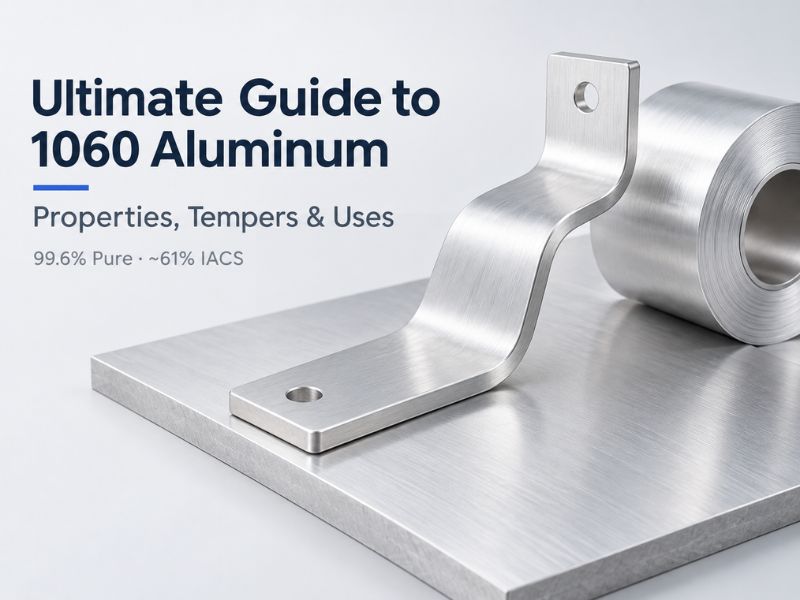
1060 je komerčně čistý hliník řady 1xxx — obsahuje nejméně 99,6 % hliníku, bez tepelně zpracovatelných legujících prvků, které by stály za zmínku. Tato čistota je celý smysl: obětuje pevnost ve prospěch nejvyšší elektrické a tepelné vodivosti ze všech běžných tvářených jakostí, plus tvářecí chování, které umožňuje hluboké tažení, odstředivé lití nebo ohýbání do tvarů, proti nimž se jiné slitiny brání. Rozhodnutí, kterým se tato příručka zabývá, není “je 1060 dostatečně pevný” — obvykle není — ale “kde vítězí jeho vodivost a tvářitelnost a který stav (O, H12, H14, H16, H18 nebo varianty H2x) odpovídá dané součásti.”
Pokud potřebujete konstrukční pevnost, zastavte se zde a podívejte se na 6061-T6; pokud potřebujete maximální čistotu a vodivost za rozumnou cenu, 1060 je jakost, kterou specifikovat. Zbytek této příručky prochází, z čeho se 1060 skládá, jak každý stav mění jeho hodnoty a kde si zaslouží své místo v přípojnicích, chemických nádržích a tvářených krytech.
Co je hliník 1060?
1060 patří do řady 1xxx, rodiny komerčně čistého hliníku, kde obsah hliníku zůstává na úrovni 99,0 % nebo vyšší. Při minimu 99,6 % se 1060 nachází blízko horní hranice tohoto rozsahu — čistší než 1100 (99,0 %) a o něco čistší než 1050 (99,5 %), což je důvod, proč jsou tyto tři jakosti neustále srovnávány.
Protože ve směsi není téměř žádný hořčík, křemík, měď nebo zinek, nelze 1060 zpevnit tepelným zpracováním. Svou nepatrnou pevnost získává deformačním zpevněním — válcováním nebo tažením kovu za studena, čímž se zafixují dislokace. Tento jediný fakt formuje všechny následující vlastnosti: vynikající vodivost, měkkost a tvářitelnost ve stavu O a nízkou pevnost ve srovnání s jakoukoli jakostí řady 6xxx nebo 7xxx.
Chemické složení hliníku 1060
1060 je definován téměř výhradně tím, kolik hliníku obsahuje; zbytkové prvky jsou omezeny na nízké hodnoty, aby byla chráněna vodivost a odolnost proti korozi.
| Prvek | Hmotnost % |
|---|---|
| Hliník (Al) | 99,60 min |
| Křemík (Si) | 0,25 max. |
| Železo (Fe) | 0,35 max |
| Měď (Cu) | 0,05 max |
| Mangan (Mn) | max. 0,03 |
| Hořčík (Mg) | max. 0,03 |
| Zinek (Zn) | 0,05 max |
| Titan (Ti) | max. 0,03 |
| Ostatní každý | max. 0,03 |
Nízké stropy pro měď a železo jsou důležité: oba patří mezi nejškodlivější nečistoty pro elektrickou vodivost, takže jejich udržení na nízké úrovni umožňuje 1060 dosáhnout hodnoty ~61 % IACS.
Fyzikální a mechanické vlastnosti
Kromě chemického složení je to fyzikální profil 1060, který vede konstruktéry k jeho použití v elektrotechnických a tepelných aplikacích.
| Majetek | Typická hodnota |
|---|---|
| Hustota | 2,71 g/cm³ |
| Rozsah tavení | 645–657 °C |
| Tepelná vodivost | ~234 W/m·K |
| Elektrická vodivost | ≥ 61 % IACS |
| Modul pružnosti | ~69 GPa |
| Součinitel tepelné roztažnosti | 23,6 µm/m·K |
| Odrazivost | Vysoká (viditelné a infračervené záření) |
Mechanická pevnost silně závisí na stavu (viz následující část), ale v měkkém stavu O se 1060 pohybuje kolem 90 MPa pevnosti v tahu a 70 MPa meze kluzu — zhruba čtvrtina toho, co poskytuje 6061-T6. S 1060 zacházejte jako s vodičem a tvářeným materiálem, nikdy jako s nosnou konstrukcí.
Stavy 1060: Volba správného deformačně zpevněného stavu
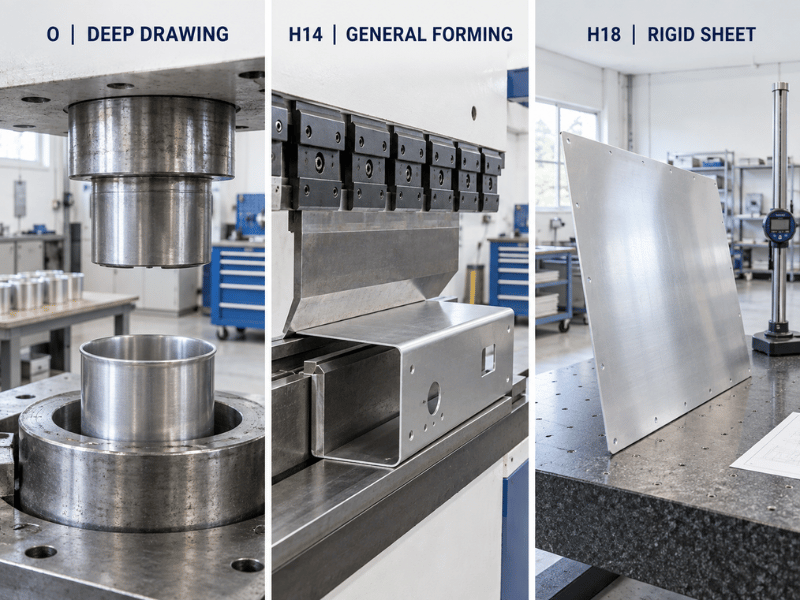
1060 není tepelně zpracovatelný, takže “stav” zde znamená, kolik studeného tváření bylo aplikováno. Stavy H1x jsou pouze deformačně zpevněné; stavy H2x jsou deformačně zpevněné a poté částečně žíhané pro lepší tažnost při dané pevnosti. Každý krok nahoru na stupnici H vyměňuje tvářitelnost za tuhost.
| Temperament | Pevnost v tahu (MPa) | Mez kluzu (MPa) | Prodloužení % | Nejlepší použití |
|---|---|---|---|---|
| O (žíhaný) | 90 | 70 | 43 | Hluboké tažení, odstředivé lití, maximální tvářitelnost |
| H12 | 105 | 85 | 25 | Lehké konstrukce, mírné tváření |
| H14 | 125 | 103 | 20 | Obecné plechy, mírně tvářené součásti |
| H16 | 145 | 124 | 17 | Tuhé panely, omezené ohýbání |
| H18 | 165 | 145 | 15 | Tuhý, plně tvrdý, minimální tváření |
| H22 | 105 | 62 | 25 | Stejná pevnost jako H12, vyšší tažnost |
| H24 | 125 | 82 | 20 | Stejná pevnost jako H14, vyšší tažnost |
Pro součásti, které musí být ohýbány nebo taženy po řezání, zůstaňte u stavu O nebo H14 a dodržujte velkorysý poloměr ohybu. Pro tuhé kryty nebo reflektory, které se nebudou dále tvářet, poskytuje H18 nejtužší plech, který 1060 může nabídnout. Varianty H2x umožňují dosáhnout stejné pevnosti s větší zbytkovou tažností, což pomáhá, když součást prochází sekundárním tvářením.
1060 vs 1050 vs 1100 vs 6061
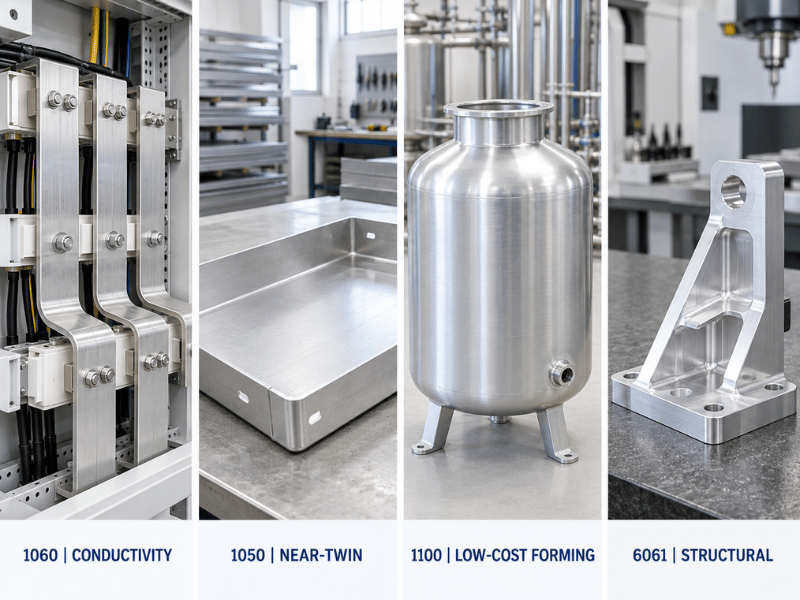
1060 je zřídka specifikován izolovaně — kupující jej porovnávají s jeho téměř čistými příbuznými a někdy s konstrukční slitinou, pokud má součást smíšené role.
| Třída | Al % | Elektrická vodivost | Pevnost v tahu (O/H18) | Tepelně zpracovatelné | Poznámky |
|---|---|---|---|---|---|
| 1060 | 99.6 | ~61 % IACS | 90 / 165 MPa | Ne | Nejvyšší vodivost ze všech tří, mírně dražší než 1100 |
| 1050 | 99.5 | ~61 % IACS | 90 / 160 MPa | Ne | Téměř dvojče 1060; často zaměnitelné z hlediska ceny |
| 1100 | 99.0 | ~59 % IACS | 90 / 165 MPa | Ne | Nejlevnější, mírně méně čistý, vynikající tvářitelnost |
| 6061-T6 | 95–98 | ~40 % IACS | 310 / — MPa | Ano | Konstrukční pevnost; špatná volba tam, kde rozhoduje vodivost |
Vyberte si 1050 přes 1060 pouze tehdy, když nabídka dodavatele nebo dostupnost skladových zásob činí rozdíl 0,1 % čistoty irelevantním — výkon je prakticky identický. Zvolte 1100 když rozpočet a tvářitelnost převažují nad posledním bodem vodivosti. Sáhněte po 6061-T6 pouze tehdy, když součást musí nést zatížení; vede elektřinu zhruba o 35 % hůře a její zpracování je výrazně nákladnější.
Kde se hliník 1060 používá
Soubor vlastností 1060 jej předurčuje k jasně vymezeným úkolům:
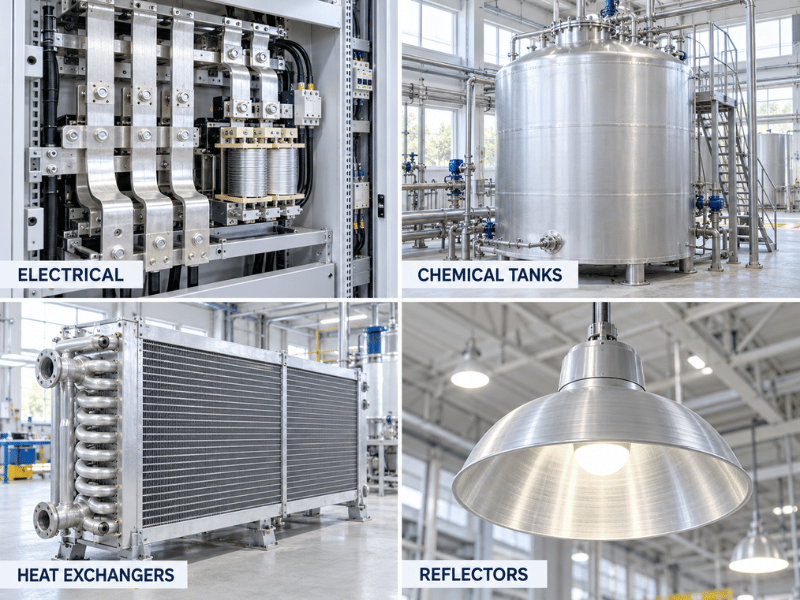
- Elektrické přípojnice a vodiče. Vodivost ~61 % IACS činí z 1060 standardní volbu pro přípojnice, vinutí transformátorů a propojení baterií, kde záleží na ceně za ampér.
- Chemické a potravinářské nádrže. Vysoká čistota odolává mnoha kyselinám a alkalickým roztokům lépe než legované jakosti, proto se 1060 používá na nádrže, potrubí a pláště nádob v procesním zařízení.
- Tepelné výměníky a žebra. Vysoká tepelná vodivost spolu s tvařitelností jej předurčuje pro žebra radiátorů a materiál kondenzátorů.
- Reflektory a osvětlení. Jeho vysoká odrazivost viditelného a infračerveného záření pohání použití v reflektorech svítidel a architektonických reflexních panelech.
- Hluboce tažené a rotačně tvářené díly. Kuchyňské nádobí, dekorativní krytky a kryty vyžadující extrémní tvařitelnost bez požadavku na pevnost.
- Reklamní a typové štítky. Měkký, snadno sítotiskem potisknutelný nebo reliéfně tvářený a odolný vůči povětrnostním vlivům.
Práce s hliníkem 1060
- Tváření. 1060 patří mezi nejsnáze tvařitelné kovy. Ve stavu O se hluboce táhne a rotačně tváří s minimálním odpružením; dokonce i H14 se ohýbá čistě s velkým poloměrem. Nástroje udržujte leštěné, aby nedocházelo k zachycování měkkého povrchu.
- Svařování. 1060 se snadno svařuje metodou TIG nebo MIG s přídavným materiálem 1100 nebo 4043. Protože není vytvrzovatelný tepelným zpracováním, svárová zóna nezměkne tak jako u spoje 6xxx — ale základní kov je tak měkký, že skutečnou výzvou je deformace a zkroucení, proto dobře upínejte a fixujte.
- Obrábění. Obrábění je špatné. Materiál je lepivý, zachycuje nástroj a tvoří nárůstek na hraně; používejte ostré, leštěné nástroje s velkým úhlem čela, vysoký posuv a malou hloubku řezu pro udržení kontroly. Kde je to možné, tvarujte místo obrábění.
- Anodizace a povrchové úpravy. 1060 se anodizuje na tenký, tvrdý, průsvitný šedý povlak, který dobře chrání, ale vypadá ploše — ne jako bohatá dekorativní barva, kterou získáte u 6063. Pro vzhledové aplikace jej raději natřete nebo proveďte lesklou povrchovou úpravu. Také přijímá lepidla a většinu mokrých nátěrů bez komplikací s předúpravou.
Hliník 1060: Ano, nebo ne
| Zvolte 1060, když… | Vyhněte se 1060, když… |
|---|---|
| Díl vede elektrický proud nebo teplo | Díl přenáší konstrukční zatížení |
| Potřebujete hluboké tažení nebo rotační tváření | Potřebujete tvrdost nad ~165 MPa |
| Na korozní odolnosti v chemickém provozu záleží | Chcete barevný anodizovaný povrch |
| Rozpočet i čistota jsou důležité | Díl je vystaven vysokému cyklickému namáhání |
Výhody a omezení
Přednosti. 1060 poskytuje nejlepší elektrickou a tepelnou vodivost mezi běžnými tvářenými hliníky, tváří se lépe než téměř jakýkoli jiný kov, odolává atmosférickému a mnoha chemickým prostředím, svařuje se bez komplikací s tepelným zpracováním a zůstává levný, protože nevyžaduje legování ani vytvrzování stárnutím.
Omezení. Je slabý — nepoužitelný jako nosná cesta — nelze jej tepelně zpracovat pro zlepšení, špatně se obrábí a anodizuje se na plochý dekorativní vzhled. Specifikujte jej pro to, v čem je nejlepší, ne jako obecnou konstrukční náhradu.
Závěr
1060 si zaslouží své místo tam, kde o konstrukci rozhoduje vodivost a tvařitelnost, ne tam, kde rozhoduje pevnost: přípojnice, chemické nádrže, žebra tepelných výměníků a hluboce tažené díly všechny těží z jeho čistoty 99,6 % a hodnoty ~61 % IACS. Stav zvolte podle toho, kolik tváření díl ještě potřebuje — O nebo H14 pro tažení, H18 pro tuhé panely — a sáhněte po 1050 nebo 1100, když cena nebo skladové zásoby převáží, nebo po 6061-T6, když díl skutečně musí nést zatížení.
Linsy Aluminum dodává 1060 ve formě plechů, svitků a desek s hutními atesty a na vyžádání s inspekcí třetí stranou (SGS a další), podpořeno vlastním řezáním, CNC, svařováním a povrchovým dokončováním a dodacími lhůtami přibližně 10–60 dní při nízkých minimálních objednacích množstvích. Pošlete nám svůj výkres nebo specifikaci a my potvrdíme dostupnost skladu a stavu, poté vrátíme odpovídající cenovou nabídku.
Často kladené otázky
Je hliník 1060 stejný jako 1050?
Jsou téměř dvojčata: 1060 je 99,6 % hliníku, 1050 je 99,5 % a oba dosahují vodivosti přibližně 61 % IACS se shodnou pevností a tvařitelností. Ve většině konstrukcí jsou zaměnitelné, takže volba obvykle závisí na ceně a na tom, co má dodavatel na skladě.
Lze hliník 1060 tepelně zpracovat?
Ne. Jako slitina komerční čistoty řady 1xxx nemá žádné vytvrzovatelné prvky, takže rozpouštěcí žíhání a stárnutí pro něj nic neznamenají. Veškerá pevnost pochází ze studeného tváření — stavů H12 až H18 — a jakékoli zahřátí jej jednoduše vyžíhá zpět směrem k měkkému stavu O.
Je 1060 vhodný pro elektrické přípojnice?
Ano. Při přibližně 61 % IACS je jedním z nejvodivějších dostupných tvářených hliníků a jeho nízké náklady na ampér z něj činí standardní jakost pro přípojnice a vodiče. Dimenzujte průřez pro jeho mírnou pevnost a získáte spolehlivou, ekonomickou proudovou cestu.
Který stav mám pro 1060 zvolit?
Záleží na tváření. Pro hluboké tažení nebo rotační tváření použijte O nebo H14 a udržujte velké poloměry ohybu; pro tuhé panely nebo reflektory, které již nebudou dále tvářeny, poskytuje H18 nejtužší plech. Stavy H2x (H22, H24) nabízejí stejnou pevnost jako jejich protějšky H1x s větší zbytkovou tažností.
Lze hliník 1060 anodizovat?
Lze, a vytváří tenkou tvrdou ochrannou vrstvu — ale výsledkem je plochá průsvitná šedá, ne bohatá dekorativní barva, kterou získáte u 6063. Pro vzhledově kritické díly je lepší cestou nátěr nebo lesklá mechanická úprava; pro ochranu proti korozi anodizace funguje dobře.