5182铝合金是什么
5182是一种铝镁合金,通过镁的固溶强化和冷加工强化。它不能通过沉淀硬化处理——不存在固溶处理和时效强化路径,因此所有高于退火态的性能均来自应变强化,以H状态表示。.
由此产生两个后果,二者都体现在该合金的采购方式中:
- 状态就是规格。. 订购“5182”而不注明状态是没有意义的。5182-O(屈服强度约145 MPa,延伸率21%)与5182-H19(屈服强度约395 MPa,延伸率4%)之间的差距,比许多不同合金之间的差距还要大。.
- 焊接会软化热影响区。. 冷加工硬化在焊接热循环作用下被局部退火消除,且没有热处理手段可以恢复。焊接接头强度低于H态母材,接头设计必须以此为前提。.
扁平轧制产品的适用规范为 ASTM B209 (薄板和板材),, EN 485-2 (力学性能)和 EN 573-3 (化学成分)——欧洲标准,, GB/T 3880 ——中国标准,以及 JIS H4000 ——日本标准。汽车板材通常按 GMW15192 或等效的整车厂材料标准进行规定,而非仅依据B209。等效牌号为 UNS A95182, EN AW-5182和 ISO AlMg5 在部分参考资料中。.
5182的化学成分
| 要素 | 重量 % | 在合金中的作用 |
|---|---|---|
| 镁(Mg) | 4.0 – 5.0 | 主要强化元素;决定耐腐蚀性能 |
| 锰 (Mn) | 0.20 – 0.50 | 晶粒组织控制,韧性 |
| 铁(Fe) | 0.35 最大值 | 杂质——受控以保护成形性能 |
| 硅 (Si) | 0.20(最大值) | 杂质——保持低含量以限制成形开裂 |
| 铜 (Cu) | 0.15 最大值 | 杂质——保持低含量以保护耐腐蚀性能 |
| 锌 (Zn) | 最大 0.25 | 杂质 |
| 铬 (Cr) | 最大 0.10 | 微量晶粒组织控制 |
| 钛 (Ti) | 最大 0.10 | 铸造过程中的晶粒细化剂 |
| 其他元素(每种 / 总计) | 0.05 / 0.15(最大值) | — |
| 铝 (Al) | 余量(93.2 – 95.8) | 贱金属 |
镁的含量范围是需要记住的关键数字。在4.0–5.0%范围内,5182的镁含量高于5083(4.0–4.9%),远高于5052(2.2–2.8%)。这既是其强度和耐腐蚀性能的来源——也正是将其牢牢置于本指南后文所讨论的温度限制之内的原因。.
物理特性
| 财产 | 价值 |
|---|---|
| 密度 | 2.65 – 2.66 g/cm³ |
| 熔化范围 | 577 – 638 °C(1,070 – 1,180 °F) |
| 导热性 | 25 °C时约126 W/m·K |
| 导电性 | 20 °C时约28 – 32% IACS |
| 热膨胀系数 | 23.9 × 10⁻⁶ /°C(20–100 °C) |
| 比热容 | ~900 J/kg-K |
| 弹性模量(拉伸) | 约70 GPa(10,100 ksi) |
| 泊松比 | 0.33 |
其中两项经常被错误引用。熔化范围为 577–638 °C, ,而非常从5052数据表中照搬的607–649 °C——5xxx系合金的物理性能在不同牌号之间经常被混淆,而5182和5052在大多数性能表中相邻。此外,约126 W/m·K的热导率远低于5052的约138 W/m·K,如果零件需要散热而非仅仅保持形状,这一点至关重要。.
不同回火状态下的力学性能
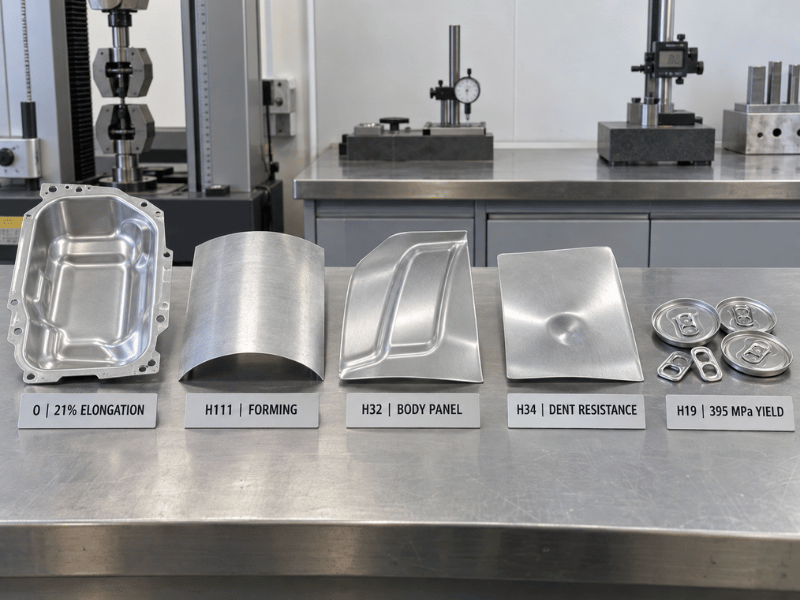
以下数值为铝业协会参考数据中的典型值。它们具有代表性,但并非保证值——设计和验收应使用适用标准中对指定状态和厚度规定的最小值,并结合工厂检测报告上的数值。.
| 脾气 | 抗拉强度 (MPa) | 屈服强度 (MPa) | 伸长率 (%) | 典型用途 |
|---|---|---|---|---|
| O | ~276 | ~145 | ~21 | 深冲、复杂成形、汽车内板 |
| H111 | ~260 | ~125 | ~18 | 罐车板材、燃料箱、成形焊接件 |
| H32 | 290 – 315 | 210 – 230 | 10 – 12 | 汽车车身板、扁平结构板材 |
| H34 | ~331 | ~255 | ~11 | 需要更高强度的车身板和结构板材 |
| H38 | ~372 | ~324 | ~6 | 高强度扁平零件 |
| H19 / H39 | ~420 | ~395 | ~4 | 罐盖、拉环、制罐料 |
| H116 / H321 | 面向船舶应用的供应 | 非主承力船舶结构——按标准确认最小值 |
从O态到H19态的屈服强度跨度约为145至395 MPa。这不是一个小的订货细节;这是能拉深成车门内板的材料与能冲压成罐拉环的材料之间的区别。.
哪种状态适用于哪种用途
- O 为退火态,完全软化,具有深冲、旋压成型和复杂冲压所需的延伸率。汽车内板和成型罐端从这里开始。.
- H111 为轻度应变硬化——强度高于O态,仍可成型,是焊接罐车车身和燃料箱的常用选择。.
- H32 和 H34 为汽车车身板状态,经应变硬化并稳定化处理。它们提供了外板所需的强度和抗凹痕性能,同时保持足够的成型性以进行冲压。H34偏重强度,H32偏重成型性。.
- H19和H39 为包装用状态。通过重度冷轧获得极高强度,延伸率刻意保持较低——罐端和拉环的生产是冲孔和刻痕操作,而非深冲,且材料需要在薄规格下保持形状。如果您为制罐料采购5182,这就是所需的状态,而重要的性能既在于绝对值,也在于整卷的一致性。.
成型性与深冲
成型性是5182在汽车板材中占据一席之地的关键,而其表现远比简单的“优秀”或“良好”评级更为微妙。.
在退火和轻度加工状态(O、H111)下,5182具有良好的深冲性能——约18–21%的延伸率可支持深冲、复杂冲压和旋压成型。与5052相比,5182以略微牺牲极限深冲性换取明显更高的强度:5052通常在最深冲中表现更好,而5182一旦成型后能更好地保持形状和抵抗凹痕。与5083相比,5182在两者中成型性明显更优,这也是5083主导船体板材而5182主导车身板的主要原因之一。.
对于汽车外板,实际决定选材的数据是 塑性应变比(r值) 以及 应变硬化指数(n值), ,而不仅仅是延伸率。r值控制拉伸过程中的抗减薄能力;n值控制局部颈缩前应变的分布方式。为外露汽车板供应5182的工厂需对这些指标进行认证,GMW15192等主机厂标准也对其作出规定。如果您为可见车身板采购,请在拉伸和屈服性能之外同时要求提供r值和n值——满足拉伸范围的5182仍可能在冲压中失败。.
两点实际注意事项。较高的镁含量意味着5182比5052加工硬化更快,因此需要更大的力、在较硬状态下需要更大的弯曲半径,并且需要更多关注回弹。在5052可一次完成的多次拉深中,5182可能需要中间退火。.
耐腐蚀性与65 °C极限
高镁含量赋予5182良好的耐大气、海水和多种食品介质腐蚀性能,这也是该合金在船用配件和配备合格漆系的食品接触包装中以未涂层状态使用的原因。在氯化物环境中,其耐蚀性明显优于5052和5754。.
限制因素在于热暴露,而5182受此约束比大多数5xxx系合金更为严格。.
当镁含量高于约3%时,持续暴露于温热环境会使镁以β相(Al₃Mg₂)沿晶界析出。该网络相对于周围基体为阳极,使合金易于发生晶间腐蚀、剥落腐蚀和应力腐蚀开裂。通常的工程极限为 65 °C(150 °F) ,适用于腐蚀环境中的连续使用。5182的镁含量为4.0–5.0%,处于商业合金范围的顶端,因此该限制的余量比5052更小。.
实际应用中:
- 避免5182在高于65 °C的环境中持续使用——如高温工艺管线、未隔热的排气区域以及长期处于温热状态的设备。.
- 在无法避免温热使用环境时,应考虑5052或5454,而非试图通过工程手段规避敏化。析出是不可逆的。.
- 对于船舶用途,可供应H116或H321状态,但需根据适用标准和工厂质保书确认状态及其保证最低值。.
电偶腐蚀是第二个注意事项,与任何5xxx系合金的规则相同:5182相对于钢、不锈钢和铜合金为阳极。在存在电解质的异种金属组件中,应对接头进行绝缘或增加牺牲阳极保护。.
5182的焊接
5182可通过GMAW(MIG)和GTAW(TIG)焊接,在罐车车身、燃料箱和船用配件中经常进行焊接。焊丝通常为5xxx系焊丝—— ER5356 用于一般作业并与镁含量匹配,同时 ER5183 可作为需要更高焊态强度或更好海洋耐蚀性能时的选项。.
焊接无法保持冷加工性能。热影响区被焊接热循环退火;应变硬化在局部被消除且无法恢复,因为该合金不可热处理强化。焊接后的H32或H34接头强度低于母材,而软化带——而非焊缝金属——通常是决定接头设计的因素。.
设计规则直接由此得出: 焊接5182接头的尺寸应按退火态热影响区性能设计,而非按母材状态值。. 按255 MPa屈服强度计算的H34组件,其承载截面将通过一个屈服强度接近145 MPa的区域。AWS D1.2发布了焊接铝结构的许用应力,是应依据的参考标准。.
机加工与表面处理
机械加工 的机加工性一般而非良好。5182加工硬化快,在较软状态下产生带状切屑;较硬状态下切削更干净,断屑更好。通常建议使用锋利的硬质合金刀具、正前角几何形状和充足的切削液。它不是易切削合金,与6061或2011对比报价的加工车间会注意到刀具寿命和加工周期的差异。.
表面处理 在包装和车身板应用中是优势——该合金可轧制出清洁、均匀的表面,能很好地接受涂层、漆和印刷,这也是它占据罐端市场的原因之一。它可以进行阳极氧化以提供保护,但与其他高镁合金一样,它不是装饰性阳极氧化合金;其表面光洁度不如5005或6063明亮均匀,批次间的颜色一致性也更难保持。指定阳极氧化时应以防护为目的,而非外观。.
5182的应用领域
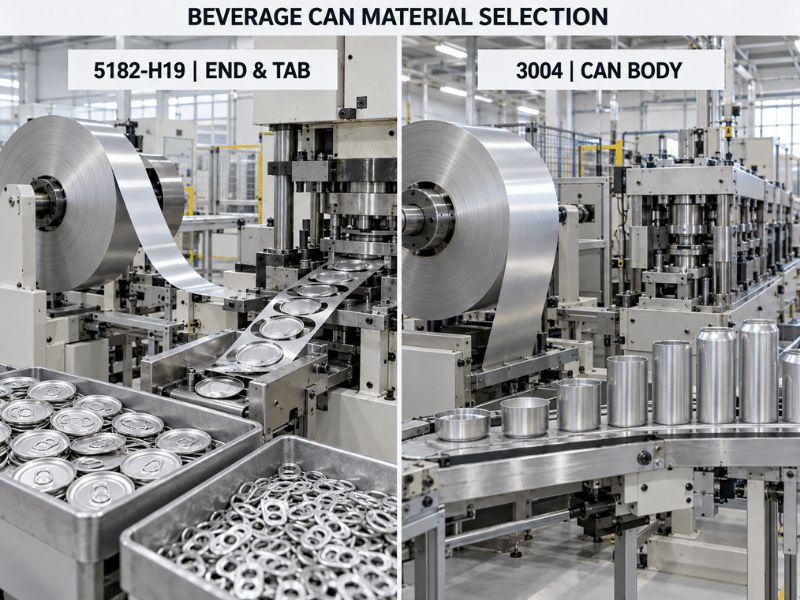
罐端和拉环 是全球主要用途,以H19状态生产。在规格指定时这一区分很重要: 罐体通常采用3xxx系合金如3004, ,而罐端、易开盖和拉环为5182。如果询价仅说“饮料罐”而未说明具体部件,合金可能是两者之一——报价前请先确认。.
汽车车身板 是第二大市场——引擎盖、车门、翼子板、内板和结构加强件,根据零件成型需求采用O至H34状态。驱动力是减重并具有可接受的抗凹痕性能,这也是r值和n值出现在这些规格中的原因。.
罐车车身和燃料箱 使用H111和H32,其中可焊性和对燃料及温和化学品的耐蚀性比峰值强度更重要。.
其他用途 包括船用配件和非主承力船体结构(在指定时使用H116/H321)、食品饮料容器和封盖、压力容器,以及需要耐蚀性配合中等强度和良好可焊性的一般工业零件。.
5182与5052、5754、5083和6061的对比
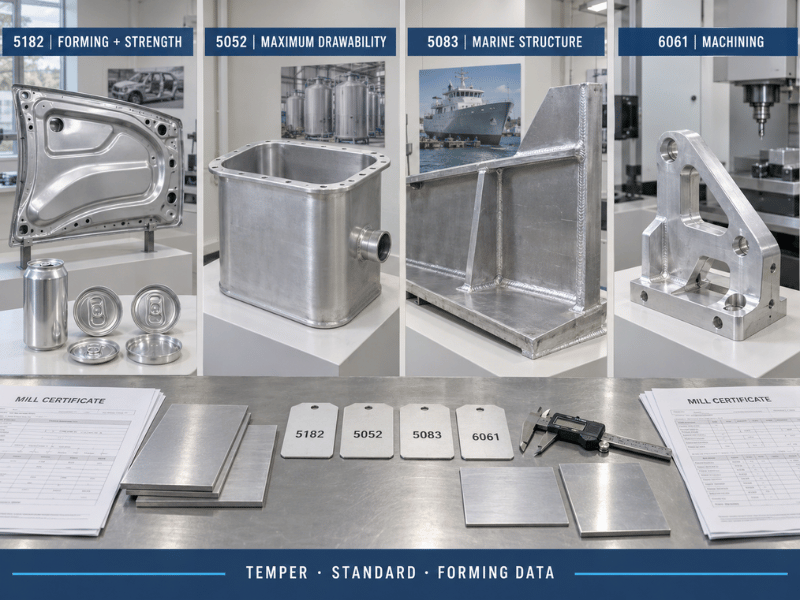
在5xxx系家族中,5052 → 5754 → 5182 → 5083大致是一个强度递增、成型性递减的阶梯。.
| 财产 | 5182 | 5052 | 5754 | 5083 | 6061-T6 |
|---|---|---|---|---|---|
| 镁(%) | 4.0 – 5.0 | 2.2 - 2.8 | 2.6 – 3.6 | 4.0 - 4.9 | 0.8 - 1.2 |
| 锰(%) | 0.20 – 0.50 | — | ≤ 0.50 | 0.40 – 1.0 | — |
| 抗拉强度(MPa,典型值) | 276 – 420 | 210 – 260 | 220 – 290 | 300 – 350 | ~310 |
| 屈服强度(MPa,典型值) | 145 – 395 | 160 – 195 | 130 – 190 | 215 – 260 | ~275 |
| 伸长率 (%) | 4 – 21 | 12 – 20 | 12 – 18 | 10 – 14 | 8 – 12 |
| 可热处理强化 | 否 | 否 | 否 | 否 | 是 |
| 深冲 | 良好(O/H111) | 优秀 | 良好 | 公平 | 公平 |
| 海洋腐蚀 | 非常好 | 良好 | 非常好 | 优秀 | 中度 |
| 焊接性 | 良好 | 优秀 | 优秀 | 优秀 | 良好 |
| 机械加工性能 | 公平 | 公平 | 公平 | 公平 | 非常好 |
| 典型用途 | 罐盖、车身面板 | 通用板材、储罐 | 船用板材、花纹板 | 船体板、低温用材 | 机加工零件、框架 |
与5052对比, ,5182强度更高、更抗凹陷,但牺牲了一定的极限深冲性;5052通常也更便宜、更易焊接。如果零件是深冲件且强度不是约束条件,5052通常胜出。如果是需要抗凹陷的车身面板,则5182胜出。完整数据见我们的 5052铝合金指南.
与5754对比, ,5182是两者中强度更高的,耐腐蚀性能相当;5754是更成熟的欧洲牌号,在船用板材和花纹板中出现频率更高。.
与5083对比, ,5182成形性更好、更易冲压,而5083强度更高,是船级社对主船体结构所期望的牌号。我们的 5083铝合金指南 涵盖了该对比的另一侧,而 船用级铝材 概述展示了5xxx系船用合金如何在它们之间划分应用。.
与6061对比, ,对比在工艺上发生反转:6061可热处理、机加工性能好、可达更高强度,但其焊接接头会损失强度,且耐海水腐蚀性更差。6061是机加工零件和框架的正确选择;5182是成形和焊接板材的正确选择。参见 6061铝材指南.
5182何时是错误选择
以条件而非零件名称来表述,因为真正决定选择的是条件。.
在以下情况下指定5182:
- 零件是罐盖、易拉盖或拉环——H19是行业标准,这是有原因的。.
- 你需要汽车车身面板级别的强度,同时具备真正的深冲性,且抗凹陷性很重要。.
- 零件是成形加焊接而非机加工,用于腐蚀性或食品接触环境。.
- 使用温度保持在65 °C以下,或高温区域被隔离。.
- 你需要比5052或5754能提供的更高强度,而又不想采用5083较低成形性的方案。.
在以下情况下另寻他选:
- 在腐蚀性环境中持续使用温度超过约65 °C。β相敏化不可逆——请使用5052或5454。.
- 零件是处于5052能力极限的深冲件。5052冲压深度更大且成本更低。.
- 涉及主船体结构。船级社规范期望使用5083或5086,而非5182。.
- 零件是从实心材料批量机加工而成。6061或2011加工更快、成本更低。.
- 装饰性阳极氧化是最终表面处理。请使用5005或6063。.
- 需要可热处理达到的峰值强度且焊接量极少。6061-T6或7075-T651性能优于任何5xxx系合金。.
标准、等效牌号与文件
| 标准 | 适用于 1370 铝线的标准: |
|---|---|
| ASTM B209 | 铝及铝合金薄板和厚板 |
| EN 573-3 | 化学成分(欧洲) |
| EN 485-2 | 薄板和带材的力学性能(欧洲) |
| GB/T 3880 | 薄板、带材和板材(中国) |
| JIS H4000 | 薄板、带材和板材(日本) |
| GMW15192 | 汽车铝板——OEM级要求 |
| AWS A5.10 / D1.2 | 填充金属分类和结构焊接设计 |
| ASTM B928 | 高镁船用板材(规定H116/H321的场合) |
等效牌号: UNS A95182, EN AW-5182, AlMg5 (部分参考文献)。.
在采购订单上,有四件事至关重要。明确注明 状态 ——O、H111、H32、H34和H19不可互换。注明 适用标准, ,因为B209和EN 485-2的最低值并不相同。要求提供 按EN 10204 3.1的工厂测试证书(MTC) 列出该批次实际抗拉强度、屈服强度和延伸率的报告。如果材料用于汽车面板或制罐料,请规定 真正重要的性能窗口 ——深冲用的r值和n值,或高速制罐线用的卷与卷一致性——而不是仅依赖抗拉强度范围。.
大多数5182的问题都是规格问题:状态未注明、标准未指明,或从未要求对成形至关重要的性能指标。.
与林西铝业合作
Linsy Aluminum供应 5182 铝 以薄板和卷材形式供应,状态包括O、H111、H32、H34和H19,船用方向供应可提供H116和H321——与其他高镁牌号一样,船用状态为扁平轧材规格,不生产棒材。自有能力涵盖CNC机加工、焊接、激光切割和表面精加工;锻造通过合作工艺设施协调完成,而非自有生产,因此如果您的零件需要锻造,请在计划中预留时间。.
每批货物均随附工厂材质证明(MTC),并可应要求安排SGS检测。对于汽车覆盖件或罐料用途,请告知哪些性能指标起决定作用——r值、n值或卷材一致性——以便询价时附带正确的参数窗口提交至工厂。对于非库存尺寸,典型交货期为10–60天,我们支持试制和原型制造的小批量起订。.
请发送您的图纸或规格书,我们将确认可用的状态、厚度、公差及文件资料,并标记使用条件中指向不同合金的任何信息。.
结论
5182是常用可成形5xxx系合金中强度最高的,它同时服务于两个将其拉向相反方向的市场:H19状态用于罐料,具有极高强度和低延伸率;汽车板材则以O至H34状态供货,选择依据是其拉伸成形能力。首先确定状态,因为不同状态之间的性能差异大于许多合金之间的差异。遵守65 °C的上限,因为4.0–5.0%的镁含量比大多数牌号留有的余量更小。并且焊接接头应按退火热影响区性能而非母材状态值进行设计。这三点做对了,5182就是一种性能可靠、资料完备且供应充足的合金。做错了——将H19指定用于深冲、高温连续服役,或按H34强度设计焊缝——失效看起来会像是材料问题,而实际上是规格问题。.
常见问题
5182铝合金主要用于什么?
两大主导应用。全球最大的用途是 罐盖料 ——饮料罐盖、易开盖和拉环——以H19状态供货。第二大用途是 汽车车身板 如发动机盖、车门、翼子板和内板,以O至H34状态供货。请注意,罐 罐身 通常采用3xxx系合金如3004;5182是 最后 和 选项卡 罐盖材料。.
5182铝合金有多强?
完全取决于状态,且差异很大:O状态约为276 MPa抗拉强度/145 MPa屈服强度/21%延伸率,而H19状态约为420 MPa抗拉强度/395 MPa屈服强度/4%延伸率。汽车车身板状态介于两者之间——H32约为290–315 MPa抗拉强度和210–230 MPa屈服强度,H34约为331 MPa和255 MPa。.
5182比5052更强吗?
是的,且差距显著。5182-H34抗拉强度约为331 MPa,而5052-H32约为210–260 MPa,屈服强度也相应更高。代价是成形性和成本:5052在深冲加工中拉伸能力更强,焊接稍容易,且通常更便宜。当强度或抗凹性起决定作用时选择5182;当最大拉伸成形性或成本起决定作用时选择5052。.
5182铝合金可以焊接吗?
可以,采用MIG和TIG焊接,通常使用ER5356焊丝,需要更高焊态强度时使用ER5183。重要的注意事项是5182不可热处理强化,因此焊接会使热影响区退火且无法恢复——焊接接头弱于H状态母材,接头应按AWS D1.2依据退火热影响区性能进行设计。.
5182的最高使用温度是多少?
约 65 °C(150 °F) 腐蚀环境中连续服役。超过该温度,4.0–5.0%的镁含量会以β相在晶界析出,导致晶间腐蚀和应力腐蚀开裂。该变化不可通过热处理逆转,因此对于高温持续服役,应改用5052或5454。.
5182适合深冲吗?
在软状态下,适合。5182-O和H111延伸率约为18–21%,适用于汽车内板、罐端盖和冲压壳体,拉伸成形良好。其拉伸能力不如5052,且加工硬化更快,因此预期需要更大的力、更大的弯曲半径,多工步深冲时可能需要中间退火。对于外露汽车覆盖件,应规定r值和n值,而不仅仅是延伸率。.
5182-H19和5182-H32有什么区别?
它们处于状态范围的两端,不可互换。. H19 经过重度冷轧以达到最大强度——约420 MPa抗拉强度、395 MPa屈服强度、仅4%延伸率——用于罐盖和拉环,其加工方式为冲孔和刻痕而非拉伸成形。. H32 经应变硬化并稳定化处理至约290–315 MPa抗拉强度和210–230 MPa屈服强度,延伸率10–12%,用于汽车车身板和结构板材。.