什么是4147铝合金?
4147铝合金(UNS A94147)是一种高硅、不可热处理强化的4000系铝合金,硅含量约为11–13%(AlSi12)。与6061或7075等结构合金不同,4147主要设计用作钎焊和焊接填充材料。其高硅含量将熔点降低至接近铝硅共晶点的狭窄区间(约577–582°C),在钎焊过程中具有优异的流动性、干净的流动性和防漏接头成形能力。.
4147与4047密切相关(两者均为AlSi12型合金),具有相同的核心功能:为真空钎焊、炉中钎焊和熔焊中铝部件的连接提供可靠的填充金属。该合金通常以O(退火)或H系列状态供货,广泛应用于换热器制造、汽车冷却系统和HVAC应用。.
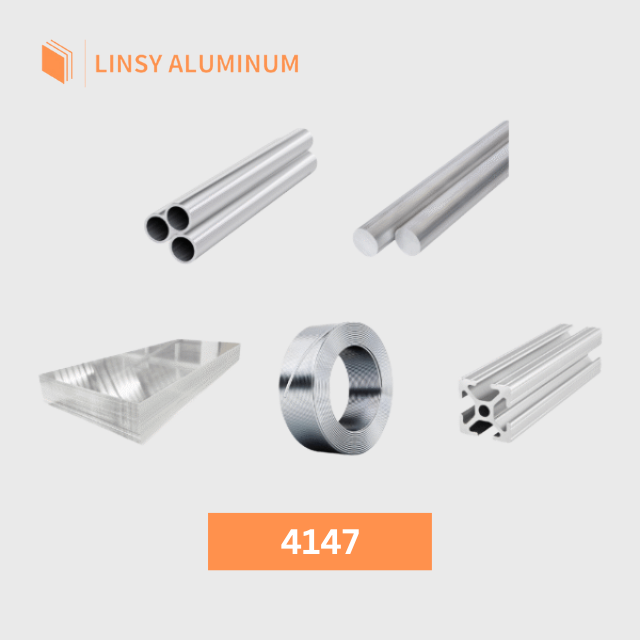
可提供的4147铝产品
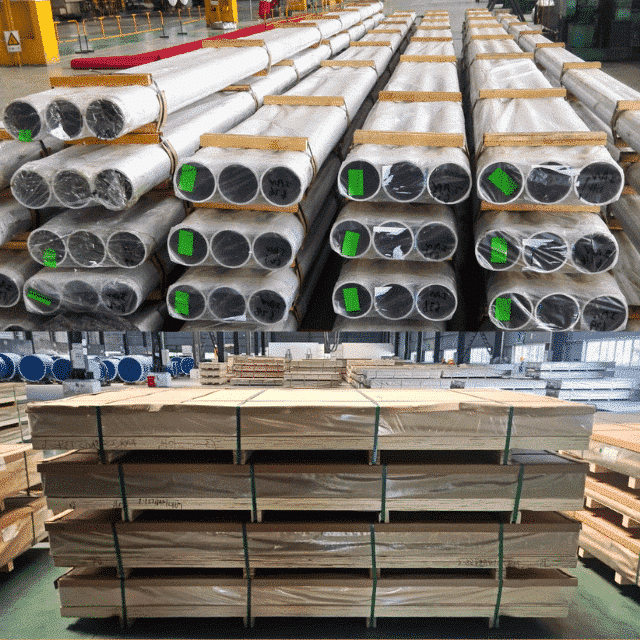
林西公司供应与钎焊和填充应用最相关的4147铝产品形态。尺寸和公差可根据您的项目要求进行定制。.
4147铝线材和填充焊丝
| 形式 |
脾气 |
直径(毫米) |
长度 |
| 4147线材(盘装) |
O, H14 |
1.2 – 5.0 |
线圈 / 工字轮 |
| 4147填充焊丝(直条) |
O, H14 |
1.6 – 5.0 |
500 – 1000 mm |
4147铝板材和卷材
| 形式 |
脾气 |
厚度(毫米) |
宽度(毫米) |
长度(毫米) |
| 4147板材 / 卷材 |
O、H14、H24 |
0.3 – 6.0 |
500 – 2600 |
500 – 16000 |
4147板材和卷材常用作包覆材料——将一层薄薄的4147通过轧制复合到芯层合金(如3003或6951)上,制成钎焊复合板。加热时,4147包覆层熔化并流动形成钎焊接头,而芯层合金保持其结构完整性。.
4147规格和等效牌号
| 标准系统 |
名称 |
| UNS |
A94147 |
| EN AW |
EN AW-4147 / AlSi12 |
| 国际标准化组织 |
Al Si12 |
| AA / SAE |
4147 |
| DIN(德国) |
3.2581 / AlSi12 |
常见的适用标准:
- ASTM B209 — 铝及铝合金板和板材
- ISO 6361 — 锻造铝及铝合金板、带和板材
- EN 573-3 — 锻造产品的化学成分和形状
- AWS A5.10/A5.10M — 裸铝及铝合金焊接电极和焊丝(相关填充金属牌号:ER4047)
4147铝的化学成分
典型成分范围(依据美国铝业协会/EN标准,重量%):
| 要素 |
Min % |
Max % |
| 硅 (Si) |
11.0 |
13.0 |
| 铁(Fe) |
— |
0.8 |
| 铜 (Cu) |
— |
0.3 |
| 锰 (Mn) |
— |
0.15 |
| 镁(Mg) |
— |
0.10 |
| 锌 (Zn) |
— |
0.20 |
| 其他,各 |
— |
0.05 |
| 其他,合计 |
— |
0.15 |
| 铝 (Al) |
平衡 |
4147铝的力学性能
4147是一种填充合金,而非结构合金。以下数值代表4147在退火(O)状态下的典型性能。由于4147不可热处理强化,各状态间的力学性能差异不大——主要选择标准是可成形性和钎焊性能,而非抗拉强度。.
| 财产 |
典型值 |
| 拉伸强度(极限值) |
130 – 160 MPa |
| 屈服强度 (0.2%) |
55 – 90 MPa |
| 断裂伸长率 |
5 – 15 % |
| 弹性模量 |
≈ 69 GPa |
| 密度 |
≈ 2.66 g/cm³ |
| 熔化区间(固相线 – 液相线) |
≈ 577 – 582 °C |
钎焊及加工特性
狭窄熔化区间
4147的硅含量为11–13%,非常接近铝硅共晶成分(12.6% Si,577°C)。这使其熔化区间极窄,约为577–582°C,意味着该合金从固态到液态的转变非常迅速。在钎焊中,狭窄的熔化区间可产生干净、可控的流动,并最大限度地降低芯层合金侵蚀或变形的风险。.
优异的流动性
高硅含量赋予4147在熔化状态下的优异流动性。这使得填充金属能够渗透到狭窄的接头间隙中,通过毛细作用沿接缝润湿铺展,形成均匀、防漏的接头——这对于换热器管和散热器翅片至关重要,因为接头完整性直接影响耐压性能。.
包覆应用
在钎焊复合板应用中,4147以薄包覆层形式(通常为板材总厚度的5–15%)轧制复合到3003、3005或6951等结构芯层合金上。在炉中或真空钎焊过程中,4147包覆层熔化并流动形成层间接头,而熔点较高的芯层合金保持其形状和结构性能。.
焊接注意事项
4147可用作GTAW(TIG)或GMAW(MIG)填充焊丝焊接铝部件。与低硅填充材料相比,它具有更好的抗裂性,尤其是在焊接4xxx或6xxx系母材时。但不建议用于焊接5xxx系(含镁)合金,因为高硅与镁的组合会在焊缝界面形成脆性的Mg₂Si析出物。.
4147铝的常见应用
4147主要用作钎焊填充金属和包覆合金。其应用集中在依赖铝-铝连接进行热管理系统的行业:
- 汽车热交换器: 散热器、暖风芯体、机油冷却器、中冷器和蒸发器——其中4147包覆层可实现多层铝组件的可控气氛钎焊(CAB)
- HVAC系统: 空调冷凝器、蒸发器盘管和制冷部件,要求防漏的钎焊接头
- 工业换热器: 板翅式换热器、管壳式换热器以及化工和电力行业使用的工艺冷却系统
- 真空钎焊: 航空航天和电子冷却组件,要求无钎剂真空钎焊以保证清洁度和接头可靠性
- 焊接用填充焊丝: 4xxx和6xxx系铝部件的TIG和MIG焊接,需要抗裂填充材料
- 铸造和铸造厂用途: 作为铝铸造过程中的母合金或硅源
质量文件与检验
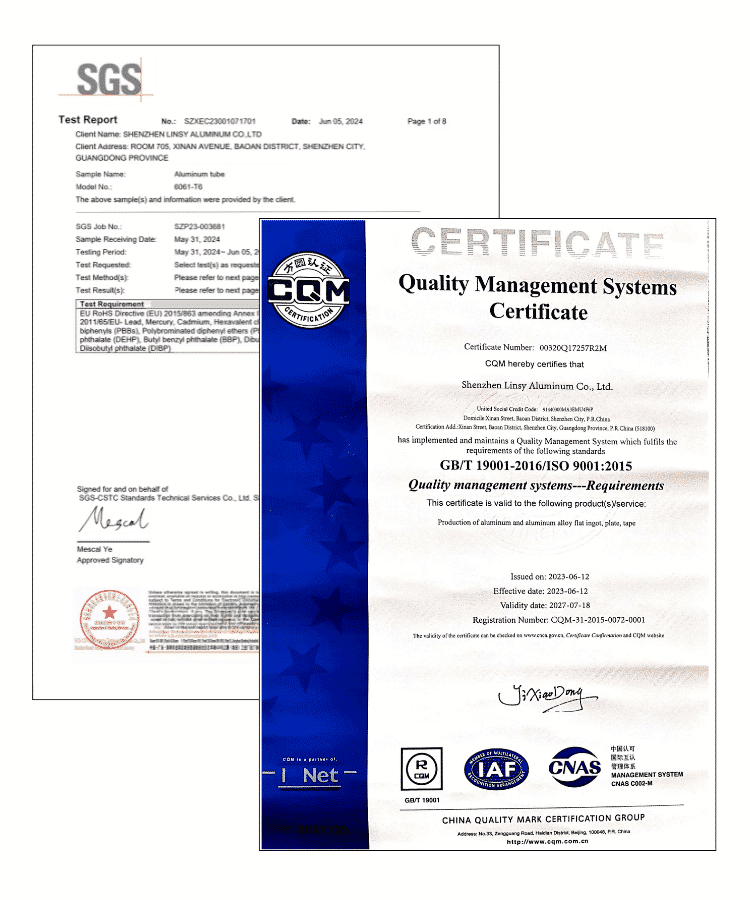
Linsy 的质量控制流程涵盖从原材料选收到成品检验的各个环节。每笔订单在生产完成后均随附由 Linsy Aluminum 签发的 MTC(材料测试证书),其中包含该批次产品的化学成分和力学性能测试结果。.
对于需要第三方验证的客户,可根据要求提供SGS测试报告,但需支付额外的测试费用。可提供的SGS报告包括:
- SGS 化学成分报告
- SGS 机械性能报告
- SGS 尺寸检测报告
- SGS RoHS + REACH 报告
为什么选择林西供应4147铝
林西铝业是一家位于深圳的铝材工厂,拥有20多年的行业经验,为汽车、HVAC、制造业和工业应用领域的客户供应4147及其他1000–8000系合金。.
选择林西作为您的4147供应商,意味着:
- 专业填充合金供应 — 4147线材、填充焊丝和包覆板材/卷材,标准及定制尺寸
- 灵活的订单支持 — 包括标准规格和混合规格的订单,其中也包含较难找到的等级
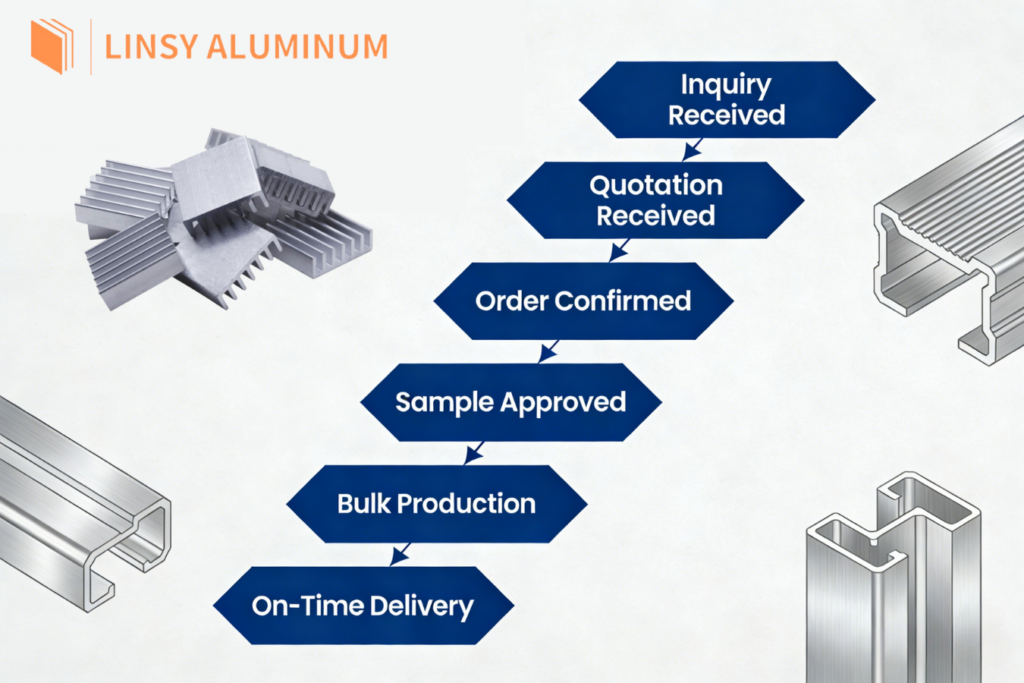
- 小批量定制生产 对于非库存尺寸,定制交货期通常为10–60天
- 厂内加工 — 支持CNC加工、激光切割和表面处理
- 每笔订单均附赠MTC, ,此外,可根据要求提供SGS检测服务
- 符合 ISO 9001、ISO 14001 和 ISO 45001 标准的管理体系 标准
相关资源
使用以下指南了解更多关于铝钎焊填充合金的信息:
4147铝常见问题解答
4147铝有什么用途?
4147铝主要用作换热器、散热器和HVAC部件的钎焊填充金属和包覆合金。它也用作TIG/MIG填充焊丝,用于焊接对抗裂性有要求的4xxx和6xxx系铝材。.
4147和4047有什么区别?
4147和4047均为AlSi12型合金,化学成分几乎相同(硅含量11–13%)。4047是焊接和钎焊标准中更常引用的牌号(如AWS ER4047 / BAlSi-4),而4147是变形产品牌号。在实际应用中,这两种合金在钎焊和填充应用中通常可互换使用。.
4147是结构合金吗?
不是。4147是一种填充及钎焊合金,而非结构合金。其抗拉强度(130–160 MPa)显著低于6061-T6等结构等级(290+ MPa)。4147不应用于承重应用——其价值在于钎焊和连接性能。.
4147可以进行热处理吗?
不可以。4147是一种不可热处理强化合金。它以O态(退火)或应变硬化状态(H14、H24)供货。无法通过固溶热处理和时效提高强度。.
4147有哪些供货状态?
常见状态包括:O态(退火),具有最大延展性和成形性;H14态(半硬),具有中等强度;H24态(半硬,应变硬化后退火),兼具强度与成形性。.
4147铝的熔点是多少?
4147的熔化范围较窄,约为577–582°C,接近铝硅共晶温度。这一窄熔化范围使其成为优异的钎焊填充材料——它能够快速熔化和流动,而不会对芯材合金造成过度热暴露。.
4147可以用于焊接5xxx系列合金吗?
不建议使用。使用4147填充材料焊接5xxx(含镁)合金会在焊缝界面产生脆性Mg₂Si析出物。对于5xxx系列母材,通常优先选用5356或5183填充焊丝。.
4147铝适用哪些标准?
常见标准包括:ASTM B209(板材及厚板)、ISO 6361(变形铝薄板/带材/厚板)、EN 573-3(化学成分)以及AWS A5.10/A5.10M(焊接耗材,对应牌号ER4047)。.
常见订购问题解答
定制4147订单的典型交货周期是多长?
对于非库存规格或定制要求,典型交货周期为10–60天,具体取决于合金、尺寸、加工要求及订单复杂程度。库存标准规格可更快发货——请联系我们获取具体报价。.
最低订购量(MOQ)是多少?
Linsy支持非库存4147产品的低起订量定制生产。起订量因形态、尺寸和加工范围而异;请告知您的需求,我们将确认可行性。.
每批货物附带哪些文件?
每笔订单均附带由林西铝业在生产后出具的材料测试证书(MTC)。可根据要求提供SGS第三方测试报告,需额外支付测试费用。.
批量订购前是否提供样品?
是的,大多数标准和定制规格均可安排样品。样品费用和交货期取决于尺寸和加工要求。.
你们向哪些地区发货?
Linsy 提供全球配送服务,其供应网络已覆盖欧洲、南非、巴西、新加坡、土耳其、日本、韩国和南亚地区。.