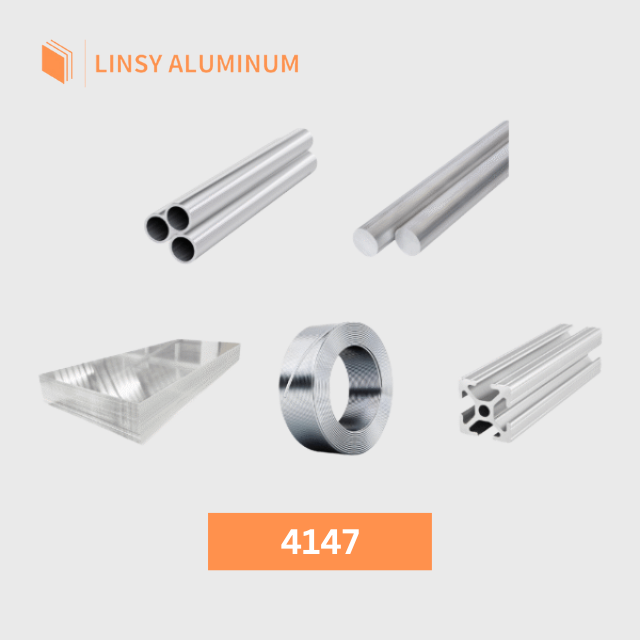



L'alliage d'aluminium 4147 (AlSi12 / EN AW-4147) est un alliage d'aluminium de la série 4000, à haute teneur en silicium, non traitable thermiquement, conçu principalement comme métal d'apport de brasage et matériau de placage. Avec une teneur en silicium de 11 à 13 %, il offre une plage de fusion étroite, une excellente fluidité et une formation de joints fiable pour le brasage sous vide et le brasage au four. Linsy fournit du fil d'aluminium 4147, des baguettes d'apport, des tôles et des bobines dans les états O, H14 et H24, avec des dimensions personnalisées et des rapports MTC disponibles.
Formulaires disponibles : fil / baguette d'apport / tôle / bobine
Tempéraments courants : O / H14 / H24
Assistance technique : usinage CNC / découpe laser / finition de surface
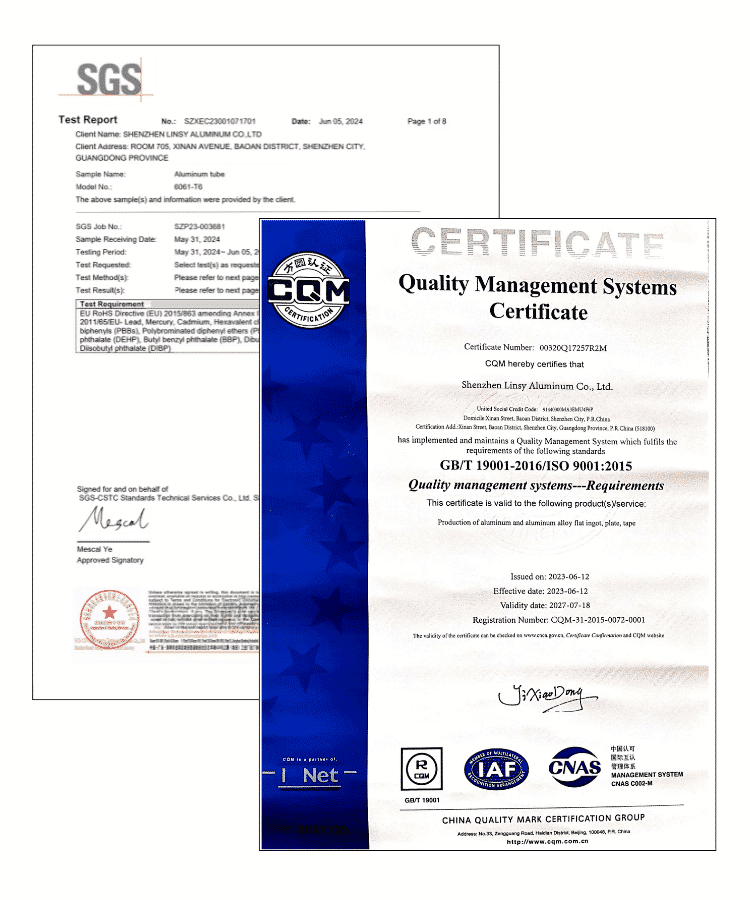
Documents relatifs à la qualité : Rapport MTC fourni avec chaque commande, essais SGS sur demande
L'alliage d'aluminium 4147 (UNS A94147) est un alliage d'aluminium à haute teneur en silicium, non traitable thermiquement, de la série 4000, contenant environ 11 à 13 % de silicium (AlSi12). Contrairement aux alliages structurels tels que le 6061 ou le 7075, le 4147 est conçu principalement comme matériau d'apport de brasage et de soudage. Sa teneur élevée en silicium abaisse le point de fusion dans une plage étroite proche de l'eutectique aluminium-silicium (environ 577 à 582 °C), produisant une excellente fluidité, un écoulement propre et des joints étanches lors du brasage.
Le 4147 est étroitement lié au 4047 (les deux sont des alliages de type AlSi12) et remplit la même fonction principale : fournir un métal d'apport fiable pour l'assemblage de composants en aluminium dans le brasage sous vide, le brasage au four et le soudage par fusion. L'alliage est généralement fourni à l'état O (recuit) ou dans les états de la série H et est largement utilisé dans la fabrication d'échangeurs de chaleur, les systèmes de refroidissement automobiles et les applications CVC.
Linsy fournit de l'aluminium 4147 dans les formes de produits les plus pertinentes pour le brasage et les applications d'apport. Les dimensions et tolérances peuvent être adaptées aux exigences de votre projet.
| Formulaire | Tempérer | Diamètre (mm) | Longueur |
|---|---|---|---|
| Fil 4147 (bobine) | O, H14 | 1.2 – 5.0 | Couronne / Bobine |
| Baguette d'apport 4147 (droite) | O, H14 | 1.6 – 5.0 | 500 – 1000 mm |
| Formulaire | Tempérer | Épaisseur (mm) | Largeur (mm) | Longueur (mm) |
|---|---|---|---|---|
| Tôle / Bobine 4147 | O, H14, H24 | 0.3 – 6.0 | 500 – 2600 | 500 – 16000 |
Les tôles et bobines 4147 sont couramment utilisées comme matériau de placage — une fine couche de 4147 est laminée par liaison sur un alliage de base (tel que le 3003 ou le 6951) pour créer une tôle de brasage. Lorsqu'elle est chauffée, la couche de placage 4147 fond et s'écoule pour former le joint brasé, tandis que l'alliage de base conserve son intégrité structurelle.
| Système standard | Désignation |
|---|---|
| UNS | A94147 |
| EN AW | EN AW-4147 / AlSi12 |
| ISO | Al Si12 |
| AA / SAE | 4147 |
| DIN (Allemagne) | 3.2581 / AlSi12 |
Normes couramment applicables :
Limites de composition typiques (selon l'Aluminum Association / normes EN, poids %) :
| Élément | Min % | Max % |
|---|---|---|
| Silicium (Si) | 11.0 | 13.0 |
| Fer (Fe) | — | 0.8 |
| Cuivre (Cu) | — | 0.3 |
| Manganèse (Mn) | — | 0.15 |
| Magnésium (Mg) | — | 0.10 |
| Zinc (Zn) | — | 0.20 |
| D'autres, chacun | — | 0.05 |
| Autres, total | — | 0.15 |
| Aluminium (Al) | Équilibre | |
Le 4147 est un alliage d'apport, et non un alliage structurel. Les valeurs ci-dessous représentent les propriétés typiques du 4147 à l'état recuit (O). Étant donné que le 4147 n'est pas traitable thermiquement, les propriétés mécaniques ne varient pas significativement selon les états — le critère de sélection principal est la formabilité et la performance de brasage, et non la résistance à la traction.
| Propriété | Valeur typique |
|---|---|
| Résistance à la traction (ultime) | 130 – 160 MPa |
| Limite d'élasticité (0,2%) | 55 – 90 MPa |
| Allongement à la rupture | 5 – 15 % |
| Module d'élasticité | ≈ 69 GPa |
| Densité | ≈ 2,66 g/cm³ |
| Intervalle de fusion (Solidus – Liquidus) | ≈ 577 – 582 °C |
Avec 11 à 13 % de silicium, le 4147 est très proche de la composition eutectique aluminium-silicium (12,6 % Si, 577 °C). Cela lui confère une plage de fusion extrêmement étroite d'environ 577 à 582 °C, ce qui signifie que l'alliage passe rapidement de l'état solide à l'état liquide. Lors du brasage, une plage de fusion étroite produit un écoulement propre et contrôlé et minimise le risque d'érosion ou de déformation de l'alliage de base.
La teneur élevée en silicium confère au 4147 une excellente fluidité à l'état fondu. Cela permet au métal d'apport de pénétrer dans les interstices étroits des joints, de se diffuser le long des coutures par action capillaire et de former des liaisons uniformes et étanches — ce qui est essentiel pour les tubes d'échangeurs de chaleur et les ailettes de radiateurs où l'intégrité des joints affecte directement la rétention de pression.
Dans les applications de tôle de brasage, le 4147 est laminé par liaison comme fine couche de placage (généralement 5 à 15 % de l'épaisseur totale de la tôle) sur un alliage de base structurel tel que le 3003, le 3005 ou le 6951. Lors du brasage au four ou sous vide, la couche de placage 4147 fond et s'écoule pour former des joints entre les couches, tandis que l'alliage de base à point de fusion plus élevé conserve sa forme et ses propriétés structurelles.
Le 4147 peut être utilisé comme fil d'apport GTAW (TIG) ou GMAW (MIG) pour souder des composants en aluminium. Il offre une bonne résistance à la fissuration par rapport aux apports à plus faible teneur en silicium, en particulier lors du soudage d'alliages de base 4xxx ou 6xxx. Cependant, il n'est pas recommandé pour le soudage d'alliages de la série 5xxx (contenant du magnésium), car la combinaison de silicium élevé et de magnésium peut former des précipités fragiles de Mg₂Si à l'interface de soudure.
Le 4147 est principalement utilisé comme métal d'apport de brasage et alliage de placage. Ses applications sont concentrées dans les industries qui dépendent de l'assemblage aluminium-aluminium pour les systèmes de gestion thermique :
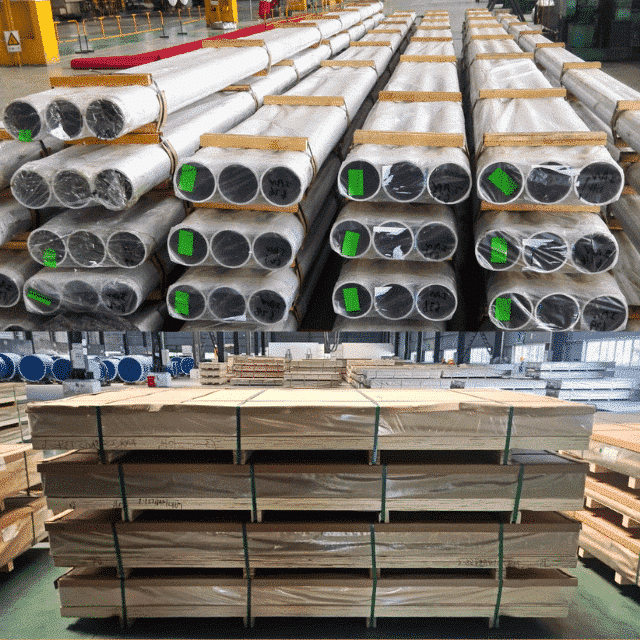
Chez Linsy, le contrôle qualité couvre l'ensemble du processus, depuis la sélection des matières premières jusqu'au contrôle du produit fini. Chaque commande est accompagnée d'un certificat d'essai des matériaux (MTC) délivré par Linsy Aluminum après la production, qui comprend les résultats relatifs à la composition chimique et aux propriétés mécaniques du lot concerné.
Pour les clients qui ont besoin d'une vérification par un organisme tiers, des rapports d'essais SGS sont disponibles sur demande, moyennant des frais d'essais supplémentaires. Les rapports SGS disponibles comprennent :
Linsy Aluminum est une usine d'aluminium basée à Shenzhen avec plus de 20 ans d'expérience industrielle, fournissant le 4147 et d'autres alliages des séries 1000 à 8000 à des clients dans les secteurs automobile, CVC, manufacturier et industriel.
Pour votre approvisionnement en 4147, cela signifie :
Utilisez ces guides pour en savoir plus sur les alliages d'apport de brasage de l'aluminium :
L'aluminium 4147 est principalement utilisé comme métal d'apport de brasage et alliage de placage pour les échangeurs de chaleur, les radiateurs et les composants CVC. Il est également utilisé comme fil d'apport TIG/MIG pour le soudage d'aluminium des séries 4xxx et 6xxx où la résistance à la fissuration est importante.
Le 4147 et le 4047 sont tous deux des alliages de type AlSi12 avec une composition chimique presque identique (11 à 13 % de silicium). Le 4047 est la désignation la plus couramment référencée dans les normes de soudage et de brasage (par exemple, AWS ER4047 / BAlSi-4), tandis que le 4147 est la désignation du produit corroyé. En pratique, les deux alliages sont souvent utilisés de manière interchangeable pour le brasage et les applications d'apport.
Le n° 4147 est un alliage d'apport et de brasage, et non un alliage de structure. Sa résistance à la traction (130–160 MPa) est nettement inférieure à celle des nuances structurelles comme le 6061-T6 (290+ MPa). Le 4147 ne doit pas être utilisé pour des applications portantes — sa valeur réside dans ses performances de brasage et d'assemblage.
Non, le 4147 est un alliage non traitable thermiquement. Il est fourni à l'état O (recuit) ou écroui (H14, H24). La résistance ne peut pas être augmentée par traitement thermique de mise en solution et vieillissement.
Les états courants sont O (recuit) pour une ductilité et une formabilité maximales, H14 (demi-dur) pour une résistance modérée, et H24 (demi-dur, recuit après écrouissage) pour un équilibre entre résistance et formabilité.
Le 4147 présente une plage de fusion étroite d'environ 577 à 582 °C, proche de la température eutectique aluminium-silicium. Cette plage étroite est ce qui en fait un excellent métal d'apport de brasage — il fond et s'écoule rapidement sans exposition thermique excessive de l'alliage de base.
Ce n'est pas recommandé. Le soudage d'alliages 5xxx (contenant du magnésium) avec un métal d'apport 4147 peut produire des précipités fragiles de Mg₂Si à l'interface de soudure. Pour les métaux de base de la série 5xxx, le fil d'apport 5356 ou 5183 est généralement préféré.
Les normes courantes incluent l'ASTM B209 (tôles et plaques), l'ISO 6361 (tôles/bandes/plaques en aluminium corroyé), l'EN 573-3 (composition chimique) et l'AWS A5.10/A5.10M (consommables de soudage, désignation associée ER4047).
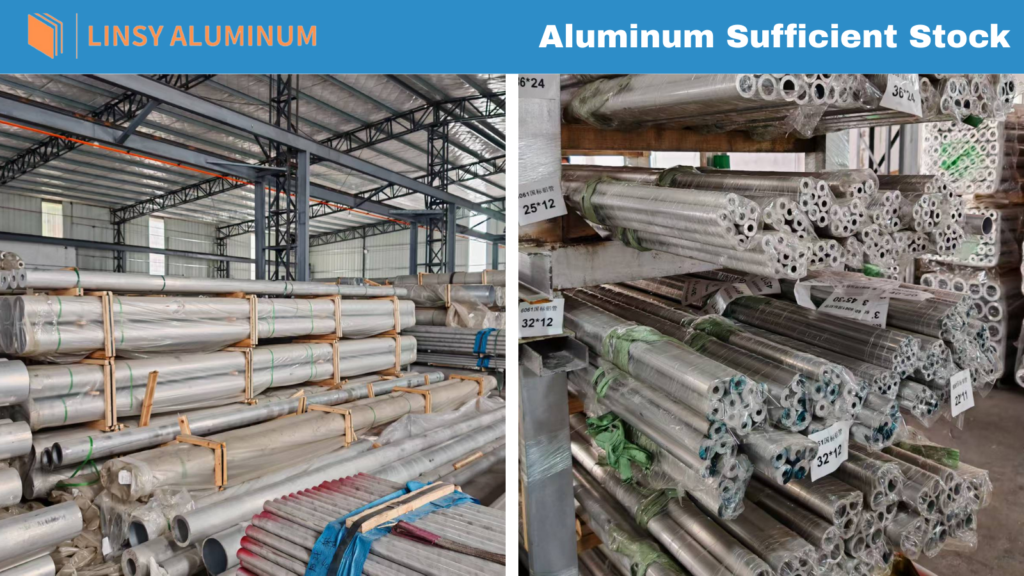
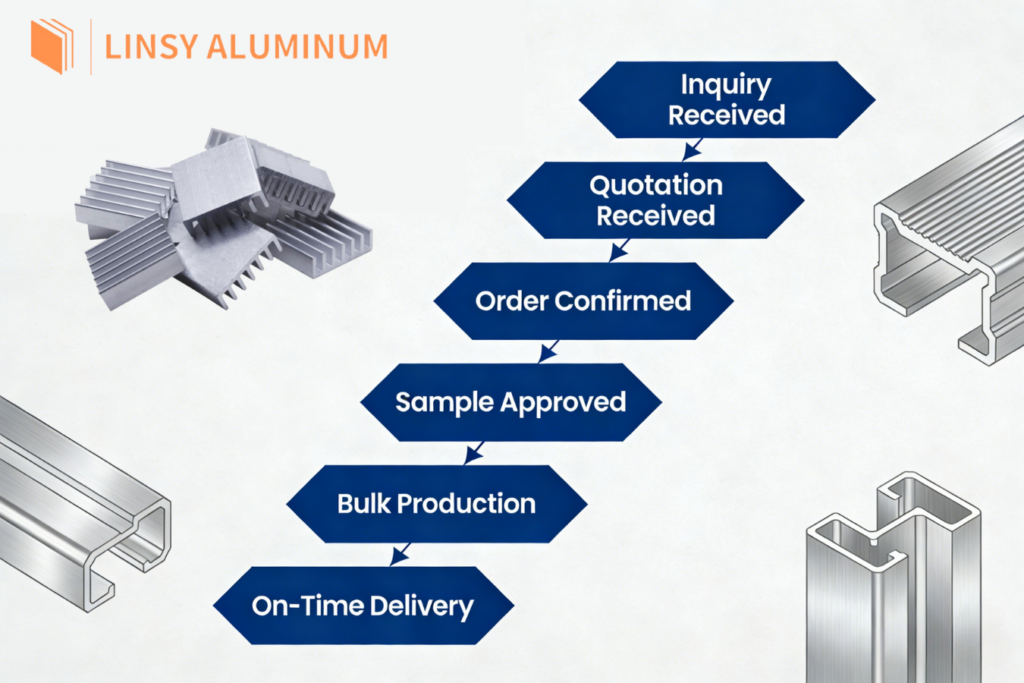
Pour les dimensions hors stock ou les spécifications sur mesure, le délai de livraison typique est de 10 à 60 jours selon l'alliage, les dimensions, les exigences de traitement et la complexité de la commande. Les spécifications standard en stock peuvent être expédiées plus rapidement — contactez notre équipe pour un devis spécifique.
Linsy prend en charge la production personnalisée à faible MOQ pour les articles 4147 hors stock. Le MOQ varie selon la forme, la taille et l'étendue du traitement ; veuillez nous communiquer vos exigences et nous confirmerons la faisabilité.
Chaque commande est expédiée avec un MTC (Certificat d'essai des matériaux) délivré par Linsy Aluminum après la production. Des rapports d'essai optionnels par un tiers (SGS) sont disponibles sur demande moyennant des frais d'essai supplémentaires.
Oui, des échantillons peuvent être organisés pour la plupart des spécifications standard et sur mesure. Le coût et le délai des échantillons dépendent de la taille et des exigences de traitement.
Linsy expédie ses produits dans le monde entier et dispose d'un réseau de distribution bien établi en Europe, en Afrique du Sud, au Brésil, à Singapour, en Turquie, au Japon, en Corée du Sud et en Asie du Sud.
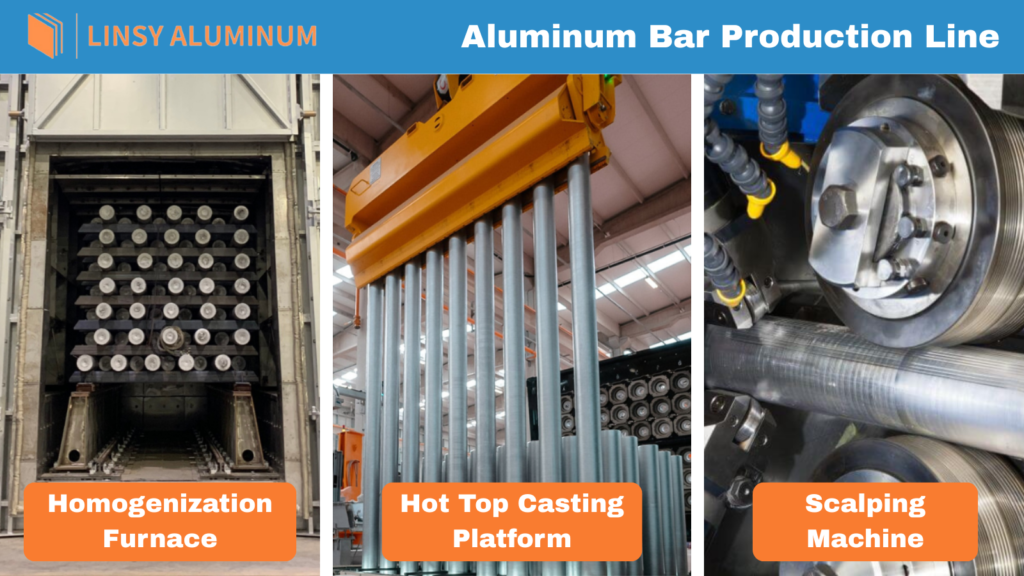
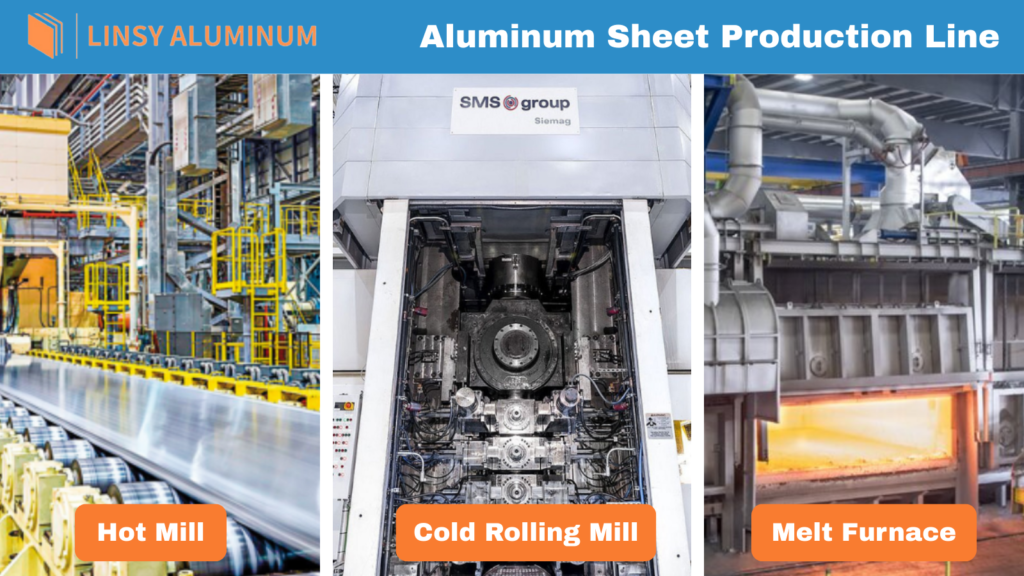
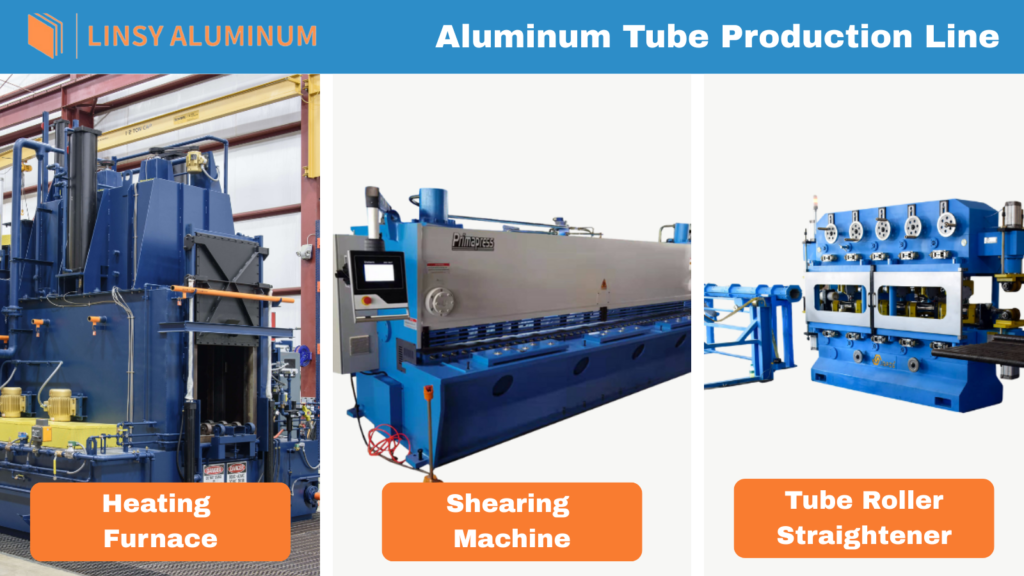
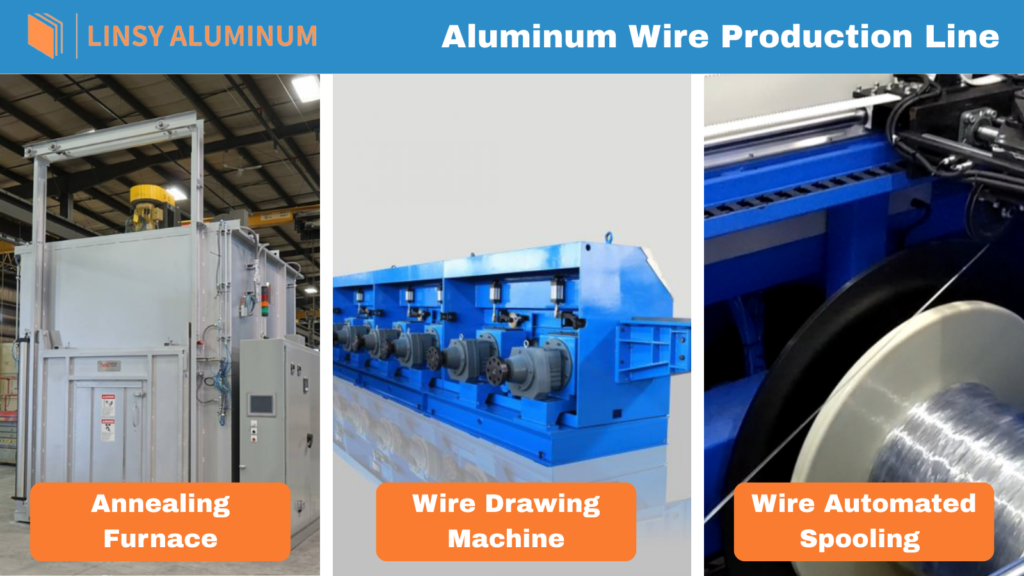
Avantages pour Linsy
Linsy Aluminum est un fournisseur de premier plan de produits de transformation de l'aluminium, au service de diverses industries, notamment l'aérospatiale, l'ingénierie générale, l'automobile, la marine, la construction navale et d'autres applications industrielles spécialisées.
Nous nous engageons à respecter les normes les plus strictes en matière de qualité et de responsabilité environnementale, comme en témoignent nos certifications : ISO 9001:2008, ISO 14001:2004 et SGS.