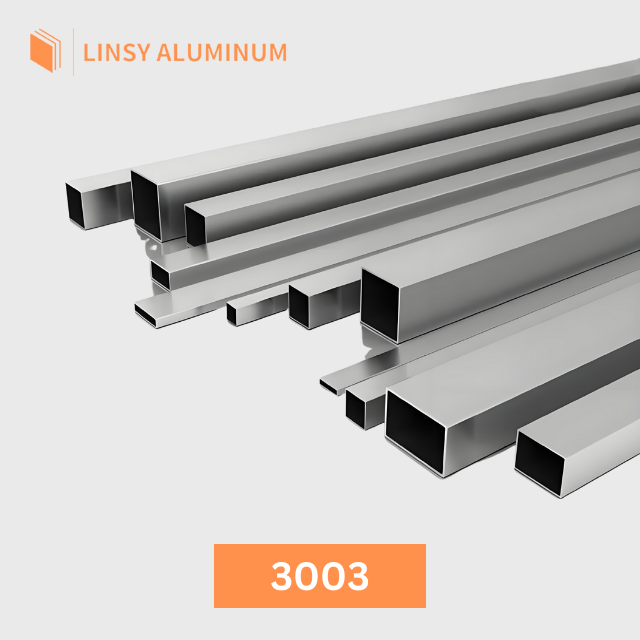

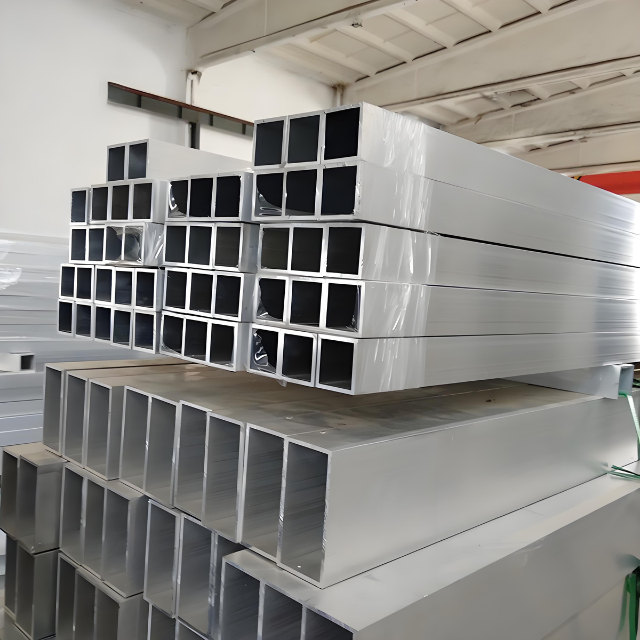
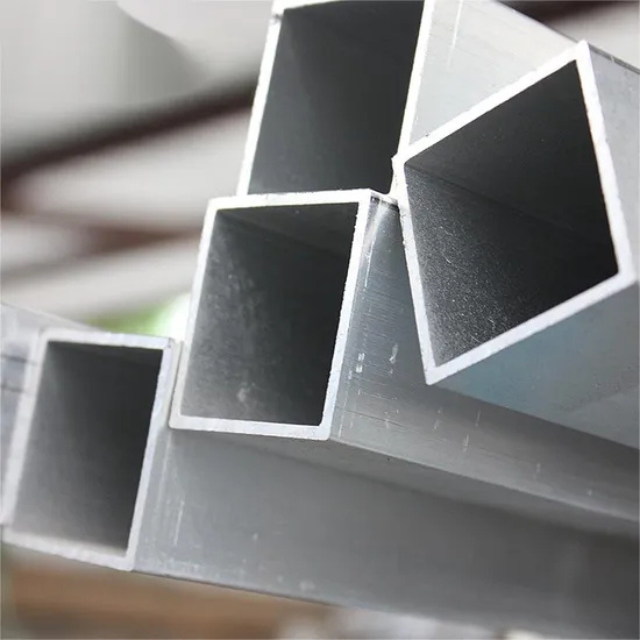
3003 aluminum square tube is a hollow square Al-Mn section, about 20% stronger than 1100 with the same workability. It serves light structural frames, equipment enclosures, ductwork and decorative trim, 10–100 mm side. Strength comes from strain hardening only; O temper is what allows field bending and flaring.
Side: 10–100 mm
Wall: 0.8–5 mm
Tempers: O / H12 / H14 / H16 / H22 / H24
Standard: ASTM B221
Quality documents: MTC report with every order
3003 aluminum square tube is a hollow square Al-Mn section with 1.0–1.5% manganese — about 20% stronger than 1100 with the same excellent workability. Square form gives uniform bending stiffness in both directions with a flat face for mounting, which is why it appears in light structural frames, equipment enclosures, ductwork and decorative trim. It cannot be heat treated, so strength comes from strain hardening and any weld or braze softens it permanently. Alloy data: 3003 aluminum alloy.
| Item | Range |
|---|---|
| Outside side | 10 – 100 mm |
| Wall thickness | 0.8 – 5 mm |
| Length | 1,000 – 6,000 mm, cut to size |
| Tempers | O / H12 / H14 / H16 / H22 / H24 |
| Standard | ASTM B221 |
The range is smaller than 6063 square tube — 100 mm side against 200 — because 3003 square tube serves light fabrication and trim rather than structural framing. Custom sizes are quoted on request; if you need a heavy section, 6063 or 6061 is the practical route.
| Temper | Tensile (MPa) | Yield (MPa) | Elongation | Where it fits |
|---|---|---|---|---|
| O | 75 – 130 | ≥ 35 | > 30% | Severe forming, field bending, flaring |
| H14 | 115 – 180 | ≥ 50 | ≥ 5% | General fabrication, frames, enclosures — the stock temper |
| H22 | 95 – 155 | Per the MTC | ≥ 3% | Light forming after delivery, light loads |
Typical values for this product form; confirm against the MTC. Density 2.73 g/cm³, elastic modulus 69 GPa. H12, H16 and H24 sit between these and are quoted on request rather than held across all sizes.
H14 is the stock temper and covers general fabrication: frames, enclosures, furniture, trim. It balances moderate strength with enough ductility for standard shop work. O is for real forming — field bending, flaring, expansion — where the tube has to move without cracking; elongation above 30% is why.
H22 is partially annealed after hardening, giving slightly lower strength than H14 with more formability — the compromise where a member is formed lightly after delivery but still has to carry a light load.
| Alloy / temper | Tensile (MPa) | Yield (MPa) | Where it fits |
|---|---|---|---|
| 3003-H14 | 115 – 180 | ≥ 50 | Light frames, enclosures, ductwork, decorative trim |
| 5052-H32 | 214 – 262 | ≥ 159 | Marine frames, welded outdoor structures |
| 6063-T5 / T6 | 185 / 240 | 145 / 215 | Architectural framing, handrails, visible work |
3003 is the lightest of the three on strength but the most workable and the cheapest. Choose it when the member is formed, brazed or welded and the load is light; step to 6063 for architectural framing with better finish, and to 5052 as soon as there is salt water or real load.
Square gives equal stiffness both ways and simplifies joints; rectangular puts material where the bending is and is lighter for a one-direction span. 3003 is normally supplied square for enclosures and trim rather than as a beam.
Corner radius matters where a connector or a sliding fit is used. Outside corners are radiused rather than sharp; if the assembly depends on the corner, state the radius or send the connector drawing.
Straightness and twist are the quality variables: a twisted member will not sit flat and pulls a welded frame out of square.
Bending: square tube does not bend like round — it collapses at the corners. But 3003 in O is more forgiving than most alloys here, which is why it is used for conduit and ductwork that gets field-bent with a mandrel.
For enclosure work, the useful property is that 3003 takes a powder coat or anodized finish without the colour variation 6xxx shows across lots, and it cuts and drills cleanly with ordinary tooling. Where the enclosure has to match a 6063 frame visually, check the anodized tone first — 3003 comes out slightly warmer because of the manganese.
Joining: brazing is the strong suit, welding is good with 4043 or 1100 filler. Both soften the joint area with no heat treatment available to recover it. Surface: anodizes with a warmer tone than 6xxx because of the manganese.
Equipment enclosures and cabinets, light structural frames, ductwork and ventilation, decorative trim, furniture frames, conduit, signage frames, food-processing and chemical equipment frames, brazed assemblies.
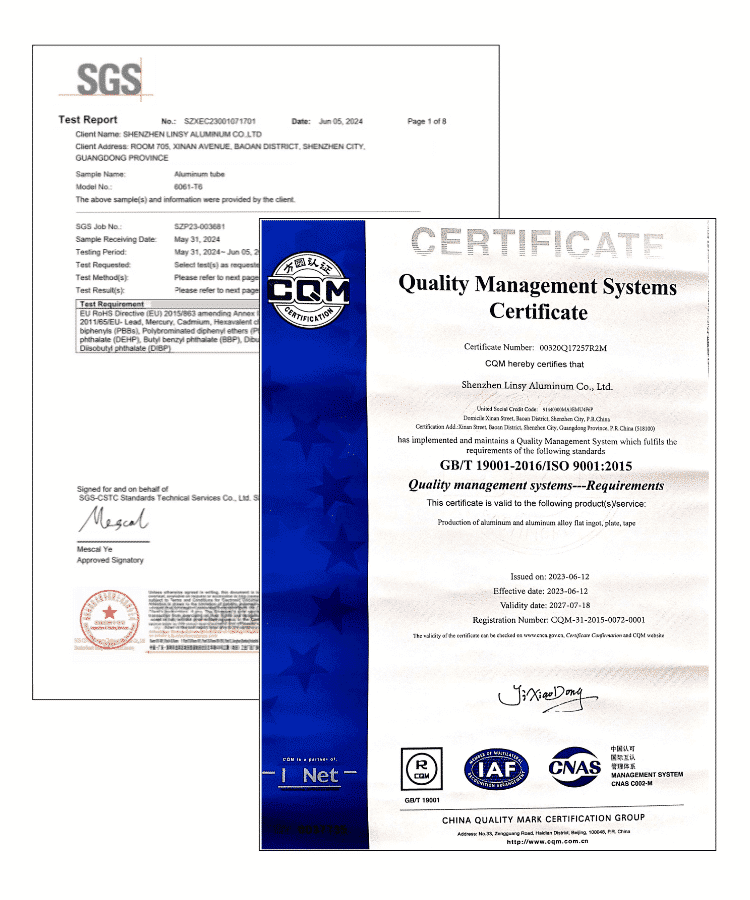
Every order ships with an MTC reporting alloy, temper, side, wall and mechanical results against ASTM B221. Third-party testing is available on request at additional cost; production runs under ISO 9001, ISO 14001 and ISO 45001 certified systems.
For enclosure and trim work the finish usually decides more than the strength: state whether the tube will be anodized or powder coated, and whether it has to match an existing frame visually, because 3003 anodizes to a slightly warmer tone than 6063.
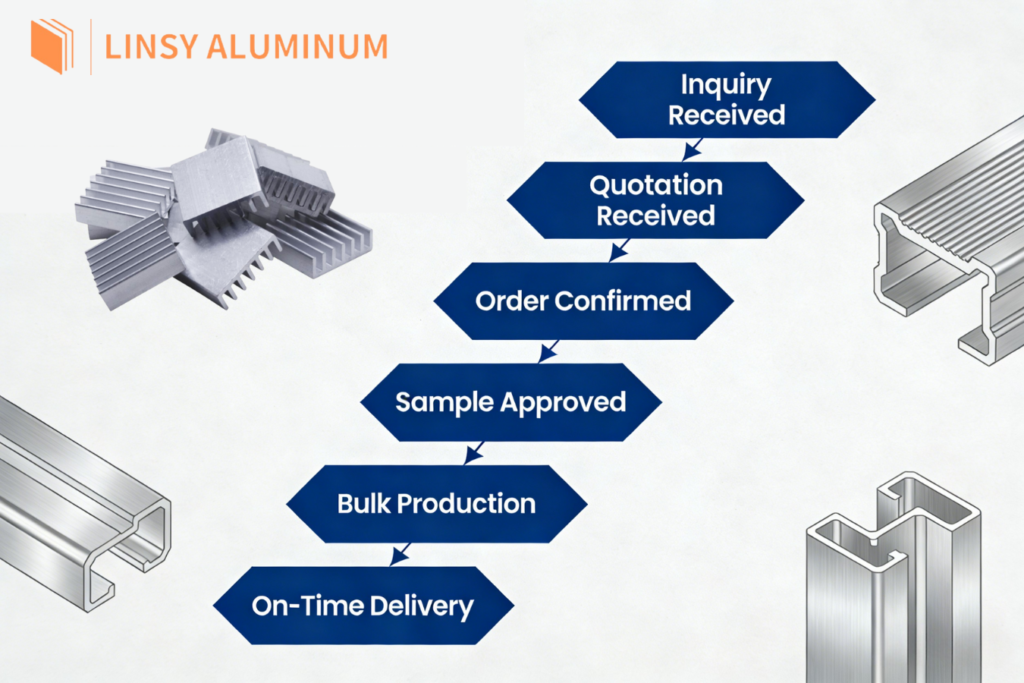
To quote in one round, send: side × wall × length, temper (H14 standard, O for forming), corner radius if a connector depends on it, straightness, end finish, and the destination.
Shenzhen-based aluminum factory, more than 20 years in the industry, supplying 1000–8000 series alloys in standard specifications and custom sizes.
Q: Can 3003 square tube be heat treated?
A: No. Strength comes from strain hardening only, and welding or brazing returns the joint area towards annealed with no way to recover it.
Q: Why is the size range smaller than 6063 square tube?
A: Because 3003 serves light fabrication and trim. Above about 100 mm side, 6063 or 6061 is the practical route and we will quote it as such.
Q: H14 or O for field-bent tube?
A: O. Its elongation above 30% is what lets a tube be bent or flared on site; H14 handles a soft bend only.
Q: Is 3003 good for brazed assemblies?
A: Yes — a furnace braze joins the assembly below the melting point of the parent metal, keeping most of the temper, which a fusion weld cannot do.
Q: What sizes do you hold?
A: 10–100 mm side, 0.8–5 mm wall, cut to length from 1,000 to 6,000 mm.
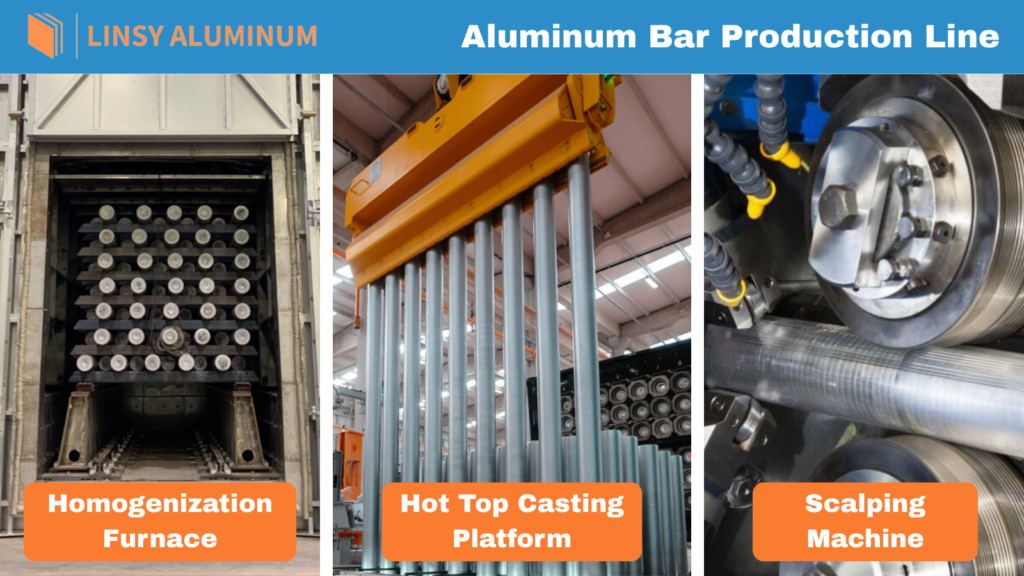
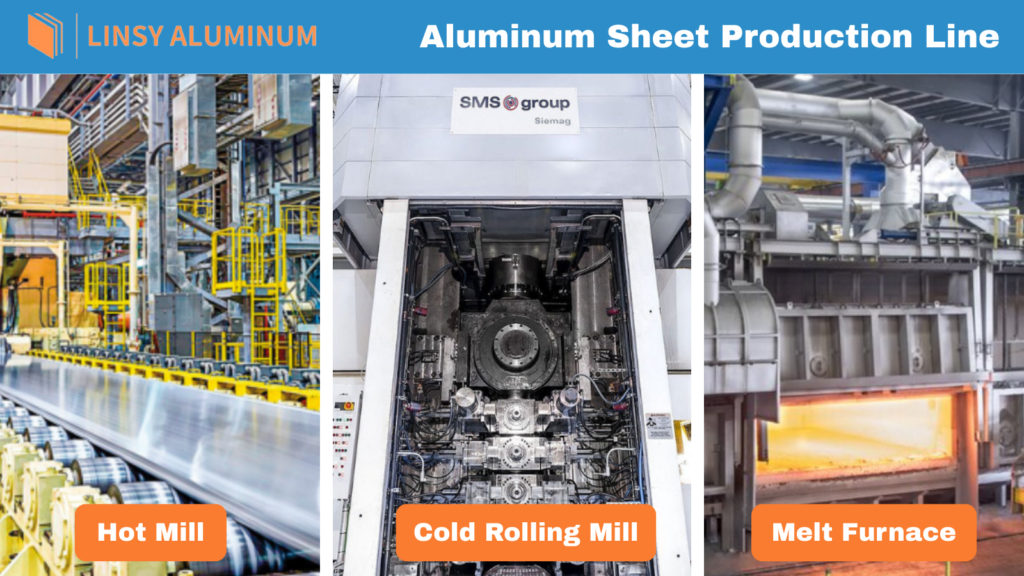
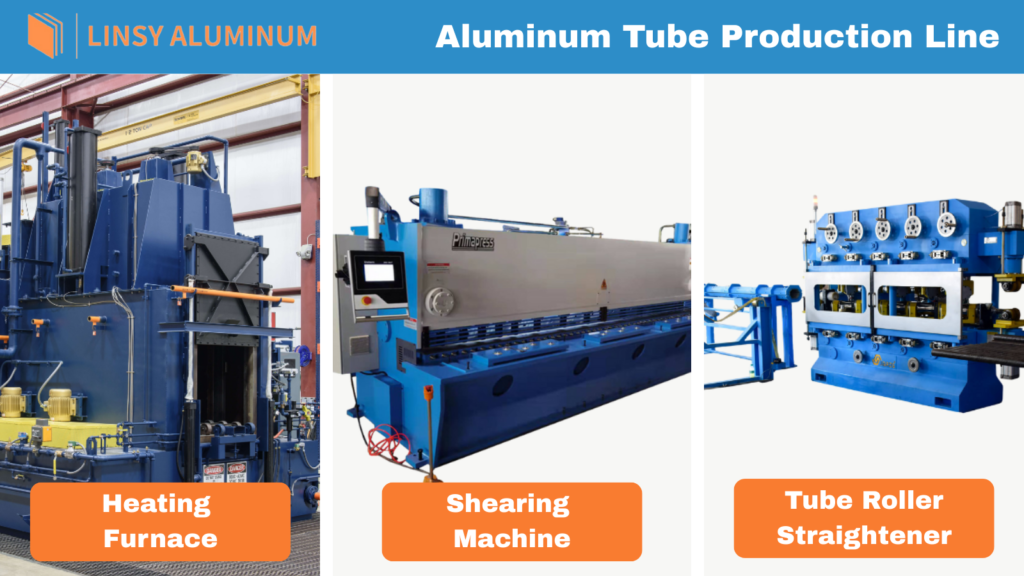
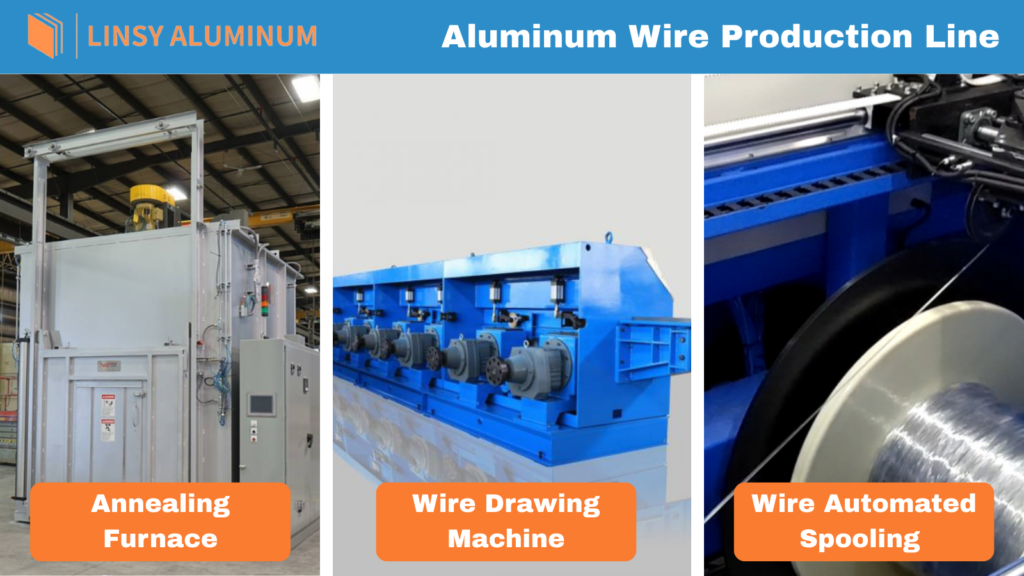
Linsy Advantages
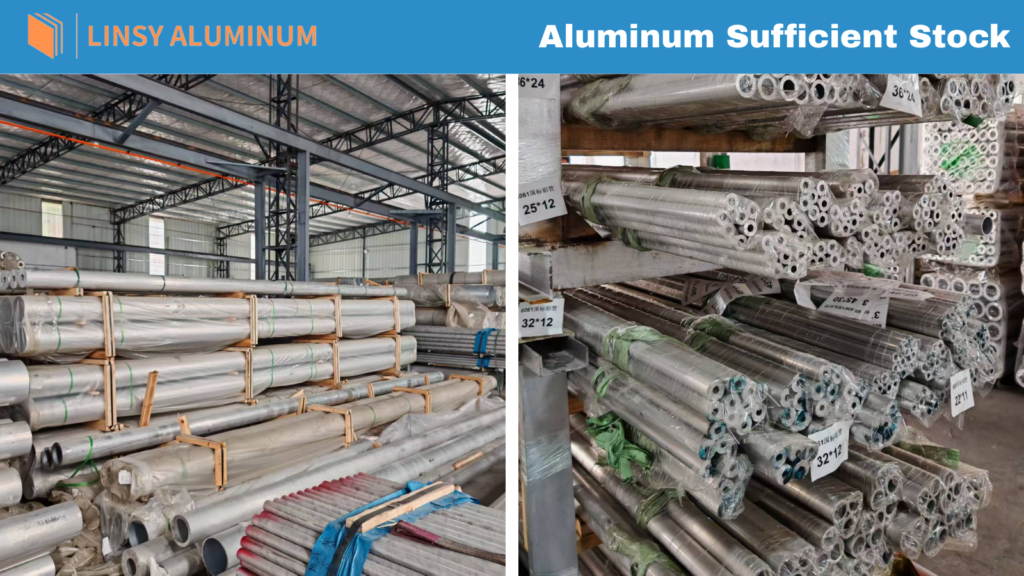
Linsy Aluminum is a leading supplier of aluminum processing products, serving diverse industries including aerospace, general engineering, automotive, marine, shipbuilding and other specialized industrial applications.
We are committed to maintaining the highest standards of quality and environmental responsibility, as demonstrated by our certifications: ISO 9001:2008, ISO 14001:2004 and SGS.