Co je hliník 5056?
5056 je vysokohořčíkový konec komerční řady 5xxx, obsahuje přibližně 5% Mg — více než 5052 (2,5%) nebo 5083 (4,5%). Tento obsah hořčíku určuje jeho identitu: nejvyšší pevnost ve stavu po tváření ze všech běžných komerčních jakostí 5xxx, plus korozní odolnost námořní třídy, kterou je tato řada známá. Nejlépe je znám jako drát na nýty a materiál pro tváření za studena, kde je pevnost ve smyku a čisté chování při tváření za studena důležitější než tloušťka.
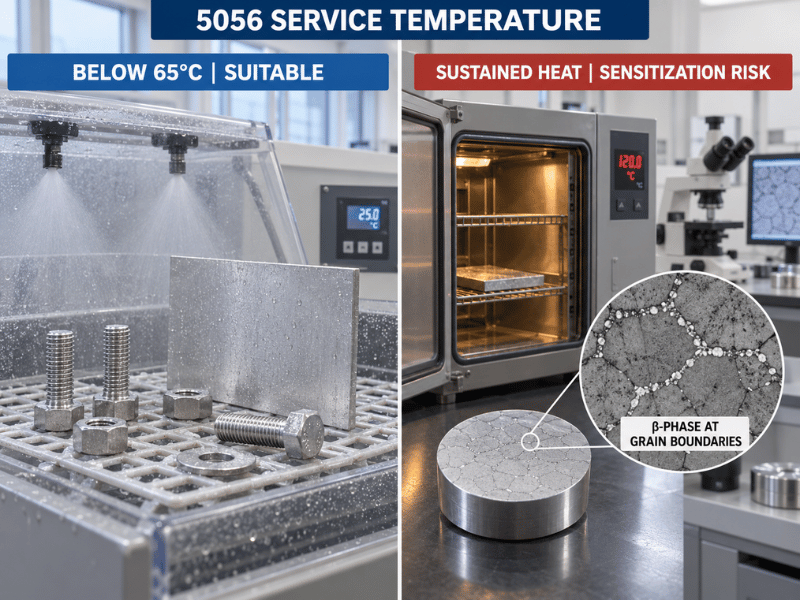
Určujícím omezením této slitiny je stejně specifická vlastnost. 5056 není tepelně zpracovatelná a stejně jako každá jakost 5xxx nad přibližně 3% Mg má horní hranici pro trvalé provozní zatížení kolem 65 °C, než senzibilizace vytvoří riziko korozního praskání za napětí. Skutečná otázka výběru tedy není, zda je 5056 dostatečně pevná — tam málokdy zklame — ale zda díl zůstane dostatečně studený, dostatečně dlouho, aby tento kompromis přijal.
Chemické složení 5056
Mezní hodnoty složení podle ASTM B209 / EN 573-3, v hmotnostních procentech. Hořčík je záměrným zpevňujícím prvkem; mangan a chrom jsou malé řízené přídavky pro strukturu zrna a korozní chování.
| Prvek | Obsah (hm. %) | Role |
|---|---|---|
| Hořčík (Mg) | 4.5–5.6 | Primární zpevňovač tuhého roztoku |
| Mangan (Mn) | 0.05–0.20 | Zjemnění zrna |
| Chrom (Cr) | 0.05–0.20 | Korozní odolnost, řízení zrna |
| Křemík (Si) | max. 0,30 | Limit nečistot |
| Železo (Fe) | max 0,40 | Limit nečistot |
| Měď (Cu) | 0,10 max | Limit nečistot |
| Zinek (Zn) | 0,10 max | Limit nečistot |
| Titan (Ti) | 0,15 max | Zjemňovač zrna |
| Ostatní (každý / celkem) | 0,05 / 0,15 max | Stopová množství |
| Hliník (Al) | Bilance | Nobelmetal |
Mechanické vlastnosti 5056 podle stavu
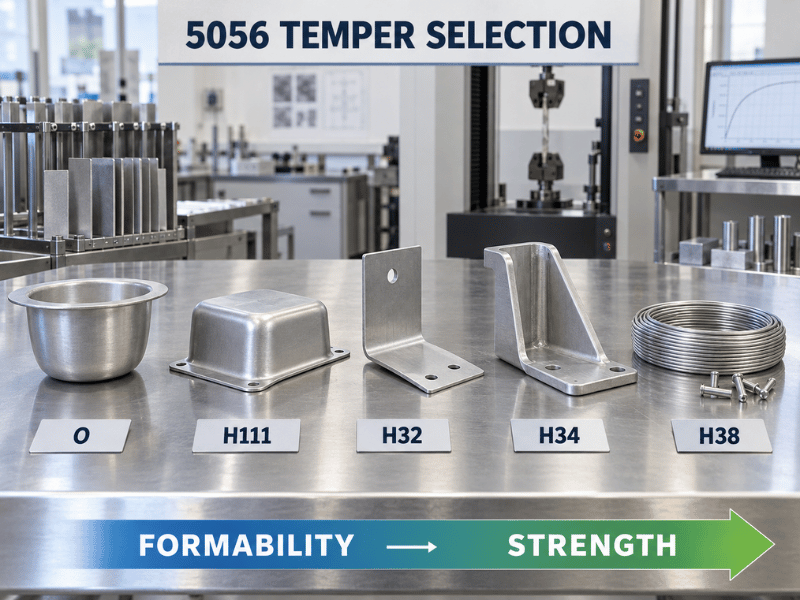
Protože 5056 nelze tepelně zpracovat, volba stavu je jediná páka pevnosti — je to množství deformace za studena plus případné stabilizační zpracování. Hodnoty níže jsou typické střední hodnoty pro plech, desku a drát; ověřte je podle atestu hutního podniku pro konkrétní formu, tloušťku a šarži.
| Temperament | Pevnost v tahu (MPa) | Mez kluzu (MPa) | Prodloužení (%) | Tvrdost (HB) |
|---|---|---|---|---|
| O (žíhaný) | 290 | 152 | 35 | 65 |
| H32 (čtvrttvrdý, stabilizovaný) | 315 | 228 | 25 | 85 |
| H34 (polotvrdý, stabilizovaný) | 345 | 283 | 15 | 95 |
| H38 (plně tvrdý) | 414 | 345 | 7 | 105 |
| H111 (žíhaný, lehce deformačně zpevněný) | 305 | 180 | 30 | 75 |
Jak se tyto překládají do praxe:
- O maximalizuje tvařitelnost. O je vhodný, když bude díl před jakýmkoli provozním zatížením hluboce tažen, rotačně tvářen nebo silně ohýbán.
- H32 a H34 jsou stabilizovaní pracanti — “stabilizovaný” znamená nízkoteplotní zpracování, které uzamkne vlastnosti, aby se při skladování za pokojové teploty neposouvaly. H32 je běžná obecná specifikace pro plech a desku; H34 přidává pevnost za určitou cenu v tvařitelnosti.
- H38 poskytuje nejvyšší pevnost v této řadě, ale tažnost klesá na přibližně 7%, takže je omezena na tenké plechy a drát, nikoli na konstrukční desky.
- H111 se nachází mezi O a H32, užitečný, když je požadována mírně lepší pevnost v dodaném stavu při zachování většiny žíhané tvařitelnosti.
Všimněte si, že H38 a stavy H1x pro drát jsou obecně dostupné pouze v tenkých plechových a drátěných formách, takže poptávat H38 na tlusté desce je obvykle specifikační chyba.
Fyzikální vlastnosti 5056
| Majetek | Hodnota | Referenční zkouška |
|---|---|---|
| Hustota | 2,64 g/cm³ | ASTM B193 |
| Rozsah tavení | 568–638 °C | — |
| Tepelná vodivost | ~117–130 W/m·K (při 25 °C) | ASTM E1461 |
| Elektrická vodivost | ~29% IACS | ASTM B193 |
| Modul pružnosti | ~71 GPa | ASTM E111 |
| Součinitel tepelné roztažnosti | 24,1 × 10⁻⁶/K (20–100 °C) | ASTM E228 |
Nízká hustota je to, co činí 5056 atraktivním ve srovnání s ocelí v sestavách citlivých na hmotnost. Tepelně vede mnohem méně než jakosti 1xxx a 6xxx, takže není materiálem pro přenos tepla — ale protože rodina Al–Mg nemá přechod z tvárného na křehké, zachovává si houževnatost při teplotách pod nulou, což se hodí pro provoz v chladných oblastech a kryogenní aplikace.
Korozní odolnost a limit 65 °C
5056 si dobře vede v námořní atmosféře a ve spreji mořské vody a jeho odolnost proti důlkové korozi obecně převyšuje 5052. Při nechráněné expozici v atmosféře a mořské vodě se chová jako námořní jakost, kterou je, což je důvod, proč jsou tenké plechy na trup, palubní hardware a kování lanoví standardními aplikacemi.
Limit je tepelný, nikoli chemický. U slitin 5xxx obsahujících více než přibližně 3% Mg dlouhodobá expozice nad přibližně 65 °C vede k tomu, že hořčík precipituje jako β-fáze (Al₃Mg₂) podél hranic zrn. Tento proces, nazývaný senzibilizace, zanechává hranice ochuzené a zranitelné, takže díl pod trvalým tahovým napětím v korozivním prostředí může prasknout interkrystalicky hluboko pod svou jmenovitou pevností. Je to pomalý mechanismus — ojedinělé krátké výkyvy nejsou problémem; trvalý zvýšený provoz je.
To je důležité i pro svařované sestavy, protože přídavný materiál odpovídající 5056 je sám o sobě slitinou s vysokým obsahem Mg. Tam, kde provoz probíhá nad okolní teplotou, standardní praxe přechází na 5454, který byl navržen pro provoz za zvýšených teplot, nebo na stabilizované námořní stavy jako 5083-H116 nebo H321.
Práce s 5056
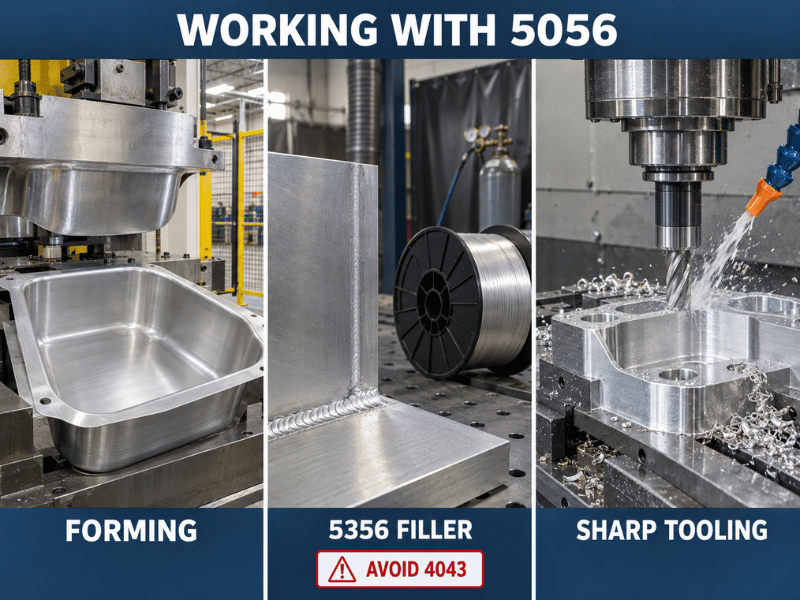
Svařování. GTAW (TIG) i GMAW (MIG) fungují dobře s přídavným materiálem 5356, standardním drátem Al–5%Mg, jehož chemie těsně odpovídá základnímu kovu. Odporové bodové svařování a mechanické spojování jsou také praktické. Nepoužívejte přídavné materiály obsahující křemík, jako je 4043, na 5056: křemík se spojuje s vysokým obsahem hořčíku za vzniku nadměrného Mg₂Si, což vytváří křehký svarový kov. Jako u každé tepelně nezpracovatelné slitiny se tepelně ovlivněná zóna vrací k žíhané pevnosti, takže účinnost spoje je určena vlastnostmi stavu O, nikoli hodnotami po tváření za studena.
Tváření. Stav O se snadno ohýbá a táhne, snáší těsné poloměry. Tvrdší stavy vyžadují postupně větší minimální poloměry ohybu — očekávejte, že požadavek prudce stoupne u H34 a H38 — takže ověření minimálního poloměru proti skutečnému stavu a tloušťce je to, co udržuje nástroje a tolerance životaschopné.
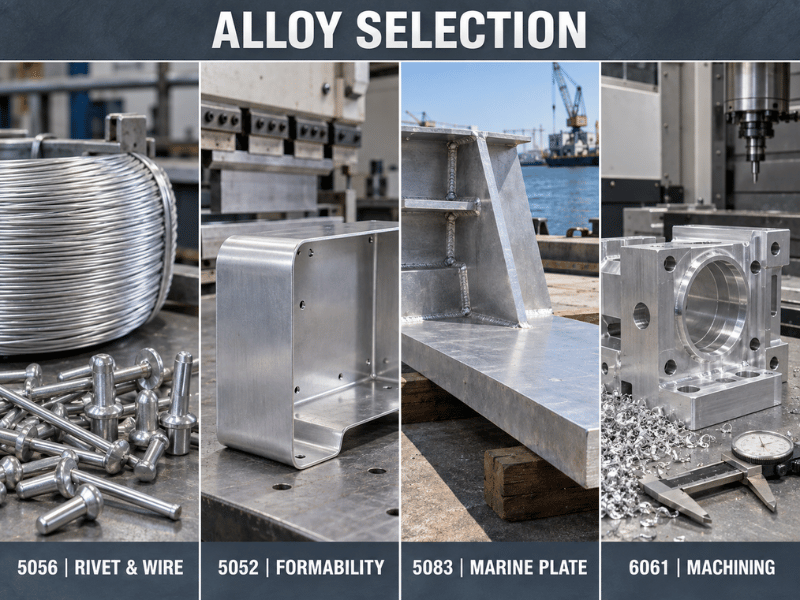
Obrábění. 5056 se obrábí přijatelně, ale její vysoký obsah hořčíku ji činí lepivější než jakosti 6xxx, s větší tendencí k tvorbě nárůstku na hraně. Ostré nástroje s pozitivním úhlem čela, velkorysý odvod třísky a konzistentní chlazení nebo mazání tento problém zvládají. Když je díl převážně obráběný a pevnostní požadavky to dovolují, 6061-T6 zůstává snazší a ekonomičtější volbou.
Povrchová úprava. 5056 přijímá jasný čirý anodický povlak a používá se pro dekorativní hardware a obložení. Pro velké architektonické panely, kde je kritériem přijetí rovnoměrnost povlaku na širokém povrchu, jsou slitiny 6xxx stále bezpečnější specifikací.
5056 vs 5052 vs 5083 vs 6061
| Faktor | 5056 | 5052 | 5083 | 6061-T6 |
|---|---|---|---|---|
| Obsah Mg | 4.5–5.6% | 2.2–2.8% | 4.0–4.9% | 0.8–1.2% |
| Typická UTS | 315 (H32) / 414 (H38) | 228 (H32) | 317 (H116/H321) | 310 |
| Typická mez kluzu | 228 (H32) | 193 (H32) | 228 (H116/H321) | 276 |
| Korozní odolnost v mořském prostředí | Vynikající | Vynikající | Vynikající + lepší teplá SCC | Střední — důlky obnažené |
| Tepelně zpracovatelný | Ne | Ne | Ne | Ano |
| Typická role | Nýtovací drát, spojovací prvky, síťový drát | Obecný plech, nejširší dostupnost | Lodní plech | Obráběné konstrukční díly |
| Hlavní omezení | Limit SCC 65 °C | Nejnižší pevnost ze čtyř | Není slitina pro drát/nýty | Není intrinsicky námořní třídy |
5056 vs 5052. Přibližně dvojnásobný obsah hořčíku poskytuje o 50–80 MPa vyšší pevnost v tahu při ekvivalentních stavech, spolu s lepší odolností proti důlkové korozi. 5056 se hodí, když tenkostěnný díl potřebuje dodatečnou pevnostní rezervu bez přechodu na vytvrzovatelnou slitinu, nebo když je samotný tvar drát nebo nýtový polotovar. 5052 se hodí, když rozhoduje široká dostupnost a nejnižší náklady.
5056 vs 5083. Tyto slitiny se překrývají při pokojové teplotě, ale 5083 lépe odolává korozi za napětí při středních teplotách, což je důvod, proč je standardní lodní třídou pro tlusté plechy a teplé námořní konstrukce. 5056 vítězí tam, kde záleží pevnost při nízkých teplotách a formy drátu nebo nýtů.
5056 vs 6061. 6061-T6 nabízí vyšší mez kluzu než většina stavů plechu 5056, tepelné vytvrzování a výrazně lepší obrobitelnost — ale holý 6061 podléhá důlkové korozi ve slané vodě, takže není intrinsicky námořní třídy. 5056 se hodí, když je požadavkem odolnost proti korozi bez povlaku; 6061 se hodí, když dominuje objem obrábění nebo tepelně vytvrzovatelná pevnost.
Go/No-Go: Kdy specifikovat 5056
5056 se hodí, když:
- Díl je nýt, za studena tvářený spojovací prvek nebo drátěná forma, kde záleží jak vysoká pevnost ve smyku, tak odolnost proti korozi.
- Maximální pevnost řady 5xxx je potřebná při teplotě studené nebo okolní služby a tloušťka je dostatečně tenká pro dosažení tvářeného stavu.
- Díl je svařován párovým vysoce hořčíkovým přídavným materiálem a není plánováno tepelné zpracování po svařování.
- Je požadována nepotahovaná námořní odolnost proti korozi a provozní prostředí zůstává pod přibližně 65 °C.
5056 se nehodí, když:
- Trvalá provozní teplota překračuje přibližně 65 °C — náhradou je 5454, nebo 5083-H116/H321 pro námořní konstrukce.
- Požadavkem je tepelně vytvrzovatelná pevnost; 5056 nezíská tepelným zpracováním nic.
- Díl je tlustý konstrukční průřez vyžadující zaručenou vysokou pevnost v celém průřezu.
- Propustnost CNC obrábění je dominantním nákladovým faktorem a expozice korozi je mírná — 6061-T6 se obrábí čistěji.
- Rovnoměrnost architektonického eloxování na velkých panelech je kritériem přijatelnosti.
Kde se 5056 používá
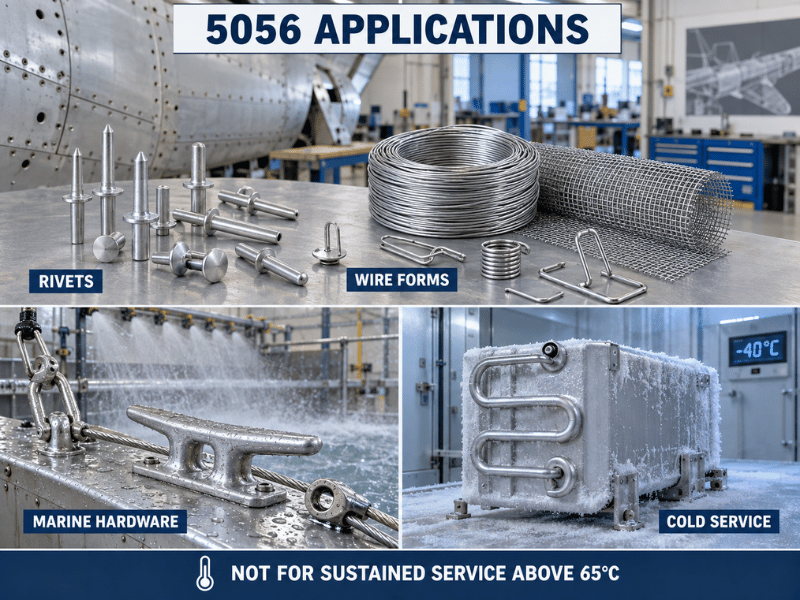
Výše uvedená logika výběru rozhoduje zda použít 5056; zde se slitina skutečně objevuje v praxi.
- Nýty a spojovací prvky. 5056 je jednou ze standardních konstrukčních nýtových slitin vedle 2024 a 2117, používaná pro montáž hliníkových draků letadel a zejména pro spojování hořčíkových součástí. Chování při tváření za studena a pevnost ve smyku jsou důvodem, proč si drží tuto pozici.
- Drátěné formy. Síťový drát a síť proti hmyzu, drátěné pletivo a filtry, kabelové pláště a pancéřování, hřebíky, sponky, zipy, čepy závěsů a obecný hardware tvářený za studena.
- Svařovací spotřební materiál. Přídavný drát a drátěný polotovar chemicky odpovídající rodině Al–5%Mg, ačkoli 5356 do značné míry vytlačil 5056 v aplikacích univerzálního přídavného materiálu.
- Námořní hardware. Stěžně, palubní kování, součásti lanoví a tenkostěnné trupové plechy, kde je expozice mořské vodě neustálá.
- Služba v chladných oblastech a kryogenní služba. Zachovaná houževnatost při teplotách pod nulou se hodí pro zařízení chladicího řetězce, chlazenou přepravu a kryogenní nádoby.
Poznamenejte, že pevnostní hodnoty uváděné pro drátěné výrobky mají tendenci být vyšší než ekvivalentní hodnoty plechu ve stavu H, protože tažení přidává deformační zpevnění. Specifikace jak formy, tak stavu zabraňuje nesouladu.
Výhody a omezení na první pohled
| Rozměr | Výhoda | Omezení |
|---|---|---|
| Síla | Nejvyšší běžná komerční 5xxx | Pouze v tenkých tloušťkách a tvářených stavech |
| Koroze | Vynikající námořní, lepší důlková koroze než 5052 | 65°C senzibilizace / SCC limit |
| Svařitelnost | Výborné s přídavným materiálem 5356 | HAZ se vrací k pevnosti v žíhaném stavu |
| Tvarovatelnost | Výborné ve stavu O | Prudký pokles u H34/H38 |
| Obrobitelnost | Přijatelné s kvalitním nářadím | Lepivější než 6xxx, riziko tvorby nárůstku |
| Dostupnost | Standardní drát, plech, deska, trubka | Užší než 5052; H38 je omezen tloušťkou |
Závěr
5056 je nejsilnější z běžných slitin řady 5xxx a první volbou pro nýtovací drát, za studena tvářené spojovací prvky a vysokopevnostní lodní plech. Má však jasné limity: dlouhodobé použití nad ~65°C riskuje korozní praskání za napětí, nelze ji tepelně zpracovat a není vhodná pro architektonické eloxování ani velkosériové CNC obrábění. Většina selhání ve specifikacích se dá vysledovat k jednomu z těchto tří omezení — nikoli k pevnosti slitiny — takže včasné ověření provozní teploty promění 5056 z riskantní volby na bezpečnou.
Linsy Aluminum dodává 5056 ve formě drátu, plechu, desky, trubky a rozměrů na míru ve stavech O, H32, H34 a H111. Nestandardní specifikace jsou dostupné při nízkém MOQ, s typickými dodacími lhůtami 10–60 dní v závislosti na slitině, rozměru a zpracování. Vlastní CNC obrábění, svařování TIG/MIG, laserové řezání a povrchové úpravy (eloxování, leštění) pokrývají navazující potřeby. Každá objednávka je expedována s MTC; chemické, mechanické a rozměrové zkušební protokoly SGS jsou k dispozici na vyžádání za příplatek.
Často kladené otázky
K čemu se hliník 5056 nejčastěji používá?
Nýtovací drát je jednoznačně největší využití, protože 5056 má smykovou pevnost a chování při tváření za studena potřebné pro konstrukční letecké nýty a nýty pro montáž hořčíku. Kromě toho se objevuje napříč drátěnými výrobky — síťový drát, pletivo a filtry, kabelové pláště, hřebíky, sponky, zipy — plus vysokopevnostní lodní plech a jako zásoba přídavného materiálu pro svařování slitin Al–Mg.
Proč má 5056 provozní limit 65°C?
Slitiny s více než přibližně 3 % hořčíku mohou senzibilizovat během dlouhodobého vystavení nad zhruba 65°C: hořčík se precipituje jako β-fáze (Al₃Mg₂) podél hranic zrn, což je činí náchylnými k mezikrystalové korozi. Při trvalém tahovém napětí v korozivním prostředí se to změní v korozní praskání za napětí. Krátkodobé teplotní výkyvy nejsou problém — rozhodující je trvalé zvýšené provozní zatížení. 5454 je standardní upgrade pro teplejší provoz.
Lze 5056 svařovat a který přídavný materiál použít?
Ano. GTAW (TIG) i GMAW (MIG) fungují s přídavným materiálem 5356, jehož chemie s ~5 % Mg odpovídá základnímu kovu. Vyhněte se přídavným materiálům obsahujícím křemík, jako je 4043, protože křemík reaguje s vysokým obsahem hořčíku za vzniku nadměrného Mg₂Si a vytváří křehký svarový kov. Očekávejte, že pevnost v tepelně ovlivněné zóně se vrátí k hodnotám žíhaného stavu, protože 5056 není vytvrzovatelná tepelným zpracováním.
Který stav mám pro 5056 specifikovat?
Použijte O, když bude díl hluboce tažen nebo silně tvářen. H32 je univerzální specifikace pro plech a desku a H34 přidává pevnost tam, kde lze obětovat část tvařitelnosti. H38 poskytuje maximální pevnost, ale tažnost klesá na přibližně 7 % a dostupnost je omezena na tenké plechy a drát. H111 se hodí pro případy vyžadující mírně vyšší pevnost než žíhaný stav při zachování většiny tvařitelnosti stavu O.
Je 5056 lepší než 5083 pro lodní použití?
Záleží na teplotě a tvaru. Při pokojové teplotě jsou si obě blízké a 5056 dosahuje vyšší pevnosti v tenkých tloušťkách a drátu. Nad okolní teplotou 5083 — zejména ve stavech H116 nebo H321 — odolává koroznímu praskání za napětí mnohem lépe, což je důvod, proč je standardní jakostí desky pro stavbu lodí. Pro tlusté desky a teplé lodní konstrukce zvolte 5083; pro drát pro chladné prostředí, nýty a tenký plech zvolte 5056.