Najważniejsze informacje
- 1100 to komercyjnie czyste aluminium o doskonałej formowalności, odporności na korozję i wysokim przewodnictwie cieplnym.
- Oferuje wyjątkową spawalność, ale nie nadaje się do obróbki cieplnej w celu uzyskania wyższej wytrzymałości.
- Jego niska szybkość utwardzania odkształceniowego sprawia, że nadaje się do zastosowań wymagających głębokiego i skomplikowanego formowania.
- Typowe zastosowania obejmują przetwórstwo chemiczne i spożywcze, opakowania oraz elementy dekoracyjne.
- Jego odporność na korozję czyni go doskonałym wyborem do wymienników ciepła i powierzchni refleksyjnych.

Wprowadzenie
Stop aluminium 1100 Jest to szeroko stosowany gatunek komercyjnie czystego aluminium, ceniony za formowalność i odporność na korozję. Niniejszy przewodnik obejmuje jego skład, właściwości mechaniczne i fizyczne oraz typowe zastosowania, wraz z praktycznymi specyfikacjami wspierającymi dobór materiału. Od wymienników ciepła po głęboko tłoczone elementy — poniższe sekcje wyjaśniają, co czyni stop 1100 wszechstronnym wyborem w różnych gałęziach przemysłu.
Co to jest aluminium 1100?
Aluminium 1100 to komercyjnie czysty stop aluminium o doskonałej formowalności i odporności na korozję. Jest powszechnie stosowany w przetwórstwie chemicznym i spożywczym oraz w zastosowaniach, gdzie ciągliwość ma większe znaczenie niż wytrzymałość. Będąc ciągliwym i spawalnym, występuje w wymiennikach ciepła, naczyniach kuchennych i reflektorach.

Skład pierwiastkowy stopu Alloy 1100
Stop 1100 zawiera co najmniej 99,0% aluminium, co zapewnia mu lekkość i odporność na korozję typową dla czystego aluminium. Śladowe ilości żelaza i krzemu pochodzą z procesu produkcji, natomiast niewielka zawartość miedzi dodaje umiarkowaną korzyść wytrzymałościową.
Taki skład daje stop, który obrabia się w sposób akceptowalny, dobrze spawa i jest odporny na korozję, co czyni go powszechnym wyborem w sektorach przemysłowych.
Kluczowe właściwości fizyczne i mechaniczne stopu aluminium 1100
| Nieruchomość | Wartość | Co to oznacza |
|---|---|---|
| Gęstość | 2,71 g/cm³ | Niska masa; łatwy w obsłudze i transporcie. |
| Temperatura topnienia | ~643–657°C (1 190–1 215°F) | Pozostaje stały w normalnych temperaturach przetwarzania. |
| Wytrzymałość na rozciąganie | ~90–120 MPa (stan wyżarzony) | Niska wytrzymałość; nie nadaje się do obciążeń konstrukcyjnych. |
| Przewodność cieplna | 218–225 W/m·K | Efektywne odprowadzanie ciepła dla wymienników i żeberek chłodzących. |
| Przewodność elektryczna | 59–62% IACS | Dobry przewodnik dla szyn zbiorczych i okablowania. |
| Odporność na korozję | Doskonały | Odpowiedni do środowisk zewnętrznych i wilgotnych. |
| Plastyczność | Bardzo wysoka | Formuje się i tłoczy łatwo, bez pękania. |
Stop 1100 łączy użyteczne właściwości fizyczne i mechaniczne do prac niestrukturalnych. Jego przewodność elektryczna osiąga 59–62% IACS, co stanowi około 60% przewodności miedzi, co czyni go praktycznym wyborem do zastosowań elektrycznych, gdzie liczą się masa i koszt.
Pod względem mechanicznym stop 1100 nie jest stopem o wysokiej wytrzymałości, ale wyróżnia się ciągliwością i kowalnością. Formuje się łatwo zarówno na zimno, jak i na gorąco oraz umożliwia skomplikowane kształtowanie bez utraty integralności.
Jego naturalna odporność na korozję zwiększa jego atrakcyjność w miejscach, gdzie elementy są narażone na trudne lub wilgotne warunki. Ta kombinacja właściwości sprawia, że stop 1100 nadaje się do szerokiego zakresu zastosowań przemysłowych i komercyjnych.
Zastosowania stopu 1100 w różnych gałęziach przemysłu
Stop 1100 jest lekki i miękki, o dobrej formowalności, odporności na korozję oraz przewodnictwie cieplnym i elektrycznym. Służy następującym sektorom:

- Przemysł elektryczny
- Używany do przewody oraz przewodniki ze względu na dobrą przewodność (59–62% IACS). Jest lżejszy i tańszy niż miedź, dlatego jest powszechny w liniach energetycznych i kablach.
- Opakowanie
- Nadaje się do folia takich jak folie spożywcze i pokrywki pojemników. Formuje się łatwo, jest odporny na korozję i uszczelnia się szczelnie bez dodawania masy.
- Budowa
- Używany w listwy ozdobne, miganieoraz panele świetlne. Dobrze znosi warunki atmosferyczne i kształtuje się do potrzeb budowlanych bez większego wysiłku.
- Transfer ciepła
- Stosowany w wymienniki ciepła oraz żebra chłodnicy ponieważ szybko przewodzi ciepło (218–225 W/m·K). Jest standardowym wyborem dla systemów chłodzenia w pojazdach i klimatyzatorach.
Porównanie stopu 1100 z innymi stopami aluminium
Zrozumienie, jak stop 1100 wypada w porównaniu z innymi gatunkami, pomaga w wyborze odpowiedniego materiału. Poniższe porównania wskazują, gdzie stop 1100 się wyróżnia, a gdzie inny stop może być lepszym rozwiązaniem.
Stop aluminium 1100 vs. 1050

| Cecha | 1100 Stop aluminium | Stop aluminium 1050 |
|---|---|---|
| Makijaż główny | 99% aluminium + niewielka ilość miedzi | 99.5% Aluminium (czystsze) |
| Siła | ~90–120 MPa | ~75–110 MPa |
| Odporność na korozję | Doskonały | Doskonały |
| Przewodność elektryczna | 59–62% IACS | 61–63% IACS |
| Wykonalność | Łatwy do gięcia i kształtowania | Łatwy do gięcia i kształtowania |
| Typowe zastosowanie | Drut, folia, lekkie elementy | Patelnie do gotowania, reflektory |
1100 i 1050 Aluminium to gatunki niemal czystego aluminium o doskonałej formowalności. Stop 1100 zawiera niewielką ilość miedzi, która daje nieco wyższą wytrzymałość (90–120 MPa vs 75–110 MPa), natomiast stop 1050 jest czystszy (99,5%) i nieznacznie bardziej przewodzący (61–63% IACS vs 59–62% IACS). Oba charakteryzują się dobrą odpornością na korozję. Wybierz 1100 do drutu lub folii, gdzie pomocna jest nieco większa wytrzymałość; wybierz 1050 do patelni i reflektorów, gdzie liczą się czystość i przewodność.
Stop aluminium 1100 vs. 3003

| Cecha | 1100 Stop aluminium | Stop aluminium 3003 |
|---|---|---|
| Makijaż główny | 99% aluminium + niewielka ilość miedzi | Al + 1% Mangan |
| Siła | ~90–120 MPa | ~110–145 MPa |
| Odporność na korozję | Doskonały | Bardzo dobry |
| Przewodność elektryczna | 59–62% IACS | 40–50% IACS |
| Wykonalność | Łatwy do gięcia, bardzo formowalny | Łatwy do zginania, nieco sztywniejszy |
| Typowe zastosowanie | Drut, folia, lekkie elementy | Naczynia kuchenne, zbiorniki, bocznica |
1100 i Aluminium 3003 są lekkie i odporne na korozję. Stop 1100 jest czystszy (99%) i bardziej miękki, o niższej wytrzymałości (90–120 MPa vs 110–145 MPa) niż stop 3003 zawierający mangan. Stop 1100 przewodzi lepiej (59–62% vs 40–50% IACS) i formuje się łatwiej. Użyj 1100 do przewodzących, elastycznych elementów, takich jak drut i folia; użyj 3003 do naczyń kuchennych, zbiorników i okładzin, gdzie potrzebna jest większa wytrzymałość.
1100 vs. stop aluminium 5052

| Cecha | 1100 Stop aluminium | Stop aluminium 5052 |
|---|---|---|
| Makijaż główny | 99% aluminium + niewielka ilość miedzi | Al + 2,5% Magnez |
| Siła | ~90–120 MPa | ~190–260 MPa |
| Odporność na korozję | Doskonały | Doskonała (dobra w wodzie morskiej) |
| Przewodność elektryczna | 59–62% IACS | 30–35% IACS |
| Wykonalność | Bardzo łatwy do gięcia i kształtowania | Dobre, ale sztywniejsze niż 1100 |
| Typowe zastosowanie | Drut, folia, lekkie elementy | Kadłuby łodzi, panele, mocniejsze części |
1100 i Aluminium 5052 służą różnym potrzebom. Stop 1100 jest miękki i lekki (90–120 MPa) oraz wysoce formowalny, z dobrą przewodnością (59–62% IACS). Stop 5052, z dodatkiem magnezu, jest znacznie mocniejszy (190–260 MPa) i dobrze sprawdza się w wodzie morskiej, dlatego jest powszechny w pracach morskich i panelowych. Stop 1100 gięty jest łatwiej; stop 5052 jest sztywniejszy, ale bardziej wytrzymały. Wybierz 1100 do lekkich, elastycznych elementów elektrycznych; wybierz 5052 do mocniejszych, cięższych komponentów.
Kiedy wybrać stop aluminium 1100: Szybka lista kontrolna
| Czynnik | Dlaczego to ma znaczenie | Wybierz stop 1100, jeśli… |
|---|---|---|
| Potrzeby w zakresie siły | Niska wytrzymałość ogranicza zastosowania nośne. | Potrzebujesz tylko lekkiej wytrzymałości (~90–120 MPa). |
| Wykonalność | Doskonała formowalność na zimno. | Chcesz formować złożone kształty. |
| Odporność na korozję | Dobrze sprawdza się w wilgotnych lub zewnętrznych warunkach. | Element jest narażony na warunki atmosferyczne lub wilgoć. |
| Przewodność elektryczna | Dobra zdolność przewodzenia prądu. | Potrzebujesz drutu lub przewodników (59–62% IACS). |
| Transfer ciepła | Efektywne przewodnictwo cieplne. | Potrzebujesz radiatorów lub grzejników. |
| Koszt | Niższy koszt niż mocniejsze stopy. | Chcesz kontrolować koszt materiału. |
| Waga | Niska gęstość, 2,71 g/cm³. | Niska masa jest priorytetem. |
Heads-Up: Jeśli Twój projekt wymaga wysokiej wytrzymałości lub odporności na uderzenia, np. elementów konstrukcyjnych lub ciężkich, pomiń stop 1100 i rozważ stopy takie jak 5052 lub 6061.
Wnioski
Stop 1100 to doskonały wybór do formowania, odporności na korozję i przewodności, ale jego niska wytrzymałość (około 90–120 MPa) oznacza, że nie może zastąpić stopów konstrukcyjnych, takich jak 5052 lub 6061, tam gdzie kluczowa jest nośność. Dla kupujących, którzy potrzebują stopu 1100 w określonych formach, stanach i ilościach, Linsy Aluminum jest praktycznym dostawcą.
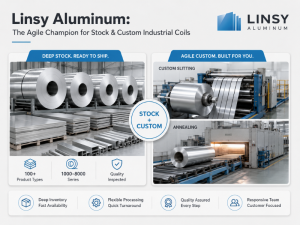
Linsy Aluminum to fabryka aluminium z siedzibą w Shenzhen, z ponad 20-letnim doświadczeniem branżowym, dostarczająca płyty, blachy, pręty, rury, drut, taśmy, profile i kęsy w seriach 1000–8000. Model firmy łączy dostawy bezpośrednio z fabryki, gotowe zapasy i produkcję na zamówienie z niskim MOQ, z terminami realizacji 10–60 dni. Każde zamówienie wysyłane jest ze świadectwem MTC, raporty SGS dostępne na życzenie, a działalność posiada certyfikaty ISO 9001, ISO 14001 i ISO 45001. Wewnętrzna obróbka CNC, spawanie TIG i MIG, cięcie laserowe oraz wykończenie powierzchni (anodowanie, polerowanie, wykończenie walcowane, proszkowe RAL 9016, folia PVC) wspierają produkcję gotowych części.
Skontaktuj się z Linsy Aluminum już dziś, aby omówić swoje wymagania dotyczące aluminium 1100 i poprosić o wycenę.
Często zadawane pytania
Dlaczego stop Alloy 1100 jest preferowany do zastosowań w przemyśle spożywczym?
Odporność na korozję stopu 1100 pomaga zapobiegać zanieczyszczeniom, a stop jest nietoksyczny, co czyni go odpowiednim do przedmiotów mających kontakt z żywnością, takich jak naczynia kuchenne i opakowania. Jego formowalność wspiera również cienkie, łatwe do czyszczenia powierzchnie.
Czy Alloy 1100 może być używany na zewnątrz?
Tak. Jego odporność na korozję i trwałość sprawiają, że nadaje się do użytku na zewnątrz, a także wytrzymuje normalne warunki atmosferyczne, co czyni go niezawodnym wyborem do elementów zewnętrznych i listew wykończeniowych.
Jak wypada przewodność stopu Alloy 1100 w porównaniu z innymi stopami?
Stop 1100 charakteryzuje się wysokim przewodnictwem elektrycznym i cieplnym. Jego przewodnictwo elektryczne wynosi 59–62% IACS (około 60% przewodnictwa miedzi), natomiast przewodnictwo cieplne na poziomie 218–225 W/m·K przewyższa wiele innych stopów aluminium, co czyni go ekonomicznym rozwiązaniem zapewniającym efektywne przekazywanie energii.
Jakie techniki spawania są odpowiednie dla stopu Alloy 1100?
Stop 1100 charakteryzuje się doskonałą spawalnością i łatwo łączy się za pomocą konwencjonalnych metod, takich jak TIG (GTAW) i MIG (GMAW). Jego dobra obrabialność oraz niska wytrzymałość sprawiają, że spawanie przebiega bezproblemowo, bez konieczności specjalnego przygotowania wstępnego.
Czy istnieją jakieś ograniczenia w stosowaniu stopu Alloy 1100 w zastosowaniach morskich?
Mimo że stop 1100 dobrze odporny jest na korozję, jego niższa wytrzymałość na rozciąganie może ograniczać zastosowanie w konstrukcyjnych elementach morskich narażonych na duże obciążenia. W przypadku większych lub nośnych komponentów morskich zwykle lepszym wyborem jest stop o wyższej wytrzymałości, taki jak 5052.