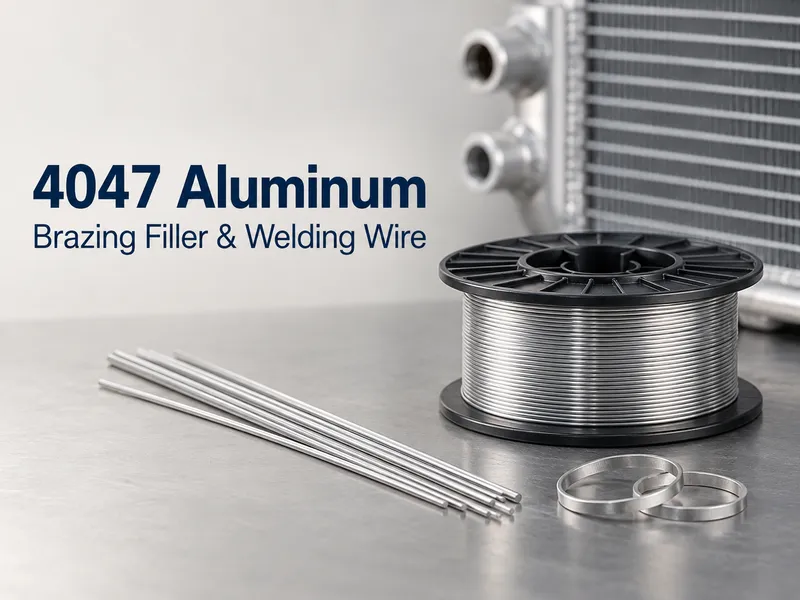
4047 — это алюминиево-кремниевый присадочный сплав, содержащий 11–13% кремния. Это не конструкционная деформируемая марка — из него не делают каркас. Его покупают для соединения других алюминиевых деталей, и он выполняет эту задачу в двух различных процессах по двум различным стандартам.
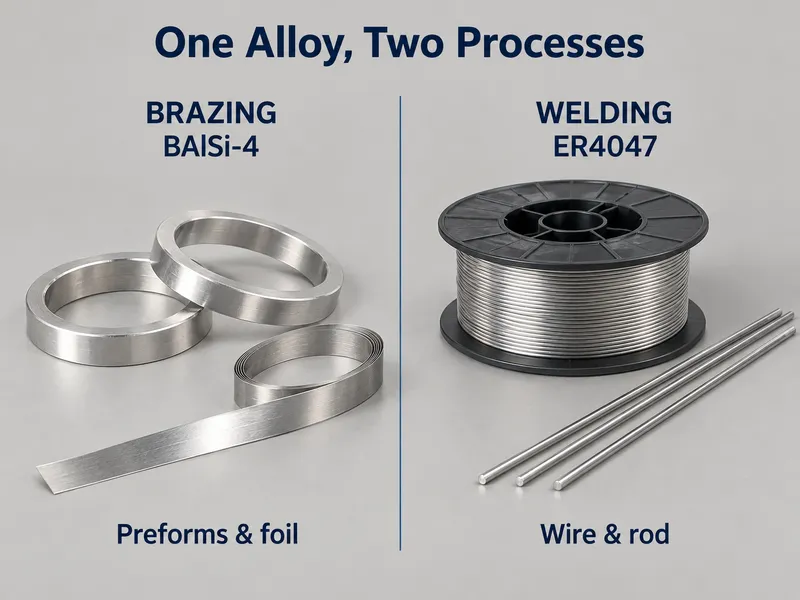
4047 нормируется в двух ролях по двум различным стандартам — AWS A5.8 BAlSi-4 как паяльный припой, AWS A5.10 ER4047 как сварочная проволока. Указывайте роль в запросе, поскольку форма, процесс и документация следуют из неё.
Одно ограничение определяет, работает ли он вообще: температура солидуса соединяемого основного металла.
Два стандарта, один сплав
Один и тот же состав 4047 зарегистрирован под двумя спецификациями AWS, и применяемая зависит от процесса, а не от сплава:
| Стандарт | Наименование | Процесс | Типичная форма проката |
| AWS A5.8 / A5.8M | BAlSi-4 | Пайка | Фольга, полоса, предформы, паста, плакирующий слой на паяльном листе |
| AWS A5.10 / A5.10M | ER4047 | Сварка GTAW (TIG) и GMAW (MIG) | Проволока на катушках или мерной длины, пруток |
| AMS 4185 | — | Аэрокосмический присадочный материал | Проволока, пруток |
| ISO 17672 | Al 112 | Пайка | Как выше |
| GB/T 13815 | BAl88Si | Пайка | Как выше |
| EN | EN AW-4047 | Оба | Как выше |
Припой, продаваемый как “проволока 4047” для TIG-сварки, и припой, продаваемый как “фольга 4047” для печной пайки, — это один и тот же сплав в разных формах. Меняются процесс, зазор в соединении и температура, которую видит сборка.
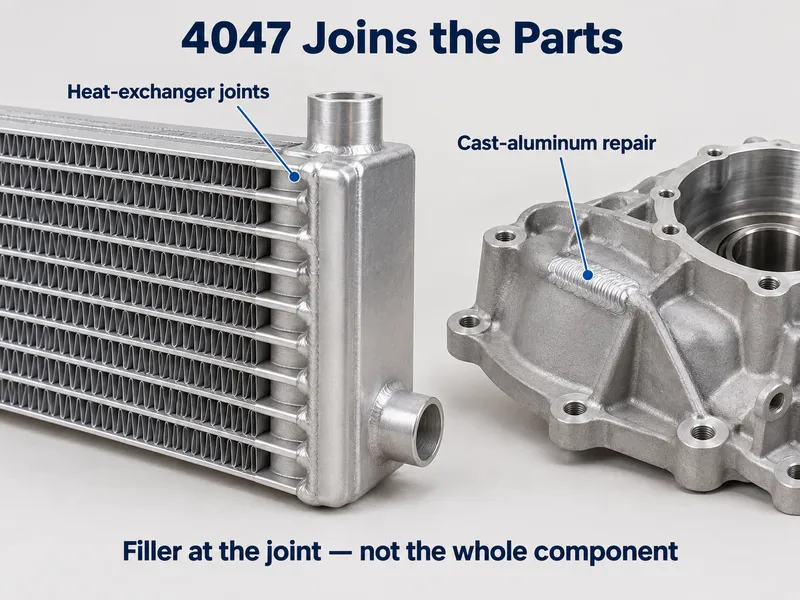
Это стоит stated plainly, потому что противоположное утверждение широко распространено: 4047 можно использовать для TIG- и MIG-сварки. ER4047 — это классификация, указанная в AWS A5.10, и это обычный выбор для ремонта литого алюминия, тонкостенных работ из 6xxx и трубок теплообменников. Это не присадочный материал по умолчанию для каждой сварки 6xxx — таковым является ER4043 — но утверждение “4047 — это паяльный припой, и им нельзя варить” неверно.
Химический состав
Кремний вблизи эвтектической точки Al-Si — это весь замысел. Железо, медь, марганец, магний и цинк являются ограничиваемыми примесями, а не намеренными добавками:
| Элемент | Содержание (%) | Роль |
| Кремний (Si) | 11.0–13.0 | Эвтектикообразователь — определяет температуру плавления и текучесть |
| Железо (Fe) | ≤ 0,8 | Примесь |
| Медь (Cu) | ≤ 0,30 | Примесь |
| Марганец (Mn) | ≤ 0.15 | Примесь |
| Магний (Mg) | ≤ 0,10 | Примесь, поддерживаемая на низком уровне для печной пайки |
| Цинк (Zn) | ≤ 0,20 | Примесь |
| Бериллий (Be) | ≤ 0,0003 | Ограничение применяется по классификации сварочной проволоки |
| Прочие, каждый / суммарно | ≤ 0,05 / ≤ 0,15 | Примесь |
| Алюминий (Al) | Остаток | Матрица |
Магний удерживается на уровне 0,10% по определённой причине. Печная пайка и пайка в контролируемой атмосфере зависит от того, остаётся ли припой чистым; магний в припое усложняет контроль флюса и атмосферы. Помните об этом ограничении, когда поставщик предлагает сплав “типа 4047” с более свободным пределом по магнию.
4047 не упрочняется термической обработкой. Реакции дисперсионного твердения, которую можно было бы использовать, нет, поэтому никакое послепаяльное или послесварочное старение не повысит его прочность.
Почему композиция, близкая к эвтектической, важна
Три свойства напрямую следуют из содержания кремния, и все три являются причиной существования 4047:
Диапазон плавления. Солидус 577 °C, ликвидус 582 °C — интервал размягчения примерно 5 °C. В опубликованных технических данных диапазон плавления указывается как 1070–1080 °F (577–582 °C).
Поведение при затвердевании. Поскольку сплав находится почти на эвтектическом составе, он переходит из полностью жидкого в полностью твёрдое состояние в пределах нескольких градусов. Длительной пастообразной стадии нет, что и подавляет горячее растрескивание в соединении.
Текучесть. Низкотемпературная жидкость с низкой вязкостью проникает в капиллярные зазоры, что делает возможными герметичные паяные соединения в теплообменниках.
Сравните это с 4043 (4,5–6,0% Si). Его солидус находится в той же области, но ликвидус намного выше, что даёт широкий пастообразный диапазон. Как сварочная проволока это нормально. Как паяльный припой для плотных, герметичных соединений — нет: припой слишком долго остаётся полутвёрдым, чтобы чисто проникнуть в узкий зазор.
4047 как паяльный припой
Это основное применение 4047 и причина, по которой он был разработан.
- Процессы. Пайка в контролируемой атмосфере (CAB), вакуумная пайка и пайка газовой горелкой.
- Типичная температура пайки. Примерно 580–605 °C. Опубликованная заводская практика помещает пик в этот диапазон, при этом верхний предел избегается для защиты тонких сечений основного металла.
- Зазор в соединении. Примерно 0,05–0,20 мм. Ниже этого значения капиллярное течение всё ещё работает; выше него припой достаточно текуч, чтобы вытечь из соединения до затвердевания.
- Формы выпуска. Фольга и полоса, преформы и кольца, паста, а также плакирующий слой на многослойном паяльном листе.
Типичные паяные узлы: автомобильные радиаторы и сердцевины отопителей, охладители наддувочного воздуха, соединения конденсаторов и испарителей HVAC, пластинчатые узлы холодильных установок, а также аэрокосмические теплообменники и топливно-масляные охладители.
Одно ожидание, которое следует скорректировать: AWS A5.8 классифицирует припой — его химический состав и поведение при плавлении. Он не назначает прочность паяного соединения. Прочность соединения определяется основным металлом, конструкцией соединения, зазором и термическим циклом. Если проекту требуется аттестованное значение, оно должно быть получено при испытании фактического соединения, а не из классификации припоя.
4047 как сварочная проволока (ER4047)
По AWS A5.10 тот же сплав применяется как ER4047 для GTAW и GMAW.
Где это хороший выбор:
- Ремонт литого алюминия и литейные сплавы, такие как A356 — высокое содержание кремния соответствует основному металлу и снижает пористость.
- Тонкостенные и термочувствительные узлы, где более низкая температура ликвидуса уменьшает деформацию.
- Склонные к трещинообразованию соединения 6xxx, где узкий интервал затвердевания работает в вашу пользу.
- Теплообменники, конденсаторы, трубки кондиционирования воздуха и радиаторные работы — то же капиллярное поведение, которое делает его хорошим паяльным припоем, помогает ему смачивать плотно подогнанное соединение.
Где 4043 превосходит его:
- Любое соединение, которое будет анодироваться и подбираться по цвету. Сварной металл с высоким содержанием кремния при анодировании приобретает серо-чёрный цвет, который не соответствует основному металлу; 4043 даёт гораздо более близкое соответствие.
- Универсальная сварка 6xxx, где чувствительность к трещинообразованию не является определяющим фактором. ER4043 — стандартный припой для 6061 в большинстве мастерских, и он обычно дешевле и шире представлен на складах.
Где не подходит ни тот, ни другой: сварка основных металлов 5xxx. Там используйте 5356 (см. сравнение ниже).
Правило солидуса основного металла
Это проверка, которая определяет большинство задач с 4047, и именно её чаще всего пропускают.
Паяльный припой должен быть полностью жидким, пока основной металл ещё полностью твёрдый. Это означает, что солидус основного металла должен находиться выше ликвидуса припоя (582 °C для 4047) с рабочим запасом, а не всего лишь на несколько градусов выше него. На практике следует стремиться к запасу не менее 25–30 °C.
| Основной металл | Солидус (°C, типичные опубликованные значения) | Пайка с 4047 |
| 1100 | ~646 | Комфортный запас |
| 3003 | ~643 | Комфортный запас — стандартный сплав-сердцевина для CAB |
| 6063 | ~615 | Работоспособно, но окно узкое |
| 6061 | ~582 | Запаса нет — не паять |
| 7075 | ~477 | Припой расплавится после основного металла |
Строка 6061 — это та, которая застаёт людей врасплох. 6061 обычно указывается как паяемый основной сплав, но его солидус составляет 582 °C — ту же температуру, что и ликвидус 4047. Технологического окна нет. Добавьте к этому содержание магния в 6061, которое усложняет контроль флюса и атмосферы, и печная пайка 6061 становится непрактичной. Если деталь изготовлена из 6061 и её нужно соединить, указывайте сварку с 4043 или 5356, а не пайку.
Приведённые выше значения солидуса являются типичными опубликованными значениями. Подтвердите фактическое значение для партии, которую вы паяете, по сертификату качества основного металла перед установкой печного цикла.
4047 против 4043 против 5356
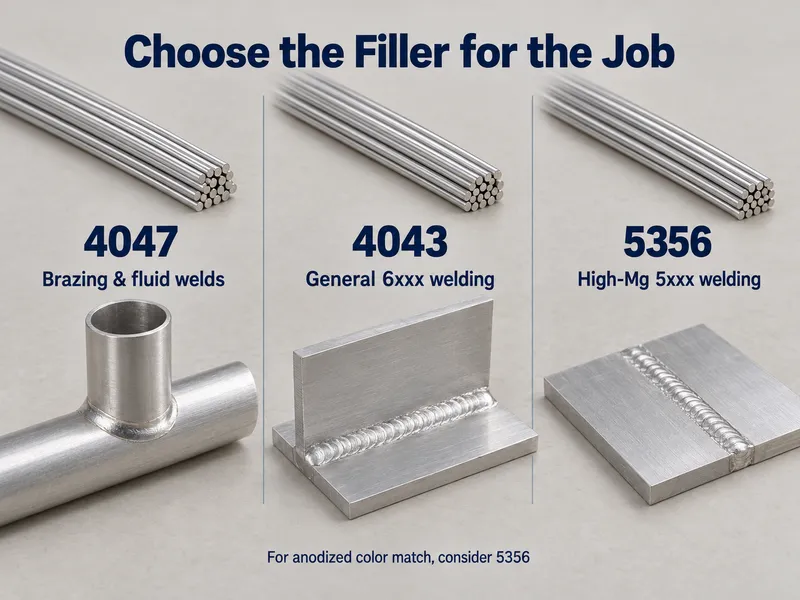
| Наполнитель | Кремний / легирование | Поведение при плавлении | Выбирайте его для | Избегайте его для |
| 4047 | 11–13% Si | 577–582 °C, зона тестообразного состояния ~5 °C | Пайка с плотным зазором, герметичные теплообменники, литой алюминий, тонкостенные 6xxx | Анодированные и цветосогласованные сварные швы; широкие зазоры в соединениях |
| 4043 | 4,5–6,0% Si | Примерно 573–630 °C, широкий пастообразный диапазон | Общая сварка 6xxx, сварные швы, которые будут анодироваться | Тугопайная капиллярная пайка — слишком вялое течение через зазор |
| 5356 | 4,5–5,5% Mg | Более тугоплавкий, капиллярное действие отсутствует | Сварка основных металлов серии 5xxx; эксплуатация в морской среде | Пайка — это сварочный присадочный материал, а не паяльный припой |
Краткая версия: 4047 и 4043 конкурируют друг с другом; 5356 выполняет другую задачу. См. наше руководство по алюминию 4043 для кремниевого присадочного материала и наше руководство по алюминию 5356 для магниевого присадочного материала.
Годен / Не годен
Применять — используйте 4047, когда:
- Пайка с tight-зазором при требовании герметичности: сердцевины радиаторов, конденсаторы, испарители, интеркулеры, пластинчатые теплообменники.
- Пайка в контролируемой атмосфере или вакуумная пайка, либо газовая пайка, с основным металлом, солидус которого превышает 582 °C с реальным запасом — 1xxx и 3xxx являются безопасными семействами.
- Сварка литого алюминия, тонкостенных сплавов 6xxx или склонных к трещинообразованию соединений, где ER4043 вызывал проблемы.
Не годен — выбирайте другой сплав, когда:
- Соединение будет анодировано и должно соответствовать цвету основного металла. Используйте 4043.
- Основной металл — 6061 или сплав серии 7xxx, и процесс — пайка. Запаса по солидусу нет. Вместо этого применяйте сварку: 4043 для 6xxx или 5356 для 5xxx.
- Зазор в соединении превышает примерно 0,2 мм. Припой вытечет до затвердевания — используйте 4043 или предварительно установленную вставку, размер которой соответствует соединению.
- Основной металл — 5xxx, и процесс — сварка. Используйте 5356.
Приложения
- Автомобили — сердцевины радиаторов и отопителей, охладители наддувочного воздуха, конденсаторы и испарители систем кондиционирования
- ОВиК — змеевики алюминиевых теплообменников, соединения холодильного контура
- Холодильная техника — пластинчатые узлы испарителей и конденсаторов
- Аэрокосмическая промышленность — алюминиевые теплообменники, маслоохладители с топливным охлаждением, теплообменники системы управления окружающей средой
- Ремонт литого алюминия — отливки и корпуса с использованием ER4047 в качестве сварочной проволоки
Заключение
4047 соответствует двум стандартам одновременно: AWS A5.8 BAlSi-4 для пайки и AWS A5.10 ER4047 для сварки TIG и MIG. Выбирайте его, когда соединение tight, герметичное или склонное к трещинообразованию; выбирайте 4043, когда сварной шов должен быть анодирован и соответствовать по цвету; 5356 — когда основной металл относится к 5xxx. Жёсткое ограничение — солидус основного металла: если он не превышает 582 °C с реальным запасом, пайка исключена, и соединение должно быть сварено.
Мы поставляем присадочную проволоку для пайки и сварки 4047, пруток и фольгу, с нестандартными диаметрами и массой бухты, изготовленными по вашей спецификации. Каждый заказ отгружается с MTC, а сроки изготовления на заказ составляют 10–60 дней.
Отправьте нам форму присадочного материала, диаметр и основной металл, и мы подтвердим наличие или окно изготовления на заказ.
Часто задаваемые вопросы
Может ли 4047 поставляться в виде предформ, колец или определённого диаметра проволоки?
Да. 4047 поставляется в виде проволоки, прутка, фольги и полосы, а формы предформ изготавливаются по геометрии вашего соединения. Укажите форму, диаметр или толщину, а также массу бухты или изделия, и позиция будет рассчитана исходя из этого, а не из каталожного размера.
Какие сроки изготовления и минимальный объём заказа следует ожидать для присадочного материала 4047?
Партии с низким MOQ поддерживаются для нестандартных размеров, типичные сроки изготовления на заказ — 10–60 дней. Стандартные диаметры проволоки обычно доступны со склада; толщина фольги и формы предформ изготавливаются на заказ.
Можно ли использовать 4047 для пайки 6061?
Нет. Ликвидус 4047 и солидус 6061 совпадают при 582 °C согласно их действующим стандартам. Не существует температуры, при которой припой течёт, а 6061 остаётся твёрдым, поэтому соединяйте 6061 сваркой с 4043 или переходите на основной металл 1xxx или 3xxx, если пайка обязательна.
Какие документы прилагаются к заказу 4047?
Сертификат заводских испытаний с химическими и механическими результатами для партии. Если квалификация процесса заказчика требует независимого подтверждения, химические и механические отчёты SGS доступны по запросу за дополнительную плату.