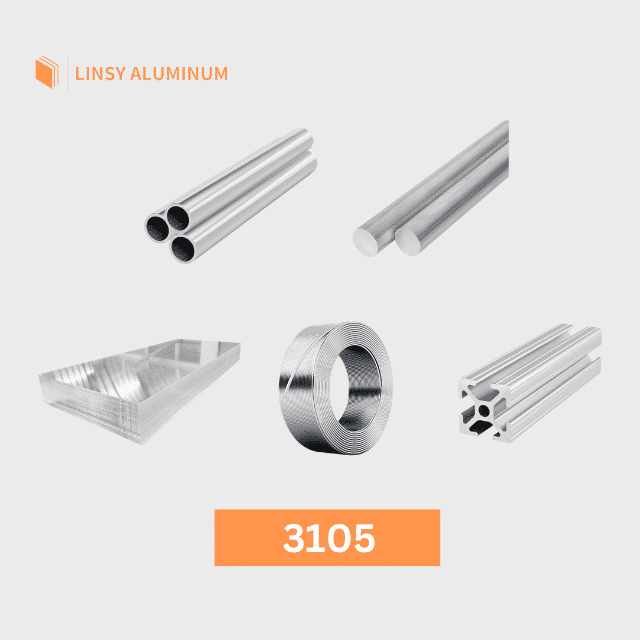
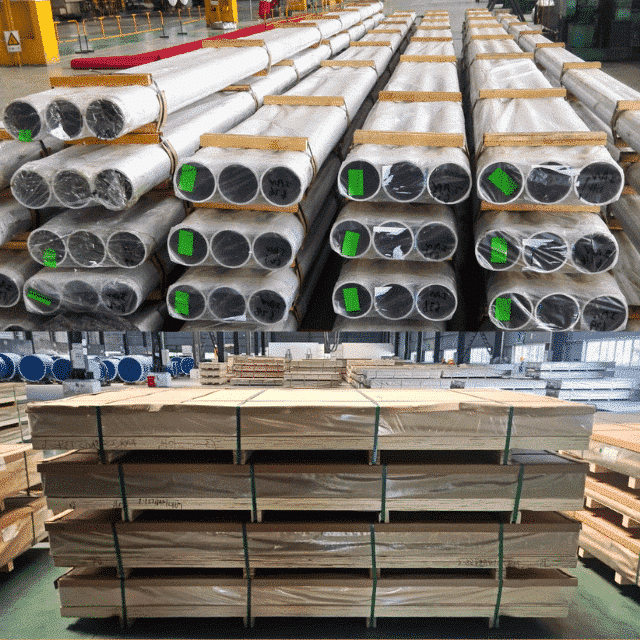

A liga de alumínio 3105 é uma liga Al-Mn não tratável termicamente, com uma pequena adição de magnésio (designação EN AlMn0.5Mg0.5), amplamente utilizada para revestimentos residenciais, telhados corrugados, painéis de casas móveis, calhas, rufos e fabricação geral de chapas metálicas. A adição de magnésio confere ao 3105 aproximadamente 10–15% maior resistência que o 3003, mantendo excelente resistência à corrosão, conformabilidade e soldabilidade. A Linsy fornece chapa, bobina, placa, tubo, barra e fio de alumínio 3105 nos temperos O, H12, H14, H16, H18 e H112, com dimensões personalizadas, opções de acabamento superficial e relatórios MTC disponíveis para cada pedido.
Formulários disponíveis: chapa / bobina / placa / tubo / barra / fio
Temperamentos comuns: O / H12 / H14 / H16 / H18 / H112
Suporte ao processamento: Usinagem CNC / corte a laser / soldagem TIG & MIG / anodização / polimento
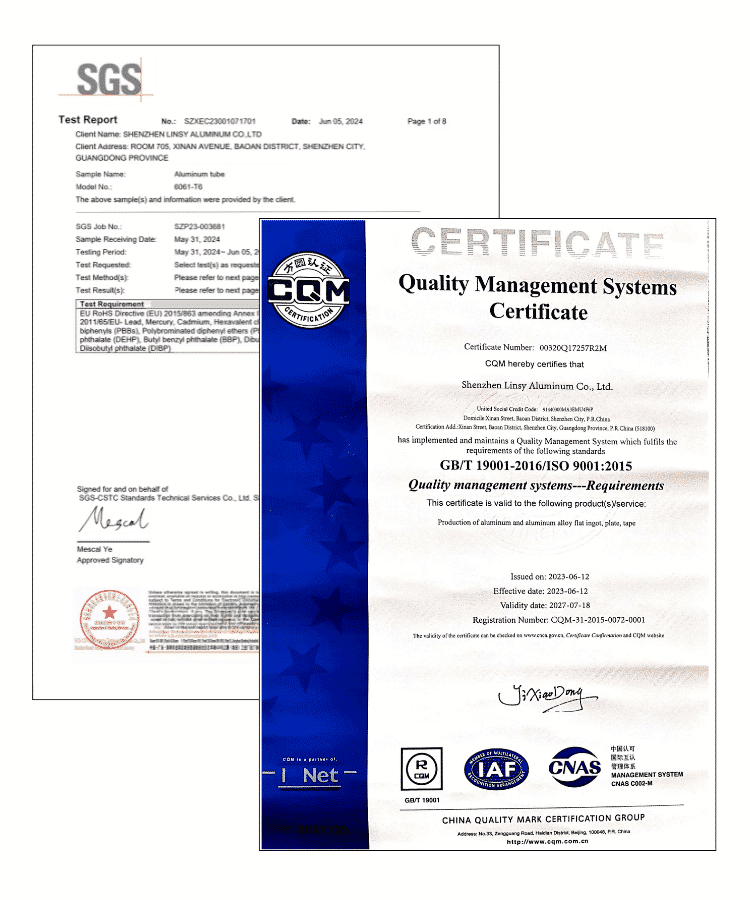
Documentos de qualidade: Relatório MTC em cada pedido, relatórios de teste SGS disponíveis mediante solicitação
A liga de alumínio 3105 é uma liga forjada Al-Mn (alumínio-manganês) não tratável termicamente, com uma pequena adição de magnésio, padronizada como UNS A93105 e EN AW-AlMn0.5Mg0.5. Como outras ligas da série 3000, o 3105 deriva suas propriedades mecânicas do trabalho a frio (encruamento) em vez de endurecimento por precipitação, portanto sua resistência é controlada pelo grau de redução a frio durante a laminação e expressa por meio das designações de tempero H (H12, H14, H16, H18, etc.).
Com 0,30–0,80% de manganês e 0,20–0,80% de magnésio como elementos de liga primários, o 3105 oferece aproximadamente 10–15% maior resistência que o alumínio 3003, mantendo a excelente resistência à corrosão, conformabilidade e soldabilidade que caracterizam a série 3000. A adição de magnésio é a diferença fundamental entre o 3105 e o 3003 — ela eleva o limite de escoamento e a resistência à tração sem reduzir significativamente a ductilidade, tornando o 3105 a liga preferida para aplicações de construção em chapas finas onde um modesto incremento de resistência é valioso.
O 3105 não pode ser endurecido por tratamento térmico. A recozimento (tempero O) restaura total maciez, enquanto a redução a frio controlada produz os temperos encruados H1x. Isso torna o 3105 ideal para aplicações que exigem perfilamento, dobramento, estampagem ou leve embutimento profundo — mais notavelmente revestimentos residenciais, telhados corrugados, painéis de casas móveis, calhas, condutores e rufos. É aprovado sob as principais normas internacionais, incluindo ASTM B209, ASTM B210, ASTM B211, ISO 6361 e EN 573-3.
A Linsy fornece alumínio 3105 em toda a gama de formas de produto padrão e personalizadas. Comprimento, largura e tolerâncias dimensionais podem ser adaptados aos requisitos do seu projeto.
| Formulário | Temperamento | Espessura (mm) | Largura (mm) | Comprimento (mm) |
|---|---|---|---|---|
| Chapa / Bobina 3105 | O, H12, H14, H16, H18, H112 | 0.3 – 6.0 | 500 – 2600 | 500 – 16000 |
| Formulário | Temperamento | Espessura (mm) | Largura (mm) | Comprimento (mm) |
|---|---|---|---|---|
| Placa 3105 | O, H12, H14, H112 | 6.0 – 150 | 500 – 2600 | 500 – 16000 |
| Formulário | Temperamento | DE (mm) | Parede (mm) | Comprimento (mm) |
|---|---|---|---|---|
| Tubo 3105 | O, H12, H14, H16 | 6 – 200 | 1 – 50 | 1000 – 6000 |
| Formulário | Temperamento | Diâmetro (mm) | Comprimento (mm) |
|---|---|---|---|
| Barra Redonda 3105 | O, H12, H14, H16, H112 | 3 – 200 | 1000 – 6000 |
| Formulário | Temperamento | Diâmetro (mm) | Peso / Bobina |
|---|---|---|---|
| Fio 3105 | O, H12, H14, H16 | 0.5 – 25 | Mínimo de 50 kg |
O alumínio 3105 é reconhecido sob designações internacionais e normas de produto. A tabela abaixo mapeia os equivalentes mais comuns utilizados em especificações de aquisição.
| Padrão | Designação | Normas de Produto Aplicáveis |
|---|---|---|
| UNS | A93105 | — |
| PT | EN AW-3105 / EN AW-AlMn0.5Mg0.5 | EN 485, EN 573-3, EN 754, EN 755 |
| AA (Aluminum Association) | 3105 | ASTM B209, B210, B211, B221 |
| ISO | AlMn0.5Mg0.5 | ISO 6361 |
| JIS (Japão) | A3105 | JIS H4000, JIS H4040, JIS H4080 |
| GB (China) | 3105 | GB/T 3190, GB/T 3880 |
Os seguintes limites de composição química se aplicam ao alumínio 3105 conforme ASTM B209 e EN 573-3. Todos os valores são em porcentagem de peso (%).
| Elemento | Mín % | Máx % |
|---|---|---|
| Silício (Si) | — | 0.6 |
| Ferro (Fe) | — | 0.7 |
| Cobre (Cu) | — | 0.3 |
| Manganês (Mn) | 0.30 | 0.8 |
| Magnésio (Mg) | 0.20 | 0.8 |
| Cromo (Cr) | — | 0.2 |
| Zinco (Zn) | — | 0.4 |
| Titânio (Ti) | — | 0.1 |
| Outros Cada | — | 0.05 |
| Outros Total | — | 0.15 |
| Alumínio (Al) | — | Equilíbrio |
A composição nominal (0,5% Mn e 0,5% Mg) está refletida na designação europeia AlMn0.5Mg0.5. O teor de magnésio é o que distingue o 3105 do 3003 (que não contém magnésio intencional) e confere ao 3105 sua resistência ligeiramente superior.
As propriedades mecânicas do alumínio 3105 dependem fortemente do tempero. O trabalho a frio aumenta tanto a resistência à tração quanto o limite de escoamento, reduzindo a ductilidade. Os valores abaixo são típicos para produtos em chapa conforme ASTM B209.
| Propriedade | Valor típico |
|---|---|
| Resistência à tração (MPa) | 100 – 145 |
| Resistência ao escoamento (MPa) | ≥ 40 |
| Alongamento (%) | ≥ 20 |
| Dureza (Brinell) | 30 |
| Propriedade | Valor típico |
|---|---|
| Resistência à tração (MPa) | 145 – 185 |
| Resistência ao escoamento (MPa) | ≥ 120 |
| Alongamento (%) | ≥ 5 |
| Dureza (Brinell) | 42 |
| Propriedade | Valor típico |
|---|---|
| Resistência à tração (MPa) | ≥ 190 |
| Resistência ao escoamento (MPa) | ≥ 165 |
| Alongamento (%) | ≥ 3 |
| Dureza (Brinell) | 55 |
A têmpera que você escolhe determina o equilíbrio entre resistência, conformabilidade e acabamento superficial. Use o guia abaixo para selecionar a têmpera correta para sua aplicação.
| Temperamento | Descrição | Benefício Principal | Aplicações típicas |
|---|---|---|---|
| O | Recozido — totalmente macio | Máxima conformabilidade e ductilidade | Peças embutidas profundamente, conformação por spinning, estampagens complexas, calhas perfiladas |
| H12 | Endurecido por deformação, 1/4 duro | Boa conformabilidade com ligeiro ganho de resistência | Conformação moderada, chapas metálicas em geral, acabamentos |
| H14 | Endurecido por deformação, 1/2 duro | Melhor equilíbrio entre resistência e conformabilidade | Revestimentos residenciais, telhas, rufos |
| H16 | Endurecido por deformação, 3/4 duro | Maior resistência, conformabilidade limitada | Painéis estruturais, sinalização, rodapés de casas móveis |
| H18 | Endurecido por deformação, totalmente duro | Máxima resistência para o 3105 | Painéis planos, peças estruturais não conformadas |
| H112 | Como fabricado (sem controle especial de endurecimento por deformação) | Econômico para chapas mais espessas | Aplicações estruturais em chapas grossas e de grande espessura |
O alumínio 3105 oferece excelente resistência à corrosão atmosférica, incluindo em ambientes úmidos, industriais e costeiros. As adições de manganês e magnésio não reduzem significativamente o desempenho de corrosão, e o 3105 apresenta bom desempenho em contato com produtos químicos suaves, água doce e produtos alimentícios. É comumente utilizado sem revestimentos protetores em revestimentos, telhados e rufos, embora chapa 3105 pintada e revestida com PVDF seja amplamente utilizada em exteriores de edifícios para desempenho de longa duração contra intempéries.
O 3105 apresenta excelente conformabilidade a frio nos temperos O e H1x. Pode ser perfilado, dobrado, estampado, conformado por spinning e levemente embutido — tornando-o um material de primeira escolha para perfis de revestimento residencial, telhas corrugadas, calhas e rufos fabricados. Para soldagem, o 3105 é classificado como altamente soldável por todos os métodos comuns, incluindo TIG (GTAW), MIG (GMAW) e soldagem por resistência. O metal de adição 4043 ou 1100 é recomendado para soldagem por fusão. Observe que a soldagem recozerá a zona afetada pelo calor, reduzindo a resistência local em temperos trabalhados a frio.
O alumínio 3105 possui boa condutividade térmica (aproximadamente 170–190 W/(m·K), variando com o tempero) e condutividade elétrica de aproximadamente 40–43% IACS. Sua densidade é de 2,71 g/cm³, e a faixa de fusão é de 638–657°C. Essas propriedades tornam o 3105 adequado para aletas de trocadores de calor e aplicações de gerenciamento térmico onde desempenho térmico moderado é suficiente, bem como para aplicações de construção onde o comportamento de expansão térmica é relevante.
| Setor | Aplicativos | Por Que o 3105 É Utilizado |
|---|---|---|
| Construção Civil | Revestimentos residenciais, telhas corrugadas, calhas, condutores, rufos, fachadas, beirais | Resistência à corrosão, conformabilidade, aceitação de pintura, incremento modesto de resistência sobre o 3003 |
| Habitações Industrializadas | Painéis de casas móveis, rodapés, telhados, revestimento de paredes de extremidade | Leve, conformável, resistente às intempéries — a liga dominante para revestimentos de casas móveis |
| Chapas Metálicas em Geral | Invólucros, sinalização, placas de identificação, acabamentos, componentes de mobiliário | Baixo custo, fácil fabricação, boa adesão de tinta |
| HVAC e Térmico | Aletas de trocadores de calor, tubos de radiadores, componentes de ar condicionado | Condutividade térmica, conformabilidade em espessuras finas |
| Químico e Industrial | Tanques de armazenamento para produtos químicos suaves, tambores, equipamentos de processamento | Resistência a produtos químicos suaves, soldabilidade, não tóxico |
| Alimentação e Cozinha | Utensílios de cozinha, bandejas de alimentos, equipamentos de cozinha | Seguro para alimentos, boa conformabilidade, condutividade térmica |
O alumínio 3105 suporta uma ampla gama de opções de processamento e tratamento de superfície:
Ao selecionar alumínio para seu projeto, o 3105 é frequentemente comparado com ligas próximas. Veja como ele se posiciona em relação às alternativas mais comuns:
| Comparação | Diferença Principal | Quando Escolher o 3105 |
|---|---|---|
| 3105 vs 3003 | A liga 3105 adiciona 0,2–0,8% de Mg para uma resistência aproximadamente 10–15% maior; a 3003 é ligeiramente mais conformável e de menor custo | Escolha a 3105 quando a resistência adicional justificar o pequeno prêmio de custo; escolha a 3003 para máxima conformabilidade |
| 3105 vs 3004 | A 3004 possui maior teor de Mn+Mg para maior resistência; a 3105 é mais conformável e de menor custo | Escolha a 3105 para chapas de revestimento/cobertura; escolha a 3004 para corpos de latas e aplicações de chapas de maior resistência |
| 3105 vs 5052 | A 5052 possui resistência aproximadamente 40% maior e melhor resistência à corrosão em água salgada; a 3105 é de menor custo e mais conformável | Escolha a 3105 para chapas de construção sensíveis ao custo; escolha a 5052 para aplicações marítimas ou de maior resistência |
| 3105 vs 1100 | A 3105 é significativamente mais resistente devido à adição de Mn+Mg; a 1100 possui maior pureza e condutividade elétrica | Escolha a 3105 para chapas estruturais de construção; escolha a 1100 para aplicações elétricas ou de alta pureza |
| 3105 vs 6061 | A 6061 é tratável termicamente e aproximadamente 2x mais resistente; a 3105 não é tratável termicamente, é mais conformável e de menor custo | Escolha a 3105 para conformação e chapas de construção; escolha a 6061 para resistência estrutural |
Para uma análise mais aprofundada das propriedades da 3105 e critérios de seleção, consulte nosso guia abrangente sobre ligas de alumínio 3105.
Todo pedido de alumínio 3105 da Linsy inclui documentação de qualidade para apoiar seus requisitos de aquisição e conformidade:
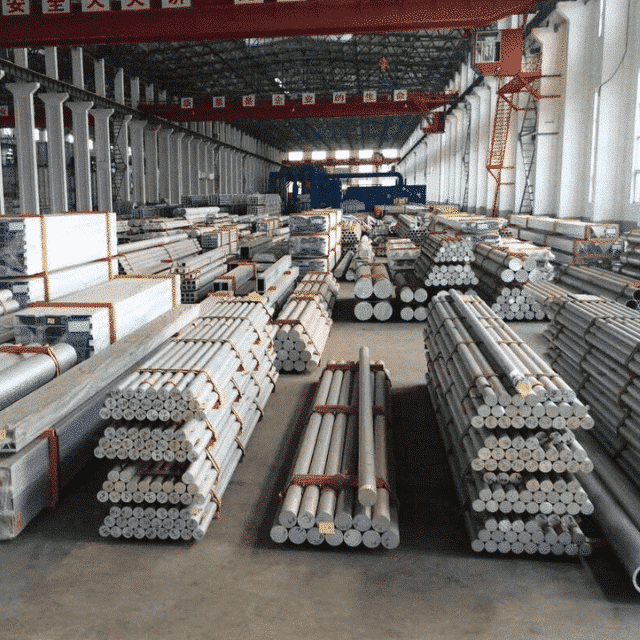
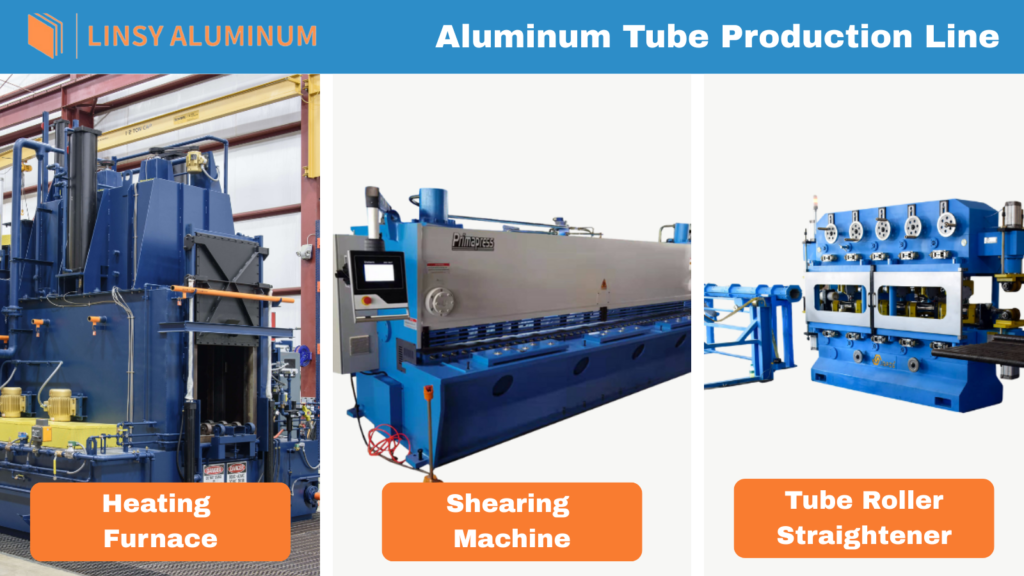
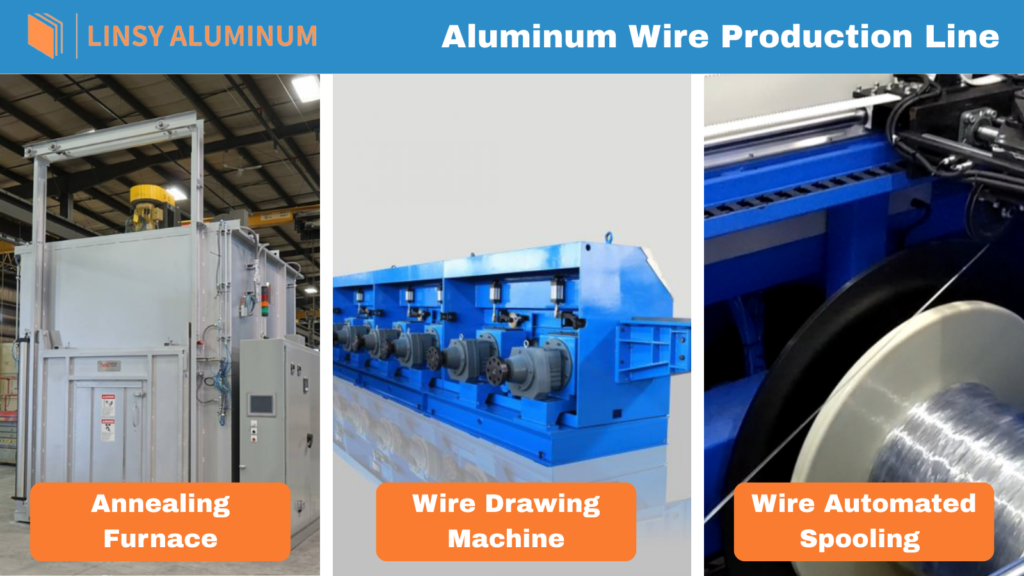
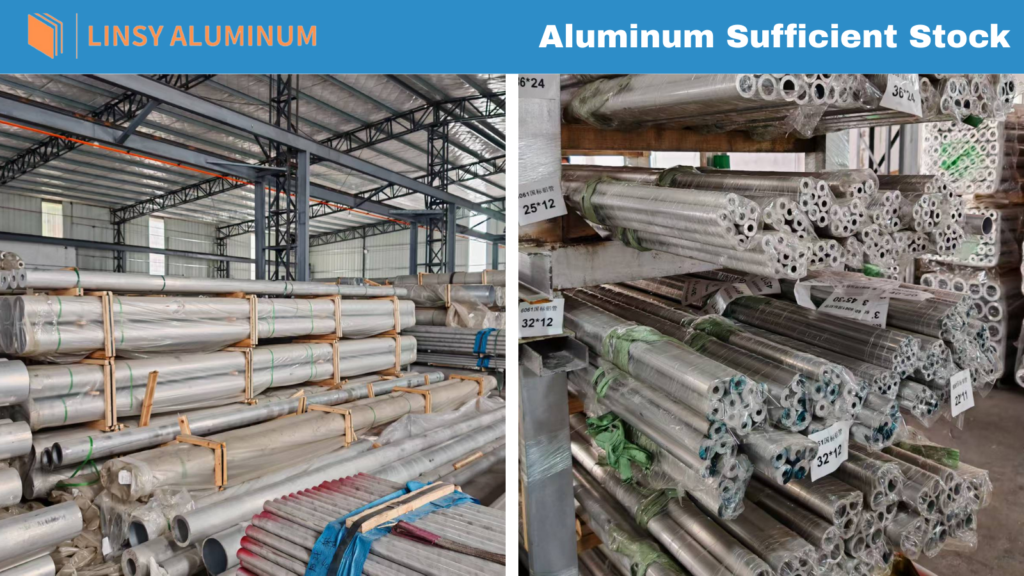
A Linsy Aluminum é uma fábrica de alumínio sediada em Shenzhen com mais de 20 anos de experiência no setor. Fornecemos chapa, bobina, placa, tubo, barra e fio de alumínio 3105 em toda a gama de têmperas — de O a H18 e H112. Nosso amplo estoque de especificações padrão da 3105 suporta atendimento rápido para pedidos comuns de revestimento, cobertura e chapas metálicas em geral, enquanto nossa capacidade de produção personalizada com MOQ baixo (prazo de 10 a 60 dias) atende a tamanhos não padronizados, têmperas especiais, acabamentos pintados/revestidos e compras de projetos com especificações mistas.
Nossas capacidades internas de processamento — usinagem CNC, corte a laser, soldagem TIG e MIG, anodização e polimento — significam que você pode adquirir tanto o material quanto o processamento downstream de um único fornecedor. Todo pedido de 3105 é enviado com um MTC emitido pela fábrica, e relatórios de ensaio SGS estão disponíveis mediante solicitação.
Atendemos compradores em todo o mundo, incluindo Europa, África do Sul, Brasil, Singapura, Turquia, Japão, Coreia do Sul e outros mercados asiáticos, oferecendo preços diretos de fábrica e qualidade rastreável, desde a matéria-prima até o produto acabado.
R: O alumínio 3105 é mais comumente utilizado para revestimento residencial, chapas corrugadas de cobertura, painéis e rodapés de casas móveis, calhas, condutores de água pluvial, rufos e fabricação geral de chapas metálicas. Sua combinação de resistência à corrosão, conformabilidade e um modesto prêmio de resistência sobre a 3003 o torna a liga dominante para revestimento de habitações industrializadas e acabamentos residenciais. Também é utilizado para aletas de trocadores de calor, sinalização e tanques de armazenamento para produtos químicos leves.
R: Ambos são ligas Al-Mn não tratáveis termicamente da série 3000, mas a 3105 adiciona 0,20–0,80% de magnésio, enquanto a 3003 não contém magnésio intencional. A adição de magnésio confere à 3105 aproximadamente 10–15% maior resistência à tração e ao escoamento do que a 3003 em têmperas equivalentes, a um pequeno prêmio de custo. A 3003 permanece ligeiramente mais conformável e é o grau de uso geral mais comum, enquanto a 3105 é preferida para revestimento e cobertura onde a resistência adicional é benéfica.
R: Não. A 3105 é uma liga não tratável termicamente — pertence à série 3000 (Al-Mn com Mg). Sua resistência é desenvolvida por trabalho a frio (encruamento), não por tratamento térmico de solução e envelhecimento como a 6061 ou 7075. O único processo térmico aplicável à 3105 é o recozimento (aquecimento a aproximadamente 340–410°C seguido de resfriamento), que retorna o material à sua condição de têmpera O macia.
R: Sim. A 3105 é classificada como altamente soldável utilizando métodos TIG (GTAW), MIG (GMAW), oxiacetilênico e soldagem por resistência. O metal de adição 4043 ou 1100 é tipicamente recomendado. No entanto, esteja ciente de que a zona afetada pelo calor amolecerá em têmperas trabalhadas a frio — a área soldada retorna à resistência próxima da têmpera O após a soldagem.
R: Sim, a 3105 pode ser anodizada, mas o acabamento terá uma aparência cinza ou amarelada, em vez do acabamento brilhante e claro de graus mais puros como 1100 ou 6063. Isso se deve ao teor de manganês e magnésio. A anodização da 3105 é adequada para aplicações protetivas ou decorativas onde um acabamento brilhante ou com correspondência de cor não é necessário. Para exteriores de edifícios, chapa 3105 pintada (PVDF ou poliéster) é muito mais comum do que a anodização.
R: O equivalente europeu da 3105 é EN AW-3105, com a designação química EN AW-AlMn0,5Mg0,5 — refletindo o teor nominal de 0,5% de manganês e 0,5% de magnésio. É coberta pelas normas EN 485 (chapa, tira e placa), EN 573-3 (composição química), EN 754 (tubo trefilado a frio) e EN 755 (barra e tubo extrudados). A designação UNS é A93105.
R: Sim, marginalmente. Em têmperas equivalentes, a 3105 tipicamente oferece 10–15% maior resistência à tração e ao escoamento do que a 3003, graças ao seu teor de magnésio. Por exemplo, a chapa 3105-H14 atinge aproximadamente 145–185 MPa de resistência à tração, versus 140–180 MPa para a 3003-H14. A diferença é modesta, mas significativa para aplicações de revestimento e cobertura onde o prêmio de resistência justifica o pequeno aumento de preço.
R: Sim. A Linsy emite um Certificado de Ensaio de Fábrica (MTC) com todo pedido de alumínio 3105, documentando a composição química, propriedades mecânicas e resultados de inspeção dimensional do material específico enviado. Relatórios de ensaio SGS também estão disponíveis mediante solicitação.
R: A Linsy suporta MOQ baixo para itens padrão em estoque e pedidos de produção personalizada. O MOQ varia de acordo com a forma do produto, tamanho e têmpera. Entre em contato com nossa equipe de vendas com sua especificação para uma cotação de MOQ específica.
R: Itens padrão em estoque são enviados em 3–7 dias. Pedidos de produção personalizada geralmente requerem 10–60 dias, dependendo da liga, dimensões, têmpera, requisitos de processamento e complexidade do pedido.
R: Sim, fornecemos pequenas peças de amostra para avaliação de qualidade. A disponibilidade de amostras depende do estoque e da especificação. Entre em contato conosco com seus requisitos.
A: Aceitamos T/T (transferência bancária) e L/C (carta de crédito). As condições de pagamento padrão são 30% de adiantamento no pedido e 70% antes do embarque. Condições personalizadas podem ser discutidas para parcerias de longo prazo.
A: Enviamos para todo o mundo, incluindo Europa, América do Sul, África, Oriente Médio e Ásia. As opções de frete incluem frete marítimo, frete aéreo e serviços de courier, dependendo do tamanho do pedido e da urgência.
A: Sim. Todos os produtos de alumínio Linsy são respaldados pelo nosso sistema de gestão da qualidade (ISO 9001). Cada pedido é rastreável através do seu MTC, e garantimos as especificações do material e as tolerâncias dimensionais documentadas na confirmação do pedido.
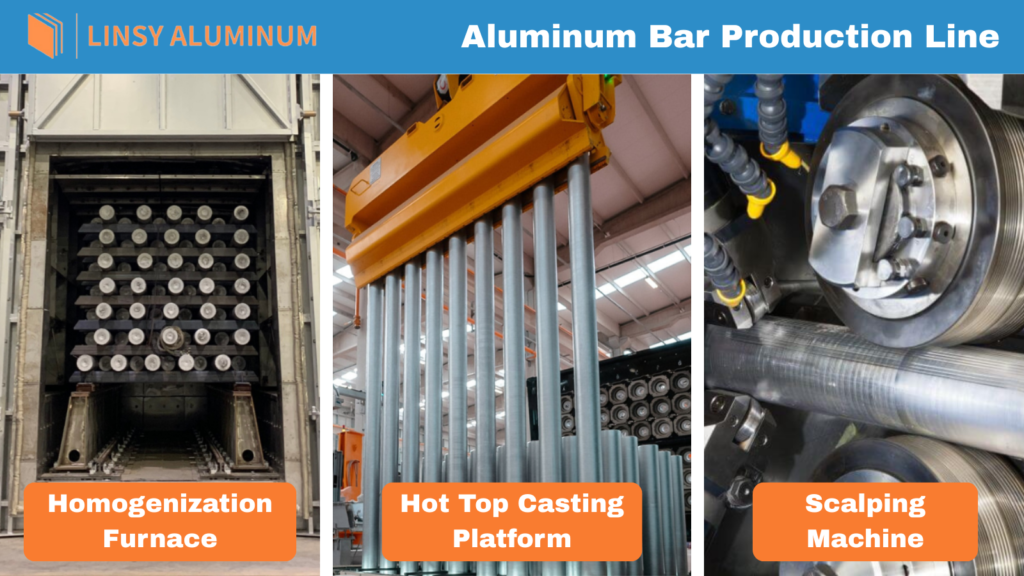
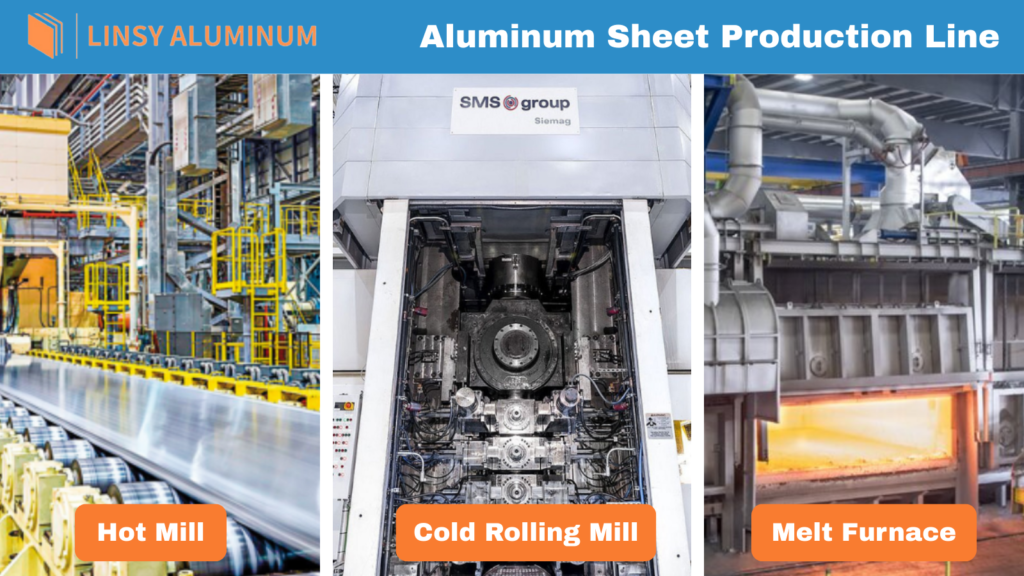
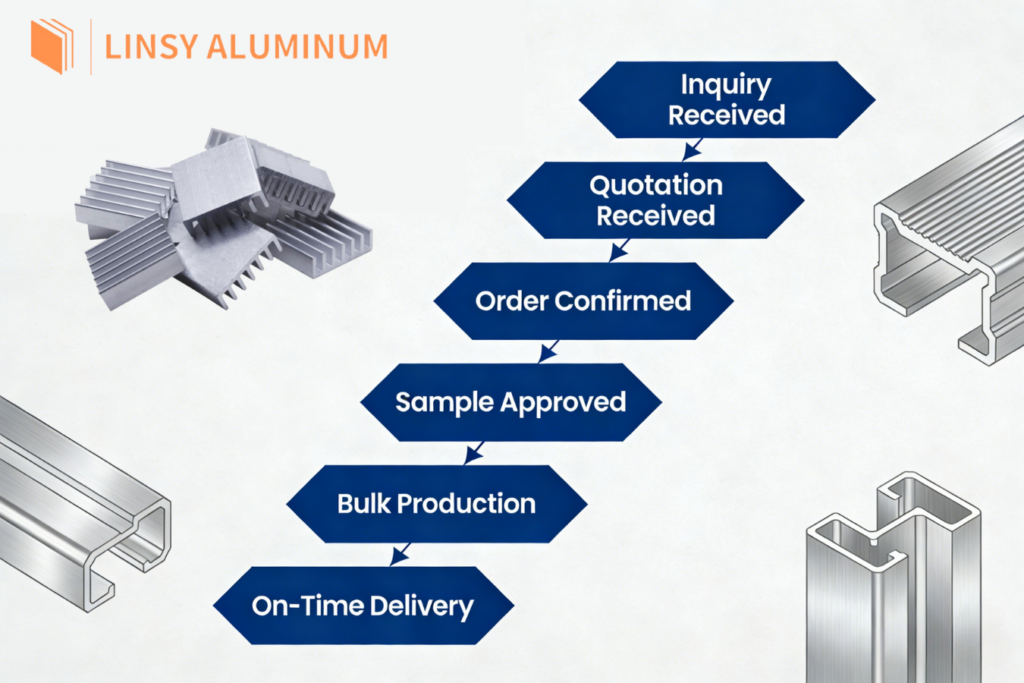
Vantagens da Linsy
A Linsy Aluminum é uma fornecedora líder de produtos de processamento de alumínio, atendendo a diversos setores, incluindo aeroespacial, engenharia geral, automotivo, marítimo, construção naval e outras aplicações industriais especializadas.
Temos o compromisso de manter os mais altos padrões de qualidade e responsabilidade ambiental, conforme demonstrado por nossas certificações: ISO 9001:2008, ISO 14001:2004 e SGS.