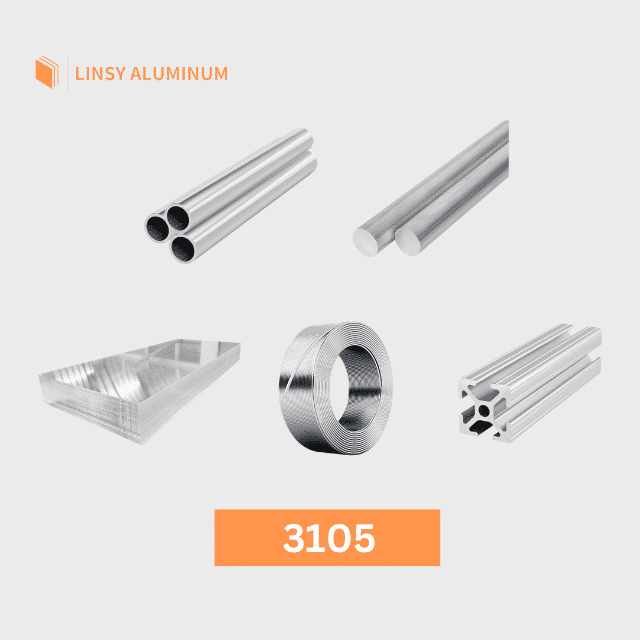

L'alliage d'aluminium 3105 est un alliage Al-Mn non traitable thermiquement avec une faible addition de magnésium (désignation EN AlMn0.5Mg0.5), largement utilisé pour les revêtements résidentiels, les toitures ondulées, les panneaux de maisons mobiles, les gouttières, les solins et la fabrication générale de tôlerie. L'addition de magnésium confère au 3105 une résistance environ 10 à 15 % supérieure à celle du 3003, tout en conservant une excellente résistance à la corrosion, une bonne formabilité et une excellente soudabilité. Linsy fournit de la tôle, de la bobine, de la plaque, du tube, de la barre et du fil en alliage 3105 dans les états O, H12, H14, H16, H18 et H112, avec des dimensions personnalisées, des options de finition de surface et des rapports d'essai des matériaux (MTC) disponibles pour chaque commande.
Formulaires disponibles : tôle / bobine / plaque / tube / barre / fil
Tempéraments courants : O / H12 / H14 / H16 / H18 / H112
Assistance technique : Usinage CNC / Découpe laser / Soudage TIG et MIG / Anodisation / Polissage
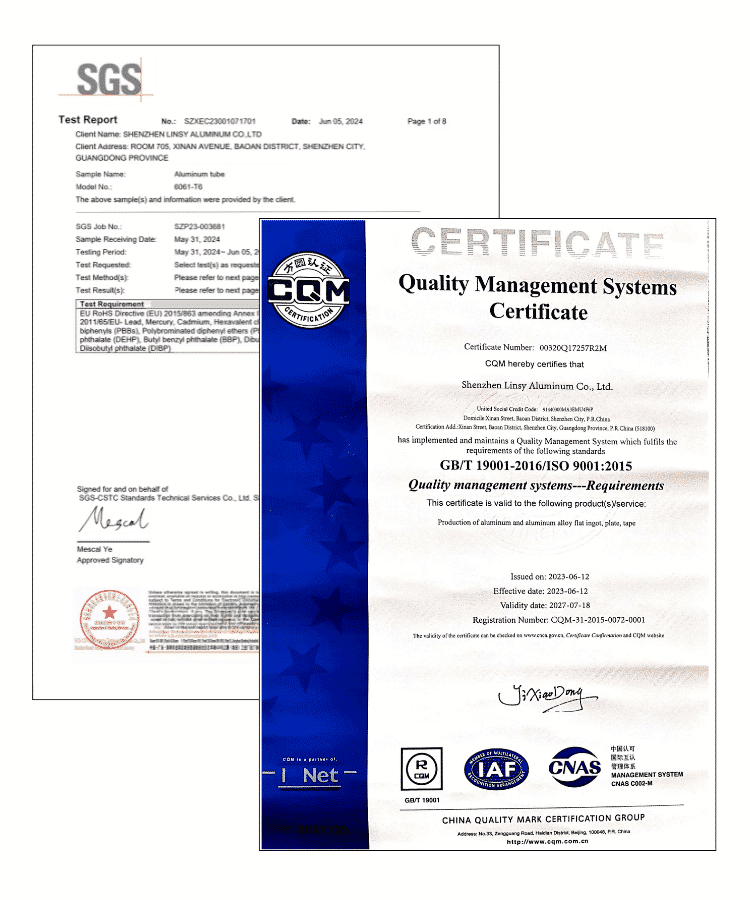
Documents relatifs à la qualité : Rapport MTC fourni avec chaque commande ; rapports d'essais SGS disponibles sur demande
L'alliage d'aluminium 3105 est un alliage corroyé Al-Mn (aluminium-manganèse) non traitable thermiquement avec une faible addition de magnésium, normalisé sous les désignations UNS A93105 et EN AW-AlMn0.5Mg0.5. Comme les autres alliages de la série 3000, le 3105 tire ses propriétés mécaniques de l'écrouissage (durcissement par déformation) plutôt que du durcissement par précipitation ; sa résistance est donc contrôlée par le degré de réduction à froid lors du laminage et exprimée par les désignations d'état H (H12, H14, H16, H18, etc.).
Avec 0,30–0,80 % de manganèse et 0,20–0,80 % de magnésium comme principaux éléments d'alliage, le 3105 offre une résistance environ 10 à 15 % supérieure à celle de l'aluminium 3003, tout en conservant l'excellente résistance à la corrosion, la formabilité et la soudabilité qui caractérisent la série 3000. L'addition de magnésium est la différence clé entre le 3105 et le 3003 — elle augmente la limite d'élasticité et la résistance à la traction sans réduire significativement la ductilité, faisant du 3105 l'alliage préféré pour les applications de construction en faible épaisseur où un léger surcroît de résistance est apprécié.
Le 3105 ne peut pas être renforcé par traitement thermique. Le recuit (état O) restaure une pleine souplesse, tandis qu'une réduction à froid contrôlée produit les états écrouis H1x. Cela rend le 3105 idéal pour les applications nécessitant du profilage, du cintrage, de l'emboutissage ou un léger emboutissage profond — notamment les revêtements résidentiels, les toitures ondulées, les panneaux de maisons mobiles, les gouttières, les descentes d'eaux pluviales et les solins. Il est approuvé selon les principales normes internationales, notamment ASTM B209, ASTM B210, ASTM B211, ISO 6361 et EN 573-3.
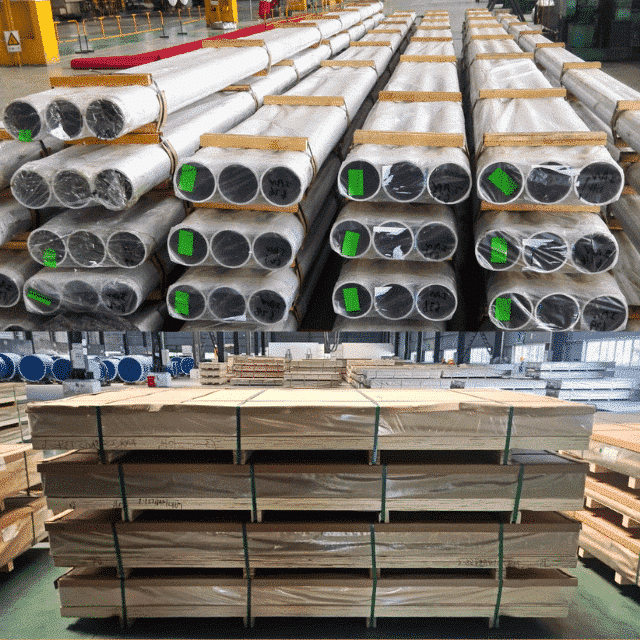
Linsy fournit de l'aluminium 3105 dans une gamme complète de formes de produits standard et personnalisées. La longueur, la largeur et les tolérances dimensionnelles peuvent être adaptées aux exigences de votre projet.
| Formulaire | Tempérer | Épaisseur (mm) | Largeur (mm) | Longueur (mm) |
|---|---|---|---|---|
| Tôle / Bobine 3105 | O, H12, H14, H16, H18, H112 | 0.3 – 6.0 | 500 – 2600 | 500 – 16000 |
| Formulaire | Tempérer | Épaisseur (mm) | Largeur (mm) | Longueur (mm) |
|---|---|---|---|---|
| Plaque 3105 | O, H12, H14, H112 | 6.0 – 150 | 500 – 2600 | 500 – 16000 |
| Formulaire | Tempérer | Diamètre extérieur (mm) | Paroi (mm) | Longueur (mm) |
|---|---|---|---|---|
| Tube 3105 | O, H12, H14, H16 | 6 – 200 | 1 – 50 | 1000 – 6000 |
| Formulaire | Tempérer | Diamètre (mm) | Longueur (mm) |
|---|---|---|---|
| Barre ronde 3105 | O, H12, H14, H16, H112 | 3 – 200 | 1000 – 6000 |
| Formulaire | Tempérer | Diamètre (mm) | Poids / Bobine |
|---|---|---|---|
| Fil 3105 | O, H12, H14, H16 | 0.5 – 25 | 50 kg minimum |
L'aluminium 3105 est reconnu selon des désignations et normes de produits internationales. Le tableau ci-dessous présente les équivalences les plus courantes utilisées dans les spécifications d'achat.
| Standard | Désignation | Normes applicables aux produits |
|---|---|---|
| UNS | A93105 | — |
| FR | EN AW-3105 / EN AW-AlMn0.5Mg0.5 | EN 485, EN 573-3, EN 754, EN 755 |
| AA (Association de l'aluminium) | 3105 | ASTM B209, B210, B211, B221 |
| ISO | AlMn0.5Mg0.5 | ISO 6361 |
| JIS (Japon) | A3105 | JIS H4000, JIS H4040, JIS H4080 |
| GB (Chine) | 3105 | GB/T 3190, GB/T 3880 |
Les limites de composition chimique suivantes s'appliquent à l'aluminium 3105 selon les normes ASTM B209 et EN 573-3. Toutes les valeurs sont exprimées en pourcentage pondéral (%).
| Élément | Min % | Max % |
|---|---|---|
| Silicium (Si) | — | 0.6 |
| Fer (Fe) | — | 0.7 |
| Cuivre (Cu) | — | 0.3 |
| Manganèse (Mn) | 0.30 | 0.8 |
| Magnésium (Mg) | 0.20 | 0.8 |
| Chrome (Cr) | — | 0.2 |
| Zinc (Zn) | — | 0.4 |
| Titane (Ti) | — | 0.1 |
| Autres Chacun | — | 0.05 |
| Autres Total | — | 0.15 |
| Aluminium (Al) | — | Équilibre |
La composition nominale (0,5 % Mn et 0,5 % Mg) est reflétée dans la désignation européenne AlMn0.5Mg0.5. La teneur en magnésium est ce qui distingue le 3105 du 3003 (qui ne contient pas de magnésium intentionnel) et confère au 3105 sa résistance légèrement supérieure.
Les propriétés mécaniques de l'aluminium 3105 dépendent fortement de l'état. L'écrouissage augmente à la fois la résistance à la traction et la limite d'élasticité tout en réduisant la ductilité. Les valeurs ci-dessous sont typiques pour les produits en tôle selon la norme ASTM B209.
| Propriété | Valeur typique |
|---|---|
| Résistance à la traction (MPa) | 100 – 145 |
| Limite d'élasticité (MPa) | ≥ 40 |
| Élongation (%) | ≥ 20 |
| Dureté (Brinell) | 30 |
| Propriété | Valeur typique |
|---|---|
| Résistance à la traction (MPa) | 145 – 185 |
| Limite d'élasticité (MPa) | ≥ 120 |
| Élongation (%) | ≥ 5 |
| Dureté (Brinell) | 42 |
| Propriété | Valeur typique |
|---|---|
| Résistance à la traction (MPa) | ≥ 190 |
| Limite d'élasticité (MPa) | ≥ 165 |
| Élongation (%) | ≥ 3 |
| Dureté (Brinell) | 55 |
Le trempage que vous choisissez détermine l'équilibre entre résistance, formabilité et finition de surface. Utilisez le guide ci-dessous pour choisir le trempage adapté à votre application.
| Tempérer | Description | Avantage principal | Applications typiques |
|---|---|---|---|
| O | Recuit — entièrement malléable | Formabilité et ductilité maximales | Pièces embouties profondément, repoussage, emboutissages complexes, gouttières profilées |
| H12 | Durci par déformation, 1/4 dur | Bonne formabilité avec un léger gain de résistance | Formage modéré, tôlerie générale, garnitures |
| H14 | Durci par déformation, demi-dur | Le meilleur compromis entre résistance et formabilité | Revêtements résidentiels, tôles de toiture, solins |
| H16 | Durci par déformation, 3/4 dur | Résistance plus élevée, formabilité limitée | Panneaux structurels, signalétique, soubassements de maisons mobiles |
| H18 | Durci par déformation, durcissement complet | Résistance maximale pour le 3105 | Panneaux plats, éléments structurels non profilés |
| H112 | À l'état brut de fabrication (sans contrôle particulier de l'écrouissage) | Économique pour les tôles plus épaisses | Applications dans le domaine des tôles et des éléments de structure de forte épaisseur |
L'aluminium 3105 offre une excellente résistance à la corrosion atmosphérique, y compris dans les environnements humides, industriels et côtiers. Les additions de manganèse et de magnésium ne réduisent pas significativement les performances de corrosion, et le 3105 se comporte bien au contact de produits chimiques doux, d'eau douce et de produits alimentaires. Il est couramment utilisé sans revêtement protecteur dans les applications de revêtement, de toiture et de solins, bien que la tôle 3105 peinte ou revêtue de PVDF soit largement utilisée dans les extérieurs de bâtiments pour une performance de vieillissement à long terme.
Le 3105 présente une excellente formabilité à froid dans les états O et H1x. Il peut être profilé, cintré, embouti, repoussé et légèrement embouti profondément — ce qui en fait un matériau de premier choix pour les profils de revêtement résidentiel, les tôles de toiture ondulées, les gouttières et les solins fabriqués. Pour le soudage, le 3105 est considéré comme hautement soudable par toutes les méthodes courantes, y compris le soudage TIG (GTAW), MIG (GMAW) et par résistance. Le métal d'apport 4043 ou 1100 est recommandé pour le soudage par fusion. Notez que le soudage recuit la zone affectée thermiquement, réduisant la résistance locale dans les états écrouis.
L'aluminium 3105 a une bonne conductivité thermique (environ 170–190 W/(m·K), variant selon l'état) et une conductivité électrique d'environ 40–43 % IACS. Sa densité est de 2,71 g/cm³ et sa plage de fusion est de 638–657 °C. Ces propriétés rendent le 3105 adapté aux ailettes d'échangeurs de chaleur et aux applications de gestion thermique où une performance thermique modérée est suffisante, ainsi qu'aux applications de construction où le comportement de dilatation thermique est important.
| L'industrie | Applications | Pourquoi le 3105 est utilisé |
|---|---|---|
| Bâtiment et construction | Revêtements résidentiels, tôles de toiture ondulées, gouttières, descentes d'eaux pluviales, solins, bandeaux, sous-faces | Résistance à la corrosion, formabilité, acceptation de la peinture, surcroît de résistance modeste par rapport au 3003 |
| Habitations préfabriquées | Panneaux de maisons mobiles, soubassements, toitures, revêtement de pignons | Léger, formable, résistant aux intempéries — l'alliage de revêtement dominant pour les maisons mobiles |
| Tôlerie générale | Enceintes, signalétique, plaques signalétiques, garnitures, composants de mobilier | Faible coût, fabrication facile, bonne adhérence de la peinture |
| CVC et thermique | Ailettes d'échangeurs thermiques, tubes de radiateurs, composants de climatiseurs | Conductivité thermique, aptitude au formage en feuilles minces |
| Chimie et industrie | Réservoirs de stockage pour produits chimiques doux, fûts, équipements de traitement | Résistance aux produits chimiques doux, soudabilité, non toxique |
| Alimentation et cuisine | Ustensiles de cuisine, plateaux alimentaires, équipements de cuisine | Compatible alimentaire, bonne formabilité, conductivité thermique |
L'aluminium 3105 prend en charge une large gamme d'options de traitement et de traitement de surface :
Lors de la sélection de l'aluminium pour votre projet, le 3105 est souvent comparé à des alliages proches. Voici comment il se positionne face aux alternatives les plus courantes :
| Comparaison | Différence essentielle | Quand choisir le 3105 |
|---|---|---|
| 3105 vs 3003 | Le 3105 ajoute 0,2–0,8 % de Mg pour une résistance supérieure d'environ 10 à 15 % ; le 3003 est légèrement plus formable et moins coûteux. | Choisissez le 3105 lorsque la résistance supplémentaire justifie la prime modeste ; choisissez le 3003 pour une formabilité maximale. |
| 3105 vs 3004 | Le 3004 contient plus de Mn+Mg pour une résistance accrue ; le 3105 est plus formable et moins coûteux. | Choisissez le 3105 pour les tôles de bardage et de toiture ; choisissez le 3004 pour les corps de canettes et les applications de tôles à plus haute résistance. |
| 3105 vs 5052 | Le 5052 offre une résistance supérieure d'environ 40 % et une meilleure résistance à la corrosion en eau salée ; le 3105 est moins coûteux et plus formable. | Choisissez le 3105 pour les tôles de construction sensibles aux coûts ; choisissez le 5052 pour les applications marines ou à plus haute résistance. |
| 3105 vs 1100 | Le 3105 est nettement plus résistant grâce à l'ajout de Mn+Mg ; le 1100 présente une pureté et une conductivité électrique plus élevées. | Choisissez le 3105 pour les tôles de construction structurelles ; choisissez le 1100 pour les applications électriques ou de haute pureté. |
| 3105 vs 6061 | Le 6061 est traitable thermiquement et environ 2 fois plus résistant ; le 3105 n'est pas traitable thermiquement, plus formable et moins coûteux. | Choisissez le 3105 pour le formage et les tôles de construction ; choisissez le 6061 pour la résistance structurelle. |
Pour un examen plus approfondi des propriétés et des critères de sélection du 3105, consultez notre guide complet sur les alliages d'aluminium 3105.
Chaque commande d'aluminium 3105 de Linsy comprend une documentation qualité pour soutenir vos exigences d'approvisionnement et de conformité :
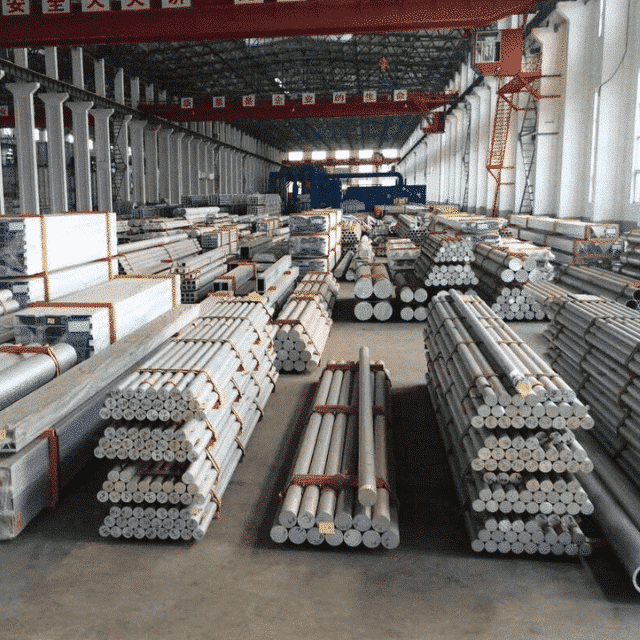
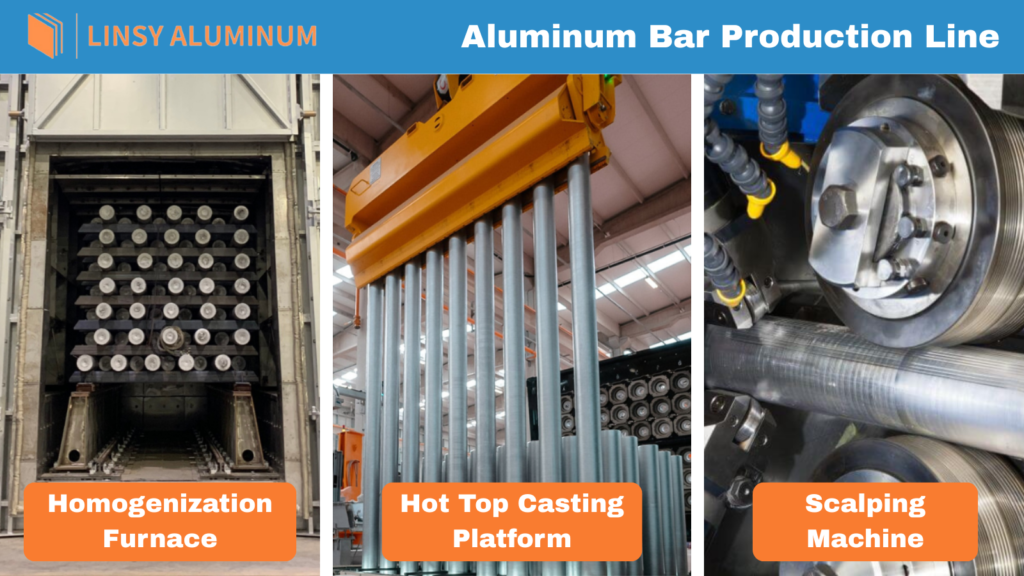
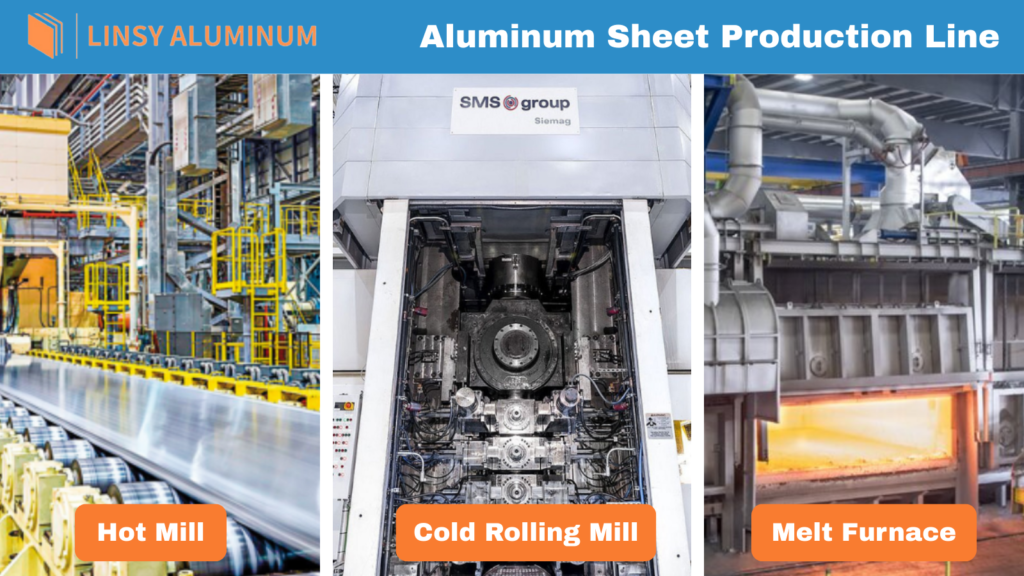
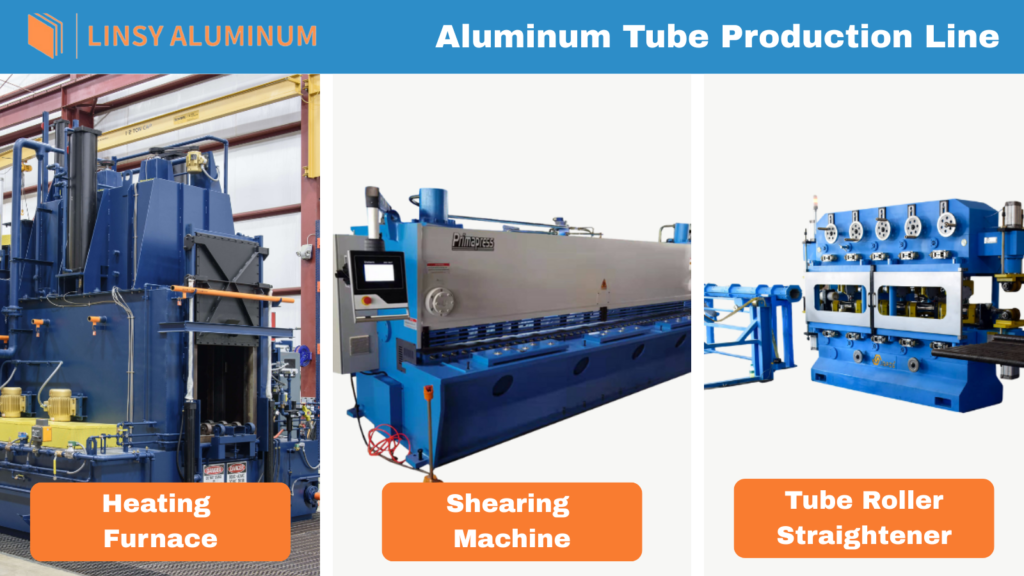
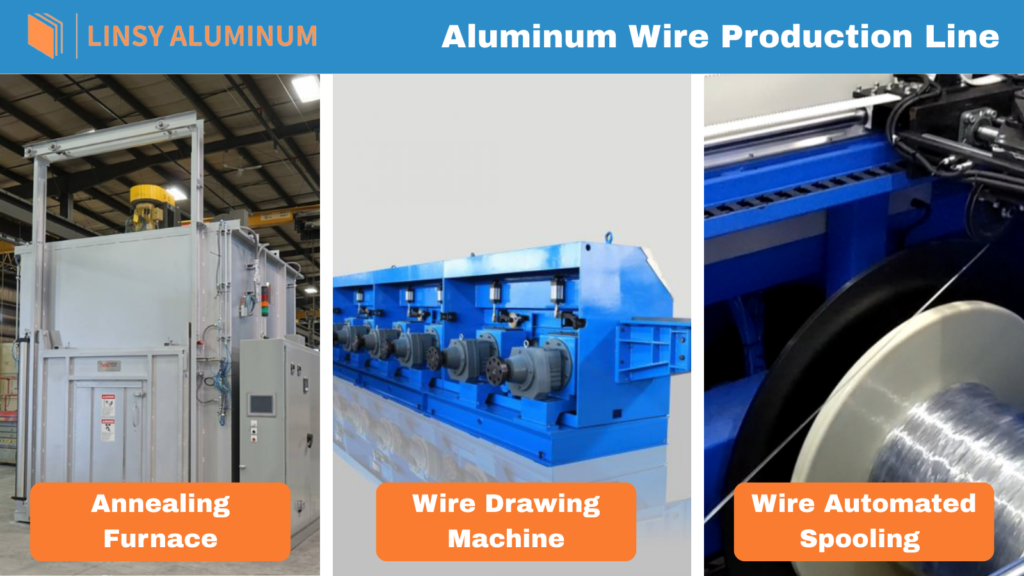
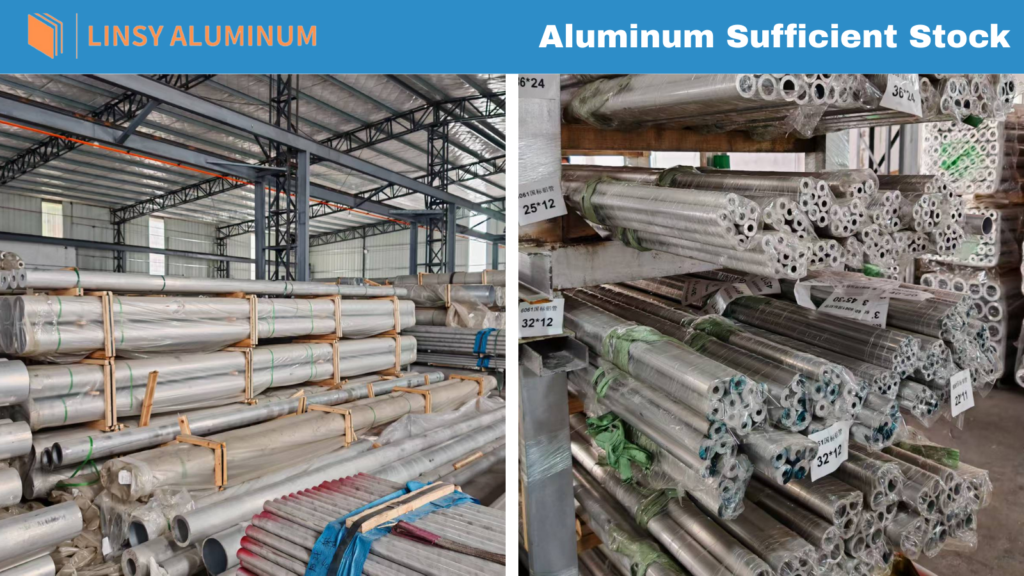
Linsy Aluminum est une usine d'aluminium basée à Shenzhen avec plus de 20 ans d'expérience dans l'industrie. Nous fournissons des tôles, bobines, plaques, tubes, barres et fils en aluminium 3105 dans toute la gamme des états — de O à H18 et H112. Notre vaste inventaire de spécifications standard du 3105 permet une exécution rapide pour les commandes courantes de bardage, de toiture et de tôlerie générale, tandis que notre capacité de production personnalisée à faible quantité minimale de commande (délai de 10 à 60 jours) traite les dimensions non standard, les états spéciaux, les finitions peintes/revêtues et les achats de projets avec spécifications mixtes.
Nos capacités de transformation internes — usinage CNC, découpe laser, soudage TIG et MIG, anodisation et polissage — vous permettent de vous approvisionner à la fois en matériau et en traitement aval auprès d'un seul fournisseur. Chaque commande de 3105 est expédiée avec un certificat d'essai en usine, et les rapports d'essais SGS sont disponibles sur demande.
Nous fournissons des acheteurs du monde entier, notamment en Europe, en Afrique du Sud, au Brésil, à Singapour, en Turquie, au Japon, en Corée du Sud et sur d'autres marchés asiatiques, en proposant des prix directs d'usine et une qualité traçable, de la matière première au produit fini.
R : L'aluminium 3105 est le plus couramment utilisé pour le bardage résidentiel, les tôles de toiture ondulées, les panneaux et les soubassements de maisons mobiles, les gouttières, les descentes d'eaux pluviales, les solins et la fabrication générale de tôlerie. Sa combinaison de résistance à la corrosion, de formabilité et d'une légère prime de résistance par rapport au 3003 en fait l'alliage dominant pour le revêtement des maisons préfabriquées et les garnitures de bâtiments résidentiels. Il est également utilisé pour les ailettes d'échangeurs de chaleur, la signalétique et les réservoirs de stockage pour produits chimiques doux.
R : Ce sont tous deux des alliages Al-Mn non traitables thermiquement de la série 3000, mais le 3105 ajoute 0,20–0,80 % de magnésium tandis que le 3003 ne contient pas de magnésium intentionnel. L'ajout de magnésium confère au 3105 une résistance à la traction et une limite d'élasticité environ 10 à 15 % plus élevées que le 3003 pour des états équivalents, avec une légère prime de coût. Le 3003 reste légèrement plus formable et est le grade d'usage général le plus courant, tandis que le 3105 est préféré pour le bardage et la toiture où la résistance supplémentaire est bénéfique.
R : Non. Le 3105 est un alliage non traitable thermiquement — il appartient à la série 3000 (Al-Mn avec Mg). Sa résistance est développée par écrouissage (durcissement par déformation), et non par traitement thermique de mise en solution et vieillissement comme le 6061 ou le 7075. Le seul processus thermique applicable au 3105 est le recuit (chauffage à environ 340–410 °C puis refroidissement), qui ramène le matériau à son état O doux.
R : Oui. Le 3105 est considéré comme hautement soudable en utilisant les méthodes TIG (GTAW), MIG (GMAW), oxyacétylénique et par résistance. Le métal d'apport 4043 ou 1100 est généralement recommandé. Cependant, notez que la zone affectée thermiquement se ramollira dans les états écrouis — la zone soudée revient à une résistance proche de l'état O après soudage.
R : Oui, le 3105 peut être anodisé, mais la finition aura un aspect gris ou jaunâtre plutôt que la finition brillante et claire des nuances plus pures comme le 1100 ou le 6063. Cela est dû à la teneur en manganèse et en magnésium. L'anodisation du 3105 convient aux applications de protection ou de décoration où une finition brillante ou de couleur assortie n'est pas requise. Pour les extérieurs de bâtiments, la tôle 3105 peinte (PVDF ou polyester) est beaucoup plus courante que l'anodisation.
R : L'équivalent européen du 3105 est l'EN AW-3105, avec la désignation de symbole chimique EN AW-AlMn0.5Mg0.5 — reflétant la teneur nominale de 0,5 % de manganèse et 0,5 % de magnésium. Il est couvert par les normes EN 485 (tôles, feuillards et plaques), EN 573-3 (composition chimique), EN 754 (tubes étirés à froid) et EN 755 (barres et tubes extrudés). La désignation UNS est A93105.
R : Oui, marginalement. Pour des états équivalents, le 3105 offre généralement une résistance à la traction et une limite d'élasticité 10 à 15 % plus élevées que le 3003 grâce à sa teneur en magnésium. Par exemple, la tôle 3105-H14 atteint une résistance à la traction d'environ 145–185 MPa contre 140–180 MPa pour le 3003-H14. La différence est modeste mais significative pour les applications de bardage et de toiture où la prime de résistance justifie la légère augmentation de prix.
R : Oui. Linsy délivre un certificat d'essai en usine avec chaque commande d'aluminium 3105, documentant la composition chimique, les propriétés mécaniques et les résultats d'inspection dimensionnelle pour le matériau spécifique expédié. Les rapports d'essais SGS sont également disponibles sur demande.
R : Linsy propose des quantités minimales de commande (MOQ) réduites pour les articles en stock standard et les commandes de production sur mesure. La MOQ varie en fonction de la forme, de la taille et de la trempe du produit. Contactez notre équipe commerciale en précisant vos spécifications pour obtenir un devis avec la MOQ correspondante.
R : Les articles en stock sont expédiés sous 3 à 7 jours. Les commandes de fabrication sur mesure nécessitent généralement un délai de 10 à 60 jours, en fonction de l'alliage, des dimensions, du état de durcissement, des exigences de traitement et de la complexité de la commande.
R : Oui, nous fournissons de petits échantillons pour permettre d'évaluer la qualité. La disponibilité des échantillons dépend des stocks et des spécifications. N'hésitez pas à nous contacter pour nous faire part de vos besoins.
R : Nous acceptons les paiements par virement bancaire (T/T) et par lettre de crédit (L/C). Les conditions de paiement standard sont les suivantes : 30% d'acompte à la commande et 70% avant l'expédition. Des conditions personnalisées peuvent être négociées dans le cadre de partenariats à long terme.
R : Nous expédions dans le monde entier, notamment en Europe, en Amérique du Sud, en Afrique, au Moyen-Orient et en Asie. Les options d'expédition comprennent le transport maritime, le transport aérien et les services de messagerie, en fonction du volume de la commande et de son urgence.
R : Oui. Tous les produits en aluminium Linsy sont couverts par notre système de gestion de la qualité (ISO 9001). Chaque commande est traçable grâce à son numéro MTC, et nous garantissons le respect des spécifications des matériaux et des tolérances dimensionnelles indiquées dans la confirmation de commande.
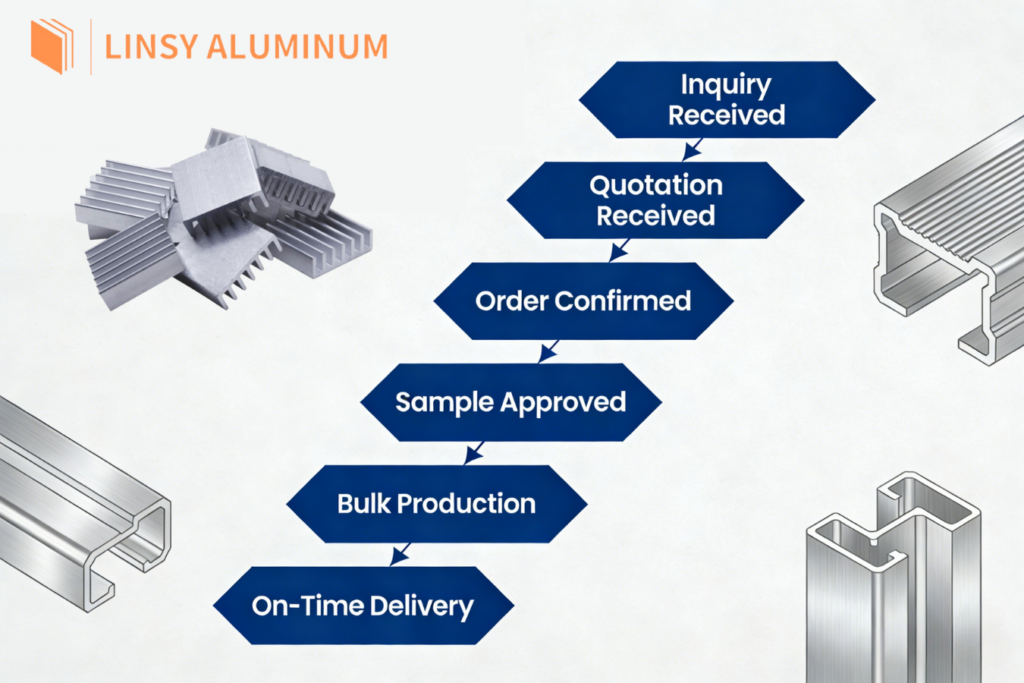
Avantages pour Linsy
Linsy Aluminum est un fournisseur de premier plan de produits de transformation de l'aluminium, au service de diverses industries, notamment l'aérospatiale, l'ingénierie générale, l'automobile, la marine, la construction navale et d'autres applications industrielles spécialisées.
Nous nous engageons à respecter les normes les plus strictes en matière de qualité et de responsabilité environnementale, comme en témoignent nos certifications : ISO 9001:2008, ISO 14001:2004 et SGS.