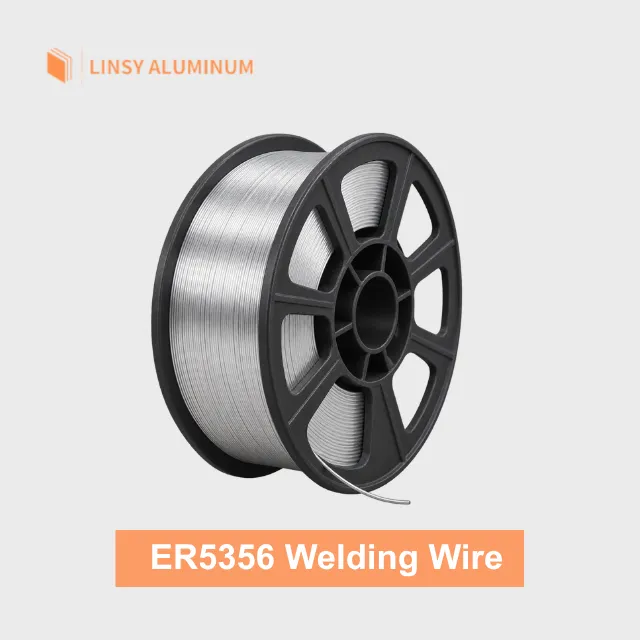
ER5356 aluminum welding filler is an Al-Mg alloy (AlMg5) supplied as MIG spooled wire and TIG straight rod, classified to AWS A5.10 ER5356 and EN ISO 18273 S Al 5356. It delivers high weld strength, good saltwater corrosion resistance and an anodized colour that matches 5xxx base metal — the reason it is the first choice for marine work and for 5xxx-to-6xxx dissimilar joints. Not recommended for continuous service above 65 °C, where the magnesium sensitizes.
MIG-Schweißdraht: 0,8 / 1,0 / 1,2 / 1,6 / 2,0 / 2,4 mm Spulen oder Trommeln
WIG-Schweißstab: 1.6 / 2.4 / 3.2 mm × 914 mm
Base metals: 5052 / 5083 / 5086 / 5454 / 5754, plus 6061 / 6063 / 6082
Qualitätsdokumente: MTC mit Wärme- und Chargennummer
ER5356 aluminum welding filler is an Al-Mg alloy (AlMg5, EN AW-AlMg5CrTiMn) for MIG spooled wire and TIG straight rod. It delivers high weld strength, good saltwater corrosion resistance and an anodized colour that matches 5xxx base metal closely, which is why it is the filler for marine and anodized work. It is not recommended for continuous service above 65 °C. Classified to AWS A5.10 ER5356 and EN ISO 18273 S Al 5356. Alloy data: 5356 Aluminiumlegierung.
As with 4043, the two names are the same alloy in different delivery forms. Schweißdraht is continuous and spooled for MIG; Schweißstab is cut to straight lengths for hand-fed TIG.
| Formular | Durchmesser (mm) | Verpackung | Typische Verwendung |
|---|---|---|---|
| MIG-Schweißdraht (aufgespult) | 0.8, 1.0, 1.2, 1.6, 2.0, 2.4 | Standardspulen oder Trommeln | Produktionsschweißen, halbautomatisch und robotergestützt |
| WIG-Schweißstab (gerade geschnitten) | 1.6, 2.4, 3.2 | 914 mm length | Manuelles WIG-Schweißen, Reparaturarbeiten, kleine Baugruppen |
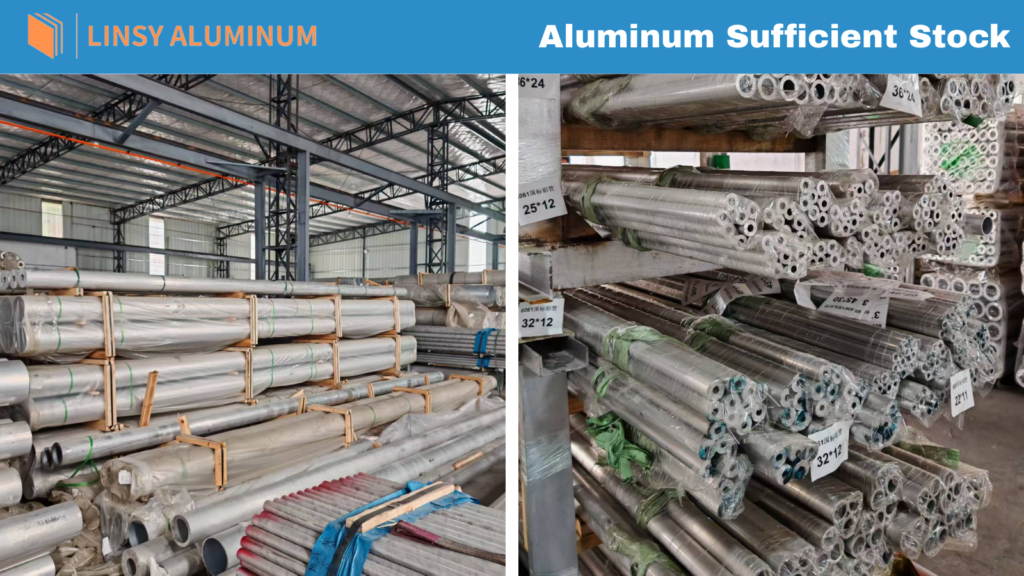
Lagerware oder Auftragsfertigung. Not every diameter is held at all times. Anything in stock ships directly with no minimum order quantity; the rest is produced or sourced to order with a MOQ. Tell us the process, diameter and quantity and we will confirm which applies.
| Unedles Metall | Eignung | Begründung |
|---|---|---|
| 5052, 5083, 5086, 5454, 5754 (5xxx) | First choice | Matches the magnesium level, so strength and corrosion resistance carry through the joint |
| 6061, 6063, 6082 (6xxx) | Works well | Higher joint strength than 4043, and the weld anodizes close to the base metal |
| 5xxx welded to 6xxx (dissimilar) | The standard answer | Handles the magnesium mismatch better than any 4xxx filler |
| Aluminiumguss A356 / A357 | Possible, but 4043 is usually better | Castings are silicon-based; a silicon filler matches them more closely |
If the assembly mixes 5xxx and 6xxx — a 5083 hull with a 6061 frame — 5356 is the filler to specify: the one grade that works on both sides without a strength penalty.
This is the constraint that decides whether 5356 is the right filler at all, and it is routinely missed.
5356 carries 4.5–5.5% magnesium. In continuous service above roughly 65 °C, that magnesium migrates to the grain boundaries and precipitates as a beta phase. The weld sensitizes: resistance to intergranular corrosion and stress-corrosion cracking drops, silently — nothing about the part changes visibly. The risk is highest in the applications 5356 is bought for, because marine and tank work combines moisture with heat.
Praktische Regel: for continuous service above 65 °C, do not specify 5356. Move to a silicon-based filler such as 4043, or tell us the service temperature and medium and we will advise. Intermittent excursions are less critical than sustained temperature, but they still belong in the enquiry rather than being discovered later.
| Eigentum | ER4043 (Al-Si 5%) | ER5356 (Al-Mg 5%) |
|---|---|---|
| Filler type | Aluminium-silicon | Aluminium-magnesium |
| Best base metals | 6xxx and cast aluminium | 5xxx, and 5xxx-to-6xxx dissimilar joints |
| Flow and wetting | Better — more fluid, more forgiving of gaps | Less fluid; needs tighter fit-up |
| Schweißnahtfestigkeit | Lower (roughly 170–190 MPa deposit) | Höher |
| Saltwater corrosion | Mäßig | Good — the reason it dominates marine work |
| Anodized colour | Weld zone turns dark grey to black | Matches 5xxx base metal closely |
| Service above 65 °C | Acceptable | Not recommended — sensitizes |
One line: 4043 is the silicon filler for 6xxx and castings — easy-flowing but dark after anodizing. 5356 is the magnesium filler for 5xxx and mixed joints — stronger, salt-water resistant, matching anodized colour, but with a temperature ceiling. Product detail on the other side of the choice: 4043 Aluminiumlegierung.
| Element | Spezifikation | Element | Spezifikation |
|---|---|---|---|
| Magnesium (Mg) | 4.5 - 5.5 | Mangan (Mn) | 0.05 - 0.20 |
| Chrom (Cr) | 0.05 - 0.20 | Titan (Ti) | 0.06 - 0.20 |
| Silizium (Si) | 0,25 max | Eisen (Fe) | 0,40 max. |
| Kupfer (Cu) | 0,10 max | Zink (Zn) | 0,10 max |
Weight percent; aluminum is the balance. The chromium and titanium are there to control grain structure and improve as-cast toughness in the weld.
| Eigentum | Wert |
|---|---|
| Tensile strength, filler deposit | Higher than 4043 — the reason it is specified where the joint must carry load |
| Eloxierte Oberfläche | Clear to slightly grey, close to 5xxx base metal |
| Dichte | 2,66 g/cm³ |
Wrought 5356 in O and H22 runs 290–320 MPa tensile — higher than most 6xxx base metals, so the joint is usually limited by the base metal, not the filler.
Praxis: remove oxide and contamination first; aluminium oxide melts far above the metal and causes both porosity and lack of fusion. 5356 is less fluid than 4043, so fit-up matters — a joint that would close up with 4043 may need a groove or a second pass. Use AC TIG or DCEP MIG with pure argon or argon-helium, and do not preheat more than the section needs. Store spools dry — magnesium-bearing wire picks up moisture more readily than silicon wire.
Anwendungen: boat hulls, decks and superstructures; marine equipment and offshore fittings; RV and truck chassis frames; storage tanks and pressure vessels; bicycle and motorcycle frames; aluminium scaffolding and piping; anodized weldments where the weld must not show; repair of 5xxx structures.
Jede Bestellung wird mit einem von Linsy nach der Produktion ausgestellten MTC geliefert, das die Legierungsbezeichnung, Schmelz- und Chargennummer, chemische Zusammensetzung, mechanische Ergebnisse und eine Maßhaltigkeitsprüfung angibt. Bei Zusatzwerkstoffen ist die Chargennummer is what lets you trace a weld back to a coil if a joint fails or a certificate is challenged.
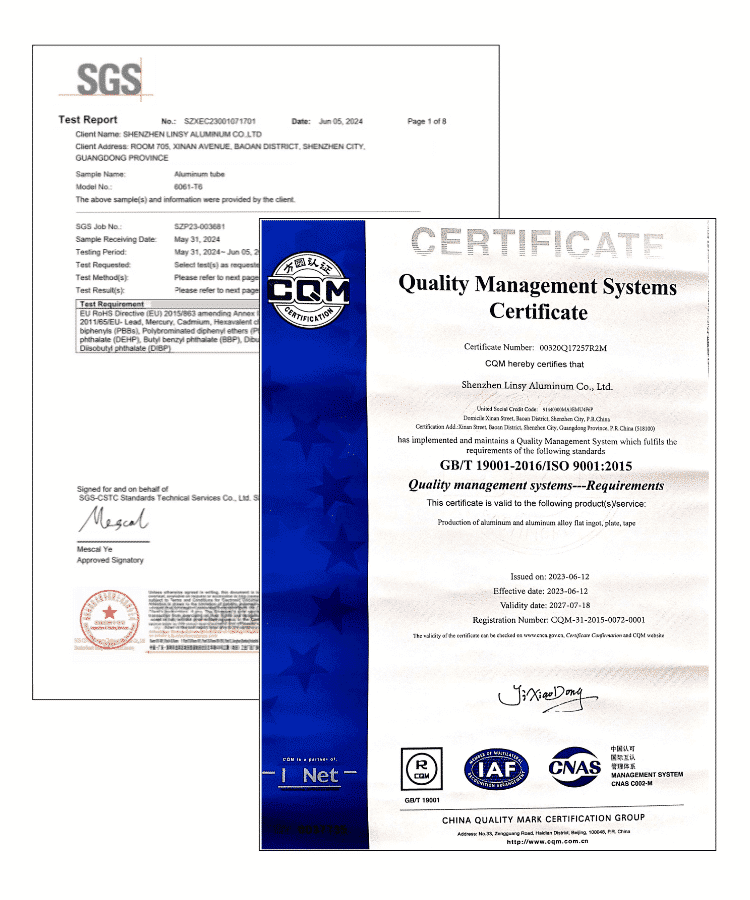
Geben Sie AWS A5.10 oder EN ISO 18273 in der Anfrage an, und das Zertifikat wird gegen diese Klassifikation ausgestellt. Fremdprüfung ist auf Anfrage gegen Aufpreis verfügbar. Die Produktion erfolgt unter ISO 9001-, ISO 14001- und ISO 45001-zertifizierten Systemen.
Der Vertrieb bestätigt Lagerware oder kundenspezifische Lieferzeit für diese exakte Kombination.
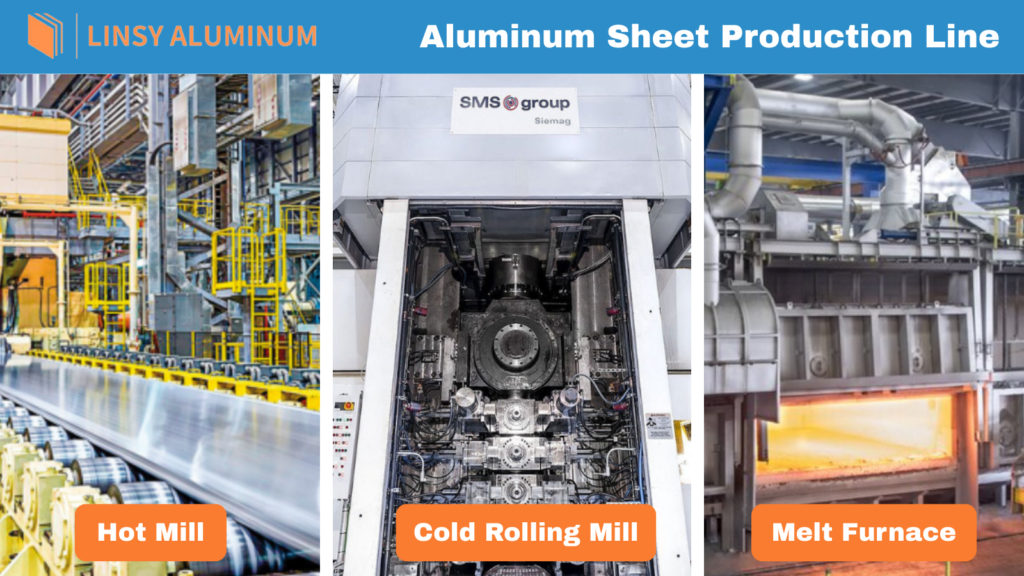
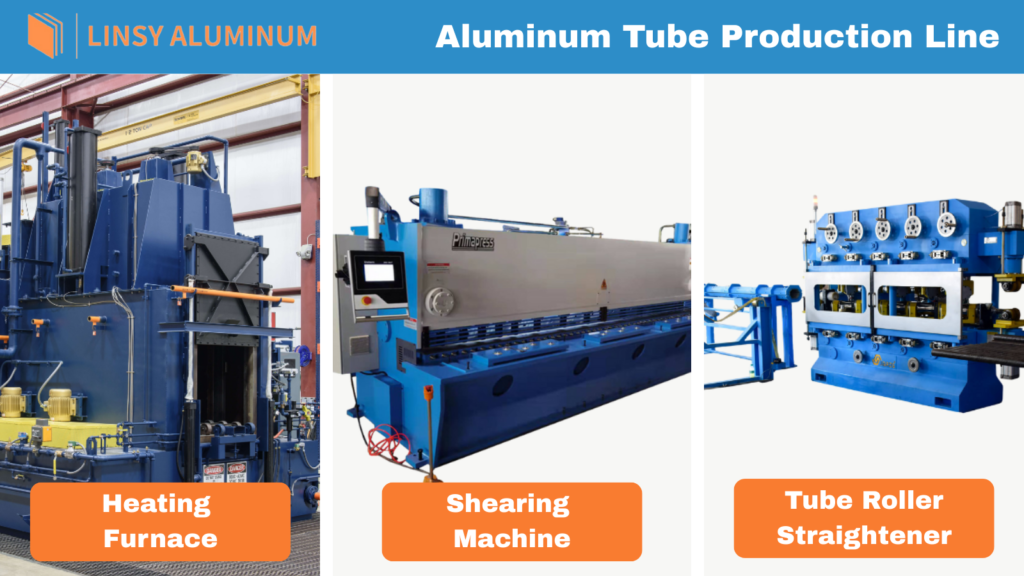
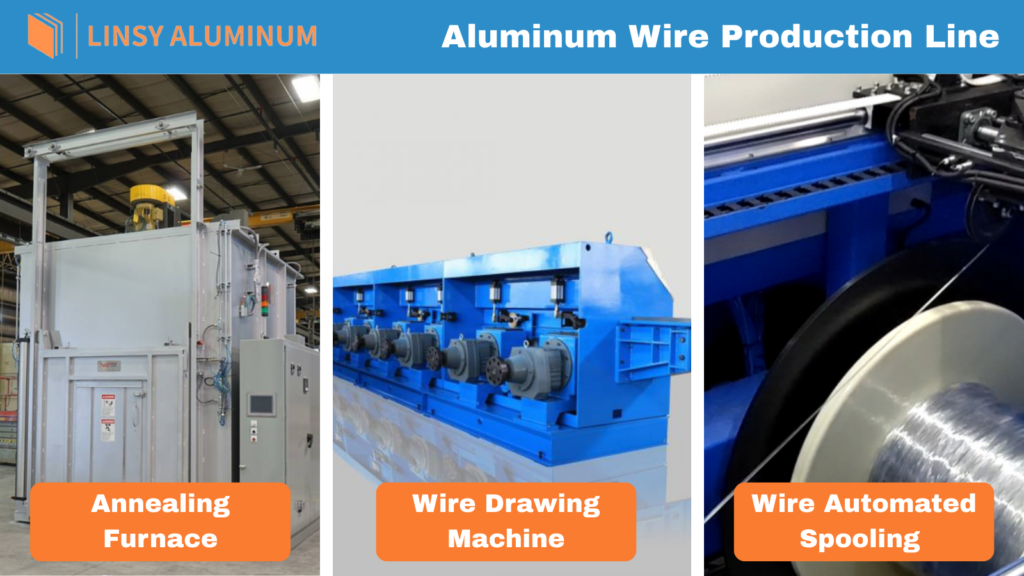
Shenzhen-based aluminum factory, more than 20 years in the industry, supplying 1000–8000 series alloys in standard specifications and custom sizes.
Q: What is the difference between ER5356 welding wire and welding rod?
A: Delivery form and process only. Wire is spooled and continuous for MIG; rod is cut to straight lengths for TIG. Both are ER5356.
Q: Can 5356 be used above 65 °C?
A: Not for continuous service. The magnesium sensitizes above that temperature and corrosion resistance drops without any visible change. Tell us the service temperature and we will recommend an alternative filler.
Q: Can 5356 weld 6061?
A: Yes, and with higher joint strength than 4043. The trade-off is that 5356 is less fluid, so fit-up must be tighter. Where the part is not anodized and the joint geometry is awkward, 4043 is often the easier weld.
Q: Why does my anodized weld look better with 5356 than with 4043?
A: Because 5356 is a magnesium filler and matches 5xxx and 6xxx base metal closely, while the silicon in 4043 anodizes dark grey to black. If the weld will be visible after anodizing, 5356 is the correct choice.
Q: Do you supply both wire and rod in the same order?
A: Yes — diameters and forms can be combined into one shipment, and specifications can be mixed with 4043 if you run both processes.
Linsy Vorteile
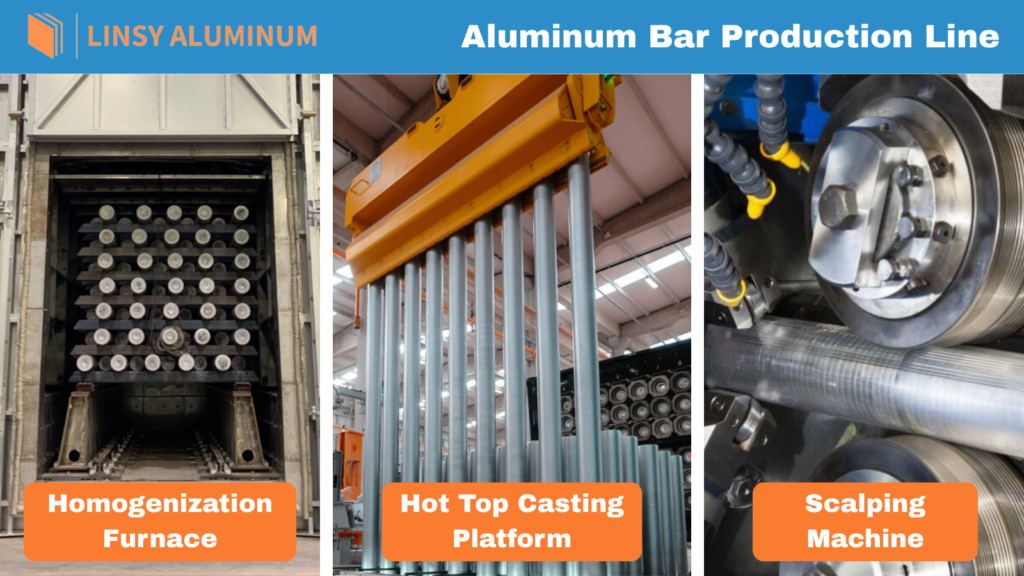
Linsy Aluminum ist ein führender Anbieter von Produkten für die Aluminiumverarbeitung und beliefert verschiedene Branchen wie die Luft- und Raumfahrt, den allgemeinen Maschinenbau, die Automobilindustrie, die Schifffahrt, den Schiffbau und andere spezialisierte industrielle Anwendungen.
Wir verpflichten uns, die höchsten Qualitäts- und Umweltstandards einzuhalten, was durch unsere Zertifizierungen belegt wird: ISO 9001:2008, ISO 14001:2004 und SGS.