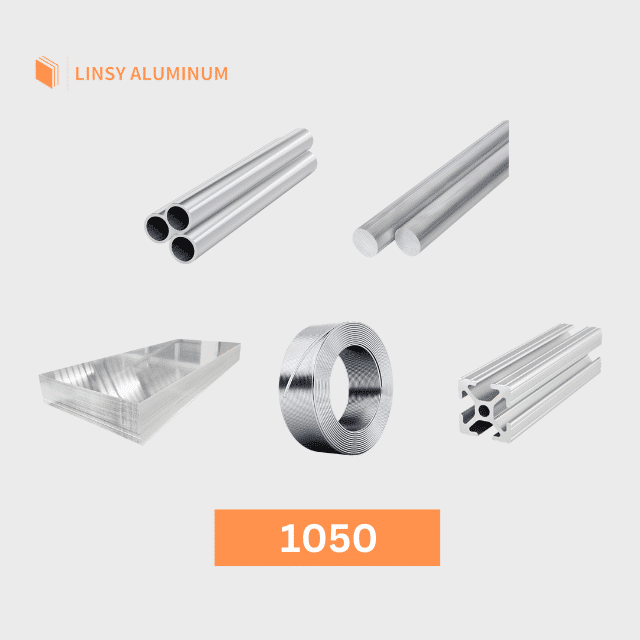


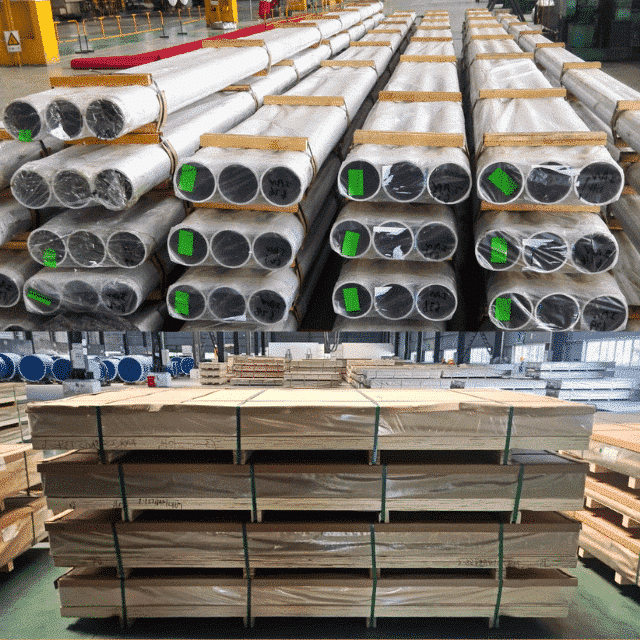

1050-Aluminiumlegierung (Al99.5) ist eine handelsübliche reine Aluminiumlegierung der 1000er-Serie mit einem Mindestaluminiumgehalt von 99,5 %. Sie ist nicht wärmebehandelbar und bietet hervorragende Korrosionsbeständigkeit, hohe elektrische und thermische Leitfähigkeit sowie herausragende Umformbarkeit. Linsy liefert 1050-Aluminiumblech, -band, -platte, -stange, -rohr, -draht und kundenspezifische Profile in den Zuständen O, H111, H112, H14 und H18, mit kundenspezifischen Abmessungen, Oberflächenveredelungsoptionen und MTC-Prüfzeugnissen.
Verfügbare Formulare: Blech / Band / Platte / Stange / Rohr / Draht / Profil
Häufige Temperamente: O / H111 / H112 / H14 / H18
Unterstützung bei der Bearbeitung: CNC-Bearbeitung / Laserschneiden / WIG- und MIG-Schweißen / Eloxieren / Polieren
Qualitätsdokumente: MTC-Bericht bei jeder Bestellung, SGS-Prüfung auf Anfrage
Die 1050-Aluminiumlegierung (UNS A91050) ist eine handelsübliche reine Aluminiumgüte der 1000er-Serie mit einem Mindestaluminiumgehalt von 99,5 %. Sie ist eine nicht wärmebehandelbare Legierung – ihre Festigkeit wird durch Kaltverfestigung (H-Zustände) und nicht durch Wärmebehandlung entwickelt. Die hohe Reinheit verleiht 1050 ihre charakteristischen Eigenschaften: hervorragende Korrosionsbeständigkeit, sehr hohe elektrische und thermische Leitfähigkeit, herausragende Umformbarkeit im weichgeglühten Zustand (O) sowie eine saubere, helle Oberfläche, die sich gut zum Eloxieren eignet.
1050 wird häufig dort spezifiziert, wo elektrische Leitfähigkeit, Wärmeübertragung, Umformbarkeit oder Korrosionsbeständigkeit wichtiger sind als Zugfestigkeit. Typische Anwendungen umfassen elektrische Stromschienen und Leiter, Wärmetauscher, Beleuchtungsreflektoren, chemische Lagertanks, Dacheindeckungen und Verkleidungen sowie eine breite Palette tiefgezogener oder drückgeformter Bauteile. Linsy liefert 1050-Aluminium in Blech, Band, Platte, Stange, Rohr, Draht und kundenspezifischen Profilen, mit MTC-Prüfzeugnissen für jede Bestellung und SGS-Prüfberichten auf Anfrage.
Linsy liefert 1050-Aluminium in der gesamten Palette standardmäßiger und kundenspezifischer Produktformen. Länge, Breite und Maßtoleranzen können an Ihre Projektanforderungen angepasst werden.
| Formular | Temperament | Dicke (mm) | Breite (mm) | Länge (mm) |
|---|---|---|---|---|
| 1050 Blech / Band | O, H111, H112, H14, H18 | 0.3 – 6.0 | 500 – 2600 | 500 – 16000 |
| Formular | Temperament | Dicke (mm) | Breite (mm) | Länge (mm) |
|---|---|---|---|---|
| 1050 Platte | O, H112, H14 | 6.0 – 80 | 500 – 2600 | 500 – 16000 |
| Formular | Temperament | Durchmesser (mm) | Länge (mm) |
|---|---|---|---|
| 1050 Rundstange | O, H112 | 6 – 300 | 1000 – 6000 |
| Formular | Temperament | Äußerer Durchmesser (mm) | Wandstärke (mm) | Länge (mm) |
|---|---|---|---|---|
| 1050-Aluminiumrohr | O, H112 | 6 – 300 | 1 – 50 | 1000 – 6000 |
| Formular | Temperament | Durchmesser (mm) | Gewicht/Spule |
|---|---|---|---|
| 1050 Aluminium-Draht | O, H14, H18 | 0.8 – 20 | Mindestens 50 kg |
1050-Aluminium ist auch in kundenspezifischen Strangpressprofilen, Bändern und zugeschnittenen Zuschnitten erhältlich. Kontaktieren Sie Linsy mit Ihrer Zeichnung oder Spezifikation, um Machbarkeit und Lieferzeit zu bestätigen.
1050-Aluminium wird nach mehreren wichtigen internationalen Normen hergestellt und bestellt. Bei der Beschaffung oder Spezifizierung von Material werden üblicherweise folgende äquivalente Bezeichnungen und Normen verwendet:
| Standard / System | Bezeichnung |
|---|---|
| AA (Aluminiumverband) | 1050 |
| UNS | A91050 |
| EN AW (Europäisch) | EN AW-1050A |
| ISO 209 | Al99.5 |
| DIN (historisch) | Al99.5 |
| JIS H 4000 | A1050 |
Anwendbare Produktnormen: ASTM B209 (Blech/Platte), ASTM B210 (gezogenes Rohr), ASTM B211 (Stange/Rundstange), ASTM B221 (stranggepresste Stange/Rundstange/Rohr/Profil), EN 485-2, EN 573-3, ISO 6361.
Die folgenden Zusammensetzungsgrenzen basieren auf den Spezifikationen der Aluminum Association und ISO 209 für 1050 / Al99.5. Diese Werte stellen die maximal zulässigen Verunreinigungsgehalte dar, sofern nicht als Mindestwert angegeben.
| Element | Symbol | Min (%) | Max (%) |
|---|---|---|---|
| Silizium | Si | — | 0.25 |
| Eisen | Fe | — | 0.40 |
| Kupfer | Cu | — | 0.05 |
| Mangan | Mn | — | 0.05 |
| Magnesium | Mg | — | 0.05 |
| Zink | Zn | — | 0.05 |
| Titan | Ti | — | 0.03 |
| Sonstige (jeweils) | — | — | 0.03 |
| Sonstige (insgesamt) | — | — | 0.10 |
| Aluminium (Rest) | Al | 99.50 | — |
1050 ist eine kaltverfestigbare Legierung. Die Festigkeit nimmt zu, wenn das Material durch die H-Zustandsreihe kaltverformt wird. Die folgenden Werte sind typisch für 1050-Aluminium und dienen dem Materialvergleich und der vorläufigen Auswahl. Endgültige Auslegungswerte sollten gegen die anwendbare Norm und das MTC für die jeweilige Charge verifiziert werden.
| Temperament | Zugfestigkeit (MPa) | Streckgrenze (MPa) | Dehnung (%) | Typische Verwendung |
|---|---|---|---|---|
| 1050-O (weichgeglüht) | 75 – 95 | ≤ 35 | ≥ 35 | Tiefziehen, Drücken, starke Umformung |
| 1050-H111 / H112 | 80 – 100 | ≥ 40 | ≥ 25 | Allgemeine Fertigung, leicht verformte Teile |
| 1050-H14 (halbhart) | 100 – 120 | ≥ 80 | ≥ 6 | Allgemeine strukturelle und geformte Teile |
| 1050-H18 (vollhart) | 120 – 150 | ≥ 110 | ≥ 3 | Teile, die höchste Festigkeit durch Kaltverformung erfordern |
Da 1050 nicht wärmebehandelbar ist, basiert die Zustandsauswahl auf dem Grad der Kaltverfestigung, der für Ihre Anwendung erforderlich ist. Die folgende Anleitung hilft Ihnen, den richtigen Zustand für häufige Anwendungsfälle zu wählen.
| Temperament | Zustand | Wesentliche Merkmale | Am besten für |
|---|---|---|---|
| O | Vollständig weichgeglüht | Weichster Zustand, maximale Umformbarkeit, geringste Festigkeit | Tiefziehen, Drücken, reflektierende Teile, Kochgeschirr |
| H111 / H112 | Leicht kaltverfestigt | Mittlere Festigkeit, gute Umformbarkeit | Allgemeine Blechbearbeitung, Rohrleitungen, leicht geformte Teile |
| H14 | Halbhart | Gutes Gleichgewicht zwischen Festigkeit und Umformbarkeit | Allgemeine Fertigung, Verkleidungen, Dacheindeckungen, Strukturpaneele |
| H18 | Vollhart | Höchste Festigkeit durch Kaltverformung, geringe Duktilität | Starre Teile, Versteifungen, nicht umgeformte Komponenten |
Mit einer elektrischen Leitfähigkeit von ca. 61 % IACS (International Annealed Copper Standard) und einer Wärmeleitfähigkeit von ca. 222 W/m·K wird 1050 häufig in elektrischen und thermischen Managementanwendungen eingesetzt. Es ist eine kostengünstige Alternative zu Kupfer für Stromschienen, Kabelummantelungen, Transformatorenwicklungen, Wärmetauscherlamellen und Kühlkörper.
Wie alle hochreinen Aluminiumsorten bildet 1050 eine starke, selbstheilende Oxidschicht, die einen hervorragenden Widerstand gegen atmosphärische, industrielle und maritime Korrosion bietet. Es widersteht auch vielen Chemikalien, einschließlich Salpetersäure und Wasserstoffperoxid, was es für chemische Lager- und Verarbeitungsanlagen geeignet macht.
Im O-Zustand ist 1050 außergewöhnlich weich und duktil und zeichnet sich durch Tiefziehen, Drücken, Stanzen und Biegeoperationen aus. Dies macht es zu einem bevorzugten Material für Lichtreflektoren, Kochgeschirr, dekorative Verkleidungen und komplex geformte Bauteile, die eine starke Umformung ohne Rissbildung erfordern.
1050 ist problemlos mit WIG-, MIG- und Widerstandsschweißverfahren schweißbar. Der O-Zustand wird für geschweißte Baugruppen bevorzugt, um Festigkeitsverluste in der Wärmeeinflusszone zu vermeiden. Die Zerspanung von 1050 erfordert scharfe Werkzeuge und ausreichenden Freiwinkel; das Material ist im Vergleich zu legierten Sorten klebrig, erzeugt jedoch bei korrektem Schnitt eine gute Oberflächengüte. Aufgrund seiner hohen Oberflächenreinheit ergibt das Eloxieren von 1050 eine helle, dekorative Oberfläche.
1050-Aluminium ist ein vielseitiges, kostengünstiges Material, das in einer Vielzahl von Branchen eingesetzt wird, in denen hohe Leitfähigkeit, Korrosionsbeständigkeit und Umformbarkeit wichtiger sind als hohe Festigkeit.
| Industrie | Typische Anwendungen | Warum 1050 verwendet wird |
|---|---|---|
| Elektrisch | Stromschienen, Leiter, Transformatorenwicklungen, Kabelummantelungen | Hohe elektrische Leitfähigkeit, kostengünstig gegenüber Kupfer |
| Wärmemanagement | Wärmetauscherlamellen, Kühlkörper, Kochgeschirr, Heizkörperplatten | Hohe Wärmeleitfähigkeit, Umformbarkeit |
| Architektur und Bauwesen | Dachbahnen, Wandverkleidungen, Abschlussbleche, dekorative Verkleidungen, Vorhangfassadenpaneele | Korrosionsbeständigkeit, helle Oberfläche, Umformbarkeit |
| Chemische Verarbeitung | Lagertanks, Rohrleitungen, Behälter für die Handhabung von Salpetersäure | Chemikalienbeständigkeit, Schweißbarkeit, Reinheit |
| Beleuchtung | Reflektoren, Lampengehäuse, LED-Kühlkörper | Hohe Reflektivität, Umformbarkeit, Wärmeleitfähigkeit |
| Automobilindustrie und allgemeiner Maschinenbau | Nicht-tragende Karosserieteile, Hitzeschilde, Dichtungen, Distanzstücke | Umformbarkeit, Korrosionsbeständigkeit, geringes Gewicht |
| Lebensmittel- und Pharmaindustrie | Brauereiausrüstung, Lebensmittelkontakttanks, Verpackungen | Ungiftig, hygienisch, korrosionsbeständig |
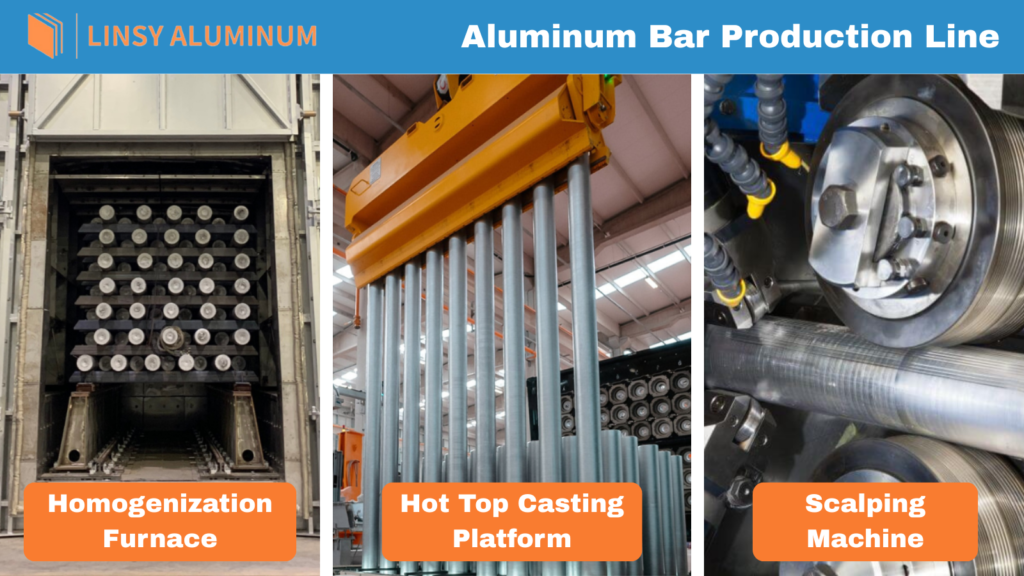
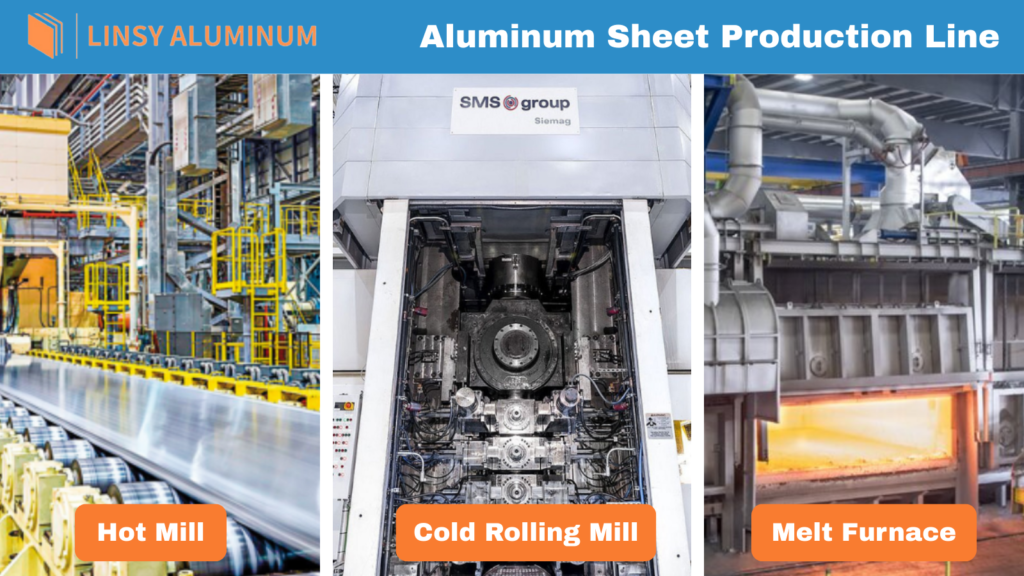
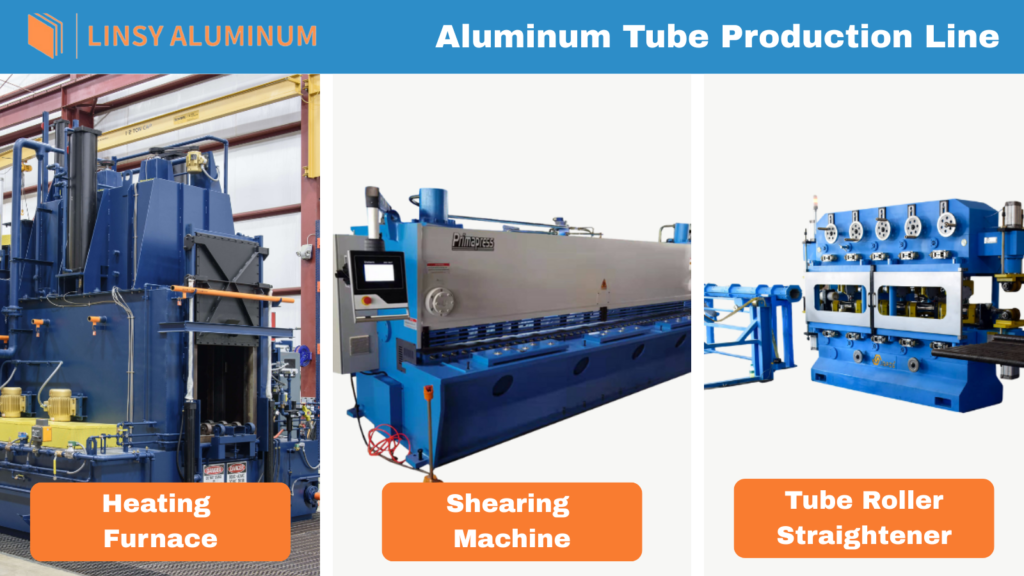
Linsys Shenzhen-Fabrik unterstützt eine Reihe von Verarbeitungs- und Mehrwertdiensten für 1050-Aluminium. Da 1050 weich und klebrig ist, sind geeignete Werkzeuge und Vorschubgeschwindigkeiten wichtig, um saubere Ergebnisse zu erzielen.
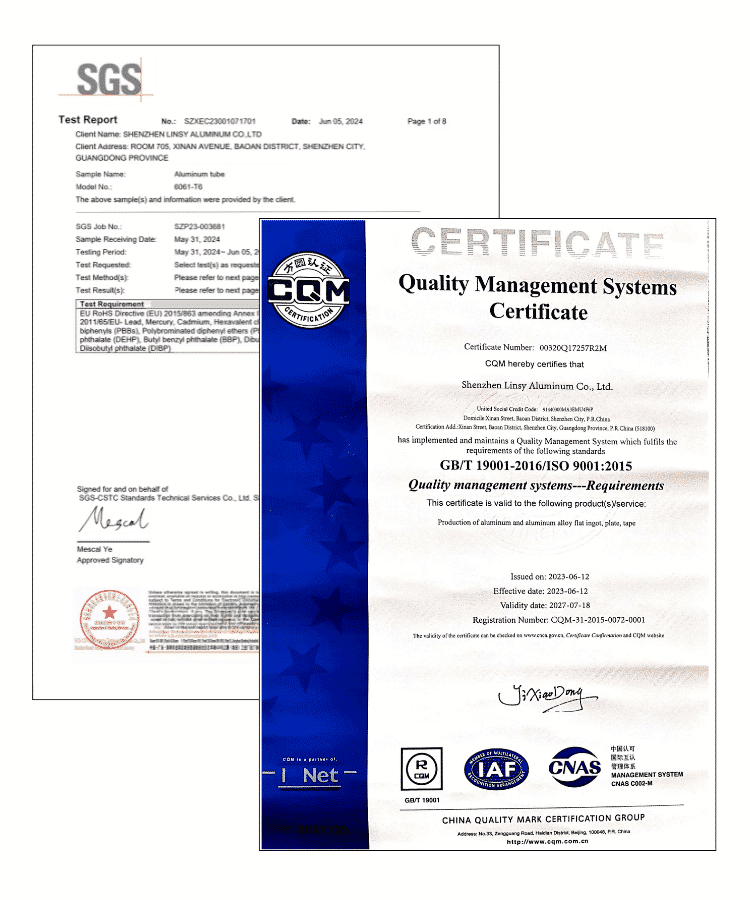
Linsy Aluminum stellt für jede Bestellung ein MTC (Material Test Certificate) aus, das nach der Produktion unter Linsy Aluminum ausgestellt wird. Das MTC enthält die chemische Zusammensetzung und die mechanischen Eigenschaften der jeweiligen Produktionscharge. Für Kunden, die eine zusätzliche Drittprüfung benötigen, sind SGS-Prüfberichte auf Anfrage gegen zusätzliche Prüfkosten erhältlich. Verfügbare SGS-Berichtsarten umfassen:
Die Qualitätskontrolle deckt den gesamten Prozess von der Rohstoffauswahl bis zur Endproduktprüfung ab. Das Managementsystem von Linsy folgt den Standards ISO 9001, ISO 14001 und ISO 45001, um eine gleichbleibende Produktqualität und verantwortungsvolle Fertigungspraktiken zu unterstützen.
Linsy Aluminum ist eine in Shenzhen ansässige Aluminiumfabrik mit mehr als 20 Jahren Branchenerfahrung. Wir konzentrieren uns auf werksdirekte Aluminiumlieferung, Lagerbestandsunterstützung und kundenspezifische Produktion mit niedrigen Mindestbestellmengen für Kunden, die sowohl Standardmaterialien als auch projektspezifische Spezifikationen benötigen.
Für die Aluminiumlegierung 1050 bietet Linsy an:
Die folgenden Leitfäden und Artikel bieten tiefergehenden technischen Hintergrund zur Aluminiumlegierung 1050 und verwandten Auswahlthemen:
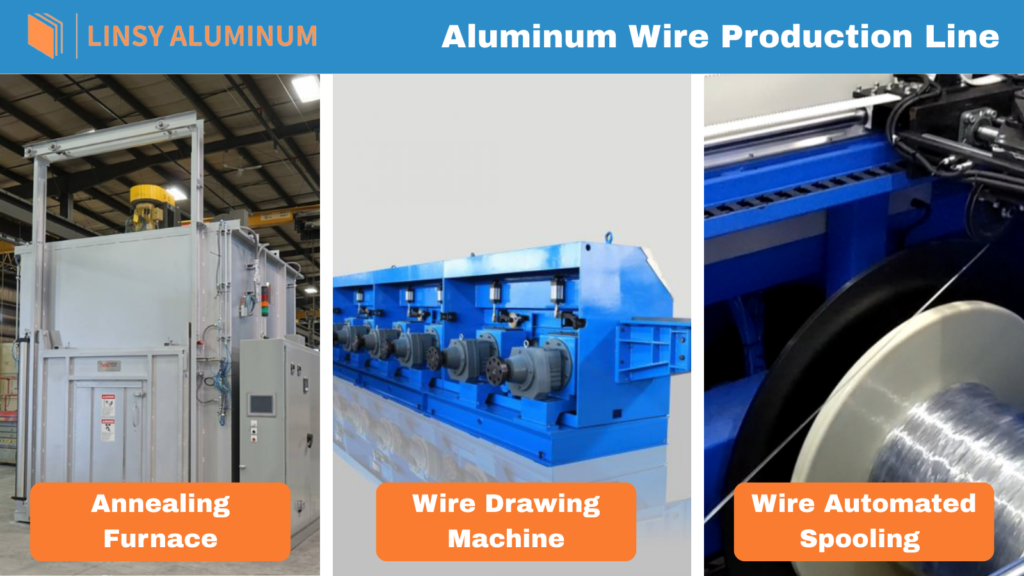
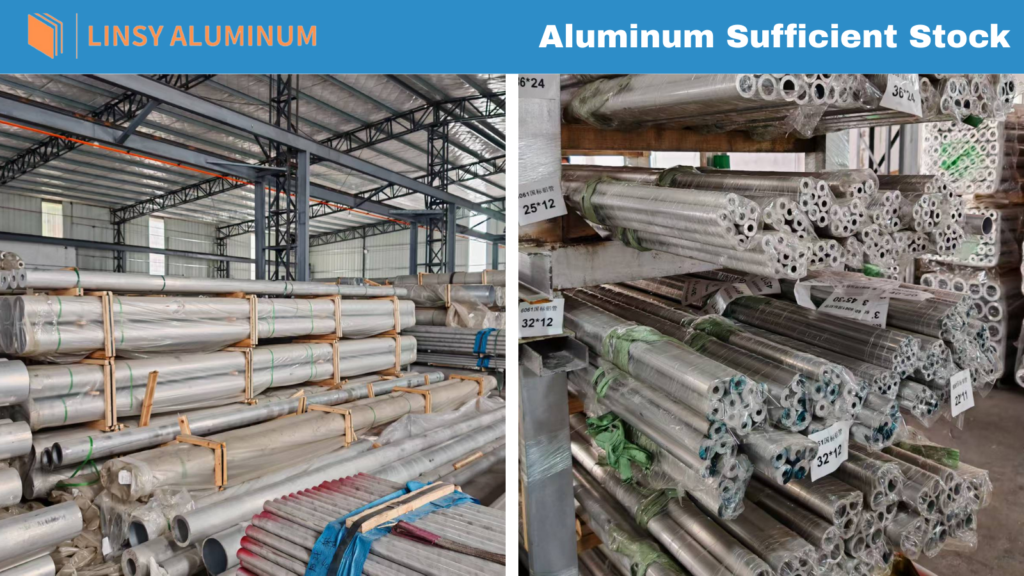
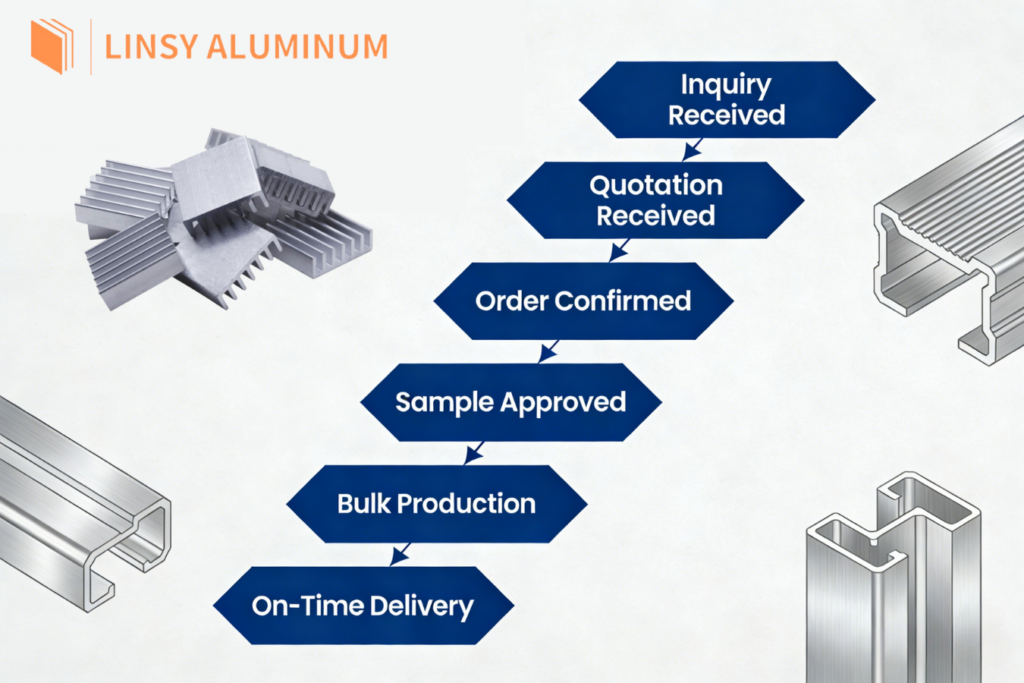
Linsy Vorteile
Linsy Aluminum ist ein führender Anbieter von Produkten für die Aluminiumverarbeitung und beliefert verschiedene Branchen wie die Luft- und Raumfahrt, den allgemeinen Maschinenbau, die Automobilindustrie, die Schifffahrt, den Schiffbau und andere spezialisierte industrielle Anwendungen.
Wir verpflichten uns, die höchsten Qualitäts- und Umweltstandards einzuhalten, was durch unsere Zertifizierungen belegt wird: ISO 9001:2008, ISO 14001:2004 und SGS.