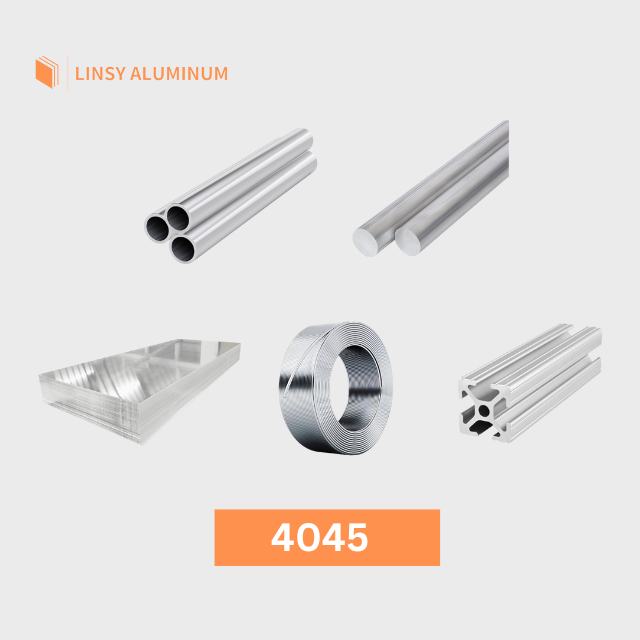



4045 알루미늄 합금(UNS A94045, EN AW-AlSi10)은 주로 실리콘(9–11%)으로 합금된 4000계열 단조 알루미늄 합금입니다. 높은 실리콘 함량은 우수한 유동성과 낮은 응고 수축률을 제공하여 브레이징 및 용접 분야에서 선호되는 필러 및 클래딩 합금입니다. Linsy는 O 및 F 템퍼 상태의 브레이징 시트, 코일, 필러 와이어, 호일 및 바 형태로 4045 알루미늄을 공급하며, 맞춤형 치수, 표면 마감 및 MTC 보고서를 제공합니다.
이용 가능한 양식: 브레이징 시트 / 코일 / 필러 와이어 / 호일 / 바
흔히 나타나는 기질: O / F
처리 지원: CNC 가공 / 레이저 절단 / 슬리팅 / 표면 마감
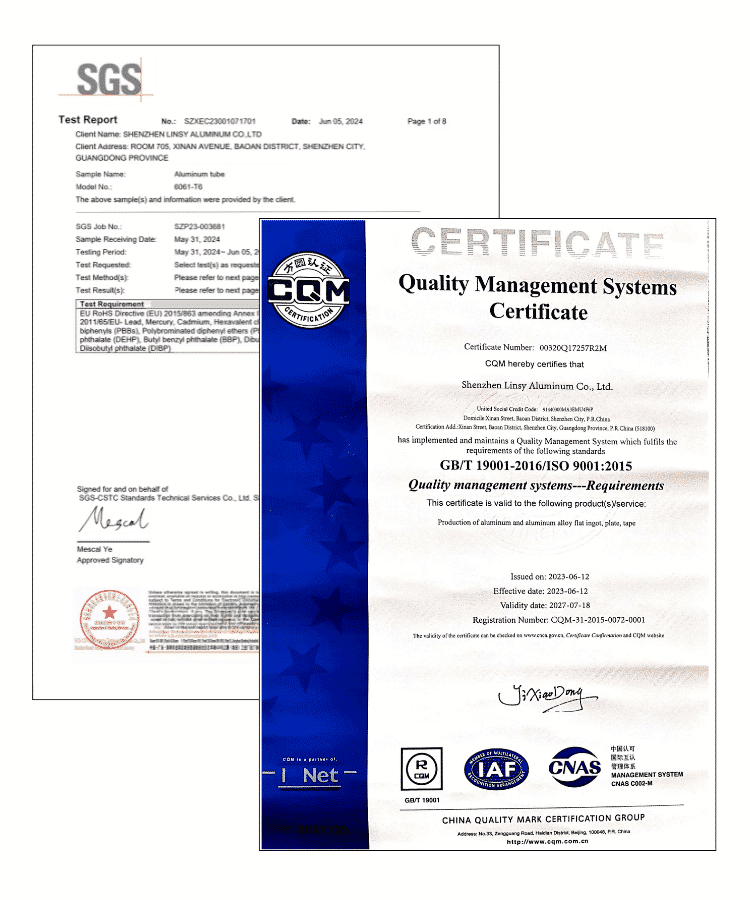
품질 관련 문서: 모든 주문 시 MTC 보고서 제공, 요청 시 SGS 검사 실시
4045 알루미늄 합금(UNS A94045, EN AW-4045 / AlSi10)은 4000계열의 열처리 가능한 단조 알루미늄 합금으로, 주로 9–11%의 실리콘으로 합금됩니다. 높은 실리콘 함량은 용융 범위를 낮추고 브레이징 중 우수한 유동성을 제공하는 동시에 응고 수축을 줄여 4045를 가장 널리 사용되는 알루미늄 브레이징 및 필러 합금 중 하나로 만듭니다.
6061 또는 7075와 같은 구조용 합금과 달리 4045는 하중 지지 용도로 설계되지 않았습니다. 그 가치는 필러로서의 야금학적 거동, 즉 조인트로 깨끗이 흘러 들어가고 알루미늄 모재를 잘 적시며 최소한의 균열로 건전한 브레이징 어셈블리를 생성하는 데 있습니다. 4045는 일반적으로 브레이징 시트(종종 3003, 3005 또는 6951 코어 합금의 클래딩 층으로), 가스 용접 및 브레이징용 필러 와이어, 열교환기 제조용 호일 형태로 공급됩니다.
4045는 ASTM B209(시트 및 플레이트), ASTM B211(바, 봉 및 와이어), ISO 6361 및 EN 573-3을 포함한 주요 국제 표준의 적용을 받습니다. 유럽 명칭은 EN AW-4045 / AlSi10(A)입니다.
Linsy는 브레이징, 용접 및 열교환기 응용 분야에 맞춰 표준 및 맞춤형 제품 형태로 4045 알루미늄을 공급합니다. 치수 및 공차는 프로젝트 요구 사항에 맞게 맞춤 설정할 수 있습니다.
| 양식 | 성질 | 두께(mm) | 너비(mm) | 길이(mm) |
|---|---|---|---|---|
| 4045 브레이징 시트 / 코일 | F, O | 0.1 – 4.0 | 500 – 1600 | 500 – 6000 |
4045 브레이징 시트는 열교환기 제조를 위해 클래드 복합재(3xxx 또는 6xxx 계열 코어에 클래딩된 4045)로 자주 공급됩니다. 단면 및 양면 클래드 구조 모두 요청 시 견적이 가능합니다.
| 매개변수 | 사양 |
|---|---|
| 지름 | 0.8 – 5.0 mm |
| 성질 | F, O |
| 코일 중량 | 최소 20 kg |
| 크기 허용 오차 | ± 0.03 mm |
| 표면 | 깨끗하고 건조하며, 스풀 또는 직선 형태 |
4045 필러 와이어는 우수한 유동성과 조인트 충전이 요구되는 알루미늄 어셈블리의 브레이징 및 가스 용접에 사용됩니다. 약간 더 넓은 용융 간격이 허용될 때 4047(더 높은 실리콘, 더 낮은 용융 범위)의 대안입니다.
| 양식 | 성질 | 두께(mm) | 너비(mm) |
|---|---|---|---|
| 4045 호일 | O | 0.05 – 0.3 | 50 – 1200 |
| 양식 | 성질 | 지름(mm) | 길이(mm) |
|---|---|---|---|
| 4045 환봉 | F, O | 3 – 100 | 1000 – 6000 |
4045 바는 시트나 와이어보다 덜 일반적이지만, 가공용 스톡 또는 브레이징 프리폼이 필요한 응용 분야에 사용 가능합니다. 필요하신 치수 범위에 대한 재고 확인을 위해 Linsy에 문의하십시오.
4045 튜브 및 맞춤형 프로파일은 특수 브레이징 어셈블리 또는 프리폼 응용 분야를 위해 요청 시 견적이 가능합니다. 4045는 주로 필러 및 클래딩 합금이기 때문에 튜브 가용성은 구조용 등급에 비해 제한적입니다. 타당성 검토를 위해 도면이나 사양을 공유해 주십시오.
| 표준 시스템 | 명칭 |
|---|---|
| UNS | A94045 |
| EN AW | EN AW-4045 / AlSi10(A) |
| ISO | Al Si10 |
| AA / SAE | 4045 |
| JIS (일본) | A4045 |
| GB / 중국어 | 4045 |
일반적으로 적용되는 표준:
ASTM / EN 표준에 따른 성분 한계(중량 %):
| 요소 | Min % | Max % |
|---|---|---|
| 실리콘(Si) | 9.0 | 11.0 |
| 철(Fe) | — | 0.8 |
| 구리(Cu) | — | 0.30 |
| 망간(Mn) | — | 0.30 |
| 마그네슘(Mg) | — | 0.30 |
| 아연(Zn) | — | 0.20 |
| 티타늄(Ti) | — | 0.20 |
| 그 외, 각각 | — | 0.05 |
| 기타, 합계 | — | 0.15 |
| 알루미늄(Al) | 잔부(≈ 87.0 – 89.5) | |
높은 실리콘 함량은 4045의 정의적 특징입니다. 실리콘은 용융 범위를 약 577–632 °C(1071–1170 °F)로 낮추어 브레이징 어셈블리에서 코어 합금보다 먼저 4045가 용융 및 유동할 수 있게 합니다. 이것이 4045가 클래딩 및 필러 재료로 널리 사용되는 이유입니다.
4045는 필러 및 브레이징 합금이지 구조용 등급이 아닙니다. 기계적 특성은 보통 수준이며 주요 선정 기준이 되는 경우는 드뭅니다. 어닐링(O) 상태의 4045에 대한 일반적인 값은 아래와 같습니다.
| 속성 | 일반 값 (O 템퍼) |
|---|---|
| 인장 강도(궁극) | ≈ 124 MPa (≈ 18 ksi) |
| 항복강도 (0.2%) | ≈ 60–80 MPa (근사치) |
| 휴식 시 신장 | ≈ 15% |
| 경도(브리넬) | ≈ 40–50 HB (근사치) |
| 밀도 | 2.67 g/cm³ (0.096 lb/in³) |
| 녹는 범위 | 577 – 632 °C (1071 – 1170 °F) |
| 탄성 계수 | ≈ 70 GPa (10,150 ksi) |
표시된 값은 어닐링된 4045의 일반적인 값입니다. 항복 강도와 경도는 참고용입니다. 4045는 일반적으로 구조적 하중 지지 용도로 지정되지 않습니다. 기계적 성능이 중요한 응용 분야의 경우 6061, 5052 또는 기타 구조용 합금을 고려하십시오.
4045는 석출 경화의 이점을 받는 구조용 등급이 아닌 필러 합금이기 때문에 제한된 수의 템퍼로 공급됩니다.
| 성질 | 최상의 대상 | 참고 |
|---|---|---|
| 4045-O (어닐링) | 최대 연성이 필요한 브레이징 시트, 호일, 필러 와이어 | 가장 연질 상태. 최상의 성형성과 브레이즈 유동성. 4045 제품의 가장 일반적인 템퍼. |
| 4045-F (가공 상태) | 최종 어닐링이 지정되지 않은 바, 봉 및 와이어 | 특성은 생산 방법에 따라 다릅니다. 어닐링 상태가 필요하지 않을 때 사용됩니다. |
2xxx, 6xxx 또는 7xxx 합금과 달리 4045는 사용 중 석출 경화에 의해 강화되지 않기 때문에 T형 템퍼(T4, T6 등)를 사용하지 않습니다. 그 야금학적 역할은 구조적 하중을 지탱하는 것이 아니라 브레이징 중에 용융 및 유동하는 것입니다.
9–11%의 실리콘 함량은 4045에 낮고 좁은 용융 범위(577–632 °C)를 제공합니다. 이를 통해 브레이징 중 조인트 간극으로 깨끗이 용융 및 유동하여 과도한 침식 없이 알루미늄 모재를 적실 수 있습니다. 4045는 열교환기 제조에서 알루미늄 브레이징용 표준 필러 합금 중 하나입니다.
높은 실리콘 함량은 순수 알루미늄에 비해 응고 수축을 줄입니다. 이는 브레이징 조인트의 수축 균열 및 기공을 최소화하여 더 건전한 어셈블리를 생성하는 데 도움이 되며, 특히 긴 브레이징 이음부와 복잡한 열교환기 코어에서 중요합니다.
실리콘 첨가는 용융물 유동성을 향상시켜 4045가 좁은 조인트 간극과 복잡한 브레이즈 조인트를 채울 수 있게 합니다. 이와 동일한 특성은 얇은 단면이나 복잡한 형상이 관련된 주조 및 주물 응용 분야에도 적합하게 만듭니다.
4045는 일반적인 브레이징 어셈블리 서비스 환경에서 허용 가능한 내식성을 제공합니다. 그러나 노출된 표면보다는 클래딩 또는 필러로 자주 사용되기 때문에 완성된 어셈블리의 내식성은 일반적으로 4045 층 자체보다는 코어 합금(예: 3003 또는 6951)에 더 많이 의존합니다.
4045 is a low-to-moderate strength alloy. Its tensile strength in the annealed condition is approximately 124 MPa — far below structural grades like 6061-T6 (≈ 310 MPa) or 7075-T6 (≈ 572 MPa). It should not be specified for load-bearing applications. Its selection is driven by braze/filler performance, not by mechanical strength.
4045 is selected wherever aluminum brazing, welding filler, or cladding performance is required:
4045 requires a different processing mindset than structural alloys. Its primary function is to melt and flow during brazing — handling and fabrication should preserve surface cleanliness and dimensional accuracy.
Quality control at Linsy runs from raw material selection through finished product inspection. Every order is supplied with an MTC (Material Test Certificate) issued under Linsy Aluminum after production, including chemical composition results for the actual lot.
제3자 검증이 필요한 고객의 경우, 요청 시 추가 시험 비용을 지불하고 SGS 시험 보고서를 발급받을 수 있습니다. 제공 가능한 SGS 보고서에는 다음이 포함됩니다:
Linsy Aluminum is a Shenzhen-based aluminum factory with more than 20 years of industry experience, supplying 4045 and other 1000–8000 series alloys to customers across automotive thermal management, HVAC, general engineering, manufacturing, and power electronics.
For your 4045 sourcing, this means:
4045 is a specialty brazing and filler alloy. Dedicated 4045 application guides will be linked here as they are published. In the meantime, these related resources may help with alloy selection:
4045 is primarily used as a brazing filler and cladding alloy. Its main applications are brazed aluminum heat exchangers (radiators, condensers, evaporators), filler wire for gas welding and brazing, and clad sheet for furnace-brazed assemblies. It is not a structural load-bearing alloy.
Both are 4xxx-series aluminum-silicon filler alloys. 4045 contains 9–11% silicon; 4047 contains 11–13% silicon. The higher silicon in 4047 gives a slightly lower and narrower melting range, which can improve braze flow in tight joints. 4045 is often used where a slightly broader melting interval is acceptable.
4043 contains 4.5–6.0% silicon, while 4045 contains 9–11% silicon. 4043 is a general-purpose welding filler wire with moderate silicon content. 4045 has higher silicon, giving better fluidity and lower melting range — making it more suitable for brazing applications. 4043 is more commonly used for general gas welding and GTAW filler applications.
4045 is classified as a heat-treatable alloy in some reference standards, but it is not strengthened by precipitation hardening in practical service. It does not use T4, T6, or other T-type tempers. Its metallurgical role is to melt and flow during brazing, not to provide strength through heat treatment.
No. 4045 has low-to-moderate strength (tensile strength ≈ 124 MPa in the annealed condition). It is a filler and brazing alloy, not a structural grade. For load-bearing applications, consider 6061, 6063, 5052, or 7075 depending on your strength, weldability, and corrosion requirements.
4045 brazing sheet is aluminum sheet (often thin gauge, 0.1–4.0 mm) used in brazed heat-exchanger manufacturing. It is frequently supplied as a clad composite — 4045 clad on one or both sides of a 3003, 3005, or 6951 core alloy. During furnace brazing, the 4045 cladding melts and forms the braze joint while the higher-melting core retains its shape.
Linsy supplies 4045 as brazing sheet and coil, filler wire, foil, and bar. Tube and custom profiles can be quoted on request. Because 4045 is a specialty filler alloy, availability of some forms is more limited than for structural grades like 6061.
The melting range of 4045 is approximately 577–632 °C (1071–1170 °F). The silicon addition lowers the melting point below that of pure aluminum (660 °C), which is why 4045 melts and flows before the core alloy in brazed assemblies.
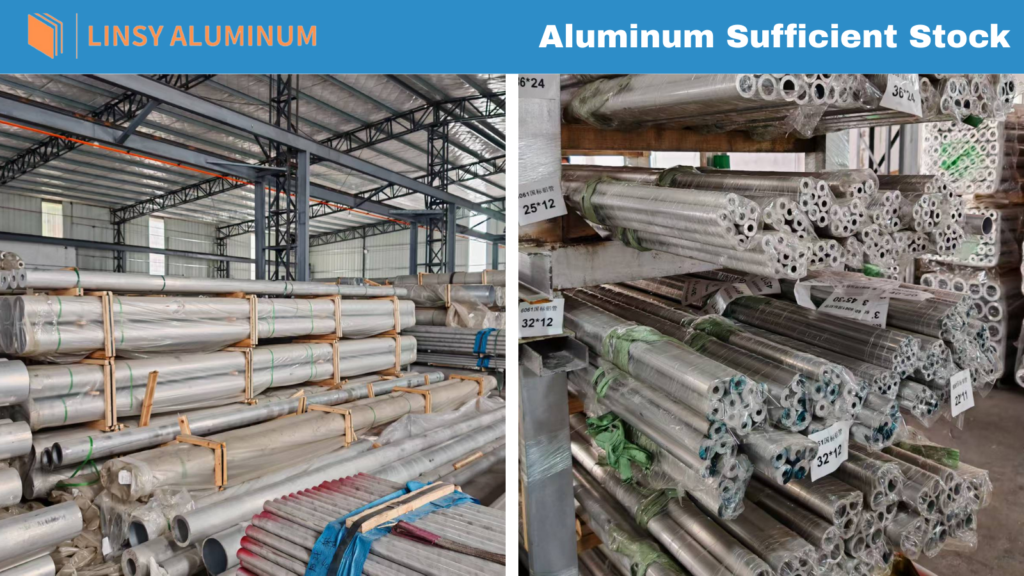
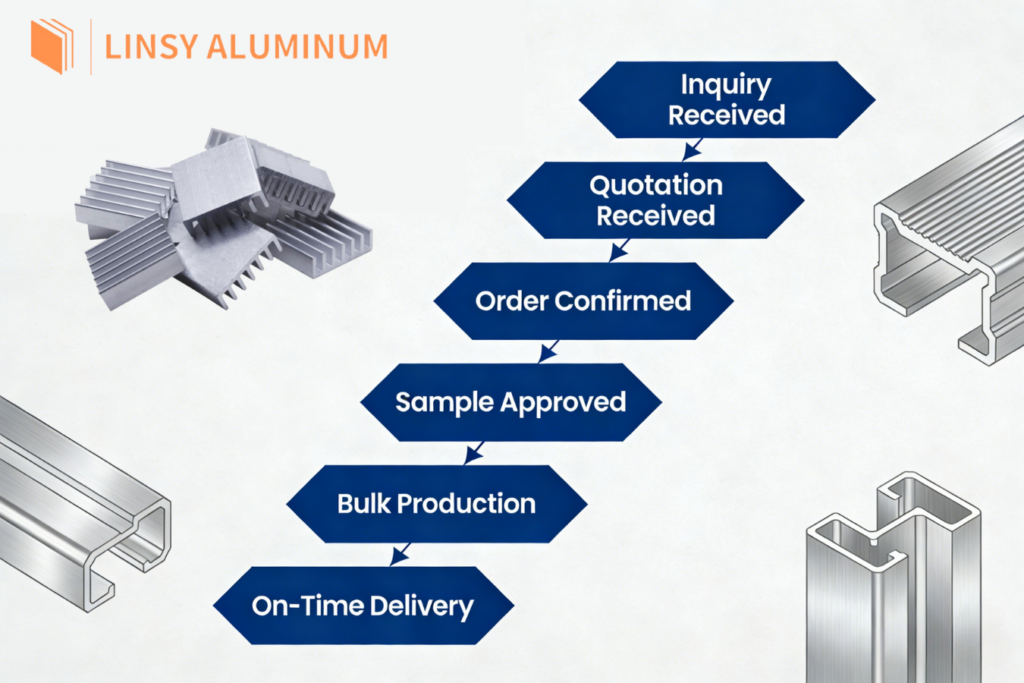
For non-stock sizes or custom specifications, typical lead time is 10–60 days depending on alloy, dimensions, processing requirements, and order complexity. In-stock standard specifications can ship faster — contact our team for a specific quote.
Linsy supports low-MOQ custom production for non-stock 4045 items. MOQ varies by form, size, and processing scope; please share your requirements and we will confirm feasibility.
Every order ships with an MTC (Material Test Certificate) issued by Linsy Aluminum after production. Optional SGS third-party test reports are available on request at an additional testing cost.
Yes, samples can be arranged for most standard and custom specifications. Sample cost and lead time depend on size and processing requirements.
Linsy는 전 세계로 배송하며, 유럽, 남아프리카, 브라질, 싱가포르, 터키, 일본, 한국 및 남아시아 지역에 안정적인 공급망을 구축하고 있습니다.
린시의 장점
린시 알루미늄은 항공우주, 일반 엔지니어링, 자동차, 해양, 조선 및 기타 특수 산업 분야를 포함한 다양한 산업 분야에 서비스를 제공하는 알루미늄 가공 제품의 선도적인 공급업체입니다.
당사는 인증에서 알 수 있듯이 최고 수준의 품질과 환경적 책임을 유지하기 위해 최선을 다하고 있습니다: ISO 9001:2008, ISO 14001:2004 및 SGS.