3003 aluminum flat bar is non-heat-treatable Al-Mn stock, about 20% stronger than 1100 with the same excellent workability. It is the general-purpose formed and welded flat stock: tank stiffeners, ducting supports, bracketry, chemical equipment frames. Strength comes from strain hardening only, and welding or brazing softens it permanently.
Grubość: 3–50 mm
Szerokość: 20–300 mm
Stany: O / H14 / H22 / H112 / F
Uwaga: temper availability narrows as thickness grows
Dokumenty dotyczące jakości: Raport MTC dołączany do każdego zamówienia
3003 aluminum flat bar is rectangular solid stock in non-heat-treatable Al-Mn with 1.0–1.5% manganese — about 20% stronger than 1100 with the same excellent workability. It is the general-purpose formed and welded flat stock: tank stiffeners, ducting supports, bracketry, chemical equipment, food-processing frames. Strength comes from strain hardening only, so the temper you buy is the strength you keep, and welding or brazing softens it permanently. Alloy data: Stop aluminium 3003.
| Grubość (mm) | Szerokość (mm) | Długość (mm) | Typowe stany |
|---|---|---|---|
| 3 – 6 | 20 – 150 | 1 000 – 6 000 | O, H14, H22 |
| 6 – 12 | 25 – 200 | 1 000 – 6 000 | O, H14, H112 |
| 12 – 50 | 30 – 300 | 1 000 – 6 000 | O, H112, F |
Read the temper column carefully — it narrows as the bar gets bigger, and that is not an ordering restriction. A wide thin bar in a hard temper cannot be rolled and levelled reliably, so above 12 mm the range falls back to O, H112 and F. If your drawing calls for H14 in a 20 mm thick, 250 mm wide bar, the specification and the physics disagree: either accept a softer temper, or reconsider the section.
Supplied to ASTM B221 as standard. Custom widths and lengths are cut to order, and cut-to-size is normal rather than a special request.
| Temperament | Wytrzymałość na rozciąganie (MPa) | Granica plastyczności (MPa) | Wydłużenie | Twardość (HB) |
|---|---|---|---|---|
| O | 95 – 130 | ≥ 35 | ≥ 25% | 28 |
| H14 | 140 – 180 | ≥ 115 | ≥ 5% | 40 |
| H22 | ≥ 185 | ≥ 165 | ≥ 3% | 55 |
Typical values; confirm against the MTC. Density 2.73 g/cm³, elastic modulus 69 GPa. H112 is hot worked without a controlled strain-hardening step, so its properties follow the forming operation rather than a temper designation — treat it as an as-fabricated condition and confirm the actuals on the certificate.
H14 to stan ogólnego przeznaczenia for formed and fabricated flat bar: enough strength for ducting supports and brackets, enough ductility to flange and bend. H22 gives more strength with some ductility retained, and suits bars that are lightly formed then used.
O jest do rzeczywistego formowania — bending on a tight radius, rolling, twisting — and it is also where 3003 shows its other strength: it brazes better than it welds. H112 appears at the heavier sizes where controlled hardening is not practical, so it is not a temper you choose for its properties but one you accept for the size.
| Stop / stan utwardzenia | Wytrzymałość na rozciąganie (MPa) | Granica plastyczności (MPa) | Odporność korozyjna | Zastosowanie |
|---|---|---|---|---|
| 3003-H14 | 140 – 180 | ≥ 115 | Dobry | Tank stiffeners, ducting supports, chemical equipment brackets |
| 5052-H32 | 214 – 262 | ≥ 159 | Lepszy w wodzie morskiej | Marine brackets, fuel tanks, higher-strength formed parts |
| 1100-O / H14 | 90 – 165 | ≥ 35 – 145 | Doskonały | Deep forming, chemical handling, electrical |
3003 is the practical middle: stronger than 1100 without losing workability, cheaper and more formable than 5052. Choose it when the bar is formed, brazed or welded and the load is modest. Move to 5052 when salt water or real stress enters, and to 1100 only where maximum formability or conductivity dominates.
Cięcie: sawn to length and width, cut-to-size as standard. Sawn edges are square; deburring is normal for parts that will be handled.
Formowanie: excellent in O, good in H14. Bending, twisting and roll forming all work; 3003 work-hardens as it forms, so a multi-stage bend sequence may need an inter-stage anneal.
On H112 specifically: because it is a hot-worked condition without a controlled strain-hardening step, two bars of the same size can differ slightly in strength depending on how they were produced. For non-critical bracketry that is irrelevant. For anything where the strength is part of a calculation, ask for the actual values on the mill certificate rather than assuming a nominal figure — on this condition the certificate is the only meaningful source.
Łączenie: brazing is the strong suit, welding is good with 4043 or 1100 filler. Both return the joint area towards annealed condition with no heat treatment to recover it — design the joint on the annealed strength of the alloy.
Powierzchnia: mill finish or anodized. Anodizing gives a slightly warmer tone than 6xxx because of the manganese, which matters if the part must colour-match a 6063 frame.
Tank stiffeners and supports, ducting and ventilation framing, chemical equipment brackets, food-processing frames, heat-exchanger supports, brazed assemblies, truck and trailer fittings, roofing and cladding supports, signage frames, general welded fabrication.
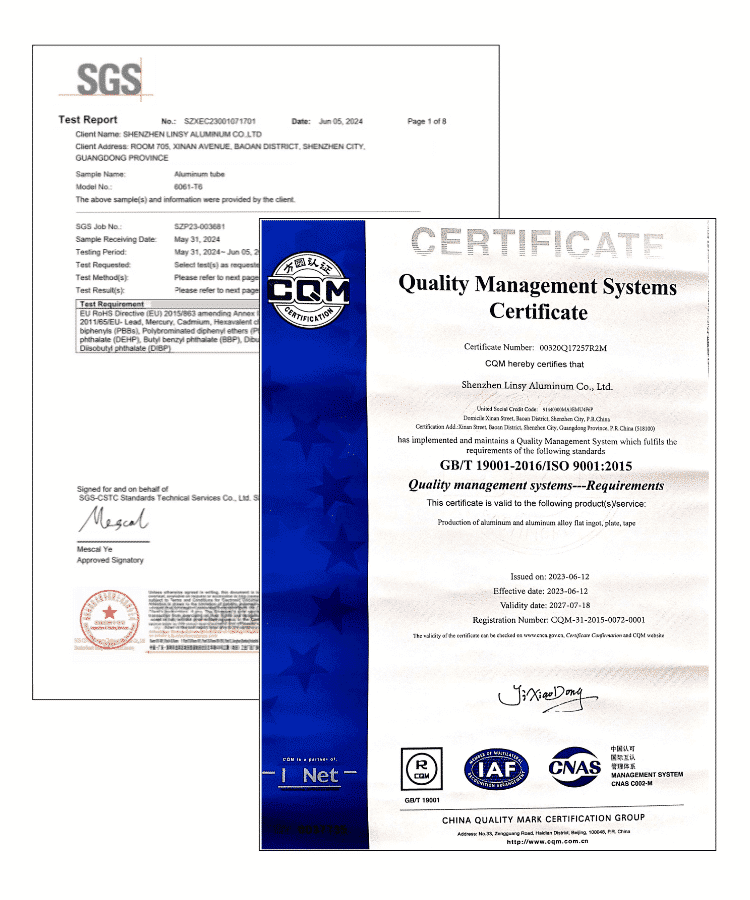
Every order ships with an MTC reporting alloy, temper, chemical composition and mechanical results against ASTM B221. For brazed or pressure assemblies, state the temper and standard on the enquiry so the certificate matches the process specification. Third-party testing is available on request at additional cost; production runs under ISO 9001, ISO 14001 and ISO 45001 certified systems.
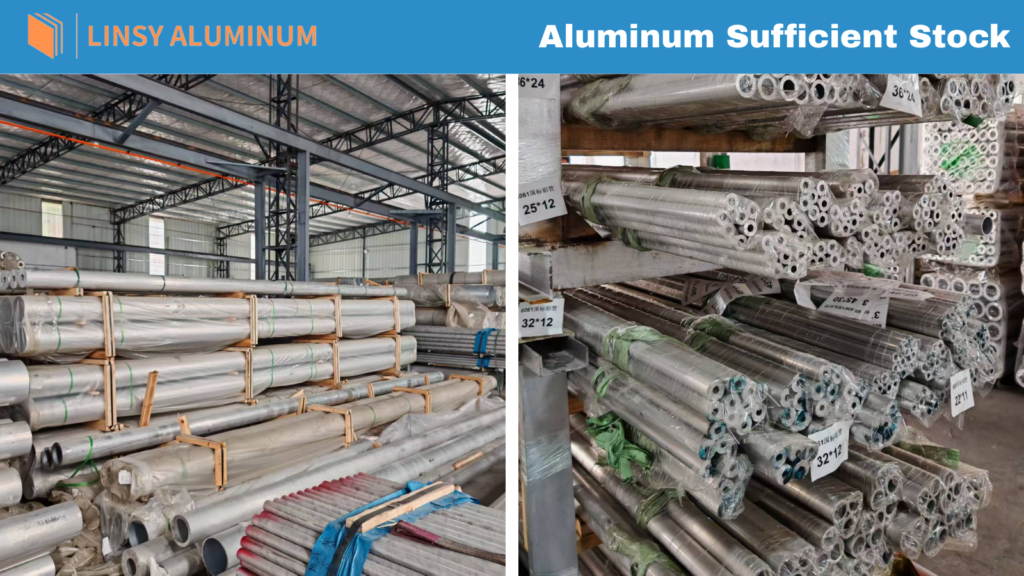
Dział sprzedaży potwierdza dostępność z magazynu lub indywidualny czas realizacji dla dokładnie tej kombinacji.
Fabryka aluminium z siedzibą w Shenzhen, ponad 20 lat w branży, dostarczająca stopy serii 1000–8000 w standardowych specyfikacjach i wymiarach niestandardowych.
Q: Why is H14 not available in the thicker sizes?
A: Because a wide, heavy bar cannot be rolled and levelled to a controlled hard temper reliably. Above 12 mm the range falls back to O, H112 and F — that is production physics, not a stocking choice.
Q: Can 3003 flat bar be heat treated?
A: No. Strength comes from strain hardening only, and any welding or brazing returns the joint area towards annealed condition.
Q: H14 or O for a bent bracket?
A: O for anything beyond a generous bend. H14 handles a simple flange but cracks on a tight radius, and 3003 has no ageing step to recover strength afterwards.
P: Dlaczego 3003 zamiast 5052?
O: Koszt i podatność do formowania. 3003 jest tańszy i łatwiejszy w formowaniu; 5052 jest o 30–50% mocniejszy i lepszy w słonej wodzie.
P: Jakie rozmiary dostarczacie?
O: Grubość 3–50 mm, szerokość 20–300 mm, cięcie na wymiar od 1 000 do 6 000 mm, z dostępnością szerokości i stanu powiązaną zgodnie z tabelą powyżej.
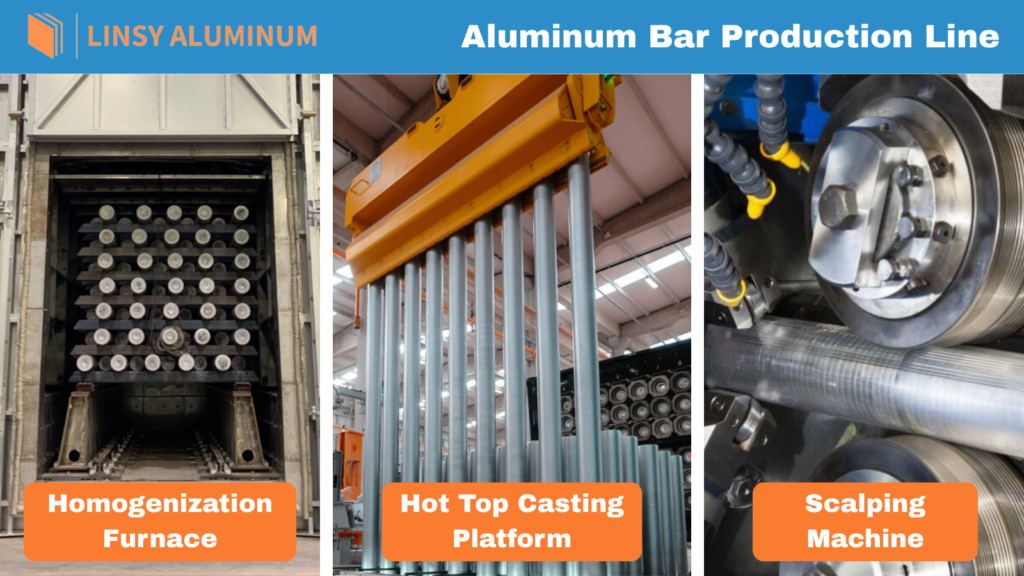
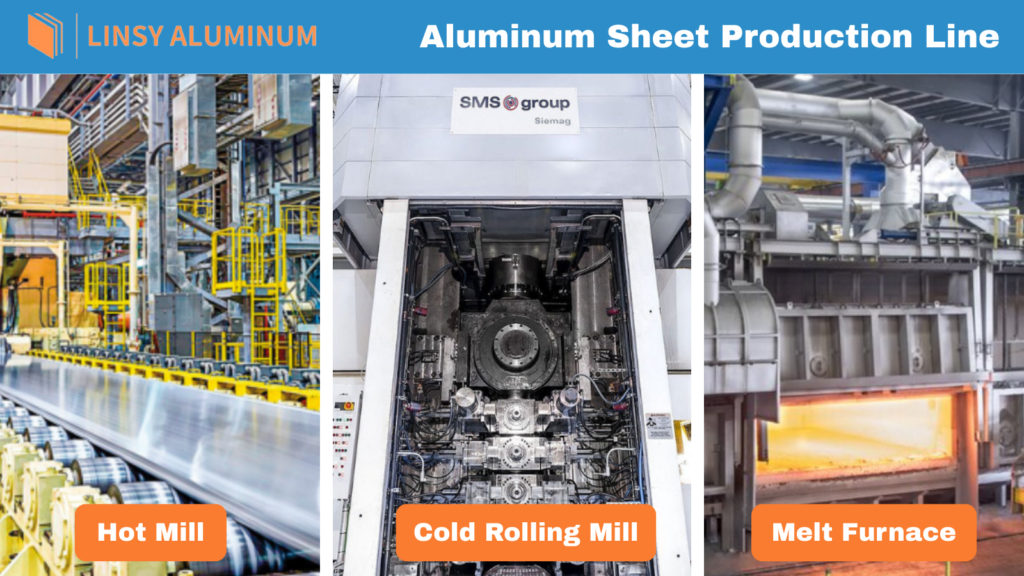
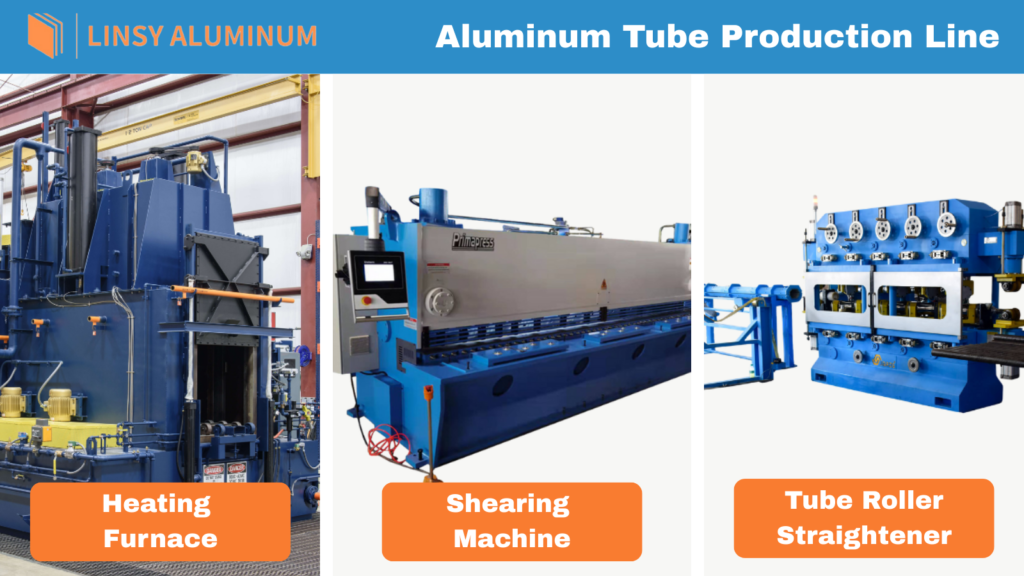
Zalety Linsy
Linsy Aluminium jest wiodącym dostawcą produktów do obróbki aluminium, obsługującym różne branże, w tym lotnictwo, inżynierię ogólną, motoryzację, przemysł morski, stoczniowy i inne specjalistyczne zastosowania przemysłowe.
Dążymy do utrzymania najwyższych standardów jakości i odpowiedzialności za środowisko, o czym świadczą nasze certyfikaty: ISO 9001:2008, ISO 14001:2004 oraz SGS.