
Linsy A380 est l'alliage de coulée sous pression aluminium-silicium-cuivre le plus largement spécifié. Il combine une excellente coulabilité, de bonnes propriétés mécaniques et un prix économique, avec une résistance à la corrosion sous contrainte et une stabilité dimensionnelle fiable dans les pièces complexes à parois minces. L'A380 est normalement utilisé à l'état brut de coulée (F) sans traitement thermique supplémentaire, bien que le T5 soit parfois appliqué pour une stabilité accrue.
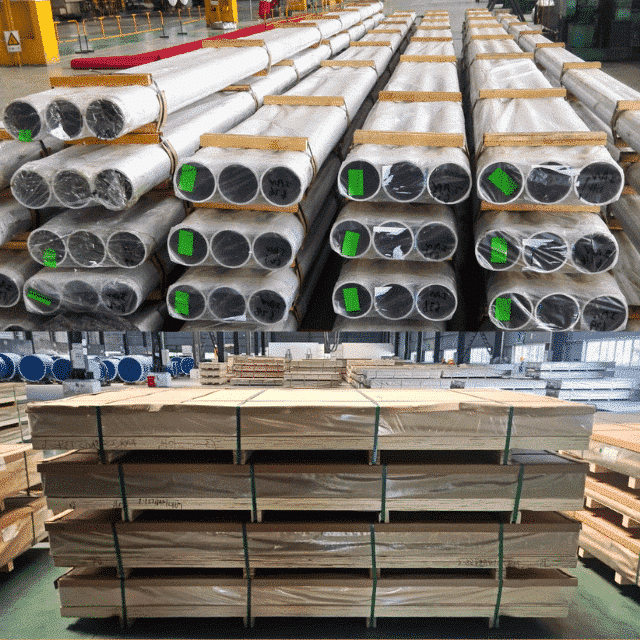
Formulaires disponibles : lingot / moulage sous pression / moulage en sable / moulage en coquille / pièces moulées usinées par CNC
Tempéraments courants : F (brut de coulée) / T5
Assistance technique : Usinage CNC / polissage / anodisation / traitement thermique
Documents relatifs à la qualité : Rapport MTC joint à chaque commande
Linsy A380 est l'alliage de coulée sous pression aluminium-silicium-cuivre le plus largement spécifié. Il combine une excellente coulabilité, de bonnes propriétés mécaniques et un prix économique, avec une résistance à la corrosion sous contrainte et une stabilité dimensionnelle fiable dans les pièces complexes à parois minces. L'A380 est normalement utilisé à l'état brut de coulée (F) sans traitement thermique supplémentaire, bien que le T5 soit parfois appliqué pour une stabilité accrue.
Linsy fournit l'A380 sous les formes les plus utiles pour les fonderies et les acheteurs de composants. Des dimensions standard et sur mesure sont disponibles ; contactez notre équipe pour les tailles non répertoriées.
| Formulaire | Taille / Spécification typique | Utilisation courante |
|---|---|---|
| Coulée sous pression | Selon plan ; épaisseur de paroi 1,0–6 mm | Pièces à parois minces de grande série |
| Moulage en sable | Selon plan | Boîtiers de plus faible volume |
| Moulage en coquille | Selon plan | Composants structurels |
| Moulage usiné par CNC | Tolérances selon ISO 2768 | Pièces finies |
Les tableaux ci-dessous répertorient les désignations commerciales et standard courantes de l'alliage. Les références croisées suivent les systèmes de dénomination largement utilisés ; vérifiez la désignation exacte requise pour votre marché cible.
| Système | Désignation |
|---|---|
| Ancienne désignation / appellation commerciale | A380 |
| AA (Association de l'aluminium) | A380 |
| FR | Série EN AC- (selon le marché) |
| ASTM | ASTM B26 / B85 (pièces moulées), B179 (lingots) |
Les limites de composition ci-dessous suivent les normes courantes pour les alliages de moulage. Les valeurs sont en pourcentage pondéral, le reste étant de l'aluminium. Confirmez les limites exactes par rapport à votre spécification requise.
| Élément | Teneur (% en poids) |
|---|---|
| Si | 7.5–9.5 |
| Fe | 1,3 max |
| Cu | 3.0–4.0 |
| Mn | 0,50 max |
| Mg | 0,10 max |
| Zn | 3,0 max |
| Ni | 0,50 max |
| D'autres, chacun | 0,05 max |
| Autres, total | 0,15 max |
| Al | Reste |
Les valeurs ci-dessous sont des propriétés typiques à température ambiante pour la condition indiquée et doivent être confirmées par rapport aux données d'essai de l'usine pour votre moulage et traitement thermique spécifiques. La méthode de moulage, l'épaisseur de section et la vitesse de refroidissement affectent les résultats.
| Tempérer | Résistance à la traction (MPa) | Limite d'élasticité (MPa) | Élongation (%) |
|---|---|---|---|
| F (brut de coulée) | 310–340 | 155–165 | 3.0–4.0 |
| T5 | 310–340 | 160–180 | 2.5–4.0 |
Choisissez la trempe en fonction de votre priorité entre résistance, ductilité et stabilité dimensionnelle :
| Tempérer | Quand utiliser |
|---|---|
| F (brut de coulée) | Brut de moulage, sans traitement thermique. Meilleure économie et stabilité dimensionnelle pour les moulages sous pression et en sable. |
| T5 | Vieillissement artificiel uniquement (sans traitement de mise en solution). Résistance améliorée avec un coût et une distorsion inférieurs au T6. |
La teneur élevée en silicium et en cuivre confère à l'A380 une fluidité supérieure et un remplissage des moules fins et complexes à cadences de production élevées.
Parmi les alliages de coulée sous pression courants les plus résistants, l'A380 convient aux supports porteurs et aux boîtiers.
Faible tendance au gauchissement ou au retrait, favorisant une production de grande série avec des tolérances serrées.
L'A380 est normalement coulé sous pression et utilisé à l'état brut de coulée. L'usinage, le taraudage et la finition vibratoire sont des opérations standard. Le placage et la peinture en poudre sont courants ; l'anodisation est limitée par la teneur élevée en silicium et n'est généralement pas recommandée. Le soudage est généralement évité pour l'A380 structurel coulé sous pression.
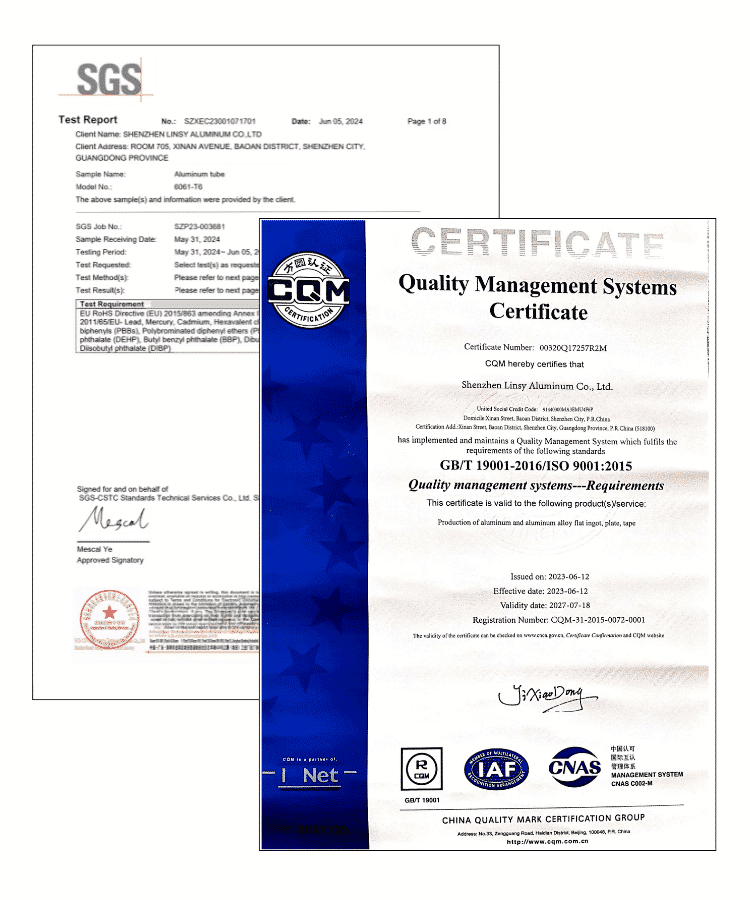
Chaque expédition d'A380 est livrée avec un certificat d'essai des matériaux (MTC) couvrant la composition chimique et les propriétés mécaniques telles que commandées. L'inspection dimensionnelle et la vérification par un tiers (par exemple, rapport SGS, disponible sur demande) peuvent être organisées. Notre système de production est géré selon les normes ISO 9001, ISO 14001 et ISO 45001.
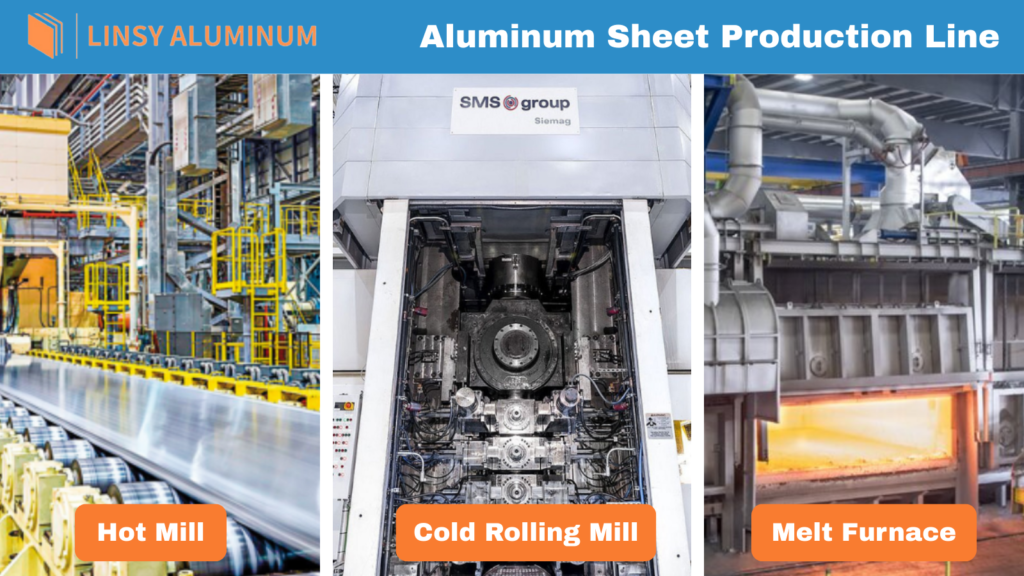
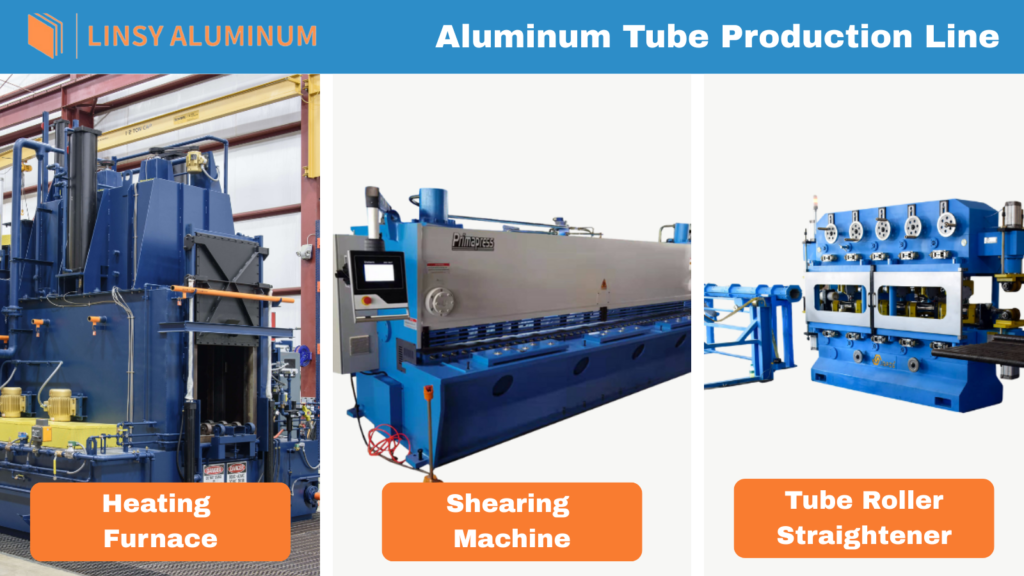
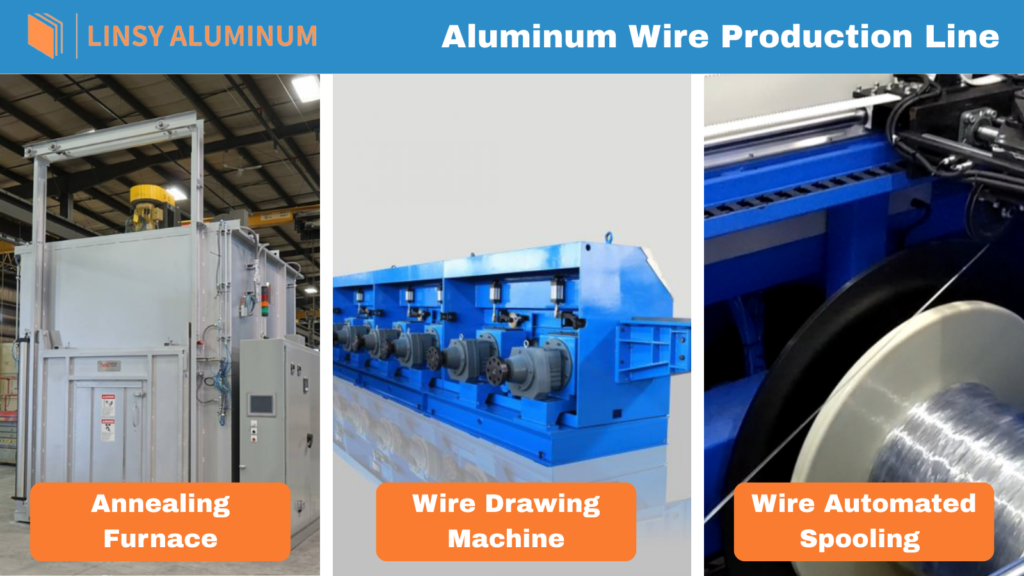
Linsy exploite une installation de fabrication d'aluminium à Shenzhen avec plus de 20 ans d'expérience dans les séries 1000 à 8000 et une large gamme de nuances de moulage. Nous soutenons à la fois la fourniture de lingots et de composants moulés finis avec usinage CNC, polissage et anodisation en interne.
L'A383 a une teneur en silicium plus élevée et une meilleure fluidité, ainsi qu'une meilleure résistance à la fissuration à chaud, préféré pour les moules très complexes ou à parois minces. L'A380 offre une résistance légèrement supérieure et constitue le choix général par défaut.
Généralement non — il est fourni à l'état brut de coulée (F). Le T5 peut être utilisé lorsque une stabilité dimensionnelle accrue est requise.
Pour les lingots standard et les moulages courants en sable/coquille, le délai typique est de 10 à 60 jours selon la trempe, la quantité et tout usinage ou traitement de surface requis. Confirmez le délai exact avec notre équipe commerciale lors de la demande de devis.
Oui. Chaque expédition est fournie avec un MTC (certificat d'essai des matériaux / rapport d'inspection) couvrant la composition chimique et les propriétés mécaniques telles que commandées.
Nous soutenons les dimensions personnalisées, le choix de la méthode de moulage, le traitement thermique (F, T4, T5, T6 selon le cas) ainsi que l'usinage CNC, le polissage et l'anodisation en aval. Partagez votre plan ou votre spécification et nous établirons un devis en conséquence.
Nos alliages de moulage sont produits et inspectés conformément à des normes largement reconnues telles que ASTM B26/B85 et EN 1706. Les références croisées de désignations spécifiques sont répertoriées sur chaque page produit ; confirmez l'exigence normative exacte pour votre marché lors de la commande.
Utilisez le formulaire de demande de devis ou contactez notre équipe commerciale en précisant l'alliage, la trempe, la forme, les dimensions, la quantité et les certificats requis. Nos ingénieurs vous répondront avec les disponibilités et les prix.
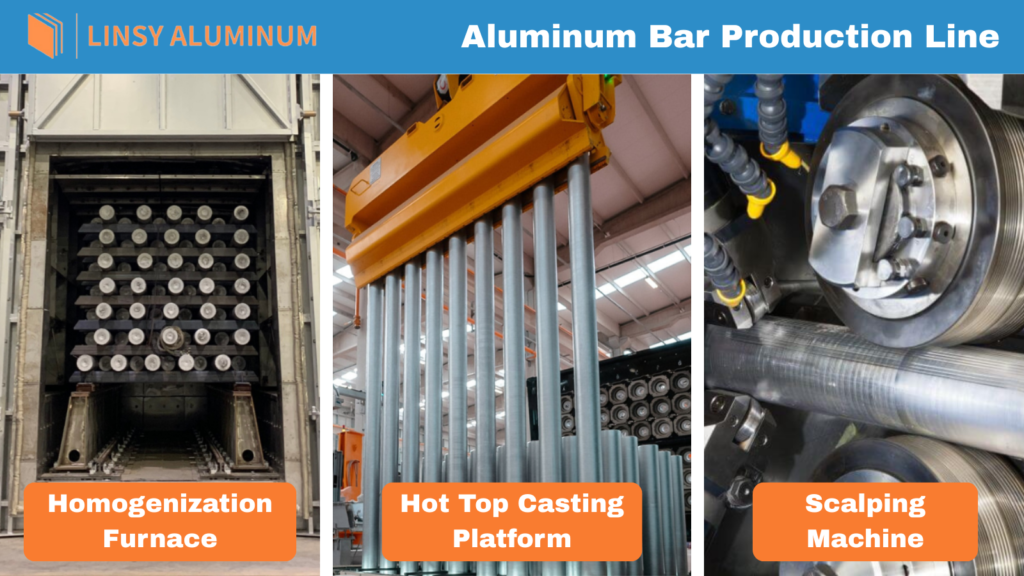
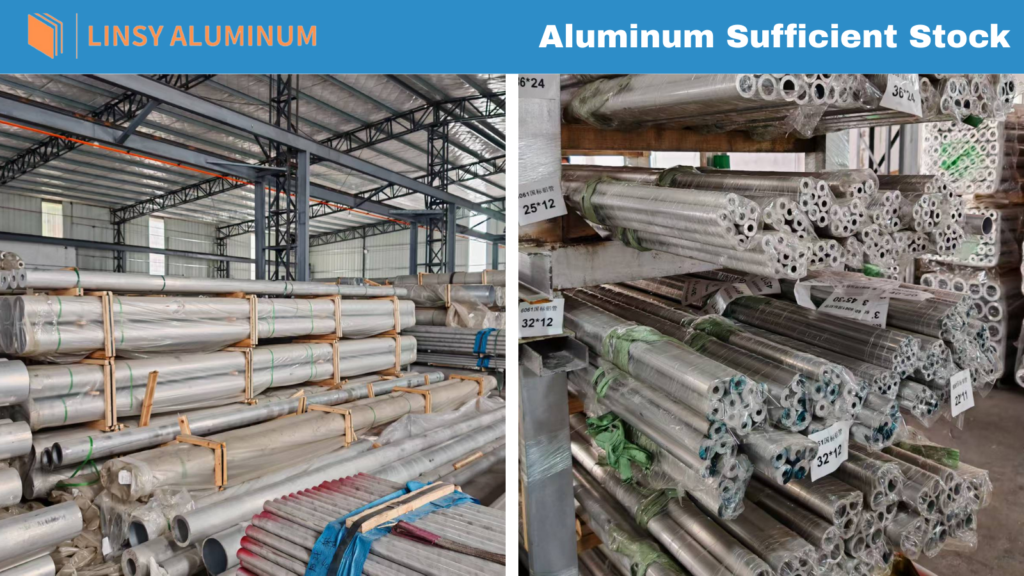
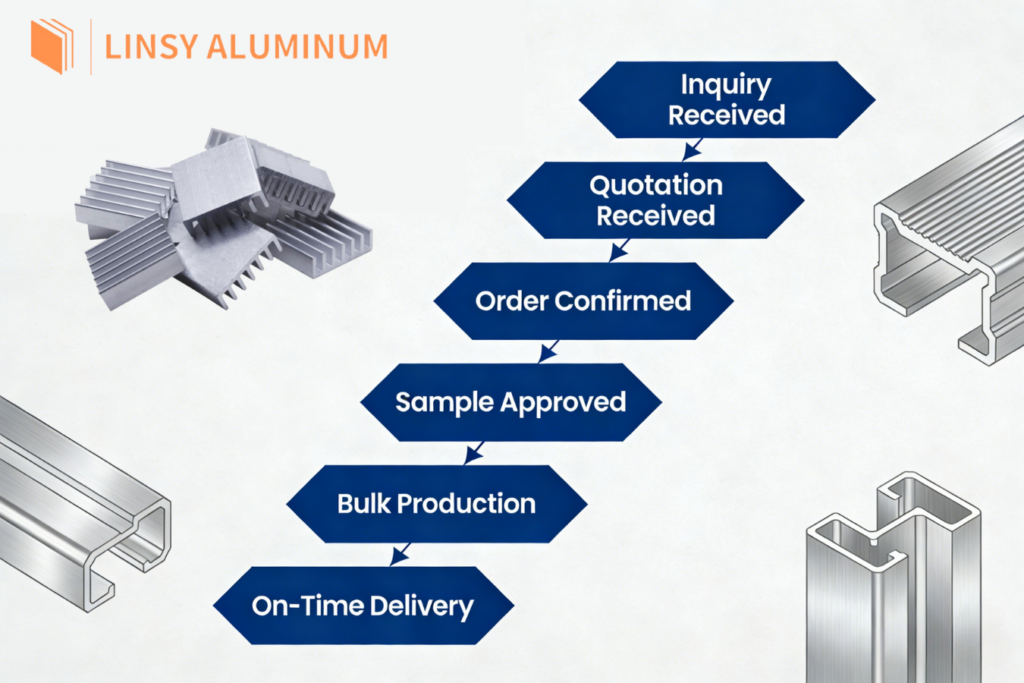
Avantages pour Linsy
Linsy Aluminum est un fournisseur de premier plan de produits de transformation de l'aluminium, au service de diverses industries, notamment l'aérospatiale, l'ingénierie générale, l'automobile, la marine, la construction navale et d'autres applications industrielles spécialisées.
Nous nous engageons à respecter les normes les plus strictes en matière de qualité et de responsabilité environnementale, comme en témoignent nos certifications : ISO 9001:2008, ISO 14001:2004 et SGS.