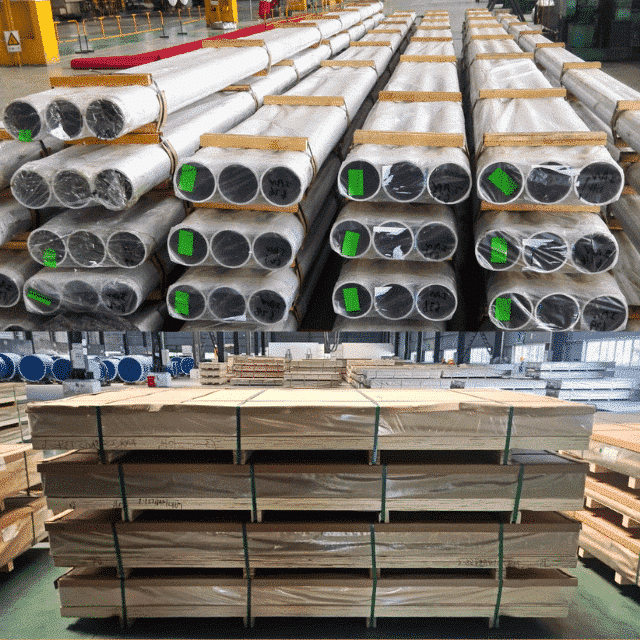

La aleación de aluminio 2219 (AlCu6Mn) es una aleación de aluminio forjado de la serie 2000 tratable térmicamente, aleada principalmente con cobre (5,8–6,8%), con adiciones de manganeso, vanadio, circonio y titanio. Se distingue de otras aleaciones de la serie 2xxx por su excepcional soldabilidad, excelente tenacidad criogénica y alta retención de resistencia a temperaturas elevadas. La aleación 2219 es la aleación estructural principal para vehículos de lanzamiento aeroespaciales, tanques de combustible criogénico y componentes estructurales de alta temperatura. Linsy suministra chapa, placa, barra, tubo y material de forja de aluminio 2219 en temple O, T31, T62, T81, T851 y T8511, con tamaños personalizados, soporte de procesamiento e informes MTC disponibles.
Formularios disponibles: chapa / placa / bobina / barra / tubo / material de forja / alambre
Temperamentos habituales: O / T31 / T62 / T81 / T851 / T8511
Asistencia técnica: mecanizado CNC / corte / soldadura / acabado de superficies
Documentos de calidad: Informe MTC con cada pedido; informes de ensayo de SGS disponibles previa solicitud
La aleación de aluminio 2219 (UNS A92219) es una aleación de aluminio forjado de la serie 2000 endurecida por precipitación, en la que el cobre es el elemento de aleación principal con un 5,8–6,8%. Su designación europea es EN AW-2219 / AlCu6Mn, lo que refleja el contenido dominante de cobre y manganeso. Lo que distingue a la aleación 2219 de otras aleaciones de alta resistencia de la serie 2xxx, como la 2014 y la 2024, es la adición deliberada de vanadio (0,05–0,15%) y circonio (0,10–0,25%), que forman fases dispersoides finas que controlan la estructura de grano y resisten el engrosamiento a temperaturas elevadas.
La aleación 2219 es notable por tres características de rendimiento que la convierten en una aleación preferida en aplicaciones aeroespaciales y criogénicas exigentes. Primero, presenta una soldabilidad excepcional para una aleación de la serie 2xxx — tanto la soldadura por arco de tungsteno con gas (GTAW/TIG) como la soldadura por arco metálico con gas (GMAW/MIG) son prácticas utilizando alambre de aporte 2319, produciendo uniones con una eficiencia mecánica que se aproxima al 60–70% de la resistencia del metal base. Segundo, la aleación 2219 conserva una excelente tenacidad a la fractura y ductilidad a temperaturas criogénicas de hasta −252 °C (−423 °F), lo que la hace adecuada para aplicaciones de tanques de combustible de oxígeno líquido e hidrógeno líquido. Tercero, la aleación mantiene una resistencia mecánica útil a temperaturas de servicio de hasta aproximadamente 300 °C (570 °F), particularmente en los temples de tipo T8.
En la familia de temple T8 (T81, T851, T8511, T87), la aleación 2219 desarrolla su máxima resistencia mediante una secuencia de tratamiento térmico de solución, trabajo en frío controlado y envejecimiento artificial. Estos temples también proporcionan una excelente resistencia al agrietamiento por corrosión bajo tensión (SCC). La aleación está cubierta por las especificaciones AMS 4066 (placa y chapa), AMS 4143 (barra y varilla) y AMS 4162/4163 (forjas), con cobertura adicional bajo ASTM B209, B211 y B221 para formas de producto generales.
Linsy suministra aleación de aluminio 2219 en una variedad de formas de producto estándar y personalizadas. La longitud, el ancho, el diámetro y las tolerancias dimensionales pueden adaptarse a los requisitos de su proyecto.
| Formulario | Temple | Espesor (mm) | Anchura (mm) | Longitud (mm) |
|---|---|---|---|---|
| Chapa / Bobina 2219 | O, T31, T81, T851 | 0.3 – 6.0 | 500 – 2600 | 500 – 16000 |
| Formulario | Temple | Espesor (mm) | Anchura (mm) | Longitud (mm) |
|---|---|---|---|---|
| Placa 2219 | O, T62, T81, T851 | 6.0 – 200 | 500 – 2600 | 500 – 12000 |
| Formulario | Temple | Diámetro (mm) | Longitud (mm) |
|---|---|---|---|
| Barra 2219 (Redonda) | O, T62, T851, T8511 | 10 – 500 | 1000 – 6000 |
| Formulario | Temple | Diámetro exterior (mm) | DI (mm) | Longitud (mm) |
|---|---|---|---|---|
| Tubo 2219 | O, T62, T851, T8511 | 10 – 500 | 5 – 450 | 1000 – 6000 |
| Formulario | Temple | Diámetro (mm) | Longitud (mm) |
|---|---|---|---|
| Material de forja 2219 | O, T62 | 20 – 600 | 500 – 6000 |
| Formulario | Temple | Diámetro (mm) | Peso / Bobina |
|---|---|---|---|
| Alambre 2219 | O, T62 | 0.8 – 30 | Mín. 50 kg |
La longitud, el ancho, el diámetro y las tolerancias dimensionales pueden personalizarse. Contáctenos con su dibujo o especificación para perfiles de aluminio 2219, preformas de forja personalizadas o placas de ingeniería con controles composicionales estrictos.
| Elemento | Composición (en % en peso) |
|---|---|
| Cobre (Cu) | 5.8 – 6.8 |
| Manganeso (Mn) | 0.20 – 0.40 |
| Vanadio (V) | 0.05 – 0.15 |
| Circonio (Zr) | 0.10 – 0.25 |
| Titanio (Ti) | 0.02 – 0.10 |
| Silicio (Si) | 0,20 Máx. |
| Hierro (Fe) | 0,30 Máx. |
| Magnesio (Mg) | 0,02 Máx |
| Zinc (Zn) | 0,10 Máx |
| Otros, Cada elemento | 0,05 Máx |
| Otros, Total | 0,15 Máx |
| Aluminio (Al) | Saldo |
Los valores a continuación son típicos para el aluminio 2219 en temples comunes. Las propiedades reales dependen de la forma del producto, el espesor de la sección y el historial de procesamiento. Contacte a Linsy para obtener datos de nivel de especificación para su pedido específico.
| Propiedad | Valor típico |
|---|---|
| Resistencia a la tracción, última | ~170 MPa |
| Resistencia a la tracción, Límite elástico (desviación del 0,2%) | ~75 MPa |
| Alargamiento | ~18% |
| Dureza (HB) | ~45 |
| Propiedad | Valor típico |
|---|---|
| Resistencia a la tracción, última | ~400 MPa |
| Resistencia a la tracción, Límite elástico (desviación del 0,2%) | ~290 MPa |
| Alargamiento | ~10% |
| Dureza (HB) | ~110 |
| Propiedad | Valor típico |
|---|---|
| Resistencia a la tracción, última | ~455 MPa |
| Resistencia a la tracción, Límite elástico (desviación del 0,2%) | ~380 MPa |
| Alargamiento | ~10% |
| Dureza (HB) | ~130 |
| Propiedad | Valor típico |
|---|---|
| Resistencia a la tracción, última | ~455 MPa |
| Resistencia a la tracción, Límite elástico (desviación del 0,2%) | ~380 MPa |
| Alargamiento | ~10% |
| Dureza (HB) | ~130 |
| Temple | Lo mejor para | Aplicaciones típicas |
|---|---|---|
| 2219-O | Máxima ductilidad y formabilidad. Condición inicial para conformado, doblado y tratamiento térmico posterior. | Operaciones de conformado, metal base para soldadura, material de mecanizado antes del endurecimiento por precipitación |
| 2219-T31 | Tratado térmicamente en solución y envejecido naturalmente con ligero trabajo en frío. Se utiliza para piezas que requieren resistencia moderada antes del envejecimiento artificial final. | Temple intermedio para piezas que se procesarán adicionalmente o se volverán a tratar térmicamente |
| 2219-T62 | Tratado térmicamente en solución y envejecido artificialmente sin trabajo en frío previo. Temple estándar para placa y barra que requieren buena resistencia con propiedades uniformes. | Placas estructurales, componentes mecanizados, soportes y accesorios aeroespaciales |
| 2219-T81 | Tratado térmicamente en solución, trabajado en frío (~3%) y luego envejecido artificialmente. Mayor resistencia que T62 con excelente resistencia al SCC. | Componentes estructurales aeroespaciales, revestimientos de tanques de combustible, piezas mecanizadas de alta resistencia |
| 2219-T851 | Tratado térmicamente en solución, aliviado de tensiones por estiramiento y luego envejecido artificialmente. Proporciona estabilidad dimensional para el mecanizado de placa gruesa. | Placa gruesa para componentes aeroespaciales de mecanizado de precisión, estructura de tanques criogénicos, placas de utillaje |
| 2219-T8511 | Tratado térmicamente en solución, aliviado de tensiones por estiramiento y compresión, y luego envejecido artificialmente. Preferido para barra extruida y tubo. | Barras y tubos extruidos para componentes de mecanizado de precisión que requieren tolerancias estrechas |
| Estándar | Denominación |
|---|---|
| UNS | A92219 |
| EN / Europeo | EN AW-2219 / AlCu6Mn |
| AMS (Especificación de Material Aeroespacial) | AMS 4066 (chapa y plancha), AMS 4143 (barra y varilla), AMS 4162 (forja), AMS 4163 (forja en matriz) |
| ASTM | ASTM B209 (chapa / plancha), B211 (barra / varilla), B221 (perfiles extruidos) |
| Especificación Federal (Legado) | QQ-A-250/30 |
A diferencia de la mayoría de las aleaciones de la serie 2000, la 2219 es altamente soldable. Utilizando alambre de aporte 2319, la soldadura por arco de tungsteno con gas (GTAW/TIG) y la soldadura por arco metálico con gas (GMAW/MIG) producen soldaduras sólidas con una eficiencia mecánica de aproximadamente 60–70% de la resistencia del metal base en condición de soldado, y el tratamiento térmico de solución post-soldadura y el envejecimiento artificial pueden restaurar hasta el 90% de las propiedades del metal base. Esta soldabilidad es una razón crítica por la cual la 2219 fue seleccionada como la aleación estructural principal para el tanque externo del Transbordador Espacial y los vehículos de lanzamiento modernos — las estructuras soldadas de gran tamaño requieren uniones fiables e inspeccionables.
El aluminio 2219 conserva una excelente tenacidad a la fractura y ductilidad a temperaturas criogénicas de hasta −252 °C (−423 °F), la temperatura del hidrógeno líquido. A diferencia de muchas aleaciones que se vuelven frágiles a temperaturas extremadamente bajas, la 2219 mantiene o incluso mejora ligeramente su tenacidad en condiciones criogénicas. Esto la convierte en el material preferido para tanques de propelente de oxígeno líquido (LOX) e hidrógeno líquido (LH2), tuberías criogénicas y estructuras de vehículos de lanzamiento espacial.
La 2219 mantiene una resistencia mecánica útil a temperaturas de servicio de hasta aproximadamente 300 °C (570 °F). Las adiciones de vanadio y circonio forman fases dispersoides finas de Al₃(V,Zr) que fijan los límites de grano y resisten el engrosamiento bajo exposición térmica. En los temple tipo T8 (T81, T851, T87), la 2219 proporciona la mejor combinación de resistencia a temperatura elevada y resistencia a la corrosión bajo tensión.
En la familia de temple T8, la 2219 exhibe una excelente resistencia a la corrosión bajo tensión (SCC). El trabajo en frío controlado aplicado entre el tratamiento térmico de solución y el envejecimiento artificial modifica la estructura de precipitados y la distribución de tensiones residuales, reduciendo significativamente la susceptibilidad a la SCC en comparación con el temple T6. Esto es particularmente importante para aplicaciones estructurales aeroespaciales donde se requiere una vida útil prolongada bajo carga.
La 2219 tiene una resistencia general a la corrosión aceptable, típica de las aleaciones de la serie 2xxx con alto contenido de cobre. Es menos resistente a la corrosión que las aleaciones de las series 5xxx y 6xxx. Para aplicaciones expuestas a ambientes corrosivos, pueden especificarse recubrimientos protectores o tratamiento Alclad. Sin embargo, la resistencia a la corrosión bajo tensión de la aleación en temple T8 es superior a la de la 2024-T3, lo que convierte a la 2219 en una opción preferida para componentes aeroespaciales con carga estructural.
En condición de temple T8, la 2219 ofrece buena maquinabilidad con herramientas de carburo. Produce virutas bien fragmentadas y admite acabados superficiales finos. El temple O es más blando y produce virutas más largas — el mecanizado en condición O es posible pero menos eficiente. Para componentes mecanizados de precisión, se recomiendan la plancha T851 o la barra extruida T8511 por su estabilidad dimensional bajo tensión de mecanizado.
| Industria | Aplicaciones típicas | Por Qué se Utiliza la 2219 |
|---|---|---|
| Aeroespacial y Lanzamiento Espacial | Tanques de combustible de vehículos de lanzamiento (LOX/LH2), tanque externo del transbordador espacial, carcasas de motores de cohetes, componentes estructurales de fuselaje, paneles de ala | Soldabilidad excepcional para estructuras de tanques de gran tamaño; tenacidad criogénica para almacenamiento de propelentes líquidos; alta relación resistencia-peso; calificada según AMS 4066 |
| Sistemas Criogénicos | Recipientes a presión criogénicos, tanques de almacenamiento de LOX/LH2, tuberías y accesorios criogénicos, estructuras de cajas frías | Mantiene ductilidad y tenacidad a la fractura a −252 °C; rendimiento fiable de uniones soldadas a temperaturas criogénicas |
| Defensa y Militar | Componentes de blindaje para vehículos militares, piezas estructurales de misiles, conjuntos estructurales de plataformas de defensa | Alta resistencia en temple T8, resistencia a la SCC y rendimiento balístico probado en configuraciones específicas |
| Estructural de Alta Temperatura | Soportes de alta temperatura, componentes estructurales de motores, carcasas de intercambiadores de calor, soportes de sistemas de protección térmica | Retención de resistencia hasta ~300 °C; las fases dispersoides de V y Zr resisten el engrosamiento microestructural bajo ciclos térmicos |
| Estructuras Soldadas y Recipientes a Presión | Recipientes a presión soldados, conjuntos estructurales de gran tamaño, estructuras tubulares soldadas | Una de las aleaciones 2xxx más soldables — el aporte 2319 produce uniones con alta eficiencia mecánica y calidad inspeccionable |
| Proceso | Idoneidad | Notas |
|---|---|---|
| Mecanizado CNC | Bien | Mejores resultados en temple T851 o T8511 utilizando herramientas de carburo con ángulos de ataque positivos y refrigerante adecuado. El temple O produce virutas más largas y es menos eficiente para el mecanizado. |
| Soldadura (TIG / MIG) | Excelente | La 2219 es una de las aleaciones 2xxx más soldables. Utilice alambre de aporte 2319 para la mejor eficiencia de unión. El tratamiento térmico de solución post-soldadura y el envejecimiento artificial pueden restaurar hasta el 90% de las propiedades del metal base. Esta es una ventaja clave de la 2219 sobre la 2024 y la 2014. |
| Soldadura por Fricción-Agitación (FSW) | Excelente | La FSW produce uniones de alta calidad en 2219 con distorsión mínima y sin necesidad de material de aporte. Se utiliza ampliamente en la fabricación de tanques aeroespaciales. |
| Forjado | Bien | La 2219 puede forjarse en temple O. El tratamiento de solución y el envejecimiento artificial después de la forja logran propiedades T62 o T81 según AMS 4162/4163. |
| Anodizado | Moderado | El alto contenido de cobre limita la respuesta al anodizado. El anodizado duro es posible pero puede producir un acabado más oscuro y menos uniforme que el de la 6061 o la 5052. El recubrimiento de conversión por cromato es una alternativa para la protección contra la corrosión. |
| Pulido | Bien | Es posible el pulido mecánico. La superficie debe protegerse con recubrimiento en ambientes corrosivos. |
Cada pedido de aluminio 2219 de Linsy incluye un Certificado de Ensayo de Molino (MTC) que documenta la composición química y las propiedades mecánicas de su lote específico. Servicios adicionales de documentación y ensayos están disponibles a solicitud:
| Propiedad | 2219 | 2024 |
|---|---|---|
| Elementos de aleación primarios | Cu + Mn + V + Zr + Ti | Cu + Mg + Mn |
| Soldabilidad | Excelente (TIG/MIG con aporte 2319) | Pobre (susceptibilidad a grietas en caliente) |
| Tenacidad criogénica | Excelente (hasta −252 °C) | Buena pero no optimizada para uso criogénico |
| Resistencia a Temperatura Ambiente (temple máximo) | ~455 MPa UTS (T81/T851) | ~470 MPa UTS (T3/T351) |
| Resistencia a Alta Temperatura | Buena (hasta ~300 °C) | Limitada (se ablanda por encima de ~150 °C) |
| Resistencia a la SCC (T8) | Excelente | Buena (T81); aceptable (T3) |
| Uso típico | Vehículos de lanzamiento, tanques criogénicos, estructuras soldadas | Revestimientos de fuselaje de aeronaves, estructuras de ala, accesorios |
Para una guía completa que cubra las propiedades, el procesamiento y las consideraciones de adquisición de la 2219, Lea nuestra guía de la aleación 2219.
Linsy Aluminum es una fábrica de aluminio con sede en Shenzhen con más de 20 años de experiencia en la industria, especializada en una gama completa de aleaciones de aluminio en las series 1000–8000. Suministramos aluminio 2219 en múltiples formatos de producto — chapa, plancha, barra, tubo, forja en bruto y alambre — con tamaños estándar y personalizados para ajustarse a las especificaciones del proyecto.
Lo que distingue a Linsy en la adquisición de aluminio 2219:
Contáctenos con su especificación o plano de aluminio 2219 para recibir una cotización — nuestro equipo de ingeniería responde el mismo día hábil para consultas estándar.
El aluminio 2219 se utiliza principalmente en aplicaciones aeroespaciales y de lanzamiento espacial, incluidos tanques de propelente de vehículos de lanzamiento (oxígeno líquido e hidrógeno líquido), carcasas de motores de cohetes y componentes estructurales de fuselaje. También se utiliza para recipientes a presión criogénicos, ensamblajes estructurales soldados y componentes estructurales de alta temperatura. Su combinación única de soldabilidad, tenacidad criogénica y resistencia a altas temperaturas lo convierte en la aleación preferida para estas aplicaciones exigentes.
Sí. El 2219 es una de las aleaciones de aluminio de la serie 2000 más soldables — una ventaja clave sobre el 2024 y el 2014. Utilizando alambre de aporte 2319, tanto la soldadura TIG (GTAW) como la MIG (GMAW) producen uniones sólidas con aproximadamente 60–70% de la resistencia del metal base en condición de soldado. El tratamiento térmico de solución posterior a la soldadura y el envejecimiento artificial pueden restaurar hasta el 90% de las propiedades del metal base. La soldadura por fricción-agitación (FSW) también se utiliza ampliamente para el 2219 en la fabricación de tanques aeroespaciales.
T62 es tratado térmicamente en solución y envejecido artificialmente sin deformación en frío previa, proporcionando buena resistencia con propiedades uniformes. T851 es tratado térmicamente en solución, aliviado de tensiones por estiramiento (típicamente 1.5–3% de deformación permanente), y luego envejecido artificialmente. La operación de estiramiento alivia las tensiones residuales internas, proporcionando una estabilidad dimensional superior durante el mecanizado — lo que convierte a T851 en el temple preferido para planchas gruesas que serán mecanizadas con precisión para componentes aeroespaciales.
El aluminio 2219 conserva una excelente tenacidad a la fractura y ductilidad a temperaturas criogénicas de hasta −252 °C (−423 °F), la temperatura del hidrógeno líquido. A diferencia de muchas aleaciones estructurales que se vuelven frágiles a temperaturas extremadamente bajas, el 2219 mantiene o mejora ligeramente su tenacidad en condiciones criogénicas. Combinado con su excepcional soldabilidad — esencial para la construcción de grandes estructuras de tanques sellados — el 2219 es el material preferido para tanques de propelente líquido en vehículos de lanzamiento.
El 2219 y el 2024 son ambas aleaciones de cobre de alta resistencia de la serie 2xxx, pero sirven para diferentes propósitos. El 2024 es ligeramente más resistente a temperatura ambiente (~470 MPa vs ~455 MPa UTS) y es preferido para revestimientos de fuselaje de aeronaves y estructuras de alas. El 2219 ofrece una soldabilidad superior, tenacidad criogénica, resistencia a altas temperaturas (hasta ~300 °C) y mejor resistencia a la corrosión bajo tensión (SCC) en temples T8 — lo que lo convierte en la elección para vehículos de lanzamiento, tanques criogénicos y estructuras aeroespaciales soldadas.
El aluminio 2219 está cubierto por múltiples especificaciones AMS: AMS 4066 (plancha y chapa), AMS 4143 (barra y varilla), AMS 4162 (forja manual) y AMS 4163 (forja en matriz). Las normas ASTM incluyen B209 (chapa/plancha), B211 (barra/varilla) y B221 (perfiles extruidos). La designación UNS es A92219, y el equivalente europeo es EN AW-2219 / AlCu6Mn.
El alambre de aporte 2319 es el recomendado para soldar aluminio 2219. Está estrechamente emparejado con la composición del metal base (Cu ~6.0%, con adiciones de Mn, V y Zr), proporcionando buena compatibilidad del metal de soldadura y propiedades mecánicas de la unión. Para aplicaciones que requieren tratamiento térmico posterior a la soldadura, el aporte 2319 permite que la unión soldada responda al tratamiento de solución y al envejecimiento artificial, restaurando hasta el 90% de la resistencia del metal base.
Sí. Linsy suministra forja en bruto de aluminio 2219 en condición de temple O, típicamente en forma de barra o lingote con diámetros de 20 mm a 600 mm. La forja en bruto puede cortarse a la longitud especificada y entregarse con documentación MTC. Contáctenos con las dimensiones de su preforma de forja y la especificación de temple objetivo para recibir una cotización.
El aluminio 2219 mantiene una resistencia mecánica útil a temperaturas de servicio de hasta aproximadamente 300 °C (570 °F). Las adiciones de vanadio y circonio forman fases dispersoides finas que resisten el engrosamiento de los límites de grano bajo exposición térmica. Para servicio sostenido a alta temperatura, la familia de temple T8 (T81, T851, T87) proporciona la mejor combinación de resistencia a temperatura elevada y resistencia a la corrosión bajo tensión.
Cada pedido de aluminio 2219 de Linsy incluye un Certificado de Prueba de Fábrica (MTC) que documenta la composición química y las propiedades mecánicas de su lote de producción específico. Documentación adicional disponible bajo solicitud incluye informes de pruebas SGS (composición química, propiedades mecánicas, inspección ultrasónica para plancha gruesa y forja en bruto, cumplimiento RoHS/REACH e informes de verificación dimensional).
Sí. AlCu6Mn es la designación europea para la aleación de aluminio 2219 según la convención de nomenclatura EN 573-3. La designación se refiere a sus elementos de aleación principales: aluminio-cobre-manganeso. El equivalente UNS es A92219, y la aleación también se especifica bajo AMS 4066 (plancha/chapa), AMS 4143 (barra/varilla) y AMS 4162/4163 (forjas). Toda la nomenclatura se refiere al mismo material.
Linsy admite tanto pedidos de gran volumen como de MOQ bajo. Las especificaciones estándar pueden solicitarse en pequeñas cantidades desde stock. Para especificaciones personalizadas, ofrecemos producción con MOQ bajo para respaldar necesidades basadas en proyectos y creación de prototipos. Contáctenos con su especificación para confirmar disponibilidad y cantidades mínimas para sus requisitos específicos de aluminio 2219.
Sí, se dispone de muestras para evaluación. Las dimensiones estándar de muestra se proporcionan sin costo; el cliente cubre el costo de flete para el envío desde nuestras instalaciones en Shenzhen. Las muestras con dimensiones personalizadas pueden implicar una tarifa nominal de preparación. Contacte a nuestro equipo con sus requisitos de muestra.
Aceptamos T/T (transferencia bancaria) y L/C (Carta de Crédito). Los términos de pago estándar se discuten durante la cotización. Para relaciones con nuevos clientes, ofrecemos términos flexibles para ayudar a establecer asociaciones de suministro a largo plazo.
Linsy exporta productos de aluminio a mercados en Europa, América del Norte, Sudáfrica, Brasil, Singapur, Turquía, Japón, Corea del Sur y otras regiones. Organizamos flete internacional con transportistas principales y podemos adaptar términos de entrega CIF, FOB y EXW según su preferencia.
Envíe su especificación — aleación, temple, formato de producto, dimensiones y cantidad — a través de nuestro formulario de contacto o correo electrónico. Nuestro equipo de ingeniería generalmente responde dentro de un día hábil con información de precios, disponibilidad y plazo de entrega.
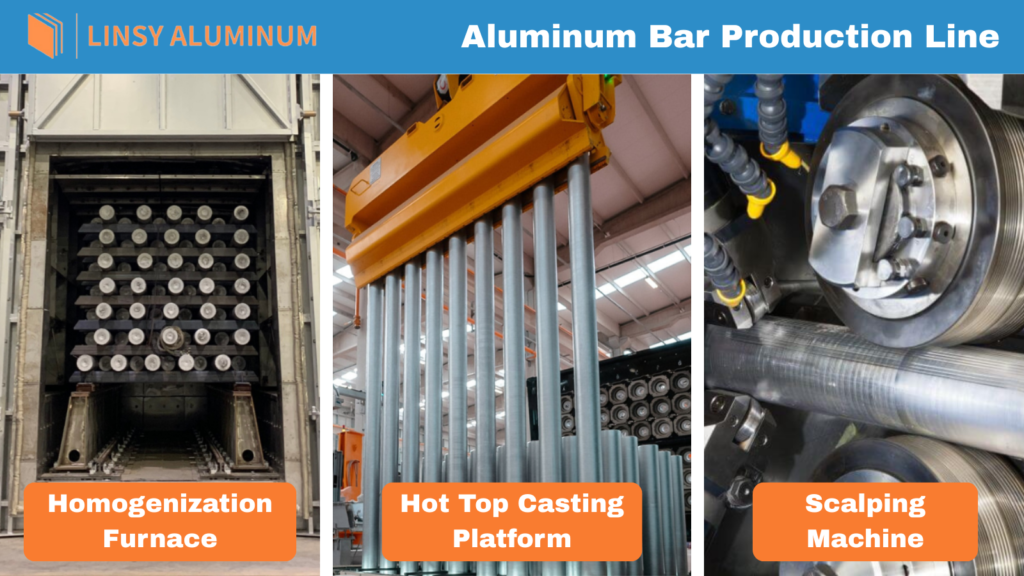
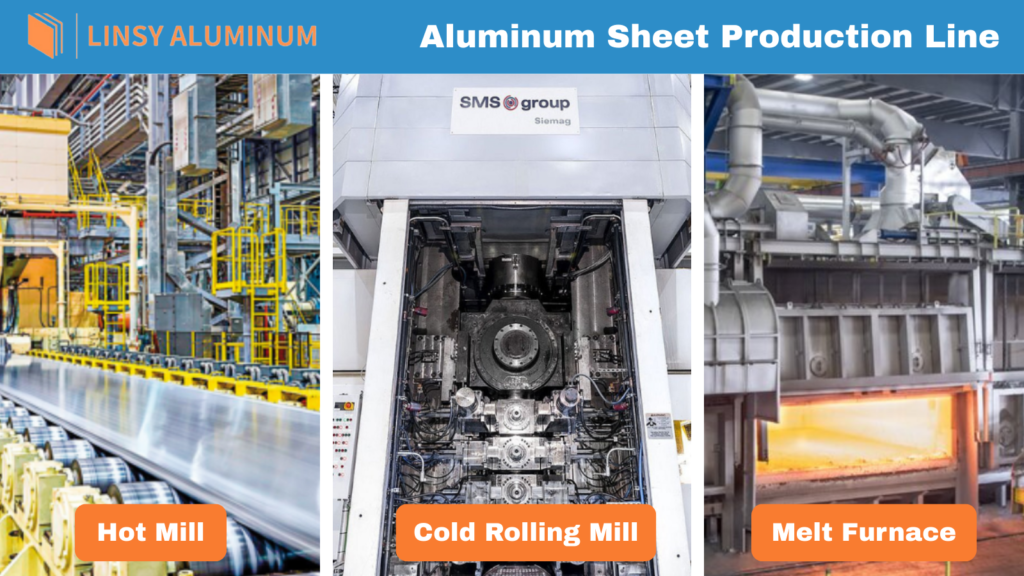
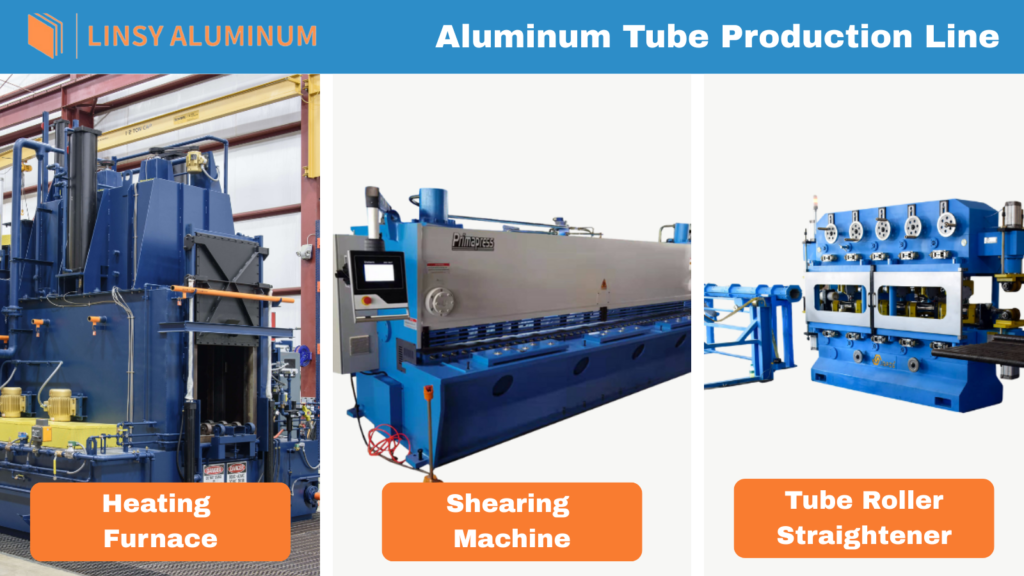
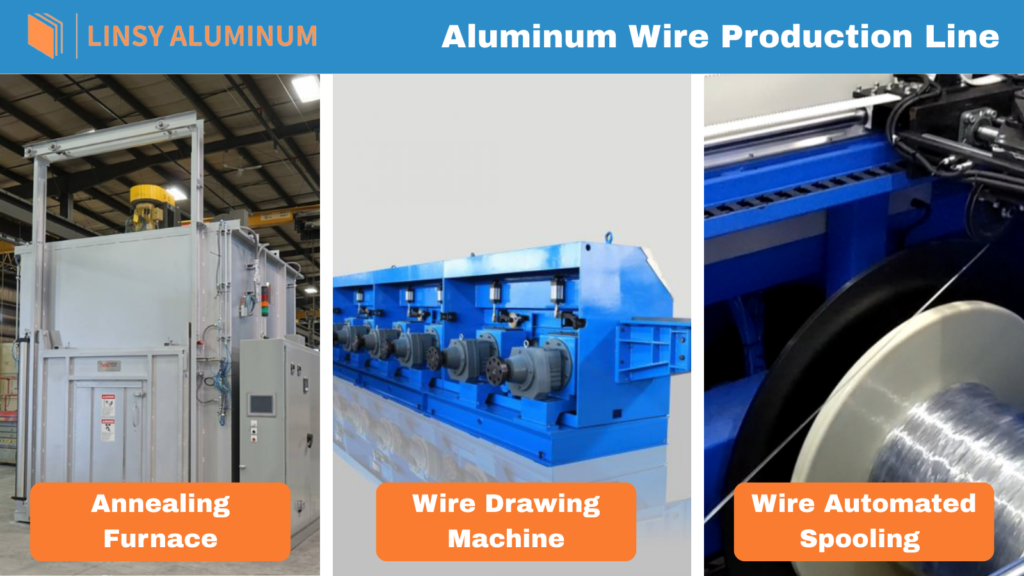
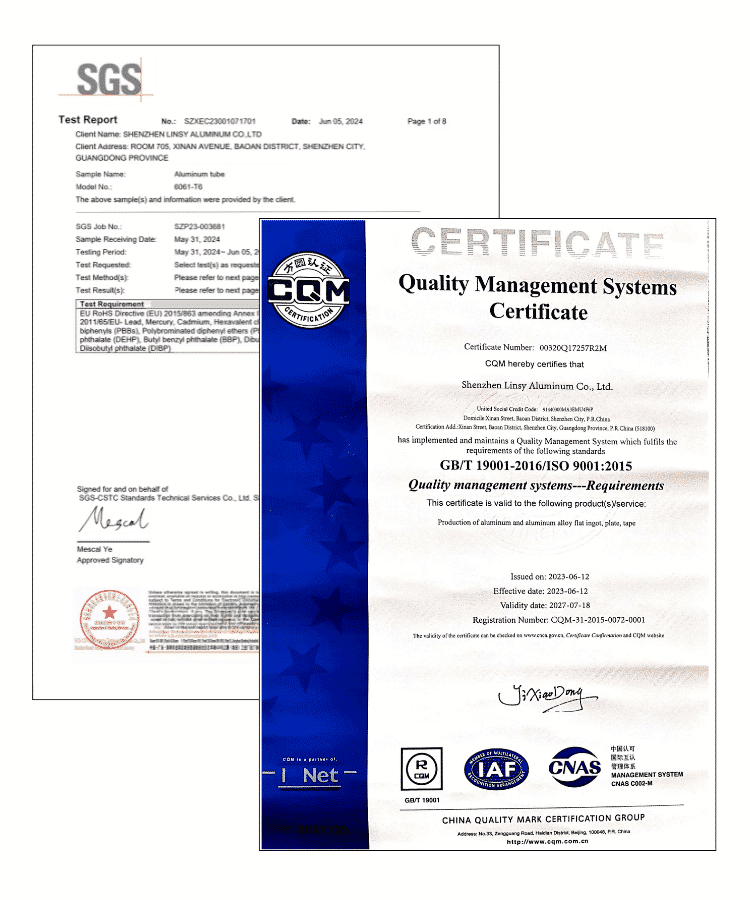
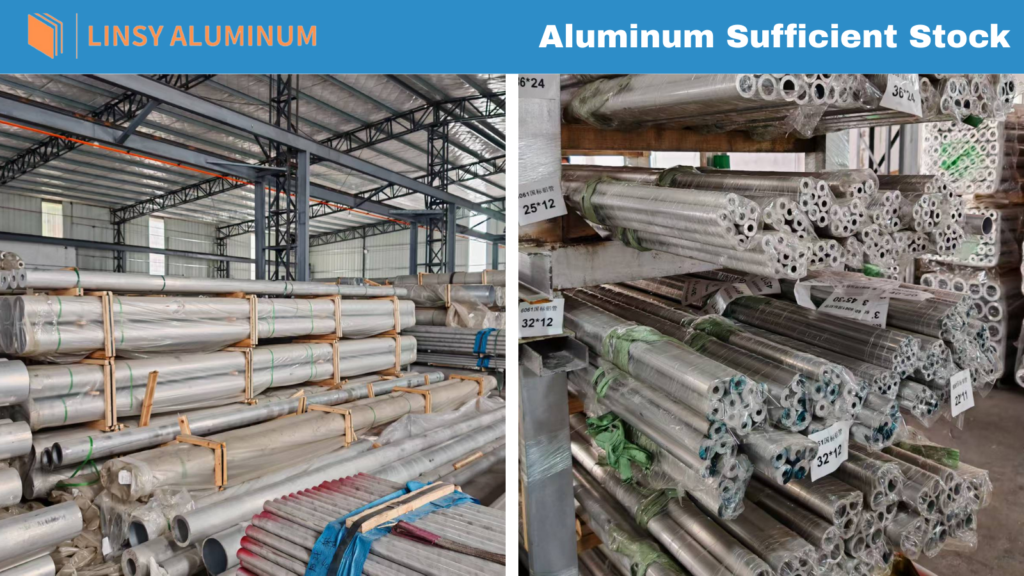
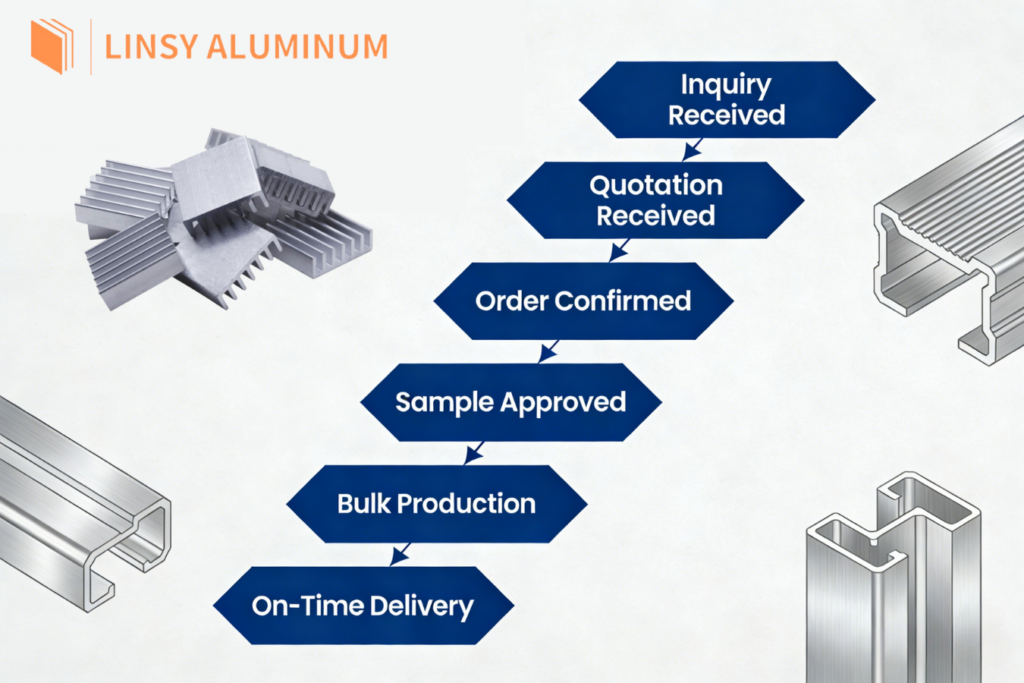
Ventajas de Linsy
Linsy Aluminum es un proveedor líder de productos de procesamiento de aluminio, que presta servicio a diversas industrias, como la aeroespacial, la ingeniería general, la automoción, la marina, la construcción naval y otras aplicaciones industriales especializadas.
Nos comprometemos a mantener los más altos estándares de calidad y responsabilidad medioambiental, como demuestran nuestras certificaciones: ISO 9001:2008, ISO 14001:2004 y SGS.