La tôle en aluminium 5052 est un alliage de la série 5xxx non traitable thermiquement, avec le magnésium comme élément de renforcement principal. Elle offre une excellente résistance à la corrosion en eau salée, une bonne soudabilité et une formabilité supérieure — ce qui en fait l'un des produits de tôle de qualité marine les plus spécifiés pour les réservoirs de carburant, les coques de bateaux, les enceintes chimiques et les travaux généraux de tôlerie.
Formulaires disponibles : tôle / plaque / bobine / barre / tube / fil
Tempéraments courants : O / H32 / H34 / H36 / H38
Assistance technique : Découpe CNC / découpe laser / pliage / soudage / anodisation
Documents relatifs à la qualité : Rapport MTC joint à chaque commande
La tôle en aluminium 5052 appartient à la série 5xxx (Al-Mg) des alliages non traitables thermiquement. Sa teneur en magnésium de 2,2 à 2,8 % assure le renforcement par des mécanismes de solution solide et d'écrouissage plutôt que par traitement thermique de précipitation. Par conséquent, le 5052 acquiert sa résistance par écrouissage à froid et est commercialisé dans des états tels que O (recuit complet), H32 et H34.
Parmi les alliages de tôle d'aluminium disponibles dans le commerce, le 5052 se distingue par sa résistance à l'eau salée et aux atmosphères marines — nettement supérieure à celle des alliages de la série 6xxx comme le 6061, et comparable au 5083 dans de nombreuses applications en service côtier. Sa combinaison de résistance modérée, d'excellente soudabilité (toutes les méthodes standard : MIG, TIG, par résistance) et de bonne formabilité en fait un choix pratique pour les coques de bateaux, les réservoirs de carburant, les enveloppes de réservoirs chimiques, les panneaux de signalisation routière et les boîtiers électroniques.
La tôle 5052 est régie principalement par la norme ASTM B209 (Tôle et tôle épaisse en aluminium et alliages d'aluminium) et est disponible en dimensions métriques et impériales auprès des distributeurs mondiaux.
L'épaisseur de la tôle varie généralement de 0,2 mm à 6,0 mm ; la tôle épaisse à partir de 6,0 mm. Les largeurs courantes sont de 1000 à 1500 mm (standard) ou des largeurs personnalisées jusqu'à 2600 mm. Les longueurs sont de 1000 à 4000 mm en standard, avec découpe sur mesure disponible. Les états les plus fréquemment commandés pour la tôle sont O (recuit, pour une formabilité maximale) et H32 (quart-dur, pour un équilibre entre résistance et pliabilité).
| Formulaire | Tempérer | Épaisseur (mm) | Largeur (mm) | Longueur (mm) |
|---|---|---|---|---|
| Feuille | O, H32, H34, H36, H38 | 0.2–6.0 | 1000–1500 (jusqu'à 2600) | 1000–4000 (découpe sur mesure) |
| Assiette | O, H32, H34 | 6.0–80 | 1000–2600 | 1000–6000 |
| Bobine | O, H32, H34 | 0.2–3.0 | 1000–1500 | Diamètre intérieur de bobine 508/610 mm |
Au-delà de la tôle et de la tôle épaisse, Linsy fournit le 5052 sous forme de barres (rondes, carrées, plates), de tubes (ronds, carrés), de fils et de profilés. Consultez les pages produits individuelles pour les détails dimensionnels.
| Standard | Désignation |
|---|---|
| ASTM | B209 (Tôle/Tôle épaisse), B221 (Barre) |
| EN / AW | EN AW-5052 |
| UNS | A95052 |
| ISO | Al Mg2.5Cr |
| GB/T | 3190 (5052 / LF2 ancienne désignation) |
| JIS | A5052 |
Selon ASTM B209 et EN AW-5052. Valeurs en pourcentage pondéral, maximum sauf indication de plage.
| Élément | Poids % |
|---|---|
| Si | 0,25 max |
| Fe | 0,40 max |
| Cu | 0,10 max |
| Mn | 0,10 max |
| Mg | 2.2–2.8 |
| Cr | 0.15–0.35 |
| Zn | 0,10 max |
| D'autres, chacun | 0,05 max |
| Autres, total | 0,15 max |
| Al | Reste |
Propriétés typiques à température ambiante selon l'ASM Handbook et l'ASTM B209. Les valeurs sont des plages nominales ; les valeurs réelles du certificat accompagnent chaque expédition.
| Tempérer | UTS (MPa) | Limite d'élasticité (MPa) | Élongation % | Dureté (HB) |
|---|---|---|---|---|
| O (recuit) | 180–210 | 55–70 | 25–30 | ~45 |
| H32 | 210–260 | 175–215 | 10–16 | ~60 |
| H34 | 230–280 | 195–240 | 6–12 | ~68 |
| H36 | 245–300 | 215–260 | 4–8 | ~75 |
| H38 | 260–310 | 230–280 | 3–5 | ~80 |
Module d'élasticité : 69,3 GPa (tous les états). Densité : 2,68 g/cm³.
Le choix du bon état de tôle 5052 dépend de votre priorité : formabilité (pliage, emboutissage profond) ou résistance (charge structurelle, résistance à la fatigue).
| Tempérer | Meilleur pour | Compromis essentiel |
|---|---|---|
| O | Emboutissage profond, pliages complexes, formabilité maximale | Résistance la plus faible ; seulement ~70 MPa de limite d'élasticité |
| H32 | Coques marines, réservoirs de carburant, tôlerie générale — spécification la plus courante | Bon équilibre : limite d'élasticité de 175 à 215 MPa avec allongement de 10 à 16 % |
| H34 | Panneaux structurels, supports, panneaux de signalisation routière | Limite d'élasticité plus élevée (~195 MPa) mais pliabilité réduite |
| H36 / H38 | Panneaux plats à haute résistance nécessitant un formage minimal | Meilleure résistance ; capacité de formage limitée |
Conseil pratique : Pour la plupart des applications marines et de réservoirs, le H32 est le choix par défaut — il offre une résistance suffisante pour les charges structurelles tout en restant formable pour les assemblages soudés. Si vous devez emboutir profondément une forme complexe, commencez avec l'état O et spécifiez une exigence d'écrouissage après formage.
La propriété remarquable du 5052 est sa résistance à l'eau salée et aux atmosphères marines. La teneur en Mg de 2,2 à 2,8 % et en Cr de 0,15 à 0,35 % forme un film d'oxyde stable et adhérent qui résiste à la corrosion par piqûres dans les environnements chlorés. Lors des essais de brouillard salin (ASTM B117), la tôle 5052 surpasse systématiquement le 6061 et le 3003. Elle n'est toutefois pas conçue pour une immersion continue dans des solutions alcalines fortes.
À l'état O, le 5052 peut être embouti profondément et plié à de très petits rayons — ce qui le rend adapté aux coques de réservoirs de carburant et aux courbes de coques de bateaux. Toutes les méthodes de soudage standard (MIG, TIG, par résistance, au gaz) fonctionnent bien avec le 5052. Aucun traitement thermique avant ou après soudage n'est requis car l'alliage n'est pas traitable thermiquement. La résistance de la soudure approche généralement la valeur du métal de base à l'état O.
Avec une densité de 2,68 g/cm³, le 5052 est plus léger que l'acier d'un facteur d'environ 3. La limite d'élasticité H32 (175–215 MPa) offre un rapport résistance/poids pratique pour les panneaux structurels marins sans la complexité de conception des alliages traitables thermiquement.
La tôle 5052 est largement utilisée dans les industries exigeant une résistance à la corrosion et une résistance modérée sans traitement thermique :
Découpe : La découpe CNC plasma, laser et au jet d'eau fonctionne toutes bien sur la tôle 5052. Pour les faibles épaisseurs (moins de 1,5 mm), la découpe laser produit des bords nets avec une distorsion minimale.
Cintrage : Le rayon de pliage minimal dépend de l'état et de l'épaisseur. La tôle H32 jusqu'à 3 mm peut généralement être pliée à 1,5 fois l'épaisseur ; les épaisseurs plus importantes ou les états plus durs nécessitent des rayons plus grands.
Soudage : Le fil d'apport 5356 ou 5556 est recommandé pour le 5052 afin de maintenir la résistance à la corrosion dans la zone de soudure. Le fil d'apport 4043 peut être utilisé pour les applications non marines où la résistance est prioritaire par rapport à la correspondance de corrosion.
Finitions de surface : La finition de laminage est standard. L'anodisation (claire ou colorée) est disponible pour les applications architecturales et décoratives. Le 5052 s'anodise bien, produisant une couche d'oxyde uniforme adaptée à l'exposition extérieure.
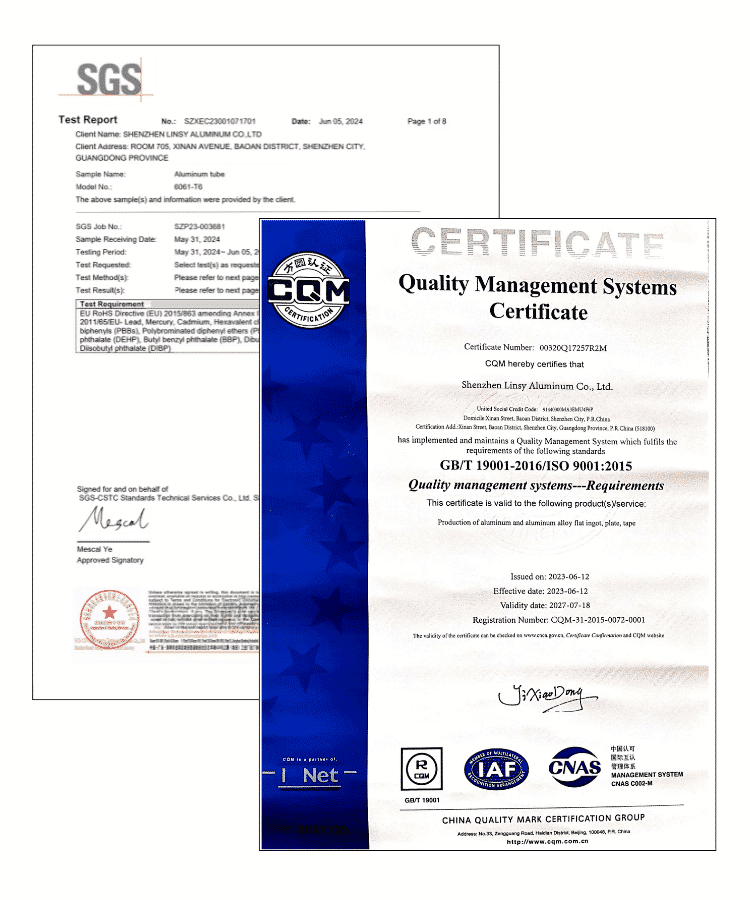
Linsy fournit un certificat de contrôle en usine (MTC / 3.1) avec chaque expédition de tôle 5052, documentant la composition chimique et les résultats des essais mécaniques conformément à la norme spécifiée (ASTM B209, EN AW-5052 ou équivalent). Les rapports d'inspection par tiers (par exemple, rapports d'essais SGS) sont disponibles sur demande.
La production est réalisée dans le cadre de systèmes certifiés ISO 9001 (management de la qualité), ISO 14001 (management environnemental) et ISO 45001 (santé et sécurité au travail). Le délai standard pour les articles en stock est de 10 à 15 jours ; les dimensions personnalisées ou les exigences d'états spéciaux peuvent nécessiter jusqu'à 60 jours.
Linsy Aluminum fournit des tôles de la série 5xxx aux clients des secteurs marin, chimique et de la fabrication générale depuis plus de 20 ans. Notre programme de tôle 5052 offre :
Explorez nos guides techniques pour l'aluminium 5052 :
Q : Quelle est la différence entre la tôle 5052-H32 et 5052-H34 ?
R : Le H32 est quart-dur (limite d'élasticité ~175–215 MPa, allongement 10–16 %) ; le H34 est demi-dur (limite d'élasticité ~195–240 MPa, allongement 6–12 %). Le H32 est plus formable et constitue le choix par défaut pour les applications marines. Le H34 est choisi lorsqu'une rigidité de planéité ou une résistance de panneau supérieure est nécessaire.
Q : La tôle 5052 peut-elle être anodisée ?
R : Oui. Le 5052 s'anodise bien, produisant une couche d'oxyde uniforme. L'anodisation claire et colorée sont toutes deux adaptées aux finitions architecturales et décoratives.
Q : La tôle 5052 est-elle adaptée aux réservoirs de carburant ?
R : Oui — le 5052-O ou 5052-H32 est couramment spécifié pour les réservoirs de carburant marins et les réservoirs hydrauliques en raison de sa résistance à la corrosion en eau salée et de sa soudabilité. Le fil d'apport 5356/5556 maintient les performances de corrosion dans le joint.
Q : Quel fil d'apport dois-je utiliser pour souder la tôle 5052 ?
R : Le fil d'apport 5356 ou 5556 est recommandé pour les soudures en service marin (correspond à la résistance à la corrosion du métal de base). Le fil d'apport 4043 peut être utilisé pour les applications non marines où une efficacité de soudure supérieure est nécessaire.
Q : Quelle est la quantité minimale de commande ?
R : Des quantités minimales de commande (MOQ) faibles sont disponibles pour les articles en stock d'épaisseurs standard. Contactez notre équipe commerciale pour les seuils de quantité spécifiques.
Q : Comment les tôles 5052 sont-elles emballées pour l'expédition ?
R : Les tôles sont empilées avec du papier intercalaire, cerclées sur des palettes en bois ou mises en caisse conformément à l'ASTM B660. Des protections de bords et des coins sont appliquées pour les expéditions à l'étranger.
Q : À quel délai de livraison dois-je m’attendre ?
A : Articles en stock : 10 à 15 jours. Dimensions personnalisées, tempes non standard ou commandes de gros tonnage : jusqu'à 60 jours.
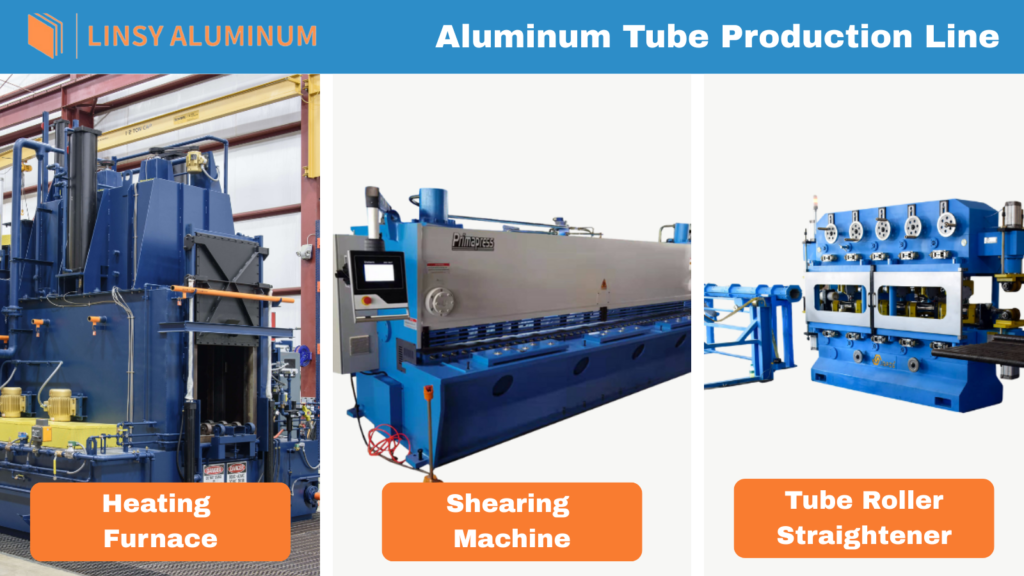
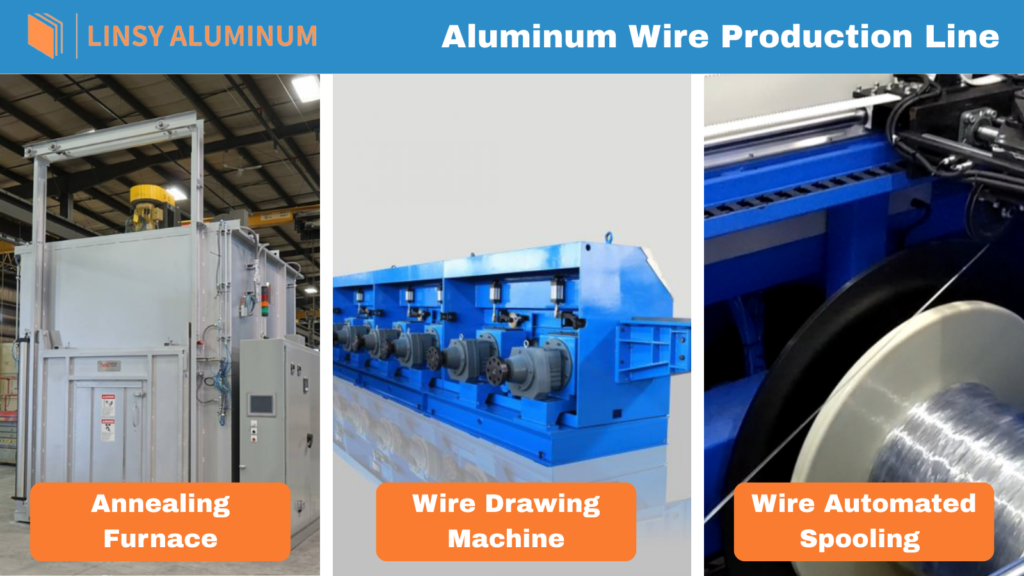
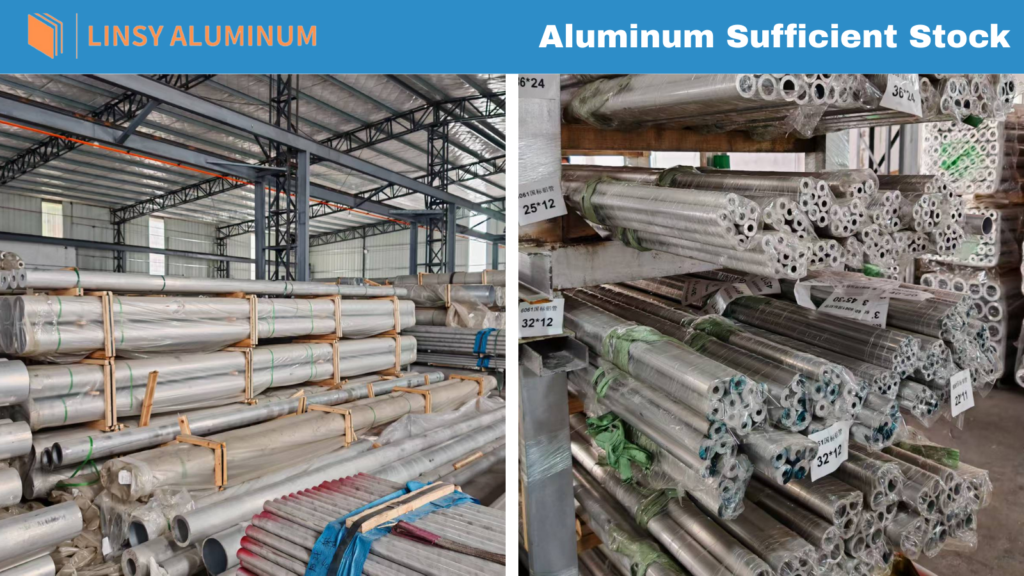
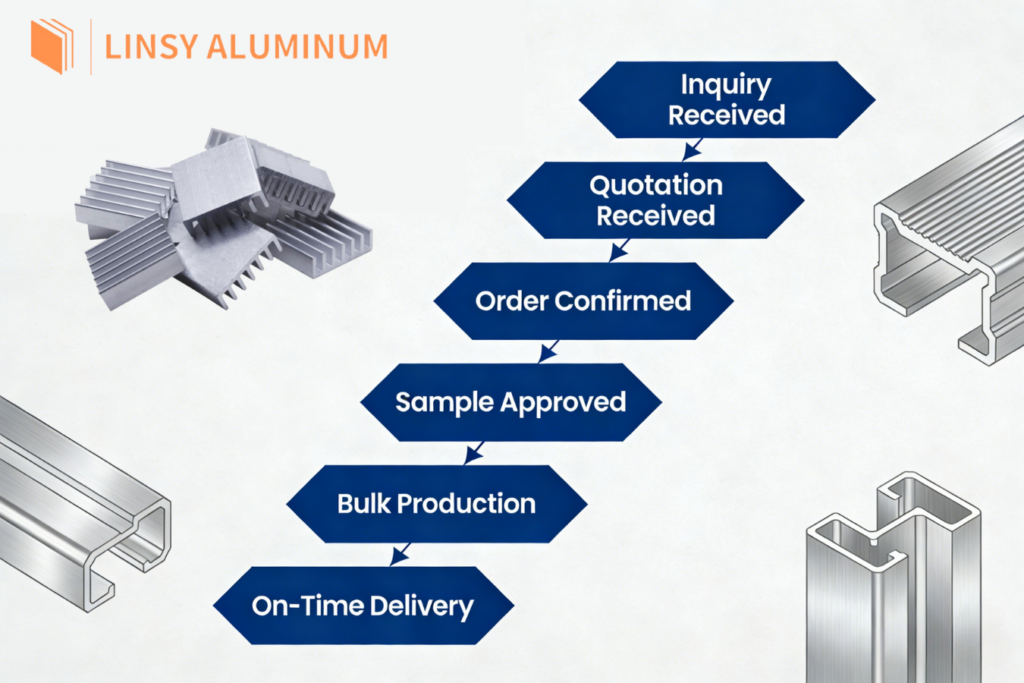
Avantages pour Linsy
Linsy Aluminum est un fournisseur de premier plan de produits de transformation de l'aluminium, au service de diverses industries, notamment l'aérospatiale, l'ingénierie générale, l'automobile, la marine, la construction navale et d'autres applications industrielles spécialisées.
Nous nous engageons à respecter les normes les plus strictes en matière de qualité et de responsabilité environnementale, comme en témoignent nos certifications : ISO 9001:2008, ISO 14001:2004 et SGS.